ASTM A213 UNS S31254 Stainless Steel Tube
What is ASTM A213 UNS S31254 Stainless Steel Tube
ASTM A213 / A213M lists UNS S31254 among the austenitic stainless grades that carry no common TP letter — Footnote C states the UNS number uniquely identifies the alloy. The chemistry is a classic 6% molybdenum “super-austenitic” window: carbon ≤0.020%, chromium 19.5–20.5%, nickel 17.5–18.5%, molybdenum 6.0–6.5%, nitrogen 0.18–0.22%, and copper 0.50–1.00%. Commercially buyers know it as 254 SMO, 6Mo, or F44-class tube chemistry; those shop names still need ASTM A213 (or the separate ASME SA-213 adoption) on the purchase order so seamless-tube minimum-wall, test, and marking clauses apply.
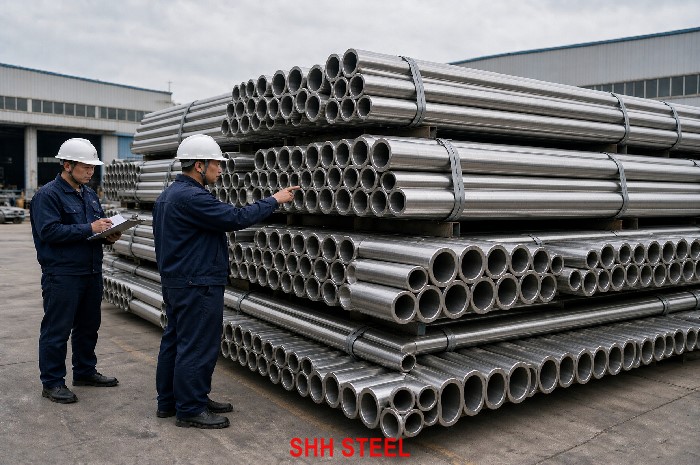
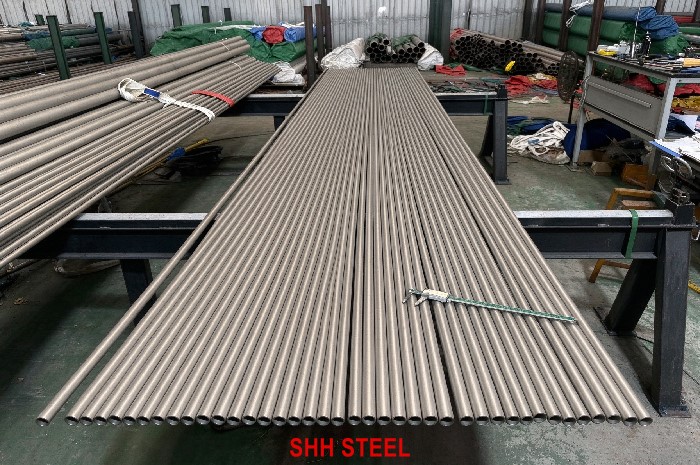
SHH STEEL can supply ASTM A213 UNS S31254 stainless steel tube as seamless cold-finished and hot-finished product in the usual boiler and heat-exchanger OD × wall / BWG band, shipped with EN 10204 3.1 mill test certificates that report the full Mo–N–Cu set and the wall-dependent Table 4 tensile and hardness results. Dual A213 / SA-213 marking is available only when the purchase order asks for both independent standards. Browse high-alloy austenitic sisters on the A213/A213M hub.
Do not paste a TP316L or TP317L chemistry block onto an S31254 certificate — molybdenum 6.0–6.5% with nitrogen 0.18–0.22% and copper 0.50–1.00% is a different PREN class, and Table 4 tensile floors sit at 98 or 95 ksi depending on wall, not the 70–75 ksi 316/317 pattern. Sister grades under the same ASTM standard include A213 TP317LMN, A213 TP317LM, A213 TP316L, A213 TP310MoLN, and A213 UNS S31277. A213 covers seamless tube only — cold-finished versus hot-finished is the process choice, not a WLD/HCW manufacturing type.
Chemical Composition of A213 UNS S31254
UNS S31254 chemistry is built for high PREN chloride and seawater-side heat-exchanger duty: a tight 19.5–20.5% chromium band, 17.5–18.5% nickel, a deliberate 6.0–6.5% molybdenum floor, nitrogen held in a narrow 0.18–0.22% window, and copper 0.50–1.00%. Melting analysis is mandatory; product analysis applies only when ordered through A1016 / A480 A1.1. Phosphorus ≤0.030% and sulfur ≤0.010% are tighter than commodity 316/317 rows. There is no TP grade letter — order and mark by UNS S31254 (Footnote C). Nitrogen analysis method is by agreement (Footnote B).
The tables below reproduce the melt limits from the public A213 stainless chemistry table, product-analysis limits from A480 Table A1.1 practice, and a short snapshot against TP317LMN / TP316L. Confirm the ordered edition before treating secondary catalogues as acceptance text. UNCERTAIN: A480 product-tolerance digits for Mo 6.0–6.5 and Cu 0.50–1.00 are applied from sister high-Mo / Cu austenitic practice — confirm the A480 edition if product analysis is contractual.
Melting analysis (heat / ladle analysis)
| Element | UNS S31254 melting analysis |
|---|---|
| Carbon (C) | ≤ 0.020 |
| Manganese (Mn) | ≤ 1.00 |
| Phosphorus (P) | ≤ 0.030 |
| Sulfur (S) | ≤ 0.010 |
| Silicon (Si) | ≤ 0.80 |
| Chromium (Cr) | 19.5 – 20.5 |
| Nickel (Ni) | 17.5 – 18.5 |
| Molybdenum (Mo) | 6.0 – 6.5 |
| Nitrogen (N) | 0.18 – 0.22 |
| Copper (Cu) | 0.50 – 1.00 |
| Niobium (Nb) | … (no requirement) |
| Titanium (Ti) | … (no requirement) |
Source: ASTM A213/A213M stainless chemistry table for UNS S31254 (public htpipe A213 PDF excerpt — _ref_a213.txt A213/A213M − 13). Molybdenum 6.0–6.5% and nitrogen 0.18–0.22% must both appear on the certificate; an MTC that only shows “254 SMO nickname chemistry” without the A213 ranges is incomplete for product acceptance.
Product analysis — A480/A480M Table A1.1 tolerances applied
| Element | Melting | Tolerance (A480 A1.1) | Product analysis limit |
|---|---|---|---|
| Carbon (C) | ≤ 0.020 | 0.005 over | ≤ 0.025 |
| Manganese (Mn) | ≤ 1.00 | 0.03 over | ≤ 1.03 |
| Phosphorus (P) | ≤ 0.030 | 0.005 over | ≤ 0.035 |
| Sulfur (S) | ≤ 0.010 | 0.005 over | ≤ 0.015 |
| Silicon (Si) | ≤ 0.80 | 0.05 over | ≤ 0.85 |
| Chromium (Cr) | 19.5 – 20.5 | 0.20 under / over | 19.30 – 20.70 |
| Nickel (Ni) | 17.5 – 18.5 | 0.15 under / 0.20 over | 17.35 – 18.70 |
| Molybdenum (Mo) | 6.0 – 6.5 | 0.10 under / over (UNCERTAIN — confirm A480 edition) | 5.90 – 6.60 |
| Nitrogen (N) | 0.18 – 0.22 | 0.01 under / 0.02 over | 0.17 – 0.24 |
| Copper (Cu) | 0.50 – 1.00 | 0.03 under / over (UNCERTAIN) | 0.47 – 1.03 |
Reading note: product analysis is not automatic — invoke it on the purchase order. Mo and Cu product digits above are sister-practice working values labeled UNCERTAIN until the ordered A480 edition is checked.
Mo / N / Cu snapshot — TP316L / TP317LMN / S31254
| Element | TP316L (S31603) | TP317LMN (S31726) | UNS S31254 |
|---|---|---|---|
| C | ≤ 0.035 | ≤ 0.03 | ≤ 0.020 |
| Cr | 16.0 – 18.0 | 17.0 – 20.0 | 19.5 – 20.5 |
| Ni | 10.0 – 14.0 | 13.5 – 17.5 | 17.5 – 18.5 |
| Mo | 2.00 – 3.00 | 4.0 – 5.0 | 6.0 – 6.5 |
| N | … | 0.10 – 0.20 | 0.18 – 0.22 |
| Cu | … | ≤ 0.75 | 0.50 – 1.00 |
S31254 is not a “high-Mo 317” nickname for TP317LMN — the 6.0% molybdenum floor, narrow nitrogen band, and mandatory copper range put it in a different PREN bracket for seawater and aggressive chloride exchanger service.
Mechanical Properties of A213 UNS S31254
Table 4 for UNS S31254 is wall-split: tubes with wall thickness ≤0.187 in. [5 mm] carry a higher tensile floor than thicker walls, while yield, elongation, and hardness stay the same across both rows. That split matters on thin HX tubing datasheets — do not apply the 95 ksi thicker-wall tensile number to a ≤5 mm wall lot, and do not invent a single “98 ksi for all walls” rule when the ordered edition prints both rows.
| Property | Wall ≤ 0.187 in. [5 mm] | Wall > 0.187 in. [5 mm] |
|---|---|---|
| Tensile strength, min | 98 ksi [675 MPa] | 95 ksi [655 MPa] |
| Yield strength (0.2% offset), min | 45 ksi [310 MPa] | 45 ksi [310 MPa] |
| Elongation in 2 in. or 50 mm, min | 35% | 35% |
| Hardness, max | 220 HBW / 230 HV or 96 HRB | 220 HBW / 230 HV or 96 HRB |
Source: ASTM A213/A213M Table 4 for UNS S31254 (public A213–13 excerpt). Mechanical property requirements generally do not apply to tubing smaller than 1/8 in. [3.2 mm] inside diameter or thinner than 0.015 in. [0.4 mm] wall. Flattening and flaring tests remain lot requirements under A213.
A tensile-only MTC that reports a 75/30 checklist against this grade is incomplete documentation practice. Hardness max 220 HBW / 96 HRB is higher than the 192 HBW / 90 HRB commodity austenitic ceiling — expect that on the certificate and do not treat a soft 90 HRB-only template as the S31254 limit.
Dimensions and Tolerances
Dimensional supply for ASTM A213 UNS S31254 remains tube language — OD × min wall (or average wall) and BWG / gauge — covering seawater coolers, desalination, and chemical heat-exchanger sizes rather than leading with ASME B36.19 pipe schedules. Usual A213 sizes run from about 1/8 in. [3.2 mm] ID to 5 in. [127 mm] OD with min wall about 0.015–0.500 in. [0.4–12.7 mm]; other diameters by agreement. Because Table 4 tensile splits at 0.187 in. [5 mm] wall, state the ordered wall clearly so the correct tensile floor is applied on the MTC.
OD and wall variations follow ASTM A1016/A1016M as invoked by A213. Cold-finished tubes commonly hold tighter OD; hot-finished tubes allow wider windows. Cold-finished average wall is often subject to a purchaser agreement note when the datasheet was written around minimum wall — put “min wall” or “average wall” on the purchase order rather than assuming the mill will guess.
Length is ordered as specific cut lengths for exchanger bundles or as random mill lengths. End finish (plain, beveled) follows the fabrication drawing. B36.19 schedule references may appear only as a secondary commercial size hint when a buyer already thinks in pipe schedules — they are not the primary A213 size story for S31254 HX tube.
Equivalent Grades
Equivalence language around S31254 tube often collapses “254 SMO,” “6Mo,” and “F44” nicknames across plate, bar, and tube product forms. ASTM A213 UNS S31254 is the governing designation for this article; commercial 254 SMO aliases point to similar 6Mo chemistry families but are not automatic substitutes on an A213 MTC without matching the seamless-tube standard clauses.
| Designation | Notes |
|---|---|
| ASTM A213 / A213M UNS S31254 | Governing ASTM seamless boiler / HX tube product standard — no TP letter (Footnote C) |
| UNS S31254 | Unified number that uniquely identifies the alloy |
| 254 SMO / 6Mo / F44 (commercial) | Shop names for 6% Mo super-austenitic chemistry — do not replace A213 product marking |
| EN / ISO near-equivalents | 1.4547-class chemistry families may appear on dual lists — confirm product form and tensile table before substitution |
| ASME SA-213 UNS S31254 | Separate Code Book adoption — dual-mark only when the PO asks |
Compare chloride-duty sisters such as A213 TP317LMN and the higher-Mo A213 UNS S31277 on the A213/A213M hub before freezing the exchanger tube list. Plate chemistry under A240 is a related alloy story, not an automatic tube MTC substitute.
Heat Treatment and Delivery Condition
UNS S31254 under ASTM A213 is furnished solution treated at a minimum of 2100 °F [1150 °C], then quenched in water or cooled rapidly by other means. That anneal temperature sits well above the 1900 °F commodity austenitic minimum — do not apply a generic “solution anneal 1900 °F” stamp to an S31254 heat. Public Table 3 for S31254 does not print a mandatory grain-size number (ellipsis), so H-grade grain-size framing does not apply.
Cold-finished versus hot-finished is a process and dimensional route, not a second product standard. Both routes still require the 2100 °F solution treatment on finished tube. Bright anneal may be agreed commercially when surface appearance matters, but it does not replace the Table 3 temperature floor unless the ordered edition and purchase order say so.
UNCERTAIN: confirm ordered-edition footnote attachment near the S31254 heat-treatment row (public OCR does not show Footnote F on that line the way some sister rows do). If a later edition attaches quench / A262 capability language, follow the ordered text rather than inventing S4 test obligations that the edition does not require.
Corrosion Resistance
S31254’s corrosion story is PREN-driven chloride and seawater resistance from the Mo 6.0–6.5% / N 0.18–0.22% / Cu 0.50–1.00% combination, not high-temperature oxidation framing and not a plain 316L “moly upgrade” slogan. It is selected for seawater coolers, desalination heaters, and aggressive chloride process exchangers where TP316L and even TP317L run out of pitting margin. It is not an H-grade creep product and not a niobium-stabilized furnace grade.
Intergranular corrosion risk after welding stays low relative to higher-carbon austenitics because carbon is capped at ≤0.020%, but heat input control and post-weld cleaning still matter in chloride service. When the datasheet demands demonstrated IGC capability, order A262 Practice E (or the edition’s equivalent) explicitly rather than assuming every mill runs it by default. For still-higher Mo / N brackets compare A213 UNS S31277.
Applications of A213 UNS S31254 Tube
Buyers specify ASTM A213 UNS S31254 when heat-exchanger and cooler duty needs a 6Mo super-austenitic seamless tube rather than a 2–3% Mo 316/317 product. Typical placements include seawater and brackish-water coolers, desalination brine heaters, scrubber and flue-gas condensate exchangers, and chemical-process condensers where chloride pitting and crevice attack drive grade selection.
| Service theme | Why S31254 is considered |
|---|---|
| Seawater / brackish coolers | Mo 6.0–6.5% + N 0.18–0.22% PREN step above 316/317 |
| Desalination / brine heaters | Low C ≤0.020% with Cu 0.50–1.00% in a 6Mo austenitic window |
| Chloride process condensers | Wall-split Table 4 strength with high hardness ceiling suited to thin HX walls |
| Scrubber / condensate exchangers | Seamless A213 tube product form with EN 10204 3.1 Mo–N–Cu reporting |
If the duty is high-temperature oxidation rather than wet chloride PREN, look at 310-family pages such as A213 TP310S instead of forcing S31254 into a furnace narrative it was not written for.
Weldability
S31254 tube welds with high-alloy austenitic practices using matching or over-alloyed nickel-base / 6Mo-class fillers selected for the joint design and chloride service. The ≤0.020% carbon ceiling reduces sensitization risk in the heat-affected zone; heat input control, interpass temperature, and thorough post-weld cleaning still matter for seawater and scrubber duty. Do not assume a soft ER316L deposit will restore 6Mo PREN performance without a qualified WPS review.
For tube-to-tubesheet welding into S31254 or higher-alloy sheets, keep filler PREN at or above the base metal and confirm any project restriction on ferrite or residual copper. When the datasheet demands A262 Practice E on welded samples, state that on the purchase order — mill tube MTCs alone do not automatically prove every fabricated joint.
Surface Finishes
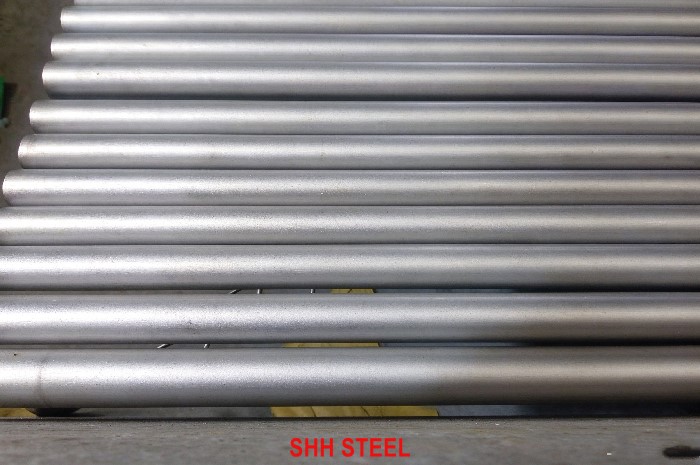
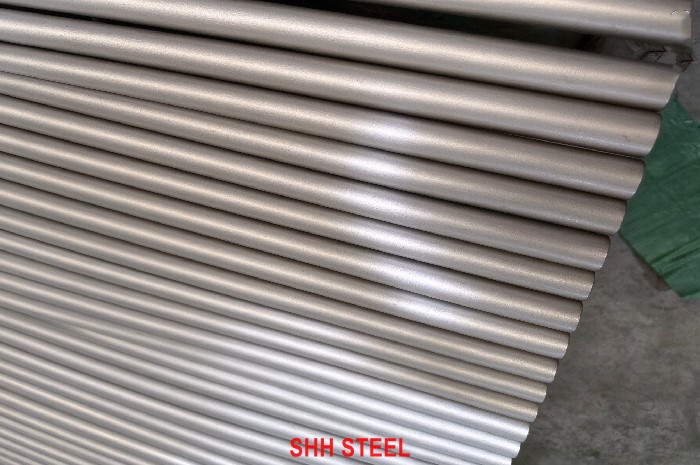
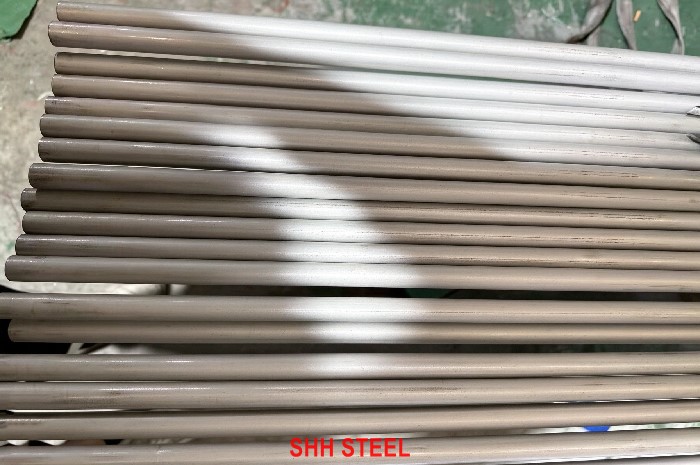
Standard delivery for ASTM A213 UNS S31254 from SHH STEEL is solution annealed and pickled, with a clean ID/OD suitable for seawater cooler and chemical exchanger fabrication. Bright annealed or polished finishes are available by agreement when the process side needs lower roughness or a brighter appearance.
State finish expectations on the enquiry together with OD × wall and end preparation. Do not assume a bright finish from a generic “6Mo tube” line item — pickled anneal after the 2100 °F solution treatment is the default boiler/HX path unless the purchase order says otherwise.
Inspection and Testing
Lot testing for ASTM A213 UNS S31254 follows the tension, hardness, flattening, and flaring requirements of A213 together with A1016/A1016M. Chemistry is verified on the heat (and on product when ordered) — molybdenum 6.0–6.5%, nitrogen 0.18–0.22%, and copper 0.50–1.00% must all clear. Non-destructive examination follows the ordered edition and any purchaser supplementary requirements.
EN 10204 3.1 mill test certificates from SHH STEEL report ladle chemistry, wall-applicable Table 4 tensile and hardness results (98/45 or 95/45 ksi; 220 HBW / 96 HRB), heat-treatment condition at ≥2100 °F [1150 °C], and dimensions. Ask for A262 Practice E on the PO when IGC capability must be demonstrated by actual test. Third-party witness and dual A213/SA-213 marking are available when specified.
Packaging and Shipping
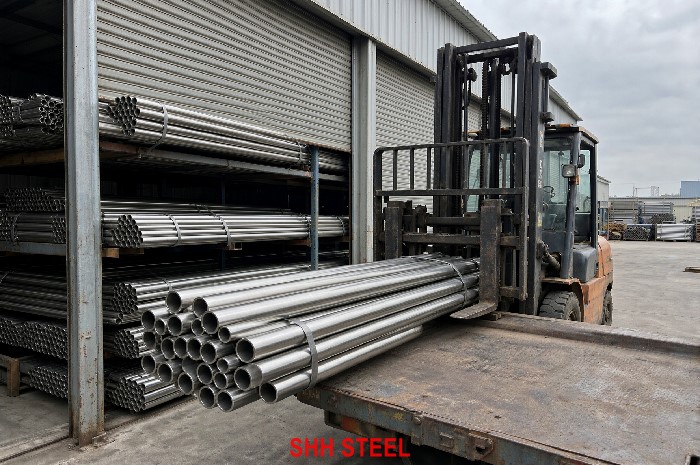
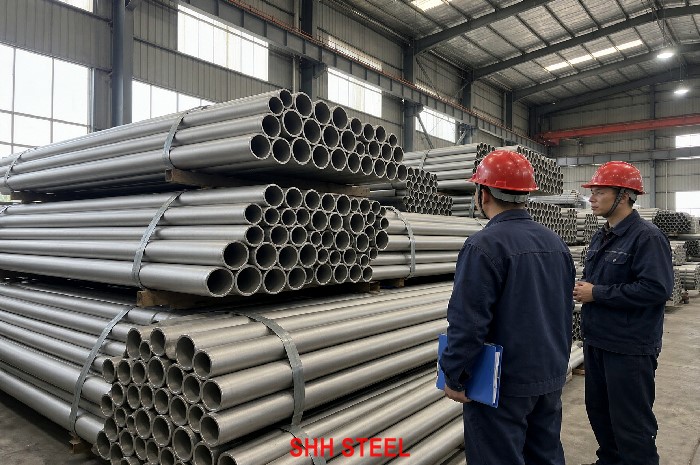
S31254 tubes ship in capped or plugged bundles with weather protection suited to the destination and transport mode. Cut lengths for cooler and exchanger bundles are labeled by heat and size; export packing uses wooden cases or steel-frame crates when the route requires them.
Marking includes ASTM A213, UNS S31254, size, heat number, and SHH STEEL identification. Dual SA-213 marking appears only when the purchase order requests it. Packing lists reference the same heat numbers shown on the EN 10204 3.1 certificates.
Why Choose SHH STEEL
SHH STEEL treats ASTM A213 UNS S31254 as a specification 6Mo product: C ≤0.020%, Mo 6.0–6.5%, N 0.18–0.22%, Cu 0.50–1.00%, the wall-split Table 4 tensile row, hardness max 220 HBW / 96 HRB, and the 2100 °F solution anneal are checked together before a heat is offered. Quotations state OD × wall / BWG, wall basis, finish route, A262 options, and whether dual A213/SA-213 marking is required.
We refuse nickname assemblies that stamp “254 SMO pipe” chemistry onto an A213 tube MTC without clearing the seamless-tube tensile split and heat-treatment floor, or that copy a 75/30 316 checklist onto a 98/45 grade. EN 10204 3.1 documentation includes Mo, N, and Cu together. Compare sisters on the A213/A213M hub before freezing the cooler tube list.
Supply Capability
SHH STEEL supplies ASTM A213 UNS S31254 seamless stainless steel tube against purchase-order chemistry, mechanical, and dimensional requirements — cold-finished or hot-finished — with EN 10204 3.1 mill test certificates. The capability table below summarizes the enquiry window; it is not a frozen warehouse SKU list.
| Capability | SHH STEEL supply window for UNS S31254 |
|---|---|
| Product form | Seamless cold-finished / hot-finished boiler, superheater, and heat-exchanger tube |
| Grade / marking | ASTM A213 UNS S31254; dual A213/SA-213 only when PO asks |
| Size band | Typical OD × min wall (or average wall) within the A213 ~1/8 in. ID to 5 in. OD / 0.015–0.500 in. wall window; other diameters by agreement |
| Documentation | EN 10204 3.1 MTC with Mo–N–Cu chemistry and wall-applicable Table 4 tensile/hardness |
| Testing options | A262 Practice E, PMI, third-party witness, supplementary NDE per PO |
| Trade terms | FOB / CFR / CIF / EXW and other agreed Incoterms |
Stock / Available sizes
SHH STEEL quotes S31254 against a stock-and-mill enquiry range rather than a frozen SKU/tonnage list. Representative OD × wall / BWG combinations for seawater cooler and chemical heat-exchanger tube appear below.
| Item | Typical stock / enquiry range for UNS S31254 |
|---|---|
| Outside diameter | 15.88, 19.05, 25.4, 31.8, 38.1, 42.4, 50.8, 63.5 mm (and other HX ODs on enquiry; through the usual A213 ~5 in. [127 mm] band) |
| Wall / BWG | BWG 12–18 class walls and metric min-wall equivalents; note the 0.187 in. [5 mm] Table 4 tensile split; heavier walls by agreement |
| Common OD × wall examples | 19.05 × 1.65 mm; 25.4 × 2.11 mm; 31.8 × 2.11 mm; 38.1 × 2.77 mm; 50.8 × 2.77 mm — illustrative, confirm min vs average wall and applicable tensile row |
| Length | Cut lengths for cooler / exchanger bundles; U-bends and random mill lengths on enquiry |
| Special | Non-standard OD/wall, bright anneal, dual A213/SA-213, A262 Practice E, third-party witness — confirm before heat reservation |
Send OD × wall (or BWG), wall basis (min or average), finish route, quantity or cut list, marking (A213 or dual A213/SA-213), and any A262 / NDE extras with the enquiry so the correct Table 4 row and 2100 °F anneal path are reserved with the heat.
FAQ
-
Is ASTM A213 the same as ASME SA-213 for UNS S31254?
- No. ASTM A213 / A213M is the ASTM International product specification for seamless boiler, superheater, and heat-exchanger tubes; ASME SA-213 / SA-213M is the separate ASME Code Book adoption. Dual-mark only when the purchase order asks for both names on the stencil and MTC. Chemistry and tensile floors align closely for a given referenced edition, but the standards remain independent.
-
Why does S31254 have no TP letter under A213?
- Footnote C in the A213 stainless chemistry table states that for these alloys there is no common grade designation and the UNS number uniquely identifies them. Order, mark, and certify as UNS S31254 rather than inventing a TP254 or TP6Mo letter code on the stencil. Commercial nicknames such as 254 SMO remain useful shop language but do not replace the UNS product marking.
-
What is the chemistry of ASTM A213 UNS S31254?
- Public A213 melt limits for S31254 are C ≤0.020%, Mn ≤1.00%, P ≤0.030%, S ≤0.010%, Si ≤0.80%, Cr 19.5–20.5%, Ni 17.5–18.5%, Mo 6.0–6.5%, N 0.18–0.22%, and Cu 0.50–1.00%. Nitrogen analysis method is by agreement (Footnote B). Confirm the ordered A213/A213M edition before treating catalogue reprints as acceptance text.
-
S31254 vs TP317LMN — which high-Mo A213 tube should I order?
- TP317LMN (S31726) sits in a Mo 4.0–5.0% / N 0.10–0.20% / Cu ≤0.75% window with a working ~80/35 ksi tensile pattern, while S31254 requires Mo 6.0–6.5%, N 0.18–0.22%, Cu 0.50–1.00%, and wall-split 98/45 or 95/45 ksi floors. Choose S31254 when seawater or aggressive chloride PREN needs the full 6Mo step; choose TP317LMN when the datasheet is written around the 4–5% Mo nitrogen-bearing 317 family.
-
S31254 vs S31277 — when do I need the higher-Mo grade?
- UNS S31277 pushes molybdenum to 6.5–8.0%, nickel to 26.0–28.0%, and nitrogen to 0.30–0.40%, with a much higher Table 4 tensile floor (112/52 ksi). Specify S31277 when the process side outgrows the 6.0–6.5% Mo / 17.5–18.5% Ni window of S31254; keep S31254 when the datasheet is written around classic 254 SMO / 6Mo chemistry and wall-split 98/95 ksi tensile.
-
Is 254 SMO the same as ASTM A213 UNS S31254?
- 254 SMO is a commercial trademark/shop name for 6Mo super-austenitic chemistry in the S31254 family. It is useful language on drawings and RFQs, but the governing ASTM seamless-tube product designation for this page is ASTM A213 UNS S31254. Always put A213 (and SA-213 only if Code dual-mark is required) on the purchase order so min-wall, tensile, and marking clauses apply.
-
What tensile and hardness floors does Table 4 set for S31254?
- For wall ≤0.187 in. [5 mm]: tensile min 98 ksi [675 MPa], yield min 45 ksi [310 MPa], elongation min 35%, hardness max 220 HBW / 230 HV or 96 HRB. For wall >0.187 in. [5 mm]: tensile min 95 ksi [655 MPa] with the same yield, elongation, and hardness. State wall thickness on the PO so the correct tensile row is applied.
-
What heat treatment does A213 require for UNS S31254?
- Solution treatment at a minimum of 2100 °F [1150 °C] followed by water quench or other rapid cool. That floor is higher than the 1900 °F commodity austenitic minimum — do not accept a generic 1900 °F anneal stamp for S31254. No mandatory grain-size number is printed for this row in the public Table 3 excerpt.
-
Does ASTM A213 UNS S31254 include welded or HCW tube?
- No. ASTM A213 covers seamless boiler, superheater, and heat-exchanger tubes only. Cold-finished versus hot-finished is the process choice inside seamless manufacture. Welded or HCW product forms belong under other ASTM stainless tubular standards, not under an A213 S31254 line item.
-
Minimum wall vs average wall for A213 S31254 — which should I specify?
- A213 treats minimum wall as the default ordering basis unless the purchase order specifies average wall. Heat-exchanger datasheets almost always assume minimum wall, and the Table 4 tensile split at 0.187 in. [5 mm] makes wall basis even more important. Write “min wall” or “average wall” explicitly on the PO rather than leaving the mill to infer intent from a BWG number alone.
-
Can you dual-certify A213 and SA-213 UNS S31254?
- Yes, when the purchase order asks for both independent standards on the stencil and MTC. ASTM A213 and ASME SA-213 remain separate documents; dual marking is a commercial/documentation choice, not an automatic merge of the two names into one title. SHH STEEL will not put SA-213 in the H1 or SEO title of the product page — that stays ASTM A213.
Conclusion
ASTM A213 UNS S31254 is the 6Mo super-austenitic seamless stainless steel tube grade for seawater coolers, desalination heaters, and aggressive chloride heat-exchanger service when Mo 6.0–6.5%, N 0.18–0.22%, and Cu 0.50–1.00% — not a 2–3% Mo 316/317 checklist — drive grade selection. SHH STEEL supplies cold-finished and hot-finished seamless tube in the usual OD × wall / BWG band, solution annealed at 2100 °F [1150 °C], tested to the wall-applicable Table 4 98/45 or 95/45 ksi and hardness limits, and documented on EN 10204 3.1 certificates — with dual SA-213 marking only when the purchase order asks.
Contact: admin@steelspecs.com
Quality Steel Needed? Inquire for Offers
Related Products