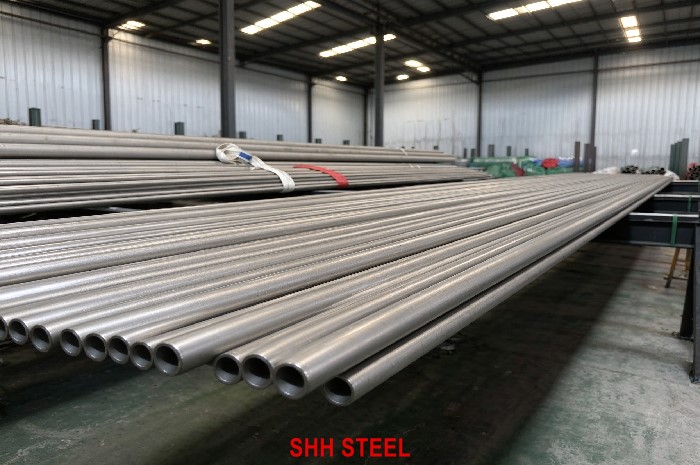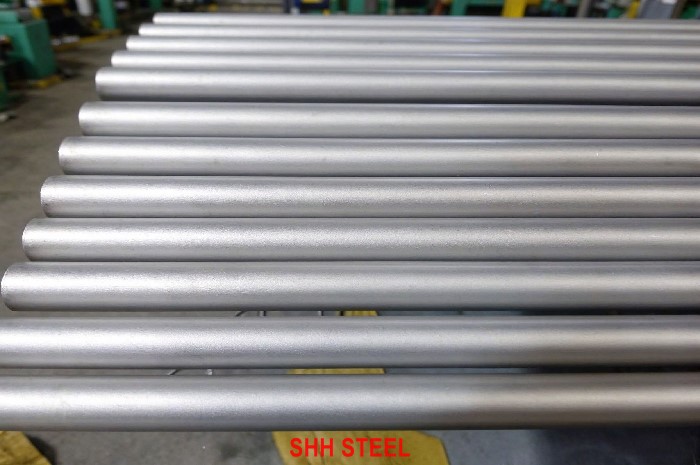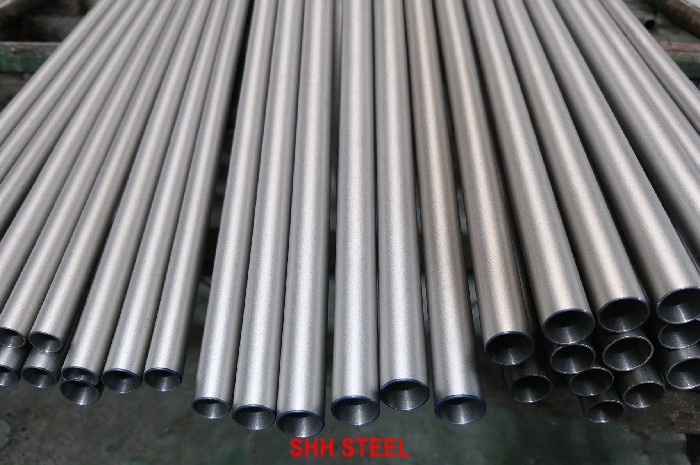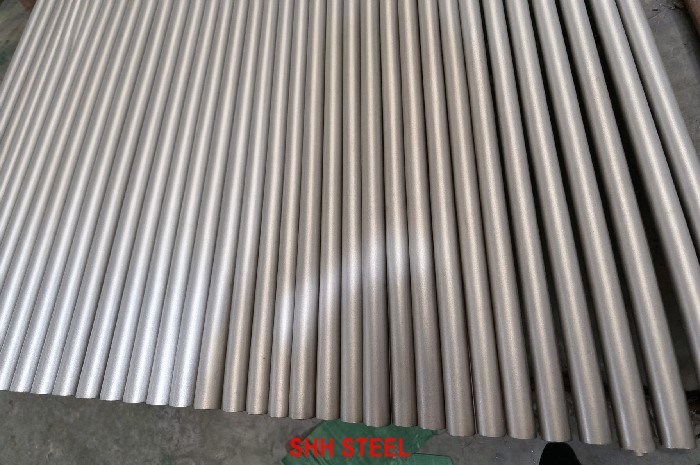
ASME SA312 TPXM-29 Stainless Steel Pipe | SA 312/SA 312M
What is ASME SA312 TPXM-29 Stainless Steel Pipe
ASME SA-312/SA-312M—the Code edition of ASTM A312/A312M—lists Grade TPXM-29 in Table 1 as UNS S24000. Of all the chromium–manganese–nitrogen austenitic grades in the specification, TPXM-29 pushes the substitution of manganese for nickel furthest: manganese 11.5–14.5%, nickel only 2.3–3.7%, chromium 17.0–19.0%, and nitrogen 0.20–0.40%. In commerce the material is known as XM-29 or by the generic description “18-3 Mn” stainless; enquiries may read SA312 TPXM-29, ASTM A312 TPXM-29, or UNS S24000 pipe.
The engineering logic is simple. Manganese stabilizes austenite and, crucially, raises the solubility of nitrogen in the melt. Nitrogen is a powerful austenite former and a strong interstitial strengthener. With enough of both, the alloy stays fully austenitic even with nickel cut to roughly a third of a 304 level, and the yield strength rises well above any of the 300-series grades. Table 4 sets TPXM-29 at 100 ksi [690 MPa] tensile and 55 ksi [380 MPa] yield minimum, the same floors as ASME SA312 TPXM-19 Stainless Steel Pipe and among the highest for austenitic pipe in SA-312.
That combination—high strength, lean nickel, austenitic toughness—explains where XM-29 gets used: pressure piping and tubing where weight or wall thickness matters, low-temperature services, and parts exposed to wear or galling. It is not a molybdenum grade, and its corrosion resistance should be judged on its own chemistry rather than borrowed from ASME SA312 TP304 Stainless Steel Pipe or ASME SA312 TP316 Stainless Steel Pipe.
SHH STEEL can supply ASME SA312 TPXM-29 / UNS S24000 stainless steel pipe to the edition named on the enquiry, including seamless (SML), welded (WLD), and heavily cold-worked (HCW) routes; ASME B36.19 schedules and special OD/wall by agreement; EN 10204 3.1 mill test certificates; and dual SA-312/A312 marking when the heat analysis, heat treatment, mechanical tests, and marking satisfy both editions named on the purchase order. XM-29 is a specialty high-manganese melt, so we confirm a heat inside the Mn 11.5–14.5%, Ni 2.3–3.7%, and N 0.20–0.40% windows before giving a delivery date. Confirm NPS, wall or schedule, finish, length practice, and any product-analysis or supplementary tests on enquiry.
The grade shows up under several labels in enquiries and older drawings. The list below shows how each maps to the ordered product; always confirm UNS S24000 on the purchase order and MTC rather than relying on the trade shorthand.
- SA312 TPXM-29 — ASME Code marking
- ASTM A312 TPXM-29 — ASTM parent grade, identical Table 1 and Table 4 rows
- UNS S24000 — unified number in Table 1
- XM-29 / 18-3-Mn (trade) — shorthand; always confirm S24000 on the PO and MTC
TPXM-29 is not interchangeable with its XM neighbours. ASME SA312 TPXM-10 Stainless Steel Pipe and ASME SA312 TPXM-11 Stainless Steel Pipe (S21900 / S21904) run 8–10% Mn, 5.5–7.5% Ni, and 19.0–21.5% Cr at 90/50 ksi, so they carry more corrosion margin but less strength. ASME SA312 TPXM-19 Stainless Steel Pipe (S20910) shares the 100/55 ksi floors but adds Mo 1.50–3.00%, Nb, V, and 11.5–13.5% Ni, which gives it the chloride and acid performance XM-29 lacks. Versus ASME SA312 TP304 Stainless Steel Pipe, XM-29 offers 304-class corrosion expectations with roughly 1.8 times the yield floor. Grade hub: ASME SA 312/SA 312M.
Manufacturing Types (SML / WLD / HCW)
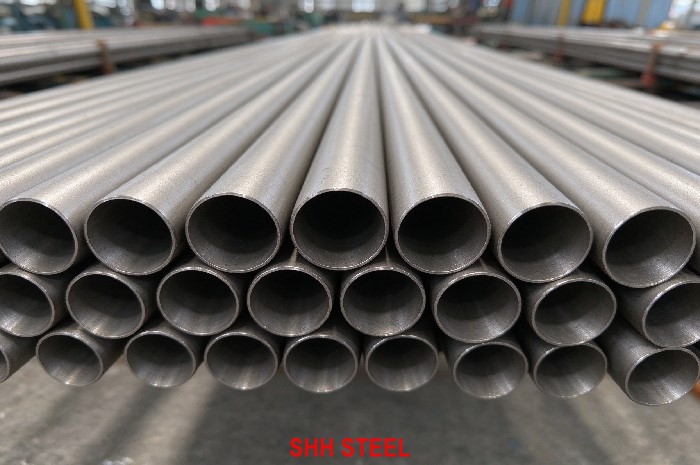
TPXM-29 can be furnished in all three SA-312 product forms. The choice is driven by the design code, the size and wall, and the inspection plan:
- Seamless (SML) — made without welding. The high hot strength of a nitrogen-rich, high-Mn alloy makes piercing and extrusion more demanding than for 304, so seamless XM-29 is typically a made-to-order item in limited size ranges.
- Welded (WLD) — formed from strip or plate and welded by an automatic process with no filler, then annealed. Often the most economical route for common NPS.
- Heavily cold-worked (HCW) — welded tube cold reduced at least 35% in wall and weld before final anneal; weld radiographed before cold work.
High work hardening is characteristic of XM-29. Cold drawing or pilgering passes therefore take more load and may need more intermediate anneals than for 304. This is a mill concern rather than a buyer requirement, but it is part of why lead times and minimum quantities for XM-29 are longer than for common grades.
Every length is hydrostatically tested or tested by a nondestructive electric method per A999. The marking states SML, WLD, or HCW, along with grade, heat, size, and mill identification.
Chemical Composition of SA312 TPXM-29
TPXM-29 chemistry is controlled by heat analysis to Table 1; product analysis is optional (S1) and judged with ASTM A480/A480M Table A1.1 tolerances, referenced through A999.
Melting analysis (heat / ladle analysis) — Table 1
Heat analysis for TPXM-29 (UNS S24000). Values are maximum unless a range is shown; ellipses (…) mean no requirement.
| Element | TPXM-29 (UNS S24000) melting analysis |
|---|---|
| Carbon (C) | ≤ 0.08 |
| Manganese (Mn) | 11.5 – 14.5 |
| Phosphorus (P) | ≤ 0.060 |
| Sulfur (S) | ≤ 0.030 |
| Silicon (Si) | ≤ 1.00 |
| Chromium (Cr) | 17.0 – 19.0 |
| Nickel (Ni) | 2.3 – 3.7 |
| Nitrogen (N) | 0.20 – 0.40 |
| Molybdenum (Mo) | … (no requirement) |
Source: ASME SA-312/SA-312M ≡ ASTM A312/A312M Table 1, Grade TPXM-29. Nitrogen method by agreement (Table 1 footnote).
Product analysis — A480/A480M Table A1.1 tolerances applied to Table 1
| Element | Melting (Table 1) | Tolerance (A480 A1.1) | Product analysis limit |
|---|---|---|---|
| Carbon (C) | ≤ 0.08 | 0.01 over | ≤ 0.09 |
| Manganese (Mn) | 11.5 – 14.5 | 0.10 under / over | 11.40 – 14.60 |
| Phosphorus (P) | ≤ 0.060 | 0.010 over | ≤ 0.070 |
| Sulfur (S) | ≤ 0.030 | 0.005 over | ≤ 0.035 |
| Silicon (Si) | ≤ 1.00 | 0.05 over | ≤ 1.05 |
| Chromium (Cr) | 17.0 – 19.0 | 0.20 under / over | 16.80 – 19.20 |
| Nickel (Ni) | 2.3 – 3.7 | 0.07 under / over | 2.23 – 3.77 |
| Nitrogen (N) | 0.20 – 0.40 | 0.02 under / 0.04 over | 0.18 – 0.44 |
Two features stand out. First, the phosphorus ceiling is 0.060%, higher than the 0.045% used for most 300-series rows, reflecting the phosphorus picked up from high-manganese ferroalloys. Second, the manganese range sits in the A480 “over 10.00 to 15.00” band, so its product tolerance is 0.10—larger than the 0.06 used for the XM-10 family.
The nitrogen tolerance is asymmetric: the 0.20 minimum lies in the “over 0.19 to 0.25” row (0.02 under), while the 0.40 maximum lies in the “over 0.35 to 0.45” row (0.04 over). Nickel at 2.3–3.7% uses the “over 1.00 to 5.00” row, 0.07 each way.
What each element does in S24000:
- Chromium 17.0–19.0% — the passive-film former; slightly below the 19% minimum of the XM-10 family, which is one reason XM-29 is not a corrosion upgrade over 304
- Manganese 11.5–14.5% — stabilizes austenite and lets the melt hold the high nitrogen range without gas porosity
- Nickel 2.3–3.7% — a small addition that still contributes to austenite stability and toughness
- Nitrogen 0.20–0.40% — the main strengthener and a strong austenite former; it also contributes to pitting resistance
- Carbon ≤0.08% — kept moderate; higher carbon would add strength but raise sensitization risk
- Silicon ≤1.00%, sulfur ≤0.030% — normal deoxidation and cleanliness limits
When reviewing an XM-29 MTC, check nickel is not below 2.3%—lean heats near the minimum are where phase-balance problems would start—and that nitrogen is inside range, since strength depends on it. A heat with nickel at 5% is not XM-29, whatever the stencil says.
Mechanical Properties of SA312 TPXM-29
| Property (SA-312 Table 4) | TPXM-29 |
|---|---|
| Tensile strength, min | 100 ksi [690 MPa] |
| Yield strength (0.2% offset), min | 55 ksi [380 MPa] |
| Elongation in 2 in. or 50 mm (or 4D), min | 35% longitudinal / 25% transverse |
| Hardness | No maximum listed |
For perspective, the TPXM-29 yield floor is 1.83 times that of ASME SA312 TP304 Stainless Steel Pipe (30 ksi) and 2.2 times that of ASME SA312 TP304L Stainless Steel Pipe (25 ksi). Its tensile floor is 25 ksi higher than TP304. Among the Cr-Mn-N grades in SA-312, ASME SA312 TP201 Stainless Steel Pipe sits at 75 / 38 ksi, ASME SA312 TP201LN Stainless Steel Pipe at 95 / 45, ASME SA312 UNS S20400 Stainless Steel Pipe at 95 / 48, the XM-10/XM-11 pair at 90 / 50, and XM-29 and XM-19 at the top with 100 / 55.
Elongation minima are the same all-grades values as for 304, so the strength increase does not come with a relaxed ductility requirement. Flattening tests on 5% of each lot check that the pipe deforms without cracking.
Work hardening: nitrogen-rich, low-nickel austenite work hardens rapidly. Bending, flaring, and expanding XM-29 pipe need more force than 304, springback is greater, and tooling wears faster. Fabricators who bend this grade should allow larger bend radii or trial bends, and should recognise that heavily cold-formed areas will be harder and stronger than the annealed pipe tested at the mill. If a formed part must return to annealed properties, a full solution anneal at the Table 2 temperature followed by rapid cooling is the only reliable route.
Code use: allowable stresses must come from the governing construction code for S24000. Where the code lists the material, its higher allowables can reduce wall thickness and weight noticeably. Where it does not, the Table 4 values do not by themselves permit a lighter design.
Hardness, impact, and elevated-temperature properties are not part of the SA-312 base requirement. Projects needing low-temperature impact testing or a hardness cap should write those requirements into the PO.
Dimensions and Tolerances
Sizes follow ASME B36.19 (Sch 5S, 10S, 40S, 80S) and, by agreement, B36.10 weights or special OD/wall. Wall tolerance per SA-312 Table 3:
- NPS 1/8–2-1/2, all t/D: +20.0% / −12.5%
- NPS 3–18, t/D ≤5%: +22.5% / −12.5%; t/D >5%: +15.0% / −12.5%
- NPS 20 and larger welded: +17.5% / −12.5%
- NPS 20 and larger seamless: +22.5% (t/D ≤5%) or +15.0% (t/D >5%) / −12.5%
OD tolerances follow A999/A999M. Standard lengths for NPS 1/8–8 are up to 24 ft (15–24 ft range); cut lengths may be up to 1/4 in. [6 mm] over and never under. Jointers are not allowed unless specified.
Ordering notes: specify NPS and schedule, or OD and minimum or nominal wall, but not both systems at once. For instrument and hydraulic lines, buyers often order by OD × wall in inches or millimetres; in that case state whether the wall is nominal or minimum, since S8 (minimum wall) changes the tolerance basis. Large NPS sizes in XM-29 are rare and usually welded.
Because XM-29 is often chosen to save wall, check that the thinner schedule still meets end-connection needs: thin-wall pipe may not accept threading, and grooved couplings have minimum wall limits. Weight savings of a lighter schedule should be compared against the price premium of a specialty grade before finalising.
Equivalent Grades
| Designation | Relationship |
|---|---|
| ASME SA-312 / ASTM A312 TPXM-29 | Governing pipe grade |
| UNS S24000 | Unified number in Table 1 |
| XM-29 / 18-3-Mn (trade) | Common market description; trade names vary by producer |
| AWS A5.9 ER240 | Matching filler listed for TPXM-29 in SA-312 Table 6 |
| EN / JIS | No one-to-one designation asserted; check regional standards if needed |
Nearest SA-312 neighbours and why they are different:
- ASME SA312 TPXM-10 Stainless Steel Pipe / ASME SA312 TPXM-11 Stainless Steel Pipe — less Mn, about twice the Ni, lower strength
- ASME SA312 TPXM-19 Stainless Steel Pipe — same 100/55 ksi floors but with Mo, Nb, V and 11.5–13.5% Ni; better chloride resistance at higher cost
- ASME SA312 UNS S20400 Stainless Steel Pipe — lower Mn (7–9%) and Cr (15–17%), 95/48 ksi
- ASME SA312 TP304 Stainless Steel Pipe — conventional 18-8 at 75/30 ksi
Plate for matching fabrications: ASME SA240 304 Stainless Steel Plate for 304-family work.
Heat Treatment and Delivery Condition
TPXM-29 is not individually listed in SA-312 Table 2, so it is solution annealed at 1900 °F [1040 °C] minimum under the general row, followed by water quench or other rapid cooling sufficient to prevent carbide re-precipitation (demonstrable by A262 Practice E when S7 is ordered).
Seamless pipe may be quenched directly after hot forming if it is at or above the 1900 °F minimum. The ASME clause 6.2 reheat rule applies to H grades and to S33228, S30815, and S31272, not to S24000.
For a high-nitrogen, lean-nickel alloy, the anneal and quench do more than dissolve carbides. They also take nitrogen fully back into solution and restore a uniformly austenitic structure after the heavy work hardening of cold finishing. Slow cooling can allow grain-boundary nitrides or carbides, reducing toughness and corrosion resistance. Specify a water quench on the PO if the mill’s standard practice is uncertain.
- Delivery: solution annealed, descaled or bright annealed
- Free of scale and exogenous iron (clause 6.1.7)
- Passivation on request
- Cold-worked or half-hard tempers are not SA-312 delivery conditions
Corrosion Resistance
With 17.0–19.0% chromium and high nitrogen, TPXM-29 has general corrosion resistance often described as comparable to 304 in many atmospheric and mild aqueous services. Nitrogen in solution supports passivity and pitting resistance; the low nickel content, however, reduces resistance to reducing acids.
- Atmospheric and fresh water: generally good, comparable to common austenitics
- Chlorides: no Mo requirement; not a drop-in replacement for ASME SA312 TP316 Stainless Steel Pipe or ASME SA312 TP316L Stainless Steel Pipe in seawater or chloride-concentrating crevices
- Reducing acids (e.g. dilute sulfuric): lean nickel lowers resistance compared with higher-Ni grades; test or review before selection
- Intergranular: carbon up to 0.08% means sensitization is possible in slow-cooled weld zones; specify S7 if intergranular attack is a design concern
- Stress corrosion: austenitic grades remain susceptible to chloride SCC above about 140 °F (general guidance); higher strength does not help
Comparison with its XM neighbours: relative to TPXM-10 and TPXM-11, XM-29 has about 2% less chromium and roughly half the nickel, so its general corrosion margin is slimmer even though its strength is higher. Relative to TPXM-19, it lacks the 1.50–3.00% Mo and the much higher nickel that give XM-19 its chloride and acid performance. Put simply, XM-29 is a strength and economy grade with 304-class corrosion expectations, and selection should be based on that trade-off.
XM-29 is also widely described as resistant to galling and wear compared with 304, which is why it appears in hydraulic and fastener-related applications. This is producer and industry experience, not an SA-312 requirement.
Fitness for service depends on the fluid, temperature, oxygen, deposits, and fabrication cleanliness. Where a service is new, field coupons or a corrosion engineer’s review are worth more than any grade table.
Applications of SA312 TPXM-29 Pipe
| Application | Reason for TPXM-29 | Note |
|---|---|---|
| High-pressure hydraulic and instrument lines | 100/55 ksi floors allow thinner walls; galling resistance at fittings | Confirm code listing and fitting compatibility |
| Low-temperature and cryogenic piping | Austenitic toughness with high strength | Impact testing per governing code |
| Aircraft and transport fluid lines | Strength-to-weight ratio | Often ordered to aerospace tube specs instead—check which applies |
| Process utilities | Air, water, and mild chemical service with strength advantage | Not for strong chlorides or reducing acids without review |
| Wear and sliding parts made from pipe | Galling resistance relative to 304 | SA-312 is a pressure-pipe spec; mechanical tube specs may fit better |
| Nickel-sensitive cost projects | Lean Ni reduces exposure to nickel price swings | Specialty availability can offset savings |
For conventional 18-8 pipe see ASME SA312 TP304 Stainless Steel Pipe; for Mo service see ASME SA312 TP316 Stainless Steel Pipe and ASME SA240 316 Stainless Steel Plate.
Weldability
TPXM-29 can be welded with the usual austenitic processes—GTAW, GMAW, SMAW, and orbital GTAW—using a matching high-manganese filler.
Filler metal (SA-312 Table 6): TPXM-29 is listed with AWS A5.9 ER240, filler metal UNS S23980, W32440. Table 6 is the standard’s guide for filler used in seam repairs and is a sensible starting point for fabrication WPSs. Using a 308-type filler would undermatch the base metal’s strength by a wide margin.
- Shielding: argon or argon-nitrogen mixtures help retain nitrogen in the weld; pure argon backing protects the root
- Heat input: moderate; very high heat input coarsens the HAZ and promotes nitrogen loss
- Porosity: nitrogen-rich metal can form porosity if shielding is poor or arc length long; keep shielding tight
- Cleaning: remove heat tint and restore passivity by pickling, electrochemical cleaning, or mechanical cleaning plus passivation
Qualify procedures to ASME Section IX on S24000. P-number grouping and any impact-test requirements come from the code, not from SA-312. Mill longitudinal welds are made without filler; any seam repair by welding must identify the filler used on the certificate (clause 15).
When joining XM-29 to 304 or 316 pipe, dissimilar-metal filler selection and strength matching should be engineered; the weaker base metal usually governs joint design.
Surface Finishes
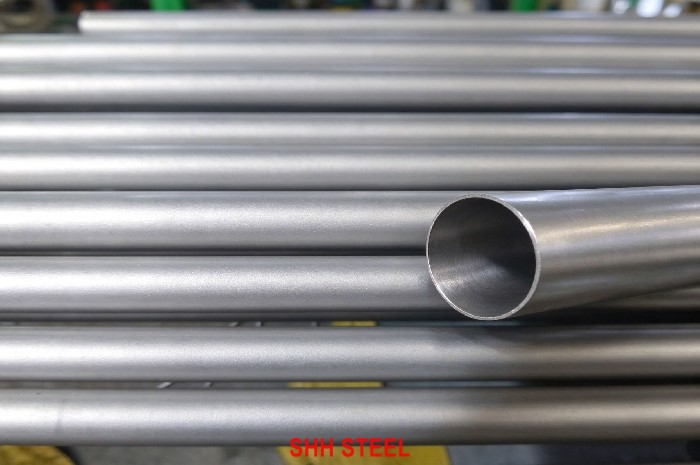
- Annealed and pickled — standard for process piping
- Bright annealed — for small-OD and instrument tubing where clean ID matters
- Polished — OD or ID polishing to stated Ra by agreement
- Conditioned weld bead — ID bead rolled or removed for welded pipe
High-manganese stainless produces a manganese-rich oxide during annealing, and mills adjust pickling chemistry to remove it fully. A properly pickled XM-29 surface looks similar to pickled 304. State the finish and any passivation on the order.
Inspection and Testing
The SA-312 base package applies: heat analysis to Table 1, tension and flattening tests per lot, hydrostatic or NDE testing on every length, and visual and dimensional checks.
| Option | Why for XM-29 |
|---|---|
| S1 product analysis | Confirms Mn, Ni, and N on finished pipe |
| S2 transverse tension | Verifies strength across welded seams |
| S5 radiography | Weld soundness on WLD pipe |
| S7 intergranular corrosion | Where C up to 0.08% and weld HAZ sensitization are a concern |
| Impact testing (PO requirement) | For low-temperature service if the code requires it |
| PMI | XRF confirms high Mn and low Ni, the fastest way to tell XM-29 from 304 |
Lot rules: tension and flattening tests are drawn per heat-treatment lot as defined in clause 11.1—same OD, wall, heat, furnace, temperature, time, and speed for continuous furnaces, or per batch charge for batch furnaces. For specialty grades produced in small campaigns, a lot may be only a few dozen lengths, so the base test frequency is effectively high. Ask for the lot definition on the MTC if traceability to individual lengths matters.
Certificates are EN 10204 3.1 as standard, with 3.2 and third-party inspection (SGS, BV, TÜV, or the buyer’s nominee) on request. The certificate states the hydro or NDE method used.
Packaging and Shipping
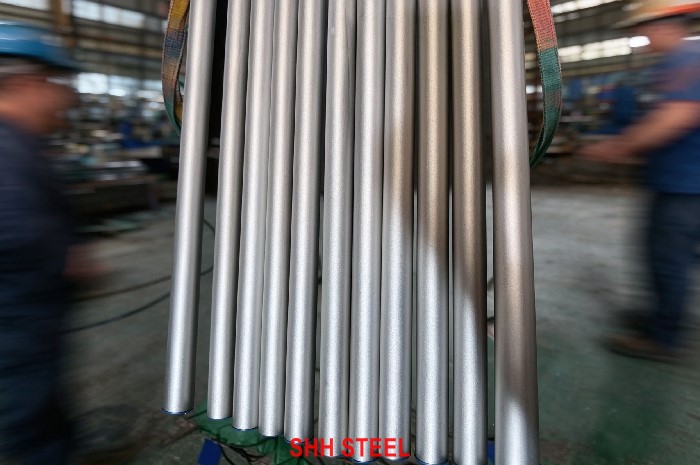
- Strapped bundles on wooden saddles, with non-metallic separators between layers
- Wooden cases for small OD, bright annealed, or polished pipe
- End caps on all lengths; bevel protectors when beveled
- Stencil: specification, TPXM-29, heat number, size, schedule, SML/WLD/HCW, test letters, mill mark
- Waterproof wrap for sea freight; loading photos on request
For export, bundles are sized to the customer’s handling limits, typically within one to three tonnes. Long thin-wall lengths are supported at closer intervals to avoid sagging and ovality in transit. Pipe shipped to humid or coastal destinations benefits from desiccant inside sealed wraps, because chloride-laden condensation can stain any stainless surface before installation.
Documents: packing list, invoice, B/L or AWB, MTCs, and origin certificate. Because XM-29 looks like any other stainless, keep it segregated and clearly tagged during storage and shipping.
Why Choose SHH STEEL
SHH STEEL supplies specification-driven stainless plate and pipe, and XM-29 is a grade where buyers need straight answers on both strength and limits. We quote TPXM-29 / UNS S24000 against the edition you name and report the full Table 1 window on the MTC—C ≤0.08%, Mn 11.5–14.5%, P ≤0.060%, Cr 17.0–19.0%, Ni 2.3–3.7%, N 0.20–0.40%—with heat identity unbroken from melt through finished length, so receiving inspection clears the heat against Table 1 and the 100/55 ksi Table 4 floors instead of an “18-3-Mn” catalog sheet. Table 6 lists ER240 (S23980, W32440) for this grade, and we point that out early, because a 308-type filler would badly undermatch the base metal.
- Specification fidelity — Table 1 and Table 4 for TPXM-29 (S24000), including the 0.060% P limit specific to this row
- Mill resources — SML, WLD, and HCW from qualified stainless pipe mills with heat traceability; cutting and beveling on confirmed orders
- Documentation — EN 10204 3.1 MTCs standard; 3.2 or third-party inspection on request
- Dual marking — SA-312/A312 when the heat meets both editions you name
- Fabrication advice — forming loads, springback, and ER240 filler flagged before the order, not after the first bend
- Export packing — seaworthy bundles, end protectors, and durable grade/heat/size/type marking
Quotations follow your purchase-order language for edition year, manufacturing type, size, finish, and supplementary tests (S1 product analysis, S7, PMI). If the service involves chlorides or reducing acids, tell us at enquiry: XM-29 is a strength and economy grade, and we would rather point you to TPXM-19 or a 316-class grade than ship pipe that will not last.
Supply Capability
SHH STEEL can supply ASME SA312 TPXM-29 / UNS S24000 stainless steel pipe against the edition and manufacturing type named on your enquiry. The capability table below summarizes the routes, sizes, finishes, and documents we regularly quote for this grade.
| Item | SHH STEEL capability for TPXM-29 |
|---|---|
| Standard | ASME SA-312/SA-312M and/or ASTM A312/A312M Grade TPXM-29 (UNS S24000) |
| Manufacturing types | SML, WLD, HCW |
| Size | NPS 1/8 and up per ASME B36.19; special OD/wall by agreement |
| Schedules | 5S, 10S, 40S, 80S and non-standard walls |
| Length | SRL, DRL, or cut-to-length |
| Finish | Annealed and pickled; bright annealed or polished by agreement |
| Testing | Tension, flattening/bend, hydro or NDE per length; supplementary tests on order |
| Documents | EN 10204 3.1; third-party inspection / 3.2 on request |
| Trade terms | FOB / CFR / CIF / EXW and other agreed Incoterms |
XM-29 is a specialty grade with limited mill stock, and seamless pipe in particular is usually made to order in a restricted size range, so welded or HCW pipe often gives shorter lead times. Heavy walls and special OD/wall combinations are mill-order items. Enquiries should state the SA-312 edition, TPXM-29 / UNS S24000, SML/WLD/HCW, NPS or OD×wall, length practice, finish, and any product-analysis, impact, or 3.2 requirements so mill slots fit your need date. Grouping project sizes into one heat helps chemistry consistency and mill minimums. Cut lengths, beveling, and packing-list marking are available on confirmed orders.
FAQ
-
What UNS number is TPXM-29?
- SA-312 Table 1 lists TPXM-29 as UNS S24000. Order and mark the pipe as SA-312 TPXM-29 / UNS S24000 with the edition year, because XM-29 or 18-3-Mn are trade labels rather than specification identities. The UNS number is what ties the MTC to the Table 1 row, code allowable stresses, and site PMI checks.
-
What are the Table 4 strength minima for TPXM-29?
- Table 4 sets 100 ksi [690 MPa] tensile and 55 ksi [380 MPa] yield minimum, with 35% longitudinal and 25% transverse elongation. That yield floor is about 1.8 times TP304’s 30 ksi. The extra strength only reduces wall thickness when your construction code lists allowable stresses for S24000 at the design temperature.
-
How much nickel does TPXM-29 contain?
- Table 1 requires 2.3–3.7% Ni, the lowest nickel range among the XM grades in SA-312, balanced by Mn 11.5–14.5% and N 0.20–0.40% to keep the structure fully austenitic. Lean nickel reduces exposure to nickel price swings, but it also lowers resistance to reducing acids compared with higher-nickel grades.
-
Which filler metal does Table 6 list for TPXM-29?
- SA-312 Table 6 lists AWS A5.9 ER240, filler metal UNS S23980 / W32440, for TPXM-29. Table 6 governs filler used in mill seam repairs and is a sensible starting point for fabrication WPSs. Mill longitudinal welds are autogenous. A 308-type consumable would undermatch the base metal’s strength by a wide margin.
-
How does TPXM-29 compare with TPXM-19?
- Both have 100/55 ksi Table 4 floors, but they are built differently. TPXM-19 (S20910) adds Mo 1.50–3.00%, Nb, and V with 11.5–13.5% Ni, giving clearly better chloride and acid resistance. TPXM-29 has no Mo and lean Ni. Choose XM-29 for strength in mild service, XM-19 when corrosion margin matters too.
-
How does TPXM-29 compare with TPXM-10?
- XM-29 has more manganese (11.5–14.5% vs 8.0–10.0%), less nickel (2.3–3.7% vs 5.5–7.5%), lower chromium (17.0–19.0% vs 19.0–21.5%), and higher strength floors (100/55 vs 90/50 ksi). In practice XM-10 carries a bit more corrosion margin, while XM-29 gives the higher allowable stresses where the code lists them.
-
Why is the phosphorus limit 0.060% for TPXM-29?
- Table 1 sets P ≤0.060% for TPXM-29, higher than the 0.045% in the 300-series rows; high-manganese grades commonly carry a higher phosphorus allowance. With product analysis the A480 tolerance takes that to ≤0.070%. Do not reject an XM-29 heat at 0.05% P by applying a 304 limit to it.
-
Is TPXM-29 suitable for seawater?
- It has no Mo requirement and only lean nickel, so do not assume it suits chloride immersion, splash zones, or chloride-concentrating crevices without a corrosion review. Its corrosion expectations are broadly 304-class. For seawater or brine, TP316/TP316L, TPXM-19, duplex, or higher alloys are the usual candidates.
-
What heat treatment applies to TPXM-29?
- TPXM-29 falls under the Table 2 default: solution anneal at 1900 °F [1040 °C] minimum, then water quench or rapid cooling. The anneal also takes nitrogen back into solution after cold finishing. Cold-worked or half-hard tempers are not SA-312 delivery conditions, so delivered pipe is always in the annealed state.
-
Does Table 4 give a hardness limit for TPXM-29?
- No. Table 4 lists tensile, yield, and elongation minima only, with no hardness maximum for TPXM-29. Because the grade work hardens fast, formed areas will be harder than the annealed pipe tested at the mill. If your project needs a hardness cap or impact data, put it on the PO.
-
Can I bend TPXM-29 pipe on standard 304 tooling?
- Often, but expect higher forming loads, more springback, and faster tooling wear, because nitrogen-rich, low-nickel austenite work hardens rapidly. Trial bends and larger radii are recommended. If a formed part must return to annealed properties, a full solution anneal and rapid cool is the only reliable route.
-
How can I tell XM-29 from 304 on site?
- PMI by XRF is the quickest check. XM-29 should read within its Table 1 ranges—Mn 11.5–14.5% and Ni 2.3–3.7%—while TP304 shows Mn ≤2% and Ni 8–11%. The high-Mn, low-Ni signature is hard to miss, which makes mixed-grade mistakes on a spool rack easy to catch.
Conclusion
ASME SA312 TPXM-29 (UNS S24000) is the lean-nickel, high-manganese, nitrogen-strengthened austenitic pipe grade in SA-312: C ≤0.08%, Mn 11.5–14.5%, P ≤0.060%, Cr 17.0–19.0%, Ni 2.3–3.7%, N 0.20–0.40%, no Mo, with Table 4 floors of 100 ksi [690 MPa] tensile and 55 ksi [380 MPa] yield and a Table 2 default 1900 °F [1040 °C] anneal. Table 6 lists ER240 filler. It is a strength and economy grade with 304-class corrosion expectations, not a substitute for TPXM-19 or TP316 in chloride service. Order the manufacturing type (SML/WLD/HCW), schedule or wall, finish, and any product analysis or supplementary tests explicitly. For stock checks, mill certificates, or dual SA-312/A312 supply questions, contact SHH STEEL at admin@steelspecs.com or browse the ASME SA 312/SA 312M category on steelspecs.com.
Quality Steel Needed? Inquire for Offers
Related Products