ASME SA312 TP309H Stainless Steel Pipe | SA 312/SA 312M
What is ASME SA312 TP309H Stainless Steel Pipe
ASME SA-312/SA-312M covers seamless, welded, and heavily cold-worked austenitic stainless steel pipe intended for high-temperature and general corrosive service. Grade TP309H is listed in Table 1 as UNS S30909. Clause 1.2 groups it with the other H grades—TP304H, TP309HCb, TP310H, TP310HCb, TP316H, TP321H, TP347H, and TP348H—as modifications intended for temperatures where creep and stress-rupture properties are important. Commercially the same product may be called SA312 TP309H pipe, ASTM A312 TP309H pipe, A312 Grade TP309H, or 309H stainless steel pipe when the purchase order clearly references SA-312 or A312. For pressure piping and code work, cite the full grade designation, the UNS number, and the edition of the standard on the purchase order and on the mill test certificate—do not rely on a bare “309H” market label.
TP309H keeps the 22.0–24.0% chromium and 12.0–15.0% nickel of ASME SA312 TP309S Stainless Steel Pipe, but Table 1 adds a carbon range of 0.04–0.10% (not a ≤0.08% ceiling alone). Table 5 requires grain size ASTM No. 6 or coarser; ASME clause 6.2 requires a reheated solution anneal before quench; and clause 17 requires heat-treatment lot marking on every length. Unlike TP309S, Table 1 shows no molybdenum requirement for TP309H—the Mo column is an ellipsis. Room-temperature Table 4 floors remain 75 ksi [515 MPa] tensile and 30 ksi [205 MPa] yield. The H-grade benefit appears in elevated-temperature code allowables and in the carbon floor plus coarse grain that support creep resistance—not in a higher room-temperature tensile number. Table 2 lists the solution temperature at 1900 °F [1040 °C] (with TP309HCb, TP310H, and TP310HCb). Table 6 does not assert a mandatory AWS filler class for TP309H from the packed notes; filler selection is by agreement on the WPS.
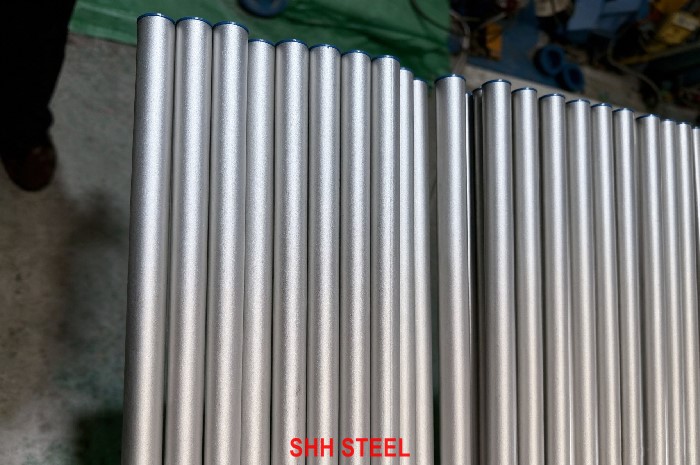
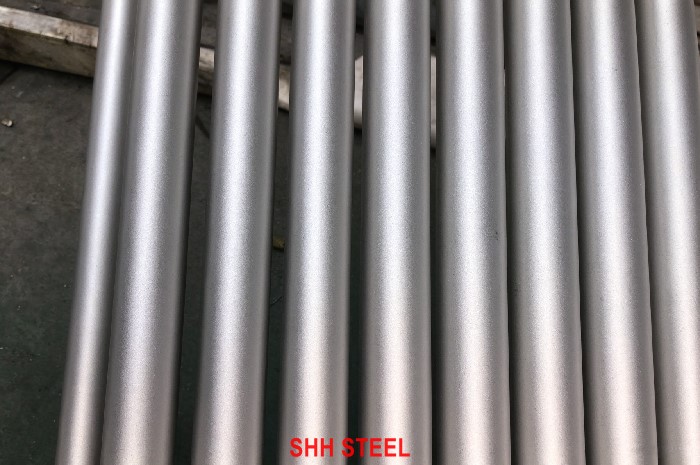
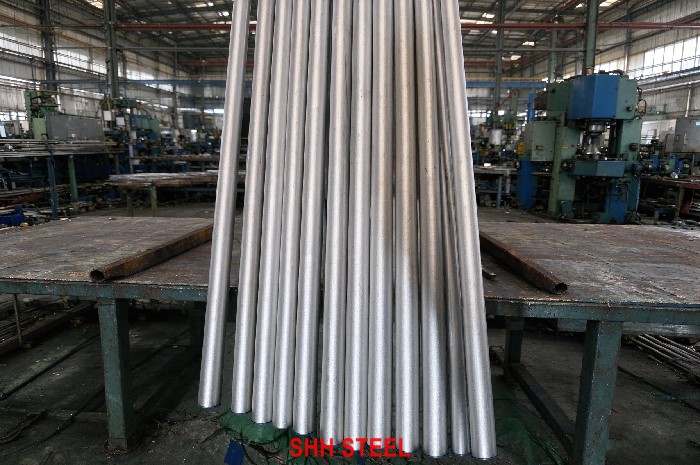
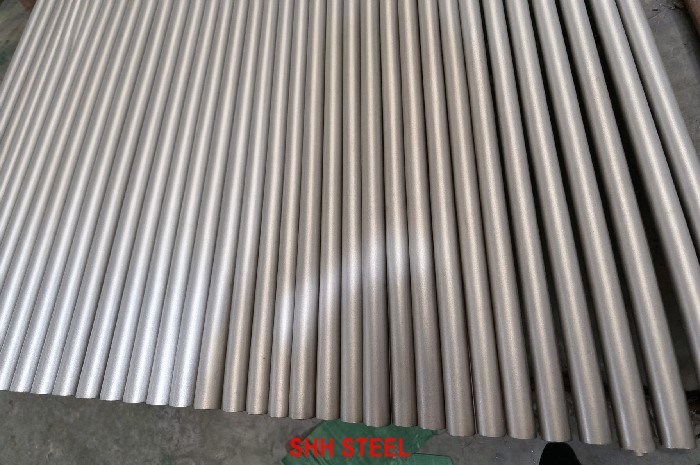
SHH STEEL can supply ASME SA312 TP309H stainless steel pipe to the edition named on the enquiry, including seamless (SML), welded (WLD), and heavily cold-worked (HCW) routes; ASME B36.19 schedules and special OD/wall by agreement; EN 10204 3.1 mill test certificates that report grain size and heat-treatment lot; and dual SA-312/A312 marking when the heat analysis, heat treatment, mechanical tests, and marking satisfy both editions named on the purchase order. Confirm NPS, wall or schedule, finish, length practice, and any product-analysis or supplementary tests on enquiry.
Common commercial names and how they map to the ordered product are listed below—use the full SA-312/A312 designation on the purchase order rather than market shorthand alone.
- ASME SA312 TP309H / SA-312 Grade TP309H — preferred marking language for ASME-code and dual-marked pipe
- ASTM A312 TP309H — same grade tables for chemistry and tensile when the ASTM edition is referenced
- UNS S30909 — unified numbering system identity used on MTCs and in cross-reference tables
- 309H stainless steel pipe — market shorthand; confirm C 0.04–0.10%, grain size ASTM No. 6 or coarser, reheat documentation, and lot marking on the order
TP309H is not a drop-in for TP309S, ASME SA312 TP309Cb Stainless Steel Pipe, or ASME SA312 TP310H Stainless Steel Pipe on a shared “309” market label—each has its own Table 1 row and (where applicable) H-grade or columbium rules. Dual certification TP309S/TP309H is possible when carbon falls in 0.04–0.08% and the H-grade anneal and grain-size rules are met, but chemistry alone does not make a heat TP309H. Versus ASME SA312 TP304H Stainless Steel Pipe (18Cr-8Ni), the extra chromium and nickel raise oxidation resistance by roughly one temperature class. Versus TP310H (25Cr-20Ni), TP309H sits one step below in alloy content and is often the economic choice when 310-level chemistry is not required. Hub: ASME SA 312/SA 312M.
Manufacturing Types (SML / WLD / HCW)
ASME SA-312 defines three manufacturing routes that may be marked on finished TP309H pipe. Selecting the route is a purchase-order decision driven by design code, size range, wall thickness, and inspection preference. It does not change the Table 1 chemistry of Grade TP309H—melting must still meet C 0.04–0.10%, Cr 22.0–24.0%, and Ni 12.0–15.0%—and every route must still pass through the clause 6.2 reheated solution anneal that produces conforming grain size.
- Seamless (SML) — no welding at any stage of manufacture. Seamless is preferred for high-temperature pressure parts, heater tubes, and heavy walls when the project specification excludes welded pipe or when the piping class documentation is written around seamless product only. Hot-finished or cold-finished seamless must still be reheated to the solution temperature before quenching; residual heat from piercing is not enough under clause 6.2.
- Welded (WLD) — automatic welding without filler metal. The weld is finished so that the pipe meets dimensional and mechanical requirements after the final heat treatment required by SA-312. Weld joint quality factors and creep-range weld strength reduction factors may apply under B31 codes. The plate heat must itself meet S30909 chemistry, and the pipe anneal must produce conforming grain size in both base metal and weld zone.
- Heavily cold-worked (HCW) — welded pipe that is cold worked to a reduction of area of wall and weld of at least 35% before the final anneal, again without filler metal in the longitudinal weld. The weld is radiographed before cold work. HCW is ordered when the buyer wants the HCW marking and the process controls written into SA-312 for that route.
Every length must carry the heat number and the heat-treatment lot identification (clause 17). That lot links each pipe to the anneal that produced its grain size—verify lot numbers on both stencil and MTC. Each finished length is hydrostatically tested or nondestructively electrically tested; the manufacturer may choose the method unless the purchase order fixes one. Pipe NPS 10 and larger may ship marked “NH” only when the purchaser agrees to a system test in lieu of hydrotest. Lot definitions follow clause 11.1; grain-size determinations are made on each heat-treatment lot for the same number of pipes as the flattening test (typically 5% of the lot) per clause 11.4.
Because of the reheat and grain-size controls, TP309H lead times are typically longer than for ASME SA312 TP309S Stainless Steel Pipe. Plan procurement early for project-critical heater sizes, and confirm route, edition, and any supplementary tests before placing a mill order so the certificate matches the design basis. Where a component is oxidation-limited rather than creep-limited, switch the conversation to TP309S before the mill melts the heat—oxidation-limited furnace parts and creep-range pressure parts are different selection problems.
Chemical Composition of SA312 TP309H
Two chemistry layers matter: melting (heat / ladle) analysis—mandatory per heat under ASME SA-312/ASTM A312 Table 1—and product analysis when ordered (Suppl. S1 / PO). SA-312/A312 defer product-analysis tolerances through ASTM A999/A999M §6.3 to ASTM A480/A480M Table A1.1. SHH STEEL reports actual ladle and, when ordered, product values—never unpublished tighter windows.
Melting analysis (heat / ladle analysis) — Table 1
Heat analysis for Grade TP309H / UNS S30909 from ASME SA-312/SA-312M (ASTM A312/A312M) Table 1 is summarized below. Values are maximum unless a range is shown; ellipses (…) mean no requirement in the ordered edition.
| Element | TP309H / UNS S30909 melting analysis |
|---|---|
| Carbon (C) | 0.04 – 0.10 |
| Manganese (Mn) | ≤ 2.00 |
| Phosphorus (P) | ≤ 0.045 |
| Sulfur (S) | ≤ 0.030 |
| Silicon (Si) | ≤ 1.00 |
| Chromium (Cr) | 22.0 – 24.0 |
| Nickel (Ni) | 12.0 – 15.0 |
| Molybdenum (Mo) | … (no requirement) |
| Nitrogen (N) | … (no requirement) |
Source: ASME SA-312/SA-312M ≡ ASTM A312/A312M Table 1 for Grade TP309H. Footnote B: maxima unless a range is shown; “…” means no requirement. Do not treat secondary catalog sheets as a substitute for the ordered edition.
Chromium drives oxidation resistance; nickel stabilizes austenite and supports toughness; the 0.04% carbon floor feeds fine, stable carbides that pin dislocations during long high-temperature exposure, while the 0.10% ceiling keeps the alloy weldable and limits excessive carbide networks. Unlike TP309S, Table 1 does not list a molybdenum residual for TP309H—an MTC need not report Mo unless the purchase order asks for it as information.
Product analysis — A480/A480M Table A1.1 tolerances applied to Table 1
When product analysis is ordered, finished-pipe chemistry shall meet Table 1 as modified by the product-analysis tolerances of ASTM A480/A480M Table A1.1 (via A999 §6.3). The verified product-analysis limits for TP309H are:
| Element | Melting (Table 1) | Tolerance (A480 A1.1) | Product analysis limit |
|---|---|---|---|
| Carbon (C) | 0.04 – 0.10 | 0.01 under / over | 0.03 – 0.11 |
| Manganese (Mn) | ≤ 2.00 | 0.04 over | ≤ 2.04 |
| Phosphorus (P) | ≤ 0.045 | 0.010 over | ≤ 0.055 |
| Sulfur (S) | ≤ 0.030 | 0.005 over | ≤ 0.035 |
| Silicon (Si) | ≤ 1.00 | 0.05 over | ≤ 1.05 |
| Chromium (Cr) | 22.0 – 24.0 | 0.25 under / over | 21.75 – 24.25 |
| Nickel (Ni) | 12.0 – 15.0 | 0.15 under / over | 11.85 – 15.15 |
Carbon 0.04–0.10% takes 0.01 under and over in product analysis (0.03–0.11%). Chromium 22.0–24.0% uses the A480 “over 20.00 to 30.00” row (0.25). Nickel 12.0–15.0% uses the 10–20% row (0.15).
309 family side by side (Table 1):
| Element | TP309S (S30908) | TP309H (S30909) | TP309Cb | TP309HCb |
|---|---|---|---|---|
| C | ≤ 0.08 | 0.04 – 0.10 | ≤ 0.08 | 0.04 – 0.10 |
| Cr | 22.0 – 24.0 | 22.0 – 24.0 | 22.0 – 24.0 | 22.0 – 24.0 |
| Ni | 12.0 – 15.0 | 12.0 – 15.0 | 12.0 – 15.0 | 12.0 – 15.0 |
| Mo | ≤ 0.75 | … (no requirement) | ≤ 0.75 | ≤ 0.75 |
The carbon minimum is the metallurgical key for creep service. Dual-certified TP309S/TP309H heats need carbon in the 0.04–0.08% overlap and conforming H-grade anneal and grain-size evidence—chemistry alone is not enough. Mills typically aim mid-range chromium and nickel and carbon near 0.06–0.08% so product-analysis tolerances never push a heat out of specification. Project limits tighter than Table 1 should be written separately on the PO. If a project specification still wants Mo reported as information on a TP309H MTC, say so on the PO—it becomes a purchaser requirement, not a Table 1 limit.
Mechanical Properties of SA312 TP309H
Tensile requirements for TP309H are given in ASME SA-312/SA-312M (ASTM A312/A312M) Table 4. Specimens and orientation follow the testing clauses of the standard and the referenced general requirements (A999/A999M as applicable). Grain size is a separate Table 5 acceptance item that does not appear for TP309S.
| Property | TP309H requirement |
|---|---|
| Tensile strength, min (Table 4) | 75 ksi [515 MPa] |
| Yield strength (0.2% offset), min (Table 4) | 30 ksi [205 MPa] |
| Elongation in 2 in. or 50 mm (or 4D) | 35% longitudinal / 25% transverse, min |
| Grain size (Table 5) | ASTM No. 6 or coarser |
| Hardness | No maximum in Table 4 |
These minima are the mandatory room-temperature acceptance floor—the same 75/30 ksi used for ASME SA312 TP309S Stainless Steel Pipe, TP309Cb, TP309HCb, and TP310S. The H grade is chosen for carbon-floor and coarse-grain practice that support elevated-temperature allowables, not for a higher Table 4 number. Grain size is measured per ASTM E112 on each heat-treatment lot; a result of No. 7 or finer fails TP309H even if chemistry and tensile results pass. Cite UNS S30909 wherever allowable-stress tables are consulted so fabricators do not pull a sister-grade strength line from memory. ASME Section II Part D lists allowable stresses for S30909 where the part is pressure retaining—do not back-calculate allowables from Table 4 room-temperature minima.
Hardness and optional tests: Table 4 does not list a hardness maximum for TP309H as a separately mandated acceptance item. If hardness matters for fabrication or end-user acceptance, state the limit on the purchase order and verify it on the MTC. Flattening or bend and tension run on a lot basis; grain size uses the same sampling as flattening (typically 5% of the lot). Elevated-temperature tensile, creep, and rupture tests are purchase-order options—not part of base SA-312.
MTC review order for TP309H: carbon 0.04–0.10%; grain size ASTM number ≤6 (coarser); anneal temperature ≥1900 °F with reheat evidence; lot number matching the stencil; tensile ≥75 ksi; yield ≥30 ksi; elongation; hydro or NDE method. Forming loads are similar to TP309S; springback is greater than for 304, so use generous bend radii for furnace tubing. Include corrosion/oxidation allowance and the 12.5% mill under-tolerance (or S8 minimum wall) in the thickness calculation. After long high-temperature service, room-temperature ductility can fall as carbides and sigma form—that is expected ageing behaviour, and used pipe should be evaluated before cold bending or repair welding.
Dimensions and Tolerances
Dimensional practice for austenitic stainless steel pipe ordered to SA-312 typically follows ASME B36.19 / B36.19M stainless-steel pipe schedules. Outside diameter and wall thickness are stated as NPS and schedule, or as OD and specified wall. Common schedules for TP309H enquiry include Schedule 5S, 10S, 40S, and 80S. Heater tubes and headers are often ordered by OD and wall to the equipment drawing, and heavy walls for heater headers are common. Other walls and non-standard OD/wall combinations are available by agreement when both the mill and the order accept them.
Size coverage in commercial practice is summarized below. Confirm large NPS and heavy walls against mill capability for the chosen manufacturing type before you lock the purchase order—heavy-wall seamless is usually mill-run with longer lead times.
- NPS / DN: commonly from NPS 1/8 upward; large NPS and heavy walls depend on manufacturing type (SML versus WLD/HCW) and mill capability—confirm on enquiry
- Schedules: 5S, 10S, 40S, 80S and special walls by agreement
- Length: single random (SRL), double random (DRL), or fixed cut lengths as stated on the purchase order; NPS 1/8 to 8 commonly up to 24 ft (15–24 ft range) unless agreed; cut lengths ≤1/4 in. [6 mm] over
- Ends: plain end (PE), beveled end (BE) to B16.25, or machined weld preps by agreement; jointers not permitted unless specified
- Minimum wall (S8): often ordered so creep-range calculations use the actual minimum rather than nominal wall minus mill under-tolerance
Wall-thickness variation limits from SA-312 Table 3 (t/D = specified wall / ordered OD) are the acceptance bands used on mill test certificates and receiving inspection for TP309H:
| NPS designator | Wall over | Wall under |
|---|---|---|
| 1/8 to 2-1/2 incl., all t/D | 20.0% | 12.5% |
| 3 to 18 incl., t/D up to 5% | 22.5% | 12.5% |
| 3 to 18 incl., t/D over 5% | 15.0% | 12.5% |
| 20 and larger, welded, all t/D | 17.5% | 12.5% |
| 20 and larger, seamless, t/D up to 5% | 22.5% | 12.5% |
| 20 and larger, seamless, t/D over 5% | 15.0% | 12.5% |
Source: SA-312 Table 3; outside diameter variations per A999/A999M. OD, wall, and length tolerances follow SA-312 via ASTM A999/A999M and the dimensional standard on the order. State whether wall is nominal or minimum on the PO. For automatic orbital welding, owners may specify tighter OD, wall, and end-squareness tolerances than A999 requires. Thermal expansion of 309-type austenitic pipe is high relative to carbon steel—long hot runs need sliding supports, spring hangers, or expansion loops, and support spacing for thin-wall heater tubes should also consider creep sag over the planned campaign length.
Equivalent Grades
Equivalence for TP309H must be stated carefully. Chemistry approximations across regional designations help material selection discussions; they are not automatic one-to-one substitutes for ASME pressure-code pipe without an approved material specification and design-code acceptance. Do not accept TP309S stock marked as 309H without grain-size results, reheat documentation, and carbon ≥0.04%—the stencil alone is not enough for code work.
| Designation | Notes |
|---|---|
| ASME SA-312 / ASTM A312 Grade TP309H | Governing pipe product standard for this article |
| UNS S30909 | Unified number listed in Table 1 |
| TP309S (UNS S30908) | Parent S grade; C ≤0.08%, Mo ≤0.75%; no Table 5 grain-size mandate |
| TP309Cb / TP309HCb | Columbium (niobium) stabilized sisters; order the exact TP name on the PO |
| TP310H (UNS S31009) | Higher Cr–Ni H grade; not interchangeable on a “309H” label |
| ASME SA-213 TP309H | Boiler and heat-exchanger tube (separate specification) |
| ASME SA-240 / A240 309H | Plate counterpart (separate specification) |
| EN / JIS | No one-to-one designation asserted in this pack |
Related product pages: ASME SA312 TP309S Stainless Steel Pipe, ASME SA312 TP309HCb Stainless Steel Pipe, ASME SA312 TP309Cb Stainless Steel Pipe, ASME SA312 TP310H Stainless Steel Pipe, ASME SA312 TP304H Stainless Steel Pipe, ASME SA312 TP310S Stainless Steel Pipe. When an enquiry says only “309H pipe,” confirm whether TP309H or TP309HCb is intended—niobium stabilization changes both chemistry and welding practice. Dual TP309S/TP309H certification widens available stock only when carbon, anneal, grain size, and lot marking all satisfy the H-grade rules. Hub: ASME SA 312/SA 312M.
Heat Treatment and Delivery Condition
All pipe furnished to ASME SA-312 shall be heat treated. SA-312 Table 2 lists TP309H (with TP309HCb, TP310H, and TP310HCb) at 1900 °F [1040 °C], cooling note D (water quench or rapid cooling). That temperature is the same number used as the Table 2 default for many non-H grades, but the process path for TP309H is different because of the H-grade reheat rule.
ASME clause 6.2: for H grades, pipe must be reheated to the specified solution temperature for the required time before quenching. Direct quenching after hot forming—allowed for many other grades—is not permitted for TP309H. Clause 17 marking: includes heat number and heat-treatment lot identification so each length traces to its anneal. Grain size ASTM No. 6 or coarser must be demonstrated on each heat-treatment lot.
- Delivered solution annealed by reheating at ≥1900 °F [1040 °C], then rapidly cooled
- Grain size ASTM No. 6 or coarser on each lot (Table 5)
- Free of scale and exogenous iron; pickled or blasted as agreed
- Heat number and heat-treatment lot number on pipe and MTC
Ask mills to retain furnace charts for each lot so time and temperature can be shown on request. Post-fabrication PWHT, if specified, must not refine grain below the Table 5 requirement. Too short a soak or too low a temperature can leave grain finer than No. 6, which fails Table 5 even when the furnace setpoint looks correct on paper—that is why lot-based grain-size testing is mandatory, not optional, for TP309H. Cite the ordered edition’s Table 2 row on the enquiry so the mill does not apply a neighboring grade’s anneal practice by habit.
Corrosion Resistance
TP309H is selected primarily for high-temperature oxidation and creep-range pressure duty, not as a general aqueous corrosion grade. The 22–24% chromium supports a continuous chromia scale similar to ASME SA312 TP309S Stainless Steel Pipe; the higher carbon (up to 0.10%) increases sensitization risk after welding or slow cooling compared with the S grade. Fitness for service depends on atmosphere, temperature, and cycling—SA-312 itself contains no corrosion data.
- Oxidation: similar to TP309S; continuous air service is commonly quoted near 1900 °F in producer guidance (not an SA-312 value)
- Sensitization: C up to 0.10% means HAZ carbides are more likely; for wet corrosive service after furnace exposure, review stabilized ASME SA312 TP309HCb Stainless Steel Pipe or shutdown neutralization
- Sulfidation and carburization: similar to TP309S; not a Si–Al carburization specialist
- Chlorides: no Mo requirement in Table 1; not a substitute for ASME SA312 TP316L Stainless Steel Pipe in chloride immersion
- Sigma phase: long holds near 1100–1650 °F can form sigma and reduce toughness
Versus sister grades: versus ASME SA312 TP304 Stainless Steel Pipe / TP304H, the extra chromium and nickel raise oxidation resistance by roughly one temperature class. Versus ASME SA312 TP310S Stainless Steel Pipe / TP310H, the higher Cr–Ni 310 family generally gives a longer life at the top of the temperature range. Versus TP309S, the H grade is the SA-312 choice when creep rupture—not oxidation alone—governs life. Polythionic acid stress corrosion during refinery shutdowns is a known concern for sensitized austenitics. Sulfur-bearing fuels can leave acidic condensates that attack sensitized grain boundaries when the unit cools—design for drainage, specify dry-out procedures, and consider whether a stabilized HCb grade is safer for units with frequent shutdowns.
Applications of SA312 TP309H Pipe
TP309H pipe is selected where austenitic stainless behavior, SA-312 product form, and H-grade carbon-floor plus grain-size practice are required for creep-range or highly stressed high-temperature duty. Typical application areas include:
| Application area | Why TP309H | Selection note |
|---|---|---|
| Refinery heater tubes and transfer lines | Creep allowables plus 309 oxidation resistance | Polythionic acid precautions on shutdown |
| Petrochemical furnace pressure parts | Carbon floor and coarse grain | Confirm code listing for S30909 |
| Power and HRSG hot sections | Elevated-temperature strength | Compare with ASME SA312 TP304H Stainless Steel Pipe |
| Industrial furnace pressure piping | When oxidation and creep both matter | Prefer ASME SA312 TP309S Stainless Steel Pipe if non-pressure / oxidation-limited |
| Dissimilar transition pieces | 309 chemistry with H controls | Document filler and WPS |
For non-creep furnace parts prefer ASME SA312 TP309S Stainless Steel Pipe. For higher Cr/Ni oxidation margin see ASME SA312 TP310H Stainless Steel Pipe. The H-grade premium is justified when code allowables or owner specs require it—not for simple ducts or muffles. Many fired heaters use TP309H or TP309HCb tubes in the radiant or convection section when flue-gas oxidation and metal temperature push beyond 304H capability. Tube metal temperature, not firebox air temperature, governs the grade choice—confirm the design metal temperature against Section II Part D before ordering.
Weldability
TP309H is generally weldable by common austenitic fusion processes with suitable heat input, interpass control, and joint cleanliness. Higher carbon raises HAZ sensitization risk compared with ASME SA312 TP309S Stainless Steel Pipe, so wet corrosive service after welding needs a deliberate review. Typical processes used on this grade include:
- GTAW (TIG) — preferred for root passes and thin-wall pipe where weld metal cleanliness and heat-input control matter
- GMAW (MIG) — productive for fill and cap passes on thicker walls when procedures are qualified
- SMAW — widely used for field girth welds with coated austenitic electrodes selected by agreement
- SAW / FCAW — used where procedure qualification and joint design support them
- Automatic orbital or mechanized GTAW — common for repetitive high-integrity girth joints
Filler metal and Table 6: no TP309H AWS class is asserted from the Table 6 extract used for this pack (TP309S and TP309Cb appear with “…”). Filler selection is therefore by agreement and must be recorded on the WPS; seam repairs under clause 15 must identify the filler on the certificate. Industry practice often uses ER309 or ER309H-type consumables—that practice is guidance, not a Table 6 prescription. Mill longitudinal welds for WLD and HCW product are made without filler metal; Table 6 guidance applies to joining with filler, not to the mill autogenous weld.
Elevated-temperature WPSs may limit ferrite to reduce sigma risk in service. Moderate heat input and controlled interpass remain good practice. Dissimilar joints to carbon steel commonly use 309-type fillers; to Cr-Mo alloy steels, nickel-base fillers are often specified. PWHT is not normally required; if specified, protect grain size. Qualify procedures to ASME Section IX—weld strength reduction factors in B31 codes may apply in the creep range. TP309H pipe is sometimes used as a transition spool between Cr-Mo headers and stainless tubes; in that case the WPS must address both joints, differential expansion, and carbon migration. Document the full joint design, not only the pipe grade.
Surface Finishes
Surface condition for SA312 TP309H pipe is stated on the purchase order. Typical mill finishes available from SHH STEEL supply include the following options:
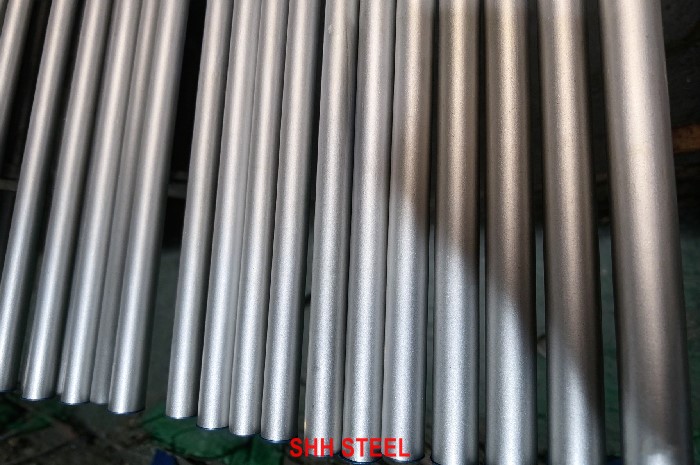
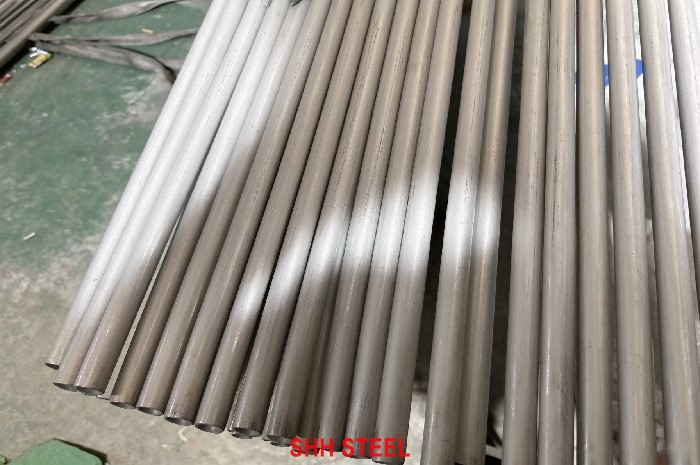
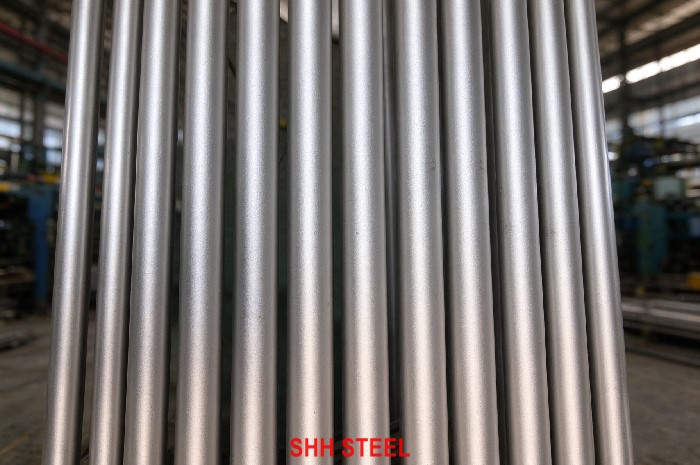
- Annealed and pickled (AP) — solution annealed, descaled in acid pickle or an equivalent process, producing a matte gray finish common for process and heater pipe
- Blasted and pickled — often used for heavy-wall seamless where scale removal benefits from blast first
- Bright annealed (BA) — annealed in a protective atmosphere to a brighter surface where the order allows; confirm the bright-anneal line still meets Table 2 temperature and grain-size rules
- As-annealed light oxide — sometimes accepted for furnace parts by agreement when the protective scale will form in service anyway
- Mechanically polished — grit or Ra-controlled polish on OD and/or ID when ordered; polishing does not replace solution annealing
- Bead-finished welded OD — weld bead rolled or ground flush as agreed for WLD/HCW product
Passivation after pickle or polish can be added when the end-user specification requires it. For high-temperature service the protective scale forms in operation; the delivered finish mainly affects inspection and cleanliness. Low-halide marking inks are preferred for high-temperature lines—avoid marking materials with low-melting metals or high halide content. For critical heater tubes, some owners specify a maximum residual scale after pickling or a visual cleanliness class; those are PO requirements beyond SA-312’s scale-free rule. End preparation (plain or beveled) should be ordered together with finish so that bevel faces and ID cleanliness meet the same acceptance language.
Inspection and Testing
Base inspection and testing for SA-312 TP309H pipe combines chemistry, mechanical, grain-size, and integrity checks. The following items form the usual acceptance package; supplementary requirements apply only when written on the purchase order.
- Heat (melting) analysis — mandatory per heat against Table 1 for TP309H (UNS S30909), including C 0.04–0.10%, Cr 22.0–24.0%, and Ni 12.0–15.0%
- Product analysis — when ordered (Suppl. S1 / purchase-order language), using A480 Table A1.1 tolerances via A999 §6.3; useful to confirm the carbon floor on finished pipe
- Grain size — ASTM No. 6 or coarser per heat-treatment lot (Table 5); same sampling as flattening
- Tension test — Table 4 tensile, yield, and elongation on a lot basis (75/30 ksi minima)
- Flattening test — or alternate bend where the standard permits (typically on 5% of the lot)
- Hydrostatic test or nondestructive electric test — each length; manufacturer’s option unless the order fixes the method
- Heat-treatment lot marking — heat number and lot identification on every length (clause 17)
- Visual and dimensional check — against ordered NPS/schedule or OD/wall and the applicable tolerance clauses
Mill test certificates: EN 10204 3.1 is the standard documentation package from SHH STEEL supply. The certificate must report grain size and heat-treatment lot. EN 10204 3.2 or third-party witness (SGS, Bureau Veritas, TÜV, or the buyer’s nominated agency) is arranged when specified and should be booked before final testing. Dual ASME SA-312 / ASTM A312 certification is available when chemistry, heat treatment, mechanical tests, and marking satisfy the edition(s) named on the order.
| Option | Purpose |
|---|---|
| S1 product analysis | Confirms carbon floor on finished pipe |
| S5 radiography | Weld integrity on WLD pipe |
| S8 minimum wall | Creep design on minimum wall |
| UT (by agreement) | Volumetric check of heavy-wall seamless |
| PMI | Confirms Cr/Ni; carbon needs OES or lab analysis |
Power and refining inspectors often witness grain-size specimens and review anneal charts. Keep heat-treatment lot identity unbroken from mill through spool fabrication: when long lengths are cut, transfer heat and lot numbers to every piece. Receiving review should confirm carbon 0.04–0.10, grain size ≤6 (coarser), anneal ≥1900 °F with reheat, lot match, tensile ≥75 ksi, yield ≥30 ksi, elongation, and hydro or NDE method.
Packaging and Shipping
Export and domestic shipments of SA312 TP309H pipe are packed for handling and ocean or land transport. Typical packing practices from SHH STEEL supply include:
- Seaworthy bundles — pipes strapped or cradled in bundles sized for container or break-bulk handling, with non-metallic separators where needed to protect finish; cradles or individual supports for heavy headers
- End caps / protectors — plastic or metal caps on plain or beveled ends to reduce damage and contamination during transit
- Marking — durable marking of specification, grade (TP309H), heat number, heat-treatment lot, size (NPS or OD × wall / schedule), manufacturing type (SML / WLD / HCW), test letters, and mill identity as required by SA-312 and the purchase order
- Export packing — waterproof wrapping or desiccant as agreed for polished or sensitive finishes; container stuffing photos on request; low-chloride inks on request
Receiving inspectors should compare stencil lot numbers against the MTC for every length before release to fabrication—missing lot fields are a red flag for “309H” paperwork that only dual-certified on chemistry. Segregate TP309H from TP309S, TP304, and TP310S on the packing list and in the yard so stencil mix-ups do not travel with the shipment. Long thin-wall heater tubes are vulnerable to bending in transit; ship them in rigid frames or with close-spaced saddles, and keep interiors dry and capped so chloride-bearing moisture does not stain or pit the surface before installation. Shipment docs typically include packing list, invoice, B/L or AWB, and MTC (3.1 or 3.2) with grain size and lot, plus origin/customs papers per Incoterms.
Why Choose SHH STEEL
SHH STEEL supplies specification-driven stainless plate and pipe. For ASME SA312 TP309H / UNS S30909 we quote against the edition you name, report the full Table 1 window on the MTC—including C 0.04–0.10%, Cr 22.0–24.0%, and Ni 12.0–15.0%—and keep heat and heat-treatment-lot identity unbroken from melt through finished length. Receiving inspection then clears the heat against Table 1, Table 4, Table 5 grain size, and clause 6.2 reheat evidence rather than against a vague “309H” catalog sheet. We flag missing grain-size or lot fields on supplier MTCs before shipment, so non-conforming paperwork is caught at the mill—not at the fabricator. We also stay honest about Table 6: no AWS filler class is asserted for TP309H in the packed notes, so filler selection stays by agreement on the WPS.
- Specification fidelity — chemistry and tensile to SA-312/A312 Table 1 and Table 4 for TP309H (S30909); grain size No. 6 or coarser per lot; no low-carbon 309S sold as 309H
- Mill resources — SML, WLD, and HCW from qualified stainless pipe mills with heat and lot traceability; cutting and beveling on confirmed orders
- Documentation — EN 10204 3.1 MTCs standard with grain size and lot; 3.2 or third-party inspection on request
- Dual marking — ASME SA-312 and ASTM A312 when the heat and tests meet both requirements you name; dual 309S/309H when carbon, anneal, and grain-size rules allow
- Related grades — sister 309-family and 310H SA-312 grades when projects buy matched high-temperature packages
- Export packing — seaworthy bundles, end protectors, and durable grade/heat/lot/size/type marking
Quotations follow your purchase-order language for edition year, manufacturing type, size, finish, and any supplementary tests you name. Ask for dual 309S/309H options when the design temperature is near the creep boundary and carbon can sit in the overlap. Grade hub: ASME SA 312/SA 312M.
Supply Capability
SHH STEEL can supply ASME SA312 TP309H / UNS S30909 stainless steel pipe against the edition and manufacturing type named on your enquiry. The capability table below summarizes the routes, sizes, finishes, and documents we regularly quote for this grade.
| Item | SHH STEEL capability for TP309H |
|---|---|
| Standard | ASME SA-312/SA-312M and/or ASTM A312/A312M Grade TP309H (UNS S30909); dual 309S/309H on request when rules allow |
| Manufacturing types | SML, WLD, HCW |
| Size | NPS 1/8 and up per ASME B36.19; special OD/wall by agreement |
| Schedules | 5S, 10S, 40S, 80S and non-standard walls |
| Length | SRL, DRL, or cut-to-length |
| Finish | Annealed and pickled; blasted and pickled; bright annealed or polished by agreement |
| Testing | Grain size, tension, flattening/bend, hydro or NDE per length; supplementary tests on order |
| Documents | EN 10204 3.1 with grain size and lot; third-party inspection / 3.2 on request |
| Trade terms | FOB / CFR / CIF / EXW and other agreed Incoterms |
TP309H is a regular mill grade for heater and furnace pressure work, but reheat and grain-size controls mean lead times are often longer than for TP309S. Common sizes may be available from dual-certified stock when paperwork already carries grain-size reports; heavy walls and special OD/wall combinations are mill-order items. Enquiries should state the SA-312 edition, SML/WLD/HCW, NPS or OD×wall (nominal or minimum), length practice, finish, grain-size reporting, and any product-analysis or 3.2 requirements so mill slots align with your need date. Cut lengths, beveling, and packing-list marking are available on confirmed orders. Combining heater-tube sizes into one heat improves chemistry consistency across a project. For dual-certified lots, confirm that grain size and lot marking still appear—chemistry alone does not make a heat TP309H.
FAQ
-
Is ASME SA312 the same as ASTM A312?
- For chemistry (Table 1), tensile (Table 4), manufacturing types, and most testing language, ASME SA-312/SA-312M matches ASTM A312/A312M of the referenced edition. Dual SA312/A312 marking is common when ordered. Name both editions on the purchase order and mill test certificate so inspectors can verify the heat against the exact books you cited—do not assume a bare market grade stamp covers dual certification.
-
What is the UNS number for TP309H?
- Table 1 lists TP309H as UNS S30909. Use that UNS on the purchase order, stencil, and MTC so chemistry, grain-size, and tensile rows stay unambiguous. When the project mixes plate and pipe, carry the same UNS language across forms, but still order pipe to SA-312/A312—not to the plate specification alone.
-
TP309H vs TP309S — which should I order?
- TP309H requires C 0.04–0.10%, Table 5 grain size No. 6 or coarser, and clause 6.2 reheat; TP309S allows C ≤0.08% without those H rules and lists Mo ≤0.75%. Table 4 floors are both 75/30 ksi. Put the design-code grade and UNS on the datasheet and purchase order before you compare price—switching to TP309S after fabrication drawings are frozen usually means a material change notice, not a free mill substitution.
-
TP309H vs TP309HCb — which should I order?
- Both are H grades with C 0.04–0.10% and Table 5 grain-size control; TP309HCb also requires niobium (columbium) stabilization and lists Mo ≤0.75%, while TP309H has no Mo requirement in Table 1. Order the datasheet grade. Put the design-code grade and UNS on the purchase order before you compare price—switching after drawings are frozen usually means a material change notice, not a free mill substitution.
-
Seamless vs welded TP309H — which is better?
- Neither is universally better. Choose the manufacturing type your design code and datasheet allow; both are legitimate SA-312 forms when tested to the standard and both must still pass the clause 6.2 reheated anneal. State SML, WLD, or HCW on the purchase order and confirm the same letters on the pipe marking and MTC—mixing offers that differ only in manufacturing type is a common bid-evaluation trap.
-
Can you dual-certify SA312 / A312 TP309H?
- Yes, when heat analysis, heat treatment, mechanical tests, grain size, lot marking, and marking meet both editions named on the order. Write the ASME and ASTM edition years on the PO, and require the MTC to reference both books so receiving inspection can clear the heat without a second paperwork chase after shipment.
-
Hydrostatic test vs NDE — which do I get?
- Each length is hydrotested or nondestructively electrically tested. Manufacturer may choose unless the purchase order fixes the method. If your piping class or client specification locks one method, state it on the PO and verify the chosen test appears on the MTC for every length—silent mill option is not the same as an approved project method.
-
What heat treatment / anneal temperature applies to TP309H?
- Table 2 lists 1900 °F [1040 °C] with TP309HCb, TP310H, and TP310HCb, cooling note D. Clause 6.2 reheat before quench and clause 17 lot marking both apply—direct quench after hot forming is not allowed. Delivery remains the solution-annealed condition required by SA-312 unless the edition and PO state otherwise. Cite the ordered edition’s Table 2 row on the enquiry so the mill does not apply a neighboring grade’s anneal practice by habit.
-
What Table 1 chemistry defines TP309H?
- Table 1: C 0.04–0.10%, Cr 22.0–24.0%, Ni 12.0–15.0%; Mo has no requirement (UNS S30909). Values are melting-analysis limits from the ordered edition—do not invent tighter catalog windows. When product analysis is needed, order it explicitly (Suppl. S1 / PO language) rather than assuming ladle values alone will satisfy receiving inspection.
-
What are the Table 4 tensile requirements for TP309H?
- Table 4 minima are 75 ksi [515 MPa] tensile and 30 ksi [205 MPa] yield (elongation per the standard’s Table 4 row). Actual MTC values are often higher; design still uses Table 4 unless the PO states higher guarantees. Record the Table 4 row and UNS S30909 on the datasheet so fabricators do not substitute a sister-grade strength line from memory when reading Section II Part D allowables.
-
What filler metal should I use to weld TP309H pipe?
- Table 6 does not assert a mandatory AWS class for TP309H in the packed notes—filler selection is by agreement and must be recorded on the WPS. Industry practice often uses ER309 or ER309H-type consumables; that practice is guidance, not a Table 6 prescription. Freeze the AWS (or EN) class on the WPS/PQR before production welds, and remember mill WLD/HCW longitudinal welds are autogenous—Table 6 guidance applies to joining with filler, not to the mill seam.
-
Does TP309H require grain-size control?
- Yes. Table 5 requires ASTM No. 6 or coarser for TP309H / UNS S30909 on each heat-treatment lot—a result of No. 7 or finer fails even when chemistry and tensile pass. Confirm the grain-size number and lot identity on the MTC against the ordered edition of SA-312/A312, and put the same wording on the purchase order and receiving checklist so inspectors do not invent a tighter window or accept chemistry-only dual marks.
Conclusion
ASME SA312 TP309H (UNS S30909) is the creep-service 22Cr–12Ni grade in SA-312: carbon 0.04–0.10%, grain size ASTM No. 6 or coarser, reheated 1900 °F [1040 °C] anneal with clause 17 lot marking, and 75/30 ksi room-temperature minima. It is not a drop-in for TP309S—the H-grade carbon band and grain-size practice are mandatory for creep-range pressure parts, while oxidation-limited furnace duty often stays on the S grade. Order the manufacturing type (SML/WLD/HCW), schedule or wall, finish, grain-size reporting, and any product analysis or supplementary tests explicitly. For stock checks, mill certificates, or dual SA-312/A312 supply questions, contact SHH STEEL at admin@steelspecs.com or browse the ASME SA 312/SA 312M category on steelspecs.com.
Quality Steel Needed? Inquire for Offers
Related Products