ASME SA312 TPXM-19 Stainless Steel Pipe | SA 312/SA 312M
What is ASME SA312 TPXM-19 Stainless Steel Pipe
ASME SA-312/SA-312M covers seamless, welded, and heavily cold-worked austenitic stainless steel pipe for high-temperature and general corrosive service. Grade TPXM-19 is listed in Table 1 as UNS S20910—a nitrogen-strengthened, molybdenum-bearing chromium–nickel–manganese austenitic stainless (commercially often called XM-19). Commercially it may be called SA312 TPXM-19 pipe, ASTM A312 TPXM-19 pipe, A312 Grade TPXM-19, XM-19 stainless pipe, or UNS S20910 pipe when the PO references SA-312 or A312. For code work, cite TPXM-19 / UNS S20910 and the edition of the standard—do not rely on a bare “XM-19” market label alone.
TPXM-19 combines elevated chromium (20.5–23.5%), nickel (11.5–13.5%), molybdenum (1.50–3.00%), controlled nitrogen (0.20–0.40%), manganese (4.0–6.0%), niobium (0.10–0.30%), and vanadium (0.10–0.30%) with carbon ≤0.06%. Table 4 sets high tensile floors: 100 ksi [690 MPa] min tensile and 55 ksi [380 MPa] min yield—well above ASME SA312 TP304 Stainless Steel Pipe or ASME SA312 TP316 Stainless Steel Pipe (75 / 30 ksi). Mo plus high N supports strength and many chloride-service selections where XM-19 chemistry is specified; it is still not an automatic substitute for duplex or nickel alloys in the most severe environments.
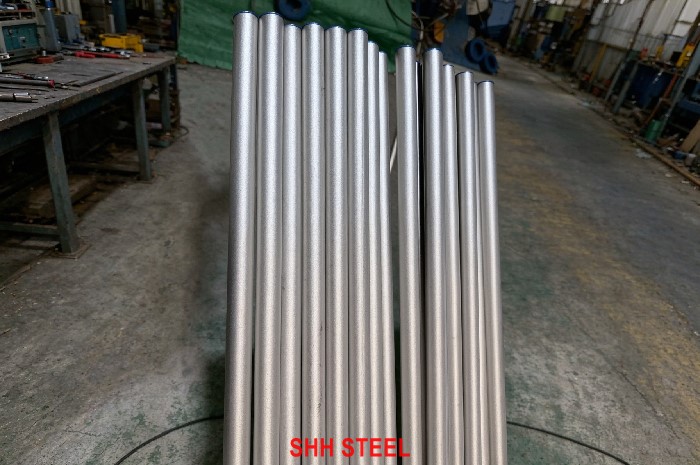
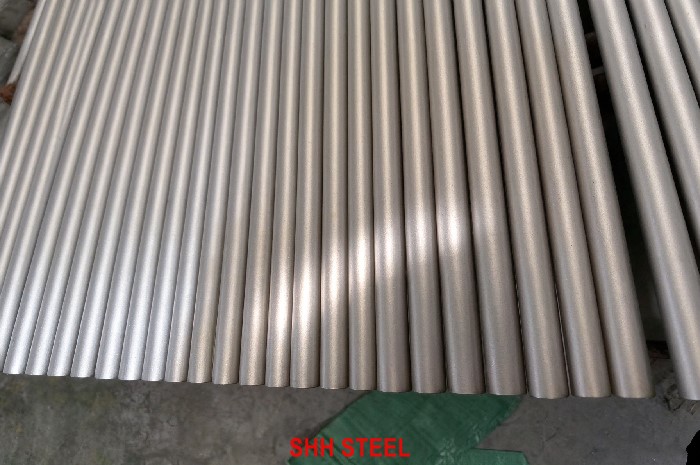
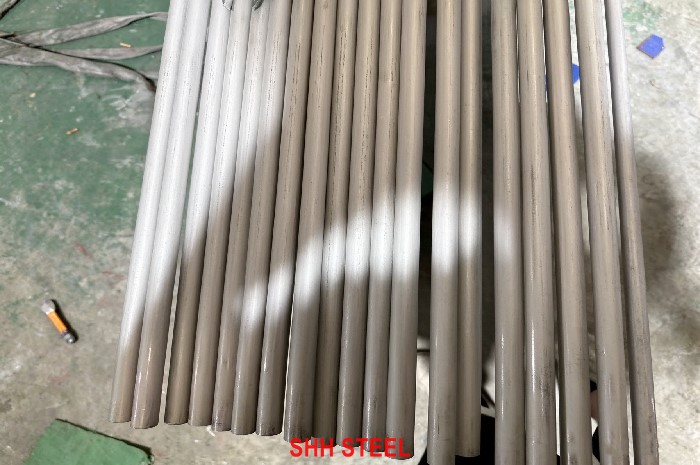
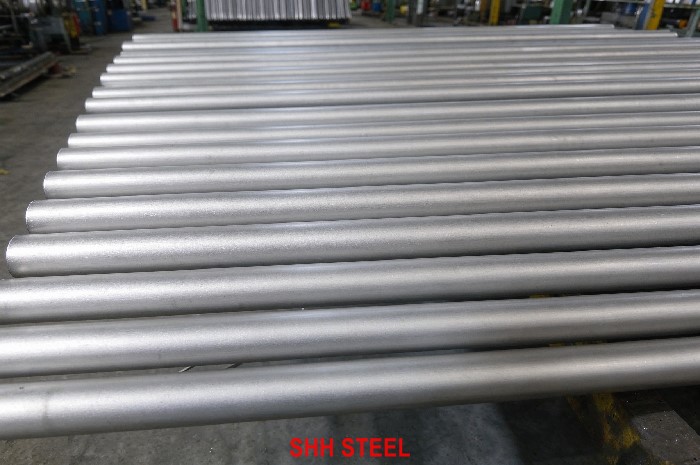
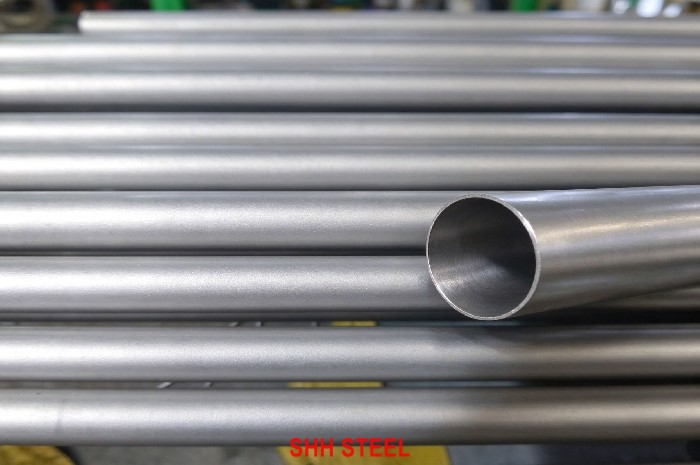
SHH STEEL can supply ASME SA312 TPXM-19 / UNS S20910 stainless steel pipe to the edition named on the enquiry, including seamless (SML), welded (WLD), and heavily cold-worked (HCW) routes; ASME B36.19 schedules and special OD/wall by agreement; EN 10204 3.1 mill test certificates; and dual SA-312/A312 marking when the heat analysis, heat treatment, mechanical tests, and marking satisfy both editions named on the purchase order. XM-19 is a specialty melt, so we confirm heat availability for the Mo, N, Nb, and V windows before quoting a delivery date rather than promising stock that may not exist. Confirm NPS, wall or schedule, finish, length practice, and any product-analysis or supplementary tests on enquiry.
Buyers meet this grade under several names in enquiries, drawings, and old datasheets. The list below shows how each label maps to the ordered product; put the full SA-312/A312 designation and the UNS number on the purchase order rather than relying on market shorthand alone.
- ASME SA312 TPXM-19 / SA-312 Grade TPXM-19 — preferred marking language for ASME-code and dual-marked pipe
- ASTM A312 TPXM-19 — same grade tables for chemistry and tensile when the ASTM edition is referenced
- UNS S20910 — unified numbering system identity listed in Table 1
- XM-19 stainless steel pipe — market shorthand; confirm SA-312/A312 and S20910 Table 1 limits on the order
TPXM-19 is not a drop-in for its XM neighbours. ASME SA312 TPXM-10 Stainless Steel Pipe (S21900) and ASME SA312 TPXM-11 Stainless Steel Pipe (S21904) carry 8–10% Mn, only 5.5–7.5% Ni, no Mo, and 90/50 ksi floors; ASME SA312 TPXM-29 Stainless Steel Pipe (S24000) matches the 100/55 ksi floors but runs 11.5–14.5% Mn with just 2.3–3.7% Ni and no Mo. Versus ASME SA312 TP316 Stainless Steel Pipe and ASME SA312 TP316L Stainless Steel Pipe, XM-19 adds higher Cr, controlled N, Nb, and V and much higher Table 4 floors, so the two are not interchangeable on a datasheet in either direction. Grade hub: ASME SA 312/SA 312M.
Manufacturing Types (SML / WLD / HCW)
ASME SA-312 defines three manufacturing routes that may be marked on finished TPXM-19 pipe. Selecting the route is a purchase-order decision driven by design code, size range, wall thickness, and inspection preference. It does not change the Table 1 chemistry of Grade TPXM-19.
- Seamless (SML) — no welding at any stage of manufacture. Seamless is preferred when the project specification excludes welded pipe, when thick walls favor seamless production, or when piping class documentation is written around seamless product only.
- Welded (WLD) — automatic welding without filler metal. The weld is finished so the pipe meets dimensional and mechanical requirements after the final heat treatment required by SA-312. Welded product is widely used for common NPS and schedule combinations where the code accepts welded austenitic pipe.
- Heavily cold-worked (HCW) — welded pipe cold worked to a reduction of area of wall and weld of at least 35% before the final anneal, again without filler metal in the longitudinal weld. HCW is ordered when the buyer wants the HCW marking and the process controls written into SA-312 for that route.
Each finished length is hydrostatically tested or nondestructively electrically tested. The manufacturer may choose the method unless the purchase order fixes one. Marking typically includes manufacturer, grade (TPXM-19), heat number, NPS or OD and schedule or wall, and SML, WLD, or HCW. When comparing SML vs WLD offers, check manufacturing type and hydro/NDE method on the MTC—not only the grade stamp.
Chemical Composition of SA312 TPXM-19
Two chemistry layers matter: melting analysis—mandatory per heat under SA-312/A312 Table 1—and product analysis when ordered (Suppl. S1 / PO). Tolerances defer through A999 §6.3 to A480 Table A1.1. SHH STEEL reports actual ladle and, when ordered, product values—never unpublished tighter windows.
Melting analysis (heat / ladle analysis) — Table 1
Heat analysis for Grade TPXM-19 / UNS S20910 from ASME SA-312/SA-312M (ASTM A312/A312M) Table 1. Values are maximum unless a range is shown. Where Table 1 shows ellipses (…) for an element, there is no requirement and that element need not be determined or reported.
| Element | TPXM-19 (UNS S20910) melting analysis |
|---|---|
| Carbon (C) | ≤ 0.06 |
| Manganese (Mn) | 4.0 – 6.0 |
| Phosphorus (P) | ≤ 0.045 |
| Sulfur (S) | ≤ 0.030 |
| Silicon (Si) | ≤ 1.00 |
| Chromium (Cr) | 20.5 – 23.5 |
| Nickel (Ni) | 11.5 – 13.5 |
| Molybdenum (Mo) | 1.50 – 3.00 |
| Niobium (Nb) | 0.10 – 0.30 |
| Nitrogen (N) | 0.20 – 0.40 |
| Vanadium (V) | 0.10 – 0.30 |
Source: ASME SA-312/SA-312M ≡ ASTM A312/A312M Table 1 for Grade TPXM-19 / UNS S20910. Do not treat secondary catalog sheets as a substitute for the ordered edition.
Versus ASME SA312 TP316 Stainless Steel Pipe: TPXM-19 has higher Cr, controlled N (0.20–0.40%), Nb and V requirements, and much higher Table 4 floors. Versus lean-nickel Mn–N grades such as ASME SA312 TP201 Stainless Steel Pipe or ASME SA312 UNS S20400 Stainless Steel Pipe, TPXM-19 carries substantial Ni and mandatory Mo. Confirm UNS S20910 on the order—do not confuse with neighboring XM grades (TPXM-10 / S21900, TPXM-11 / S21904, TPXM-29 / S24000).
Product analysis — A480/A480M Table A1.1 tolerances applied to Table 1
When product analysis is ordered, finished-pipe chemistry shall meet Table 1 as modified by A480 Table A1.1 (via A999 §6.3). The verified product-analysis limits for TPXM-19 are:
| Element | Melting (Table 1) | Tolerance (A480 A1.1) | Product analysis limit |
|---|---|---|---|
| Carbon (C) | ≤ 0.06 | 0.01 over | ≤ 0.07 |
| Manganese (Mn) | 4.0 – 6.0 | 0.05 under / over | 3.95 – 6.05 |
| Phosphorus (P) | ≤ 0.045 | 0.010 over | ≤ 0.055 |
| Sulfur (S) | ≤ 0.030 | 0.005 over | ≤ 0.035 |
| Silicon (Si) | ≤ 1.00 | 0.05 over | ≤ 1.05 |
| Chromium (Cr) | 20.5 – 23.5 | 0.25 under / over | 20.25 – 23.75 |
| Nickel (Ni) | 11.5 – 13.5 | 0.15 under / over | 11.35 – 13.65 |
| Molybdenum (Mo) | 1.50 – 3.00 | 0.05 under / 0.10 over | 1.45 – 3.10 |
| Niobium (Nb) | 0.10 – 0.30 | 0.05 under / over | 0.05 – 0.35 |
| Nitrogen (N) | 0.20 – 0.40 | 0.02 under / 0.04 over | 0.18 – 0.44 |
| Vanadium (V) | 0.10 – 0.30 | 0.03 under / over | 0.07 – 0.33 |
If an enquiry only says “XM-19” or “S20910 pipe,” confirm Table 1 limits, manufacturing type, and product analysis before rolling. Plate counterparts in Mo austenitic families: ASME SA240 316 Stainless Steel Plate—pipe remains SA-312 TPXM-19.
Mechanical Properties of SA312 TPXM-19
Tensile requirements for TPXM-19 are given in ASME SA-312/SA-312M (ASTM A312/A312M) Table 4. Specimens and orientation follow the testing clauses of the standard and the referenced general requirements (A999/A999M as applicable).
| Property | TPXM-19 requirement (Table 4) |
|---|---|
| Tensile strength, min | 100 ksi [690 MPa] |
| Yield strength (0.2% offset), min | 55 ksi [380 MPa] |
| Elongation in 2 in. or 50 mm (or 4D) | 35% longitudinal / 25% transverse, min |
These minima are the mandatory acceptance floor. Actual MTC values are often higher; design calculations should still use Table 4 unless the PO states higher guaranteed values the mill has accepted in writing. Versus ASME SA312 TP316 Stainless Steel Pipe (75 / 30 ksi) and ASME SA312 TP201LN Stainless Steel Pipe (95 / 45 ksi), TPXM-19 is among the higher-strength austenitic grades in SA-312 Table 4.
Hardness: A312/SA-312 Table 4 does not list a hardness maximum for TPXM-19. Hardness is not a separately mandated Table 4 acceptance item. Do not treat catalog Brinell or Rockwell figures as specification-mandatory. If hardness matters for fabrication or end-user acceptance, state the limit on the PO and verify it on the MTC.
Flattening/bend and tension run on a lot basis; supplementary tests only when listed on the PO. For lower-strength Mo austenitic service see ASME SA312 TP316L Stainless Steel Pipe; for non-Mo 18-8 see ASME SA312 TP304 Stainless Steel Pipe / ASME SA312 TP304L Stainless Steel Pipe.
Dimensions and Tolerances
Dimensional practice for SA-312 austenitic pipe typically follows ASME B36.19 / B36.19M. OD and wall are stated as NPS and schedule, or as OD and specified wall. Common TPXM-19 schedules: 5S, 10S, 40S, 80S; other walls by agreement.
Size coverage in commercial practice:
- NPS / DN: commonly from NPS 1/8 upward; large NPS and heavy walls depend on manufacturing type (SML versus WLD/HCW) and mill capability—confirm on enquiry
- Schedules: 5S, 10S, 40S, 80S and special walls by agreement
- Length: single random (SRL), double random (DRL), or fixed cut lengths as stated on the purchase order
- Ends: plain end (PE), beveled end (BE), or other end preparations by agreement
Wall-thickness variation for NPS/schedule pipe follows SA-312 Table 3 (e.g. NPS 1/8 to 2½: 20.0% over / 12.5% under, with the welded weld-area exception on “Over”). OD and length tolerances follow SA-312 via A999/A999M. SHH STEEL quotes the applicable clause. Confirm max wall and NPS near B36.19 edges before acceptance.
Equivalent Grades
Equivalence for TPXM-19 must be stated carefully. Chemistry approximations across regional designations help material selection; they are not automatic one-to-one substitutes for ASME pressure-code pipe without an approved material specification and design-code acceptance.
| Designation | Notes |
|---|---|
| ASME SA-312 / ASTM A312 Grade TPXM-19 | Governing pipe product standard for this article |
| UNS S20910 | Unified number listed in Table 1 |
| XM-19 (market name) | Common trade/AISI-style shorthand; confirm SA-312/A312 and S20910 on the order |
| EN / JIS approximations | High-N Mo austenitic names vary; confirm the applicable EN or JIS product specification when ordering non-ASME product |
Within SA-312, do not interchange TPXM-19 (S20910) with TPXM-10 (S21900), TPXM-11 (S21904), or TPXM-29 (S24000)—each has its own Table 1/Table 4 limits. Sisters: ASME SA312 TP201 Stainless Steel Pipe, ASME SA312 TP201LN Stainless Steel Pipe, ASME SA312 UNS S20400 Stainless Steel Pipe, ASME SA312 TP304 Stainless Steel Pipe, ASME SA312 TP304L Stainless Steel Pipe, ASME SA312 TP316 Stainless Steel Pipe, ASME SA312 TP316L Stainless Steel Pipe. Hub: ASME SA 312/SA 312M. Plate: ASME SA240 304 Stainless Steel Plate, ASME SA240 316 Stainless Steel Plate.
Pressure-code caution: EN/JIS/market approximations do not authorize B31 or Section VIII substitution without engineered approval.
Heat Treatment and Delivery Condition
All pipe furnished to ASME SA-312 shall be heat treated. For TPXM-19 and other grades that do not carry an individual temperature row in Table 2, the default minimum solution-annealing temperature is 1900 °F [1040 °C], followed by water quenching or another rapid cool sufficient to prevent harmful carbide reprecipitation. That Table 2 default is SHH STEEL’s delivery baseline unless the ordered edition states otherwise.
Seamless pipe may be quenched after hot forming when the edition allows and finishing temperature is not below the min anneal. H-grade reheating notes do not change this TPXM-19 path. HCW cold reduction is done before final anneal; delivery remains the annealed condition—cold work is not a final hardness condition.
Commercial delivery condition typically includes:
- Solution annealed to SA-312 Table 2 requirements for TPXM-19
- Pickled and descaled, or bright annealed, as ordered (see Surface Finishes)
- Straightened and cut to the ordered length practice
- Hydrotested or NDE-tested per length as required by the standard and the purchase order
Corrosion Resistance
TPXM-19 is selected for general corrosive and many chloride-bearing services where nitrogen-strengthened Mo austenitic stainless (S20910) is accepted by the end-user specification. Elevated Cr, Mo 1.50–3.00%, and controlled N support pitting resistance relative to non-Mo 18-8 grades, while Table 4 strength supports higher design stresses where allowed by the code. It is still not a universal substitute for duplex, super-austenitic, or nickel-alloy pipe in the most severe seawater or reducing-acid duties.
Versus TP316 / TP316L: Both are Mo-bearing. TPXM-19 adds higher Cr, mandatory N/Nb/V ranges, and much higher Table 4 floors. Prefer ASME SA312 TP316 Stainless Steel Pipe / ASME SA312 TP316L Stainless Steel Pipe when the datasheet is written around 316/316L; prefer TPXM-19 when S20910 / XM-19 chemistry and 100/55 ksi floors are specified. Plate: ASME SA240 316 Stainless Steel Plate.
Versus TP304 / TP304L: Mo is mandatory on TPXM-19 and absent as a Table 1 requirement on ASME SA312 TP304 Stainless Steel Pipe / ASME SA312 TP304L Stainless Steel Pipe. Prefer TPXM-19 or TP316-class when chlorides matter. Plate: ASME SA240 304 Stainless Steel Plate.
Versus lean-nickel Mn–N grades: ASME SA312 TP201 Stainless Steel Pipe, ASME SA312 TP201LN Stainless Steel Pipe, and ASME SA312 UNS S20400 Stainless Steel Pipe are not drop-ins for Mo + high-N XM-19 service.
Surface condition: Pickling and passivation after fabrication restore a clean passive surface and remove free iron. Clean and passivate site welds when required. Corrosion performance depends on fluid, temperature, velocity, and cleanliness—not grade name alone.
Applications of SA312 TPXM-19 Pipe
TPXM-19 is selected where SA-312 form, S20910 chemistry, and high Table 4 floors (100 / 55 ksi) suit the fluid, temperature, and design stress. Typical areas include:
| Application area | Typical use of TPXM-19 pipe | Selection note |
|---|---|---|
| Chemical and process | Higher-strength austenitic lines with Mo chemistry ordered to SA-312 | Confirm fluid compatibility with S20910 |
| Marine / chloride-bearing | Topsides and process piping where XM-19 is specified | Not automatic substitute for duplex in severe seawater |
| Oil and gas / OEM | Piping kits needing high yield austenitic stainless documentation | Dual SA312/A312 marking often requested |
| Power and utility | High-stress stainless auxiliary lines where S20910 is accepted | Use Table 4 floors in design, not catalog “typical” values |
| General corrosive + strength | Where 316-class Mo is not enough on strength but XM-19 is accepted | Do not substitute TP316 for TPXM-19 when 100/55 ksi is required |
| Fabricated spool pieces | Welded assemblies ordered as SA-312 TPXM-19 | Use ER209 filler guidance; document WPS |
When the same plant also uses 316 plate, buyers may pair ASME SA240 316 Stainless Steel Plate for flat product while keeping pipe as ASME SA312 TPXM-19 Stainless Steel Pipe when S20910 is required. Match grade family to corrosion, strength, and code needs first.
Weldability
TPXM-19 is generally weldable by common austenitic fusion processes with suitable heat input, interpass, and cleanliness:
- GTAW (TIG) — preferred for root passes and thin-wall pipe where weld metal cleanliness and heat-input control matter
- GMAW (MIG) — productive for fill and cap passes on thicker walls when procedures are qualified
- SMAW — widely used for field girth welds with coated austenitic electrodes selected by agreement
- Automatic orbital or mechanized GTAW — common for repetitive high-integrity girth joints
With C ≤0.06% and elevated N, evaluate procedures for nitrogen-strengthened Mo austenitic weld metal. Controlled heat input and interpass remain good practice. Do not assume ER316 consumables are the Table 6 default for this grade.
Filler metal: SA-312 Table 6 lists AWS A5.9 Class ER209 (filler UNS S20980 / W32240) as the recommended filler classification associated with TPXM-19 when weld repairs of the mill weld seam use filler metal under Section 15. For field girth welding, ER209 is the usual matching XM-19-type consumable documented on the WPS/PQR; record the agreed AWS (or EN) classification on the welding procedure. Mill longitudinal welds for WLD and HCW product are made without filler metal; Table 6 guidance applies to joining or repair with filler, not to the mill autogenous weld.
Girth welds follow the piping/vessel code (e.g. ASME B31 / Section IX), separate from mill hydro/NDE. Specify girth NDE when required. Keep joints clean. A262 Practice E (Suppl. S7) may be ordered when required.
Surface Finishes
Surface condition for SA312 TPXM-19 pipe is stated on the order. Typical mill finishes include:
- Annealed and pickled (AP) — solution annealed, descaled in acid pickle or an equivalent process, producing a matte gray finish common for process and utility pipe
- Bright annealed (BA) — annealed in a protective atmosphere to a brighter surface where the order allows and mill capability exists for the size
- Mechanically polished — for example 180#, 320#, or 400# grit, or Ra-controlled polish on OD and/or ID; polishing does not replace solution annealing
- Bead-finished welded OD — weld bead rolled or ground flush as agreed for WLD/HCW product
Passivation after pickle or polish can be added when required. State Ra (or grit) and docs on the enquiry when surface finish is critical. SHH STEEL will not imply polished finish on standard AP pipe unless the PO says so. Order ends with finish so bevel faces and ID cleanliness match acceptance language.
Inspection and Testing
Base inspection and testing for SA-312 TPXM-19 pipe combines chemistry, mechanical, and integrity checks. The following items form the usual acceptance package; supplementary requirements apply only when written on the purchase order.
- Heat (melting) analysis — mandatory per heat against Table 1 for TPXM-19 (UNS S20910), including Mo, N, Nb, and V
- Product analysis — when ordered (Suppl. S1 / purchase-order language), using A480 Table A1.1 tolerances via A999 §6.3
- Tension test — Table 4 tensile, yield, and elongation on a lot basis (100 / 55 ksi floors)
- Flattening test — or alternate bend where the standard permits for certain welded pipe
- Hydrostatic test or nondestructive electric test — each length; manufacturer’s option unless the order fixes the method
- Visual and dimensional check — against ordered NPS/schedule or OD/wall and the applicable tolerance clauses
Mill test certificates: EN 10204 3.1 is standard from SHH STEEL. 3.2 or third-party witness (SGS, BV, TÜV, or buyer’s agency) is arranged when specified. Dual SA-312/A312 certification is available when chemistry, heat treatment, mechanical tests, and marking satisfy the edition(s) named on the order.
Optional / supplementary: PMI (confirm Mo/N), RT/UT, intergranular corrosion (A262 Practice E via Suppl. S7) or weld-decay tests, tighter straightness, special marking—only when listed on the PO. Keep heat numbers on cut pieces for MTC traceability.
Packaging and Shipping
SA312 TPXM-19 shipments are packed for ocean or land transport. Typical practices include:
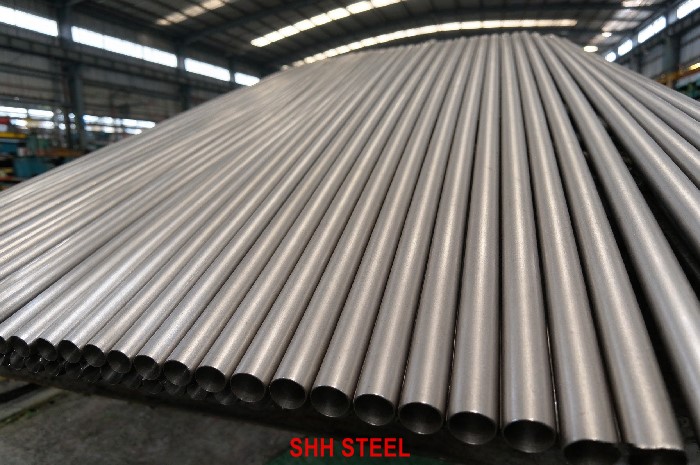
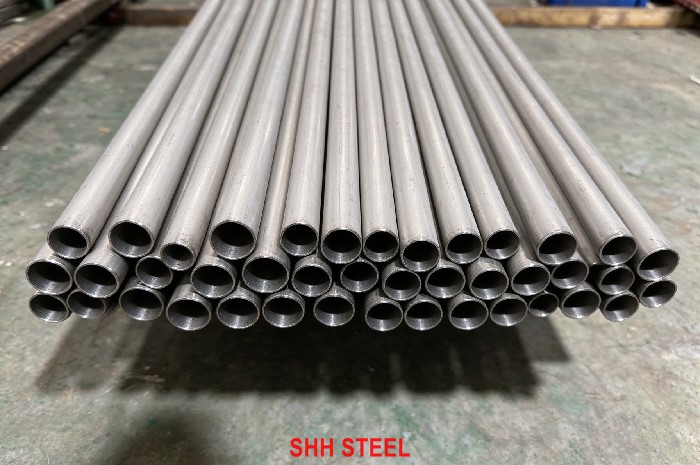
- Seaworthy bundles — pipes strapped or cradled in bundles sized for container or break-bulk handling, with separators where needed to protect finish
- End caps / protectors — plastic or metal caps on plain or beveled ends to reduce damage and contamination during transit
- Marking — durable marking of grade (TPXM-19 / S20910), heat number, size (NPS or OD × wall / schedule), manufacturing type (SML / WLD / HCW), and mill identity as required by SA-312 and the purchase order
- Export packing — waterproof wrapping or tarpaulin as agreed for polished or sensitive finishes; container stuffing photos on request
Shipment docs typically include packing list, invoice, B/L or AWB, MTC (3.1 or 3.2), and origin/customs papers per Incoterms. State destination, packing, and extra marking at enquiry.
Why Choose SHH STEEL
SHH STEEL supplies specification-driven stainless plate and pipe, and XM-19 is a grade where that discipline matters. TPXM-19 / UNS S20910 has eleven controlled elements in Table 1, including Mo 1.50–3.00%, N 0.20–0.40%, Nb 0.10–0.30%, and V 0.10–0.30%, and many catalog sheets for “XM-19” quietly leave out the Nb and V windows. We quote against the edition you name, report every Table 1 element on the MTC, and keep heat identity unbroken from melt to finished length, so receiving inspection can clear the heat against Table 1 and the 100/55 ksi Table 4 floors without guesswork. We are equally plain about welding: Table 6 lists ER209 for this grade, and we do not suggest ER316 as a shortcut.
- Specification fidelity — Table 1 and Table 4 for TPXM-19 (S20910), including Nb and V, not vague “XM-19” sheets
- Mill resources — SML, WLD, and HCW from qualified stainless pipe mills with heat traceability; cutting and beveling on confirmed orders
- Documentation — EN 10204 3.1 MTCs standard; 3.2 or third-party inspection on request
- Dual marking — SA-312/A312 when the heat meets both editions you name
- Honest substitution advice — we flag when TP316/TP316L, duplex, or another XM grade fits the datasheet better
- Export packing — seaworthy bundles, end protectors, and durable grade/heat/size/type marking
Quotations follow your purchase-order language for edition year, manufacturing type, size, finish, and any supplementary tests (S1 product analysis, S7 intergranular testing, PMI to confirm Mo and N). If your project is still choosing between XM-19, a 316-class grade, and duplex, tell us the fluid, temperature, and design stress and we will say which grade the documentation actually supports.
Supply Capability
SHH STEEL can supply ASME SA312 TPXM-19 / UNS S20910 stainless steel pipe against the edition and manufacturing type named on your enquiry. The capability table below summarizes the routes, sizes, finishes, and documents we regularly quote for this grade.
| Item | SHH STEEL capability for TPXM-19 |
|---|---|
| Standard | ASME SA-312/SA-312M and/or ASTM A312/A312M Grade TPXM-19 (UNS S20910) |
| Manufacturing types | SML, WLD, HCW |
| Size | NPS 1/8 and up per ASME B36.19; special OD/wall by agreement |
| Schedules | 5S, 10S, 40S, 80S and non-standard walls |
| Length | SRL, DRL, or cut-to-length |
| Finish | Annealed and pickled; bright annealed or polished by agreement |
| Testing | Tension, flattening/bend, hydro or NDE per length; supplementary tests on order |
| Documents | EN 10204 3.1; third-party inspection / 3.2 on request |
| Trade terms | FOB / CFR / CIF / EXW and other agreed Incoterms |
XM-19 is a specialty heat, not a commodity grade, so stock is thinner than for TP304 or TP316 and moves with mill rolling cycles. Common NPS and schedule combinations are sometimes available from mill stock or short runs; heavy walls, large seamless sizes, and special OD/wall combinations are mill-order items with longer lead times. Enquiries should state the SA-312 edition, TPXM-19 / UNS S20910, SML/WLD/HCW, NPS or OD×wall, length practice, finish, and any product-analysis or 3.2 requirements so mill slots align with your need date. Grouping project sizes into one heat improves chemistry consistency and helps meet mill minimum quantities. Cut lengths, beveling, and packing-list marking are available on confirmed orders.
FAQ
-
Is ASME SA312 the same as ASTM A312?
- For chemistry (Table 1), tensile (Table 4), manufacturing types, and most testing language, ASME SA-312/SA-312M matches ASTM A312/A312M of the referenced edition. The main ASME revision concerns clause 6.2 heat treatment of H grades, which does not affect TPXM-19. Dual SA312/A312 marking is common when ordered; name both editions on the PO and MTC so inspectors can check the heat against the exact books you cited.
-
What UNS number is TPXM-19?
- Table 1 lists TPXM-19 as UNS S20910. Order and mark the pipe as SA-312 TPXM-19 / UNS S20910 with the edition year, because “XM-19” alone is a market label. The UNS number is what ties the MTC to the Table 1 row, the Section II Part D allowable stresses, and the PMI results your inspector will check on arrival.
-
What does the TPXM-19 chemistry look like?
- Table 1 sets C ≤0.06%, Mn 4.0–6.0%, Cr 20.5–23.5%, Ni 11.5–13.5%, Mo 1.50–3.00%, N 0.20–0.40%, Nb 0.10–0.30%, and V 0.10–0.30%, with P ≤0.045%, S ≤0.030%, and Si ≤1.00%. Nitrogen carries most of the strength, Mo supports pitting resistance, and Nb and V add further strengthening. A heat missing Nb or V is not TPXM-19.
-
TPXM-19 vs TP316 — which should I order?
- Order TPXM-19 when the datasheet names S20910 and relies on its Table 4 floors of 100 ksi tensile and 55 ksi yield. Order TP316 or TP316L when the design is written around 316-class Mo chemistry at 75/30 or 70/25 ksi floors. Both carry Mo, but they are not drop-ins: XM-19 has higher Cr, controlled N, Nb, and V, and wall thickness calculated for XM-19 will not hold for TP316.
-
TPXM-19 vs TPXM-10, TPXM-11 and TPXM-29?
- All four are nitrogen-strengthened, but only TPXM-19 has a Mo requirement and Ni of 11.5–13.5%. TPXM-10 (S21900) and TPXM-11 (S21904) run 8–10% Mn with 5.5–7.5% Ni and 90/50 ksi floors. TPXM-29 (S24000) shares the 100/55 ksi floors but has 2.3–3.7% Ni and no Mo. For chloride exposure, XM-19 is the XM grade to look at first.
-
Seamless vs welded TPXM-19 — which is better?
- Neither is universally better. Seamless suits projects that exclude welded pipe or need heavy walls, while WLD and HCW pipe is often more economical and quicker in common NPS and thinner schedules. Both are legitimate SA-312 forms when made and tested to the standard. Choose the manufacturing type your design code and piping class allow, and check that the MTC states it.
-
What heat treatment does TPXM-19 receive?
- TPXM-19 has no individual row in Table 2, so it is solution annealed at the default minimum of 1900 °F [1040 °C], then water quenched or rapidly cooled to prevent carbide reprecipitation. HCW cold reduction happens before the final anneal, so delivered pipe is in the annealed condition. If your project needs a specific anneal range, write it on the PO and ask for it on the MTC.
-
What filler should I use to weld TPXM-19 pipe?
- SA-312 Table 6 lists AWS A5.9 ER209 (filler UNS S20980 / W32240) for TPXM-19 when filler is used for mill weld-seam repair, and ER209 is the usual matching consumable for field girth welds on the WPS/PQR. Mill WLD and HCW longitudinal seams are made without filler. Using ER316 would undermatch both the strength and the alloy balance of the base metal.
-
Does Table 4 specify hardness for TPXM-19?
- No. Table 4 gives tensile, yield, and elongation minima for TPXM-19 but no hardness maximum, so catalog Brinell or Rockwell figures are not acceptance criteria. If hardness matters for your fabrication route or an end-user specification, write the limit on the purchase order and ask for the measured values to be reported on the mill test certificate.
-
Hydrostatic test vs NDE — which do I get?
- Each length is either hydrostatically tested or nondestructively electrically tested, and the manufacturer chooses the method unless the purchase order fixes one. If your piping class or end user requires hydro specifically, or eddy-current specifically, say so at enquiry stage. The MTC should state which test was done so the record matches your inspection plan.
-
Is TPXM-19 a substitute for duplex in seawater?
- Not automatically. Mo and high N give XM-19 better pitting resistance than non-Mo 18-8 grades, but severe seawater, hot brine, or crevice-prone service may still call for duplex, super-austenitic, or nickel alloys. Use TPXM-19 where S20910 is the specified grade or a corrosion engineer has approved it for your fluid, temperature, and velocity.
-
Can you dual-certify SA312 / A312 TPXM-19?
- Yes, when the heat analysis, heat treatment, mechanical tests, and marking satisfy both editions named on the order. We state both specifications on the MTC and on the pipe stencil. Tell us the edition years at enquiry, because older and newer editions can differ in clauses that the inspector may check, even though the Table 1 row for S20910 is unchanged.
Conclusion
ASME SA312 TPXM-19 (UNS S20910) is the molybdenum-bearing, nitrogen-strengthened austenitic pipe grade in SA-312: C ≤0.06%, Cr 20.5–23.5%, Ni 11.5–13.5%, Mo 1.50–3.00%, N 0.20–0.40%, Nb and V 0.10–0.30%, with Table 4 floors of 100 ksi [690 MPa] tensile and 55 ksi [380 MPa] yield and a Table 2 default 1900 °F [1040 °C] anneal. It is not a drop-in for TP316/TP316L or for the other XM grades, and Table 6 points to ER209 filler. Order the manufacturing type (SML/WLD/HCW), schedule or wall, finish, and any product analysis or supplementary tests explicitly. For stock checks, mill certificates, or dual SA-312/A312 supply questions, contact SHH STEEL at admin@steelspecs.com or browse the ASME SA 312/SA 312M category on steelspecs.com.
Quality Steel Needed? Inquire for Offers
Related Products