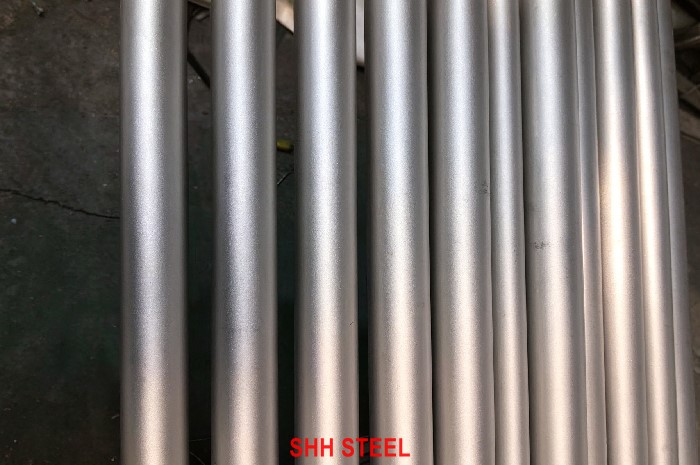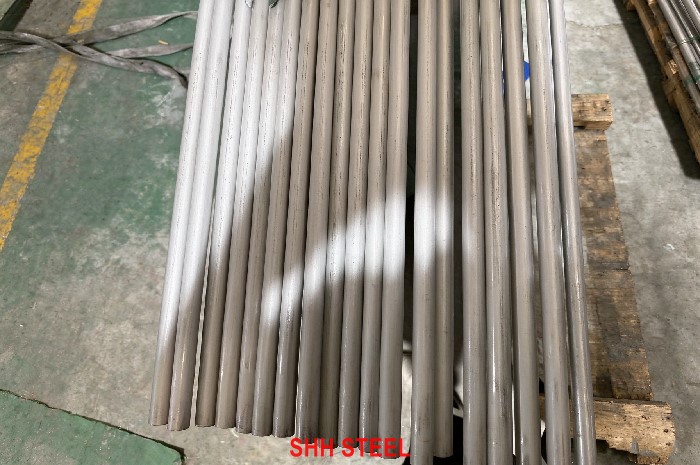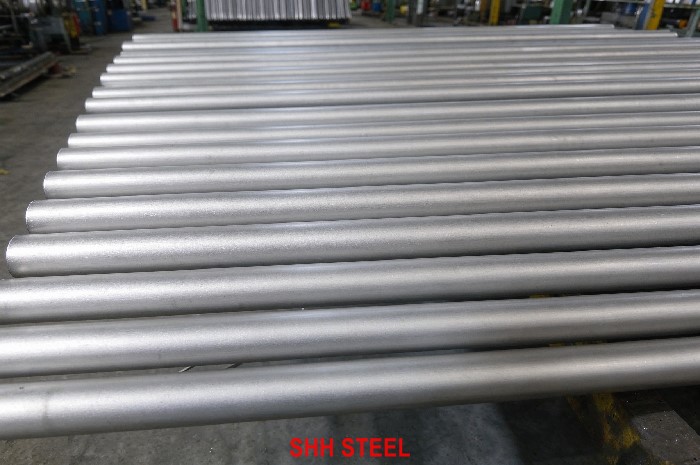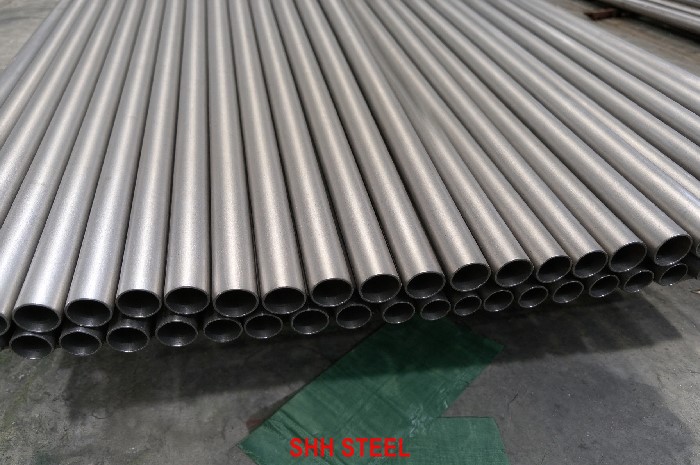
ASME SA312 TP304 Stainless Steel Pipe | SA 312/SA 312M
What is ASME SA312 TP304 Stainless Steel Pipe
ASME SA-312/SA-312M covers seamless, welded, and heavily cold-worked austenitic stainless steel pipe for high-temperature and general corrosive service, and it is the ASME Code adoption of ASTM A312/A312M. TP304 / UNS S30400 is the classic 18-8 grade in that specification and still the most widely bought stainless pipe in the world. When a buyer writes “304 pipe” on an enquiry, this is almost always the product they mean, but for pressure piping the purchase order and the certificate should still name SA-312 or A312, the edition, and the full grade designation rather than a bare market label.
Table 1 sets the heat analysis at C ≤0.08%, Mn ≤2.00%, P ≤0.045%, S ≤0.030%, Si ≤1.00%, Cr 18.0–20.0%, and Ni 8.0–11.0%, with no molybdenum or nitrogen requirement. Table 4 sets 75 ksi [515 MPa] tensile and 30 ksi [205 MPa] yield minimum with 35% longitudinal / 25% transverse elongation, Table 2 puts TP304 under the default solution anneal of 1900 °F [1040 °C] minimum, and Table 6 lists ER308 as the filler. That combination is why TP304 is the default choice for chemical transfer, food and dairy lines, utility piping, and general corrosive service where chlorides are not the dominant threat.
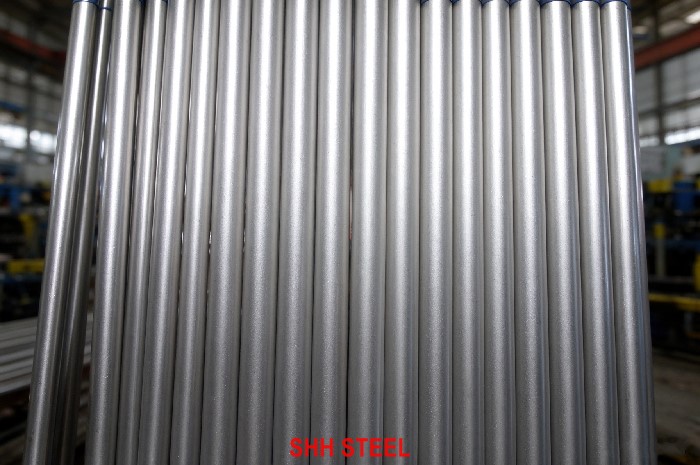
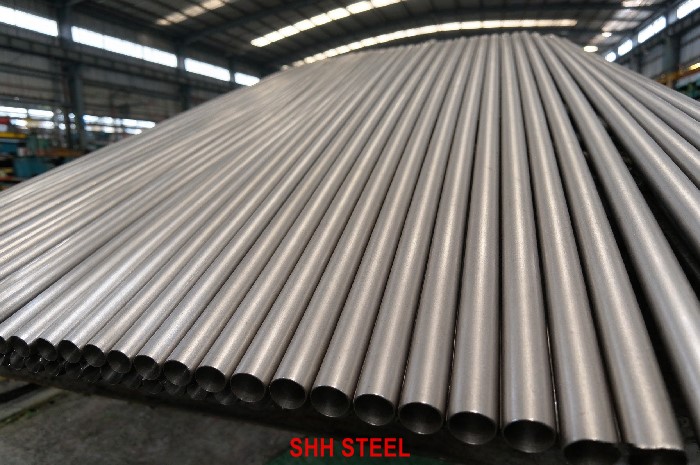
SHH STEEL can supply ASME SA312 TP304 stainless steel pipe to the edition named on the enquiry, in seamless (SML), welded (WLD), and heavily cold-worked (HCW) form. We quote ASME B36.19 schedules and special OD/wall by agreement, ship with EN 10204 3.1 mill test certificates reporting the full Table 1 chemistry and the Table 4 results, and offer dual SA-312/A312 marking, as well as dual TP304/TP304L where one heat meets both rows, when the purchase order asks for it. Please confirm NPS, wall or schedule, finish, length practice, and any supplementary tests when you enquire.
The names below are the ones buyers use in practice, and they map to the ordered product as shown. Put both the TP designation and the UNS number on the purchase order so nothing is lost between purchasing, the mill, and receiving inspection.
- ASME SA312 TP304 / UNS S30400 — preferred marking language for ASME-code and dual-marked pipe
- ASTM A312 TP304 — same grade tables when the ASTM edition is referenced
- “304” or “18-8” stainless pipe — market shorthand; acceptable in conversation, but the PO must still cite SA-312/A312
- EN 1.4301 / JIS SUS304 — approximate regional equivalents for discussion only, not code substitutes
Sister grades buyers compare with TP304 include ASME SA312 TP304L Stainless Steel Pipe (C ≤0.035% and 70/25 ksi), ASME SA312 TP304H Stainless Steel Pipe (C 0.04–0.10% with grain-size control for creep service), ASME SA312 TP304N Stainless Steel Pipe (N 0.10–0.16% and 80/35 ksi), ASME SA312 TP304LN Stainless Steel Pipe, and ASME SA312 TP316 Stainless Steel Pipe when chlorides call for molybdenum. Grade hub: ASME SA 312/SA 312M.
Manufacturing Types (SML / WLD / HCW)
ASME SA-312 recognizes three manufacturing routes for TP304 pipe, and the route is a purchase-order decision driven by the design code, the size range, wall thickness, and how the owner wants the pipe inspected. The route never changes the chemistry: whichever way the pipe is made, the heat must still meet C ≤0.08%, Mn ≤2.00%, P ≤0.045%, S ≤0.030%, Si ≤1.00%, Cr 18.0–20.0%, and Ni 8.0–11.0%, and every length must still go through the solution anneal at 1900 °F [1040 °C] minimum before it is released.
- Seamless (SML) — no welding at any stage. Seamless is preferred when the project specification excludes welded pipe, when walls are heavy, or when the piping class is written around seamless product only; it still has to be solution annealed before release.
- Welded (WLD) — automatic welding without filler metal, with the weld finished so the pipe meets dimensional and mechanical requirements after the final heat treatment. The strip or plate heat must itself carry the full TP304 chemistry, so ask for the coil or plate heat number on the certificate.
- Heavily cold-worked (HCW) — welded pipe cold worked to at least 35% reduction of wall and weld before the final anneal, again without filler in the longitudinal seam, with the weld radiographed before cold work. Order HCW when the project specifically wants that marking and the process controls SA-312 writes around it.
Every finished length is hydrostatically tested or nondestructively electrically tested, and the mill may choose the method unless the purchase order fixes one. Pipe NPS 10 and larger may ship marked “NH” only when the purchaser accepts a system test in place of the hydrotest, and lots for mechanical testing follow clause 11.1. Marking on the finished length normally carries the manufacturer, grade, heat number, size and schedule or wall, and the SML, WLD, or HCW letters, so when you compare seamless and welded TP304 offers, check the manufacturing type and the test method on the certificate rather than only the grade stamp.
TP304 is the most freely available SA-312 grade, and most common NPS and schedule combinations can be found in stock or on short mill programmes. Heavy-wall seamless, large-diameter welded, and special OD × wall sizes are mill-order items, so give us the route, size, wall, and edition year early and we will tell you honestly whether stock or a mill run fits your need date.
Chemical Composition of SA312 TP304
Two chemistry layers matter for TP304. The melting (heat or ladle) analysis is mandatory for every heat under SA-312/A312 Table 1, while product analysis on finished pipe applies only when it is ordered through Supplementary Requirement S1 or purchase-order wording. Product tolerances are not printed in SA-312 itself; they come through ASTM A999/A999M §6.3 from ASTM A480/A480M Table A1.1. SHH STEEL reports the actual ladle values and, when ordered, the product values, and never quotes tighter catalogue windows that the standard does not publish.
The tables below reproduce the Table 1 heat analysis for TP304 and the product-analysis limits that result from applying the A480 Table A1.1 tolerances. Values are maximum unless a range is shown, and an ellipsis (…) means the ordered edition sets no requirement for that element, so it need not be determined or reported on the certificate.
Melting analysis (heat / ladle analysis) — Table 1
| Element | TP304 (UNS S30400) melting analysis |
|---|---|
| Carbon (C) | ≤ 0.08 |
| Manganese (Mn) | ≤ 2.00 |
| Phosphorus (P) | ≤ 0.045 |
| Sulfur (S) | ≤ 0.030 |
| Silicon (Si) | ≤ 1.00 |
| Chromium (Cr) | 18.0 – 20.0 |
| Nickel (Ni) | 8.0 – 11.0 |
| Molybdenum (Mo) | … (no requirement) |
| Nitrogen (N) | … (no requirement) |
Product analysis — A480/A480M Table A1.1 tolerances applied to Table 1
| Element | Melting (Table 1) | Tolerance (A480 A1.1) | Product analysis limit |
|---|---|---|---|
| Carbon (C) | ≤ 0.08 | 0.01 over | ≤ 0.09 |
| Manganese (Mn) | ≤ 2.00 | 0.04 over | ≤ 2.04 |
| Phosphorus (P) | ≤ 0.045 | 0.010 over | ≤ 0.055 |
| Sulfur (S) | ≤ 0.030 | 0.005 over | ≤ 0.035 |
| Silicon (Si) | ≤ 1.00 | 0.05 over | ≤ 1.05 |
| Chromium (Cr) | 18.0 – 20.0 | 0.20 under / over | 17.80 – 20.20 |
| Nickel (Ni) | 8.0 – 11.0 | 0.10 under / 0.15 over | 7.90 – 11.15 |
The 18–20% chromium and 8–11% nickel balance is what makes TP304 the reference 18-8 austenitic grade: chromium builds the passive film and nickel keeps the structure fully austenitic, tough, and easy to form. Carbon is capped at 0.08% but has no minimum, so a modern TP304 heat often runs low enough to satisfy ASME SA312 TP304L Stainless Steel Pipe as well, and that is how dual TP304/TP304L certification is produced. When the specification needs guaranteed low carbon for as-welded corrosion resistance, order TP304L or the dual grade explicitly rather than relying on whatever the heat happens to contain.
When product analysis is ordered, the finished pipe may read up to C 0.09%, Mn 2.04%, P 0.055%, S 0.035%, and Si 1.05%, with Cr 17.80–20.20% and Ni 7.90–11.15%, as shown in the table above. These are the only product limits we quote, and we do not offer tighter catalogue windows that SA-312 does not publish. If your end user has its own chemistry restrictions, for example a lower carbon or sulfur ceiling for welding, put them on the purchase order before the heat is selected.
Mechanical Properties of SA312 TP304
Room-temperature tensile requirements for TP304 come from SA-312 Table 4 and are summarized below. These are minimum release values for the lot, not typical values, and design allowables must always be taken from the governing code tables for UNS S30400 rather than from a neighbouring grade.
| Property | TP304 requirement (Table 4) |
|---|---|
| Tensile strength, min | 75 ksi [515 MPa] |
| Yield strength (0.2% offset), min | 30 ksi [205 MPa] |
| Elongation in 2 in. or 50 mm (or 4D) | 35% longitudinal / 25% transverse, min |
These minima are the mandatory release floor for each lot, and actual certificate values are usually higher. Design should still use Table 4 and the code allowable stresses for UNS S30400 unless the mill has accepted higher guaranteed values in writing. Table 4 does not list a hardness maximum for TP304, so catalogue Brinell or Rockwell figures are not specification requirements; if hardness matters for your fabrication, write the limit on the purchase order and we will have it reported.
Compared with sister grades, TP304 shares the 75 ksi tensile minimum with ASME SA312 TP201 Stainless Steel Pipe but has a lower yield floor than that grade’s 38 ksi, while ASME SA312 TP304L Stainless Steel Pipe drops to 70/25 ksi because of its lower carbon ceiling and ASME SA312 TP304N Stainless Steel Pipe rises to 80/35 ksi through nitrogen. Flattening or bend tests and tension tests are run on a lot basis, and supplementary tests apply only when they are named on the purchase order.
Dimensions and Tolerances
Dimensional supply for SA312 TP304 pipe follows ASME B36.19 schedules for the common NPS and schedule combinations, with special OD and wall available by agreement when a project needs a section the schedules do not cover. Outside-diameter variations follow ASTM A999/A999M, and wall-thickness variations follow SA-312 Table 3 as summarized below. State on the purchase order whether wall is nominal or minimum (Supplementary S8), because the two readings produce different pipe from the same size line.
| NPS designator | Over | Under |
|---|---|---|
| 1/8 – 2-1/2, all t/D | 20.0% | 12.5% |
| 3 – 18, t/D ≤ 5% | 22.5% | 12.5% |
| 3 – 18, t/D > 5% | 15.0% | 12.5% |
| ≥ 20 welded | 17.5% | 12.5% |
| ≥ 20 seamless, t/D ≤ 5% | 22.5% | 12.5% |
| ≥ 20 seamless, t/D > 5% | 15.0% | 12.5% |
Source: SA-312 Table 3; outside diameter variations per A999/A999M.
- Lengths — single random, double random, or cut-to-length on order
- Cut lengths — typically no more than 1/4 in. [6 mm] over the ordered length unless the PO states a tighter band
- Ends — plain or beveled; confirm bevel angle and root face when the WPS is already frozen
Many chemical, food, and general process buyers order by OD × wall rather than NPS and schedule, which is fine as long as the enquiry says so clearly. Straightness, end finish, and length tolerance should be written into export orders so receiving inspection has an agreed acceptance basis instead of arguing after arrival. On thin schedules with threaded or socket-weld ends, check that the remaining wall is still adequate after the 12.5% under-tolerance. Jointers are not permitted unless the purchase order allows them, so cut-to-length programmes should include an allowance for fit-up scrap rather than expecting the mill to ship short pieces.
Equivalent Grades
TP304 / UNS S30400 has well-known approximate equivalents in European and Japanese standards, and those names are useful when comparing offers or old datasheets. Equivalence is a materials discussion, not a substitution approval, so pressure-code pipe still has to be ordered and certified to SA-312 or A312.
| Designation | Notes |
|---|---|
| ASME SA-312 / ASTM A312 Grade TP304 | Governing pipe product standard for this article |
| UNS S30400 | Unified number listed in Table 1 |
| EN 1.4301 (X5CrNi18-10) | Approximate wrought stainless designation; EN tube/pipe product forms are ordered under the relevant EN product specs, not by EN number alone on an SA-312 MTC |
| JIS SUS304 | Approximate Japanese grade name; confirm the Japanese pipe/tube product standard when ordering JIS product |
EN 1.4301 (X5CrNi18-10) and JIS SUS304 are approximate wrought designations; EN and JIS pipe is ordered to its own product standards, and those approximations do not authorize B31 or Section VIII substitution without engineered approval. Within SA-312, ASME SA312 TP304L Stainless Steel Pipe (UNS S30403) has its own carbon ceiling and Table 4 floors, so the two are not interchangeable without review unless the heat is dual certified. Other related pages: ASME SA312 TP304H Stainless Steel Pipe, ASME SA312 TP201 Stainless Steel Pipe, and ASME SA312 TP316 Stainless Steel Pipe.
Heat Treatment and Delivery Condition
All pipe furnished to SA-312 has to be heat treated. TP304 does not carry its own row in Table 2, so it falls under the default for grades not individually listed: solution annealing at 1900 °F [1040 °C] minimum, followed by water quenching or another rapid cool fast enough to prevent harmful carbide precipitation. That default is our delivery baseline unless the ordered edition states otherwise for the heat, and the anneal statement should appear on the certificate for every lot.
Seamless pipe may be quenched directly after hot forming when the edition allows it and the finishing temperature is not below the minimum anneal; the separate reheat rule for H grades such as TP304H does not apply to TP304. HCW cold reduction is done before the final anneal, so delivery is always the annealed condition rather than a cold-worked one. In practice the pipe ships solution annealed, pickled or bright annealed as ordered, straightened, cut to the ordered length practice, and hydrotested or NDE-tested on every length.
Corrosion Resistance
SA-312 has no corrosion table, so this section is engineering commentary rather than a specification requirement. TP304 performs well in many oxidizing aqueous media, in atmospheric exposure, in food and beverage contact, and in mild chemical service, which is why it remains the default austenitic pipe grade. It is not a universal answer, though, and the actual fluid, temperature, velocity, and fabrication cleanliness matter more than the grade name.
- Chlorides — without molybdenum, TP304 is more prone to pitting and crevice attack than ASME SA312 TP316 Stainless Steel Pipe or ASME SA312 TP316L Stainless Steel Pipe in seawater, brine, or heavy chloride duty
- Welded joints — with C up to 0.08%, the heat-affected zone can sensitize; ASME SA312 TP304L Stainless Steel Pipe or a dual 304/304L heat is the usual answer when as-welded corrosion resistance is specified
- Intergranular test — S7 (A262 Practice E) can be ordered when the owner wants proof rather than assumption
- Chloride stress corrosion cracking — a known risk for all 300-series grades in warm chloride-bearing water
Deposits, stagnant pockets, and poorly drained low points concentrate chlorides and are where 304 pipe usually fails first, so design and operation matter as much as the material. Mill annealed-and-pickled pipe already has a descaled passive surface, but site welds and ground areas should be cleaned and passivated when the end-user specification asks for it, and carbon-steel contamination from tools or slings should be kept away from the pipe.
Applications of SA312 TP304 Pipe
Applications for TP304 pipe follow from its balanced 18-8 chemistry, good formability and weldability, and broad code acceptance. The table below summarizes where buyers typically specify the grade and the selection points we see most often on enquiries.
| Application area | Typical use of TP304 pipe | Selection note |
|---|---|---|
| Chemical and process piping | Acids, caustics, solvents, and mild corrosive transfer lines ordered to SA-312 | Confirm fluid compatibility; prefer TP316/TP316L if chlorides dominate |
| Food, beverage, and dairy | Hygienic transfer and utility lines where 304 stainless is accepted | Follow hygiene finish and welding procedure requirements |
| Pharmaceutical / biotech | Process and utility stainless lines ordered as SA-312 product | State Ra/polish and documentation on the enquiry when required |
| Power and utility | Condensate, feedwater auxiliary, and general plant stainless piping | Dual SA312/A312 marking often requested for code work |
| Cryogenic service | Liquefied-gas transfer where austenitic toughness is required | Confirm low-temperature code acceptance for the grade |
| Architectural / structural | Exposed pipe, supports, and decorative stainless ordered to SA-312 | Finish and marking language matter as much as grade |
Typical buyers include chemical and process plants, food, beverage, and dairy producers, pharmaceutical utilities, power-plant auxiliary systems, and cryogenic equipment builders. Where chlorides dominate, move to the 316 family with ASME SA312 TP316 Stainless Steel Pipe or ASME SA312 TP316L Stainless Steel Pipe; where welded corrosion resistance is critical, specify ASME SA312 TP304L Stainless Steel Pipe; and where the line runs in the creep range, look at ASME SA312 TP304H Stainless Steel Pipe. Matching the grade to the corrosion and code needs first saves arguments after delivery.
Weldability
TP304 welds readily by GTAW, GMAW, SMAW, and orbital processes, and it is the grade most welders and procedures are already qualified on. SA-312 Table 6 lists AWS A5.9 ER308 (UNS S30800 / W30840) as the filler for TP304 when filler is used for mill weld-seam repair, and for field girth welds ER308 or ER308L is the usual consumable recorded on the WPS and PQR. With carbon up to 0.08%, keep heat input and interpass temperature under control so the heat-affected zone does not sensitize in corrosive service.
- GTAW root passes — preferred on thin wall and hygienic lines, with back-purge to protect the ID
- GMAW or SMAW fill — productive on heavier walls once the procedure is qualified
- Orbital GTAW — common for repetitive hygienic or high-integrity girth joints
- Clean joints — free of oil, paint, and carbon-steel contamination before welding
Mill longitudinal welds on WLD and HCW pipe are made without filler, so Table 6 guidance applies to repair and fabrication joints, not to the autogenous mill seam. Girth-weld NDE follows the piping or vessel code (for example ASME B31 and Section IX) and is separate from the hydro or electric test the mill applies to each length. Where low heat input cannot be guaranteed, switching to ASME SA312 TP304L Stainless Steel Pipe or a dual-certified heat is usually simpler than relying on post-weld annealing.
Surface Finishes
Surface condition for SA312 TP304 pipe should be stated on the purchase order rather than left to mill default. For stainless pipe, embedded free iron, residual scale, and chloride-bearing residues are where corrosion starts, so the finish is part of the material performance and not just appearance. The finishes we regularly quote for this grade are listed below.
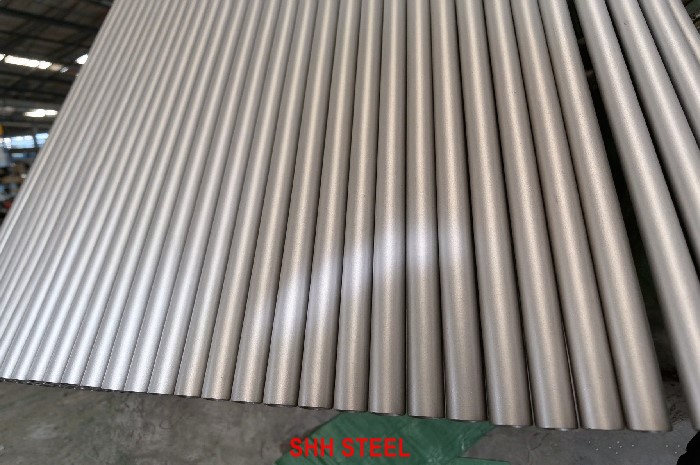
- Annealed and pickled (AP) — solution annealed at 1900 °F [1040 °C] minimum, then descaled in acid pickle or an equivalent process to a matte grey finish; the standard choice for process pipe
- Blasted and pickled — common on heavy-wall seamless where blasting first makes scale removal more reliable
- Bright annealed (BA) — annealed in a protective atmosphere where mill capability exists for the size; the anneal temperature still has to meet the Table 2 practice for TP304
- Mechanically polished — OD and/or ID polish to an agreed grit or Ra when ordered; polishing never replaces the solution anneal
- Bead-finished welded OD — weld bead rolled or ground flush as agreed on WLD and HCW product
For TP304, annealed and pickled covers most process work, while food, dairy, and pharmaceutical lines often call for bright annealed or polished pipe with a stated Ra; we will not imply a hygienic finish on standard AP pipe unless the order says so. Passivation after pickling or polishing can be added when the end-user specification calls for it, even though SA-312 itself does not require it. If the project bans chloride-bearing marking inks, say so on the order; otherwise the mill will apply its normal stencil practice and ship its default AP finish.
Inspection and Testing
The base acceptance package for SA-312 TP304 pipe combines chemistry, tensile testing, heat-treatment evidence, and a pressure or electrical integrity test on every length. The items below make up the usual package; supplementary requirements and project corrosion tests only apply when they are written on the purchase order.
- Heat (melting) analysis — mandatory per heat against Table 1 for TP304: C ≤0.08%, Mn ≤2.00%, P ≤0.045%, S ≤0.030%, Si ≤1.00%, Cr 18.0–20.0%, and Ni 8.0–11.0%
- Product analysis — when ordered (Suppl. S1 or PO wording), using A480 Table A1.1 tolerances via A999 §6.3
- Tension test — 75 ksi [515 MPa] tensile and 30 ksi [205 MPa] yield minimum, plus 35% L / 25% T elongation on a lot basis
- Flattening test — or the alternate bend test where the standard permits
- Hydrostatic or nondestructive electric test — every length; manufacturer’s option unless the order fixes the method
- Visual and dimensional check — against ordered NPS/schedule or OD × wall, with TP304 (UNS S30400) on every stencil
Mill test certificates: EN 10204 3.1 is the standard documentation from SHH STEEL supply. For TP304 the certificate reports the full Table 1 chemistry, the 75/30 ksi tensile results with 35%/25% elongation, the hydro or NDE method, and the 1900 °F anneal statement. EN 10204 3.2 or third-party witness by SGS, Bureau Veritas, TÜV, or the buyer’s nominated agency is arranged when specified, and it should be booked before final testing rather than after the heat has been released. Dual ASME SA-312 / ASTM A312 certification is available when chemistry, heat treatment, mechanical tests, and marking satisfy both editions named on the order.
| Option | Purpose |
|---|---|
| S1 product analysis | Confirms chemistry on finished pipe |
| S5 radiography | Weld integrity on WLD pipe |
| S7 intergranular corrosion | A262 Practice E after sensitizing treatment |
| S8 minimum wall | Wall interpreted as minimum rather than nominal |
| S9 weld decay | Compares weld and base-metal loss rates |
Receiving review should confirm Cr 18.0–20.0%, Ni 8.0–11.0%, and C ≤0.08% on the certificate, the 75/30 ksi tensile and elongation results, the anneal statement, the test method, and that the stencil reads TP304 with the correct heat number. Where a heat is dual certified TP304/TP304L, both grade designations should appear on the stencil and the MTC, and the carbon should be at or below 0.035%.
Packaging and Shipping
Export and domestic shipments of SA312 TP304 pipe are packed for handling and for ocean or land transport. The packing we normally apply is summarized below, and anything beyond it can be agreed on the order.
- Seaworthy bundles — pipes strapped or cradled in bundles sized for container or break-bulk handling, with non-metallic separators where the finish needs protecting
- End caps — plastic or metal caps on plain or beveled ends to keep out damage and contamination in transit
- Marking — specification, grade (TP304 (UNS S30400)), heat number, size, manufacturing type (SML / WLD / HCW), test letters, and mill identity as SA-312 and the purchase order require
- Export protection — waterproof wrapping or desiccant as agreed for polished or bright-annealed finishes, with low-chloride inks on request
Segregate TP304 from ASME SA312 TP304L Stainless Steel Pipe and ASME SA312 TP316 Stainless Steel Pipe bundles on the packing list and in the yard, because these grades look identical and a quick PMI check cannot measure carbon. Use separate bundles and distinct tags on mixed shipments, and have receiving check stencil heat numbers against the MTC. Keep interiors dry and capped so chloride-bearing moisture cannot stain or pit the surface before installation. Shipping documents normally include the packing list, invoice, bill of lading or air waybill, and the 3.1 or 3.2 MTC with full Table 1 chemistry, plus origin and customs papers to suit the agreed Incoterms.
Why Choose SHH STEEL
SHH STEEL supplies specification-driven stainless plate and pipe, and for SA312 TP304 we quote against the edition you name rather than a generic catalogue sheet. We report the full Table 1 chemistry and the Table 4 results on the MTC and quote against the edition you name, not a generic “304” catalogue sheet. Heat identity stays unbroken from the melt to the finished length, so receiving inspection can clear each heat against Table 1 and Table 4 without chasing paperwork after the pipe has arrived.
Because TP304 is so widely traded, the commonest problems we see are certificates missing the edition year, stencils that read only “304” or “SS”, and stock relabelled from other product standards. We check supplier certificates before shipment so those issues are caught at the mill rather than at the fabricator, and where you need dual TP304/TP304L we confirm the heat carbon before the order is placed.
- Specification fidelity — chemistry and tensile to SA-312/A312 Table 1 and Table 4 for TP304 (S30400); 1900 °F anneal stated; dual TP304/TP304L on qualifying heats
- Mill resources — SML, WLD, and HCW from qualified stainless pipe mills with heat traceability; cutting and beveling on confirmed orders
- Documentation — EN 10204 3.1 MTCs as standard with full Table 1 chemistry; 3.2 or third-party inspection on request
- Dual marking — ASME SA-312 and ASTM A312 when the heat and tests meet both editions you name
- Related grades — ASME SA312 TP304L Stainless Steel Pipe, ASME SA312 TP304H Stainless Steel Pipe, ASME SA312 TP316 Stainless Steel Pipe, and ASME SA312 TP316L Stainless Steel Pipe when a project buys a matched package
- Export packing — seaworthy bundles, end protectors, and durable grade, heat, size, and type marking
Quotations follow your purchase-order language for edition year, manufacturing type, size, wall, finish, and any supplementary tests you name (S1, S5, S7, S8, S9). If the same project also needs plate or fittings, ask for coordinated heats so the chemistry lines up across product forms. Grade hub: ASME SA 312/SA 312M.
Supply Capability
SHH STEEL can supply ASME SA312 TP304 stainless steel pipe against the edition and manufacturing type named on your enquiry. The capability table below summarizes the routes, sizes, finishes, and documents we regularly quote for this grade.
| Item | SHH STEEL capability for TP304 |
|---|---|
| Standard | ASME SA-312/SA-312M and/or ASTM A312/A312M Grade TP304 / UNS S30400 |
| Manufacturing types | SML, WLD, HCW |
| Size | NPS 1/8 and up per ASME B36.19; special OD/wall by agreement |
| Schedules | 5S, 10S, 40S, 80S and non-standard walls |
| Length | SRL, DRL, or cut-to-length |
| Finish | Annealed and pickled; blasted and pickled; bright annealed or polished by agreement |
| Testing | Tension (75/30 ksi), flattening/bend, hydro or NDE per length; full Table 1 chemistry on MTC; S1/S5/S7/S8/S9 on order |
| Documents | EN 10204 3.1 with full Table 1 chemistry; third-party inspection / 3.2 on request |
| Trade terms | FOB / CFR / CIF / EXW and other agreed Incoterms |
Common TP304 sizes in Schedules 10S, 40S, and 80S are frequently available from stock or short mill programmes, and stock certificates are checked for edition and full chemistry before we offer them. Heavy-wall seamless, large welded diameters, and special sizes are usually mill-order items. Enquiries should state the SA-312 edition, TP304 (UNS S30400), SML/WLD/HCW, NPS or OD × wall (and whether wall is nominal or minimum), length practice, finish, and any product-analysis, corrosion-test, or 3.2 requirements, so mill slots line up with your need date. Cut lengths, beveling, and packing-list marking are available on confirmed orders, and grouping project sizes onto one heat keeps the chemistry consistent while helping meet mill minimums without over-ordering.
FAQ
-
Is ASME SA312 the same as ASTM A312 for TP304?
- For chemistry (Table 1), tensile (Table 4), manufacturing types, heat treatment, and most testing language, ASME SA-312/SA-312M matches ASTM A312/A312M of the referenced edition. Dual SA312/A312 marking is common when it is ordered. Name both editions on the purchase order and make sure the mill test certificate repeats them, so inspectors can verify the heat against the books you cited.
-
Seamless vs welded TP304 — which is better?
- Neither is universally better. Seamless is the usual choice for heavy walls, high-pressure lines, and piping classes written around seamless product, while WLD and HCW are fully legitimate SA-312 forms when they are tested and annealed to the standard and usually cost less in common sizes. Choose the route your design code and datasheet allow, and check that SML, WLD, or HCW appears on both the stencil and the MTC.
-
Hydrostatic test vs NDE — which do I get on TP304 pipe?
- Every length is either hydrostatically tested or nondestructively electrically tested, and the manufacturer may choose unless the purchase order fixes the method. If your piping class or client specification requires one of them, state it on the PO and confirm the chosen test on the MTC for each length. NPS 10 and larger may be marked NH only when you accept a system test instead.
-
Does SA-312 Table 4 set a hardness limit for TP304?
- No. Table 4 lists tensile strength, yield strength, and elongation for TP304, but no hardness maximum, so catalogue Brinell or Rockwell figures are not specification requirements. If hardness matters for your fabrication or for an end-user rule, write the limit and the test method on the purchase order, and we will make sure the mill reports it on the certificate.
-
What is the UNS number and chemistry of TP304?
- Table 1 lists TP304 as UNS S30400 with C ≤0.08%, Mn ≤2.00%, P ≤0.045%, S ≤0.030%, Si ≤1.00%, Cr 18.0–20.0%, and Ni 8.0–11.0%, with no molybdenum or nitrogen requirement. Put both TP304 and S30400 on the purchase order, the stencil, and the certificate so the pipe is not confused with TP304L, TP304H, or TP304N.
-
TP304 vs TP304L — which should I order?
- Order TP304 when the project accepts C up to 0.08% and you want the 75/30 ksi Table 4 floor. Order TP304L, with C ≤0.035% and a 70/25 ksi floor, when as-welded sensitization resistance is written into the specification. Many buyers order dual TP304/TP304L, which is possible when one heat meets both Table 1 rows and both Table 4 floors.
-
TP304 vs TP316 — which is better in chlorides?
- TP316 or TP316L is the better choice when chlorides, seawater, or brine dominate, because their 2–3% molybdenum improves pitting and crevice resistance. TP304 has no molybdenum requirement and is the general-purpose 18-8 grade for oxidizing and mild service. Do not use TP304 as a drop-in for a 316 line without a corrosion review of the actual fluid.
-
TP304 vs TP201 — are they interchangeable?
- No. TP201 (UNS S20100) is a manganese–nitrogen lean-nickel grade with different Table 1 chemistry and a higher 38 ksi yield floor, while TP304 is the nickel-based 18-8 grade with 30 ksi yield. Corrosion behaviour and code allowables differ, so order exactly the grade named on the datasheet and do not substitute either way without engineering approval.
-
What heat treatment does SA-312 require for TP304?
- TP304 is not individually listed in Table 2, so it takes the default solution anneal at 1900 °F [1040 °C] minimum followed by water quench or another rapid cool. Seamless pipe may be quenched after hot forming when the edition allows and the finishing temperature is not below that minimum. The anneal statement should appear on the MTC for every lot.
-
What filler metal should I use to weld TP304 pipe?
- SA-312 Table 6 lists ER308 (UNS S30800 / W30840) for TP304 when filler is used for mill weld-seam repair. For field girth welds, ER308 or ER308L is the usual consumable recorded on the WPS and PQR. Mill longitudinal seams on WLD and HCW pipe are autogenous, so the Table 6 guidance applies to repairs and fabrication joints only.
-
Can you dual-certify SA312 / A312 TP304, or TP304/TP304L?
- Yes on SA312/A312, when chemistry, heat treatment, mechanical tests, and marking meet both editions named on the order. Dual TP304/TP304L is also routine when the heat carbon is at or below 0.035% and the tensile results meet the TP304 75/30 ksi floor. Write the editions and the dual grade on the purchase order before the heat is allocated.
Conclusion
ASME SA312 TP304 / UNS S30400 is the classic 18-8 stainless pipe grade, with C ≤0.08%, Cr 18.0–20.0%, and Ni 8.0–11.0% in Table 1, a 75/30 ksi Table 4 floor with 35% L / 25% T elongation, the default 1900 °F [1040 °C] solution anneal from Table 2, and ER308 filler from Table 6. It is the sensible default for general corrosive and process service, but not a drop-in for ASME SA312 TP304L Stainless Steel Pipe in as-welded corrosive duty or for ASME SA312 TP316 Stainless Steel Pipe in chloride service. Order the manufacturing type, size and wall, finish, any dual TP304/TP304L requirement, and supplementary tests explicitly. For stock checks, mill certificates, or dual SA-312/A312 supply questions, contact SHH STEEL at admin@steelspecs.com or browse the ASME SA 312/SA 312M category on steelspecs.com.
Quality Steel Needed? Inquire for Offers
Related Products