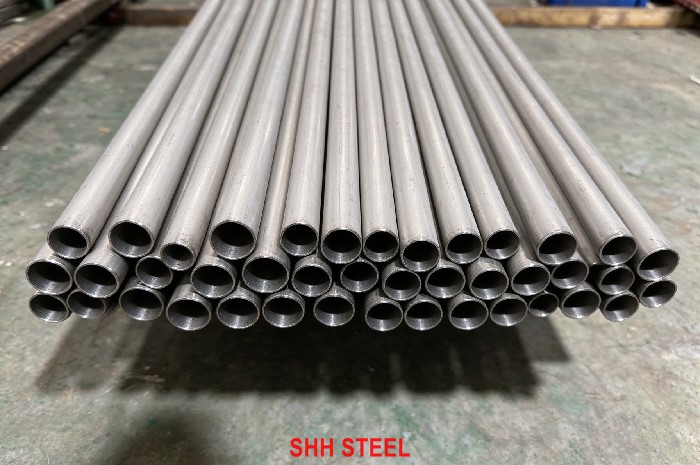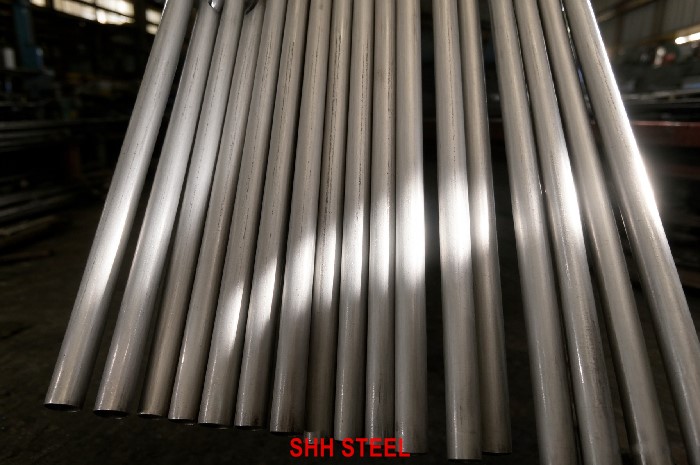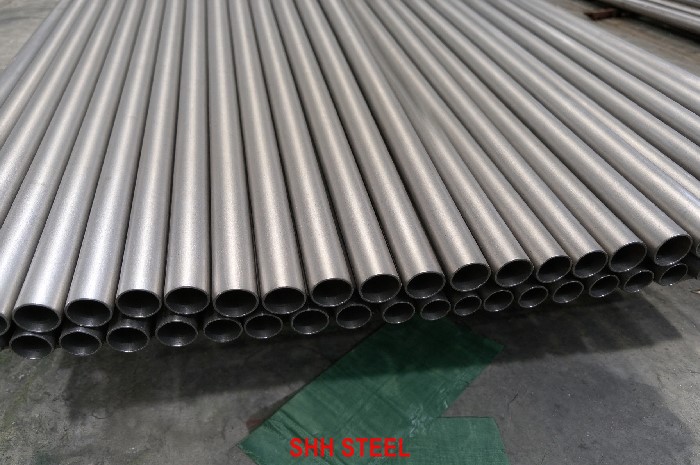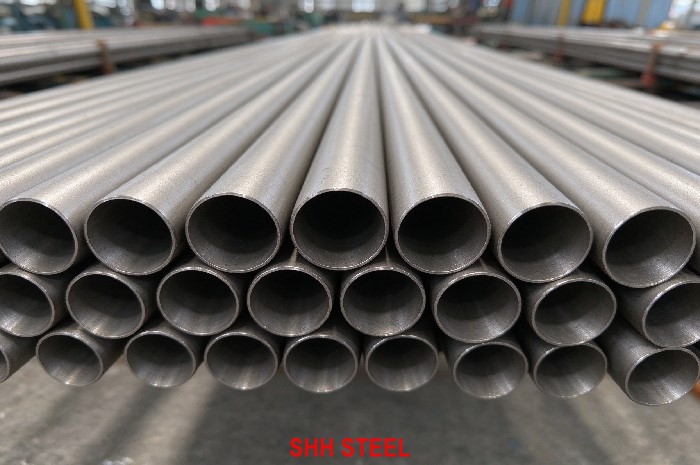
ASME SA312 UNS S30815 Stainless Steel Pipe | SA 312/SA 312M
What is ASME SA312 UNS S30815 Stainless Steel Pipe
ASME SA-312/SA-312M (identical in its grade tables to ASTM A312/A312M) covers seamless, welded, and heavily cold-worked austenitic stainless steel pipe for high-temperature and general corrosive service. UNS S30815 is listed in Table 1 with no TP designation, so it is ordered, stencilled, and certified by UNS number. It is a micro-alloyed heat-resisting grade, and the Code row—not a producer brand—is what the heat has to be checked against.
Table 1 builds on a 21Cr–11Ni base: chromium 20.0–22.0%, nickel 10.0–12.0%, carbon 0.05–0.10%, silicon 1.40–2.00%, nitrogen 0.14–0.20%, cerium 0.03–0.08%, manganese ≤0.80%, phosphorus ≤0.040%, and sulfur ≤0.030%. Table 4 requires 87 ksi [600 MPa] tensile and 45 ksi [310 MPa] yield minimum with 35% longitudinal / 25% transverse elongation—the highest yield floor among the micro-alloyed heat-resisting grades in the specification. Table 2 lists S30815 (with S31272) at 1920 °F [1050 °C] minimum. S30815 is not listed in Table 6, so filler is by agreement, and it is not in Table 5.
SA-312 treats S30815 like an H grade in two ways even though clause 1.2 does not call it one. ASME clause 6.2 requires seamless S30815 to be reheated to the solution temperature before quenching—direct quench from hot forming is not allowed—and clause 17 requires the pipe to carry the heat number and heat-treatment lot identification. The metallurgy explains the interest: cerium and silicon create a thin, tough, adherent oxide that resists spalling in thermal cycling, while nitrogen and carbon strengthen the austenite and support creep resistance. For many furnace and hot-gas components that gives oxidation resistance and strength at least comparable to higher-nickel grades at lower alloy cost.
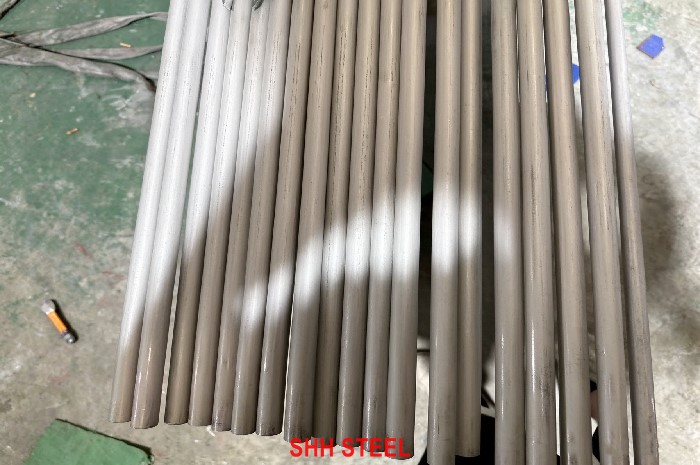
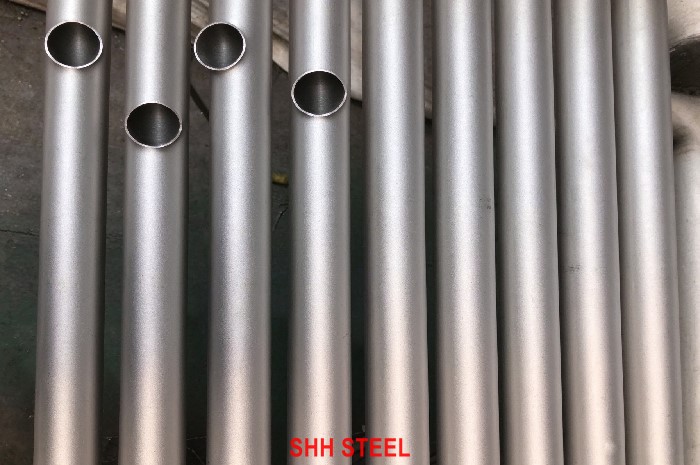
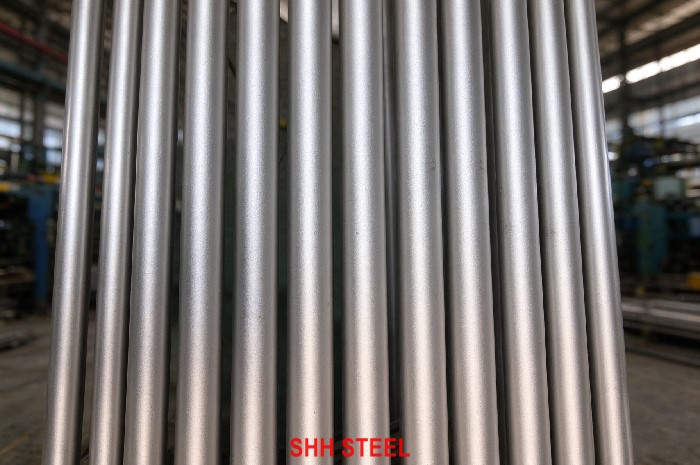
SHH STEEL can supply ASME SA312 UNS S30815 stainless steel pipe to the edition named on the enquiry, as seamless (SML), welded (WLD), or heavily cold-worked (HCW) pipe; in ASME B36.19 schedules or special OD × wall for furnace and recuperator tubes; with EN 10204 3.1 mill test certificates reporting the full Table 1 window including Si, N, and Ce, the reheated 1920 °F anneal, and the heat-treatment lot that also appears on the stencil; and with dual SA-312/A312 marking when heat, heat treatment, tests, and marking satisfy both editions on the order. Seamless is common up to medium sizes, with welded pipe from plate covering large diameters.
Names you may meet and how they map to the ordered product:
- ASME SA312 UNS S30815 / SA-312 S30815 — correct Code form; no TP name exists
- ASTM A312 UNS S30815 — ASTM parent with the same chemistry and tensile rows
- EN 1.4835 (X9CrNiSiNCe21-11-2) — commonly cited European equivalent; verify in EN 10095 / EN 10302 before accepting it
- Producer trade names — the chemistry is sold under proprietary names; order and certify by UNS S30815
S30815 is not interchangeable with its neighbours. ASME SA312 UNS S30415 Stainless Steel Pipe is the leaner version of the same concept for somewhat lower temperatures, with a 42 ksi rather than 45 ksi yield floor. ASME SA312 UNS S30615 Stainless Steel Pipe uses high carbon, silicon, and aluminium for strongly carburizing gases. ASME SA312 TP309S Stainless Steel Pipe and ASME SA312 TP310S Stainless Steel Pipe take the “more chromium and nickel” route at 75/30 ksi, and ASME SA312 TP304H Stainless Steel Pipe remains the simpler choice for creep-range pressure piping with moderate oxidation. Family hub: ASME SA 312/SA 312M.
Manufacturing Types (SML / WLD / HCW)
ASME SA-312 recognizes three manufacturing routes for UNS S30815 pipe, and the route is a purchase-order decision driven by the design code, the size range, wall thickness, and how the owner wants the pipe inspected. The route never changes the chemistry: whichever way the pipe is made, the heat must still meet the Table 1 window of Cr 20.0–22.0%, Ni 10.0–12.0%, C 0.05–0.10%, Si 1.40–2.00%, N 0.14–0.20%, and Ce 0.03–0.08%, and every length must still go through the solution anneal at the Table 2 minimum of 1920 °F [1050 °C] before it is released.
- Seamless (SML) — no welding at any stage. Preferred for high-pressure service, thick walls, and owners who exclude welded pipe from the design class. Under ASME clause 6.2, seamless S30815 must be reheated to the solution temperature before quenching; the mill cannot rely on residual heat from piercing or extrusion.
- Welded (WLD) — automatic welding without filler metal, with the weld finished so the pipe meets dimensional and mechanical requirements after the final heat treatment. The strip or plate heat must itself carry the full UNS S30815 chemistry, so ask for the coil or plate heat number on the certificate.
- Heavily cold-worked (HCW) — welded pipe cold worked to at least 35% reduction of wall and weld before the final anneal, again without filler in the longitudinal seam, with the weld radiographed before cold work. Order HCW when the project specifically wants that marking and the process controls SA-312 writes around it.
Every finished length is hydrostatically tested or nondestructively electrically tested, and the mill may choose the method unless the purchase order fixes one. Pipe NPS 10 and larger may ship marked “NH” only when the purchaser accepts a system test in place of the hydrotest, and lots for mechanical testing follow clause 11.1. Clause 17 requires S30815 pipe to be marked with the heat number and heat-treatment lot identification, so every length can be traced to its anneal.
The separate reheat adds production time but gives a more uniform, fully recrystallized structure with nitrogen and carbon in solution, and it is one reason S30815 lead times run somewhat longer than for ASME SA312 TP304H Stainless Steel Pipe. Typical orders include small-bore thermowell sizes, mid-size furnace and recuperator tubes ordered by OD × wall, and large welded ducts or headers. Group project sizes onto one heat where possible so cerium and nitrogen are consistent across the order.
Chemical Composition of SA312 UNS S30815
Heat analysis must conform to Table 1. Product analysis (S1) is evaluated with ASTM A480/A480M Table A1.1 tolerances via A999, except for cerium.
Melting analysis (heat / ladle analysis) — Table 1
Heat analysis for UNS S30815. Values are maximum unless a range is shown; ellipses (…) mean no requirement.
| Element | UNS S30815 melting analysis |
|---|---|
| Carbon (C) | 0.05 – 0.10 |
| Manganese (Mn) | ≤ 0.80 |
| Phosphorus (P) | ≤ 0.040 |
| Sulfur (S) | ≤ 0.030 |
| Silicon (Si) | 1.40 – 2.00 |
| Chromium (Cr) | 20.0 – 22.0 |
| Nickel (Ni) | 10.0 – 12.0 |
| Nitrogen (N) | 0.14 – 0.20 |
| Cerium (Ce) | 0.03 – 0.08 |
| Molybdenum (Mo) | … (no requirement) |
Source: ASME SA-312/SA-312M ≡ ASTM A312/A312M Table 1, UNS S30815 (grade column “…”). Footnote C: nitrogen method by agreement.
Product analysis — A480/A480M Table A1.1 tolerances applied to Table 1
| Element | Melting (Table 1) | Tolerance (A480 A1.1) | Product analysis limit |
|---|---|---|---|
| Carbon (C) | 0.05 – 0.10 | 0.01 under / over | 0.04 – 0.11 |
| Manganese (Mn) | ≤ 0.80 | 0.03 over | ≤ 0.83 |
| Phosphorus (P) | ≤ 0.040 | 0.005 over | ≤ 0.045 |
| Sulfur (S) | ≤ 0.030 | 0.005 over | ≤ 0.035 |
| Silicon (Si) | 1.40 – 2.00 | 0.10 under / over | 1.30 – 2.10 |
| Chromium (Cr) | 20.0 – 22.0 | 0.20 under / 0.25 over | 19.80 – 22.25 |
| Nickel (Ni) | 10.0 – 12.0 | 0.10 under / 0.15 over | 9.90 – 12.15 |
| Nitrogen (N) | 0.14 – 0.20 | 0.01 under / 0.02 over | 0.13 – 0.22 |
| Cerium (Ce) | 0.03 – 0.08 | Not listed in A480 Table A1.1 | Not established—by agreement |
Cerium gap: A480 Table A1.1 has no row for cerium, so no product-analysis tolerance is published. Any Ce check analysis is by agreement; SHH STEEL reports the certified heat value without an invented tolerance.
Tolerance notes: chromium’s 20.0 minimum is in the 15–20% row (0.20) and its 22.0 maximum in the 20–30% row (0.25). Nickel 10.0 minimum uses the 5–10% row (0.10), 12.0 maximum the 10–20% row (0.15). Nitrogen 0.14 minimum sits in “over 0.02 to 0.19” (0.01) while 0.20 maximum sits in “over 0.19 to 0.25” (0.02). Silicon 1.40–2.00% is wholly in the “over 1.00 to 3.00” row (0.10).
S30415 vs S30815 (Table 1):
| Element | S30415 | S30815 |
|---|---|---|
| C | 0.04 – 0.06 | 0.05 – 0.10 |
| Mn | ≤ 0.80 | ≤ 0.80 |
| P | ≤ 0.045 | ≤ 0.040 |
| Si | 1.00 – 2.00 | 1.40 – 2.00 |
| Cr | 18.0 – 19.0 | 20.0 – 22.0 |
| Ni | 9.0 – 10.0 | 10.0 – 12.0 |
| N | 0.12 – 0.18 | 0.14 – 0.20 |
| Ce | 0.03 – 0.08 | 0.03 – 0.08 |
Element roles: chromium 20–22% forms the main chromia scale; silicon strengthens the scale; cerium improves scale adhesion; nitrogen and carbon add strength and creep resistance; low manganese avoids less protective Mn-rich oxides; nickel keeps the alloy austenitic.
Mechanical Properties of SA312 UNS S30815
| Property (SA-312 Table 4) | UNS S30815 |
|---|---|
| Tensile strength, min | 87 ksi [600 MPa] |
| Yield strength (0.2% offset), min | 45 ksi [310 MPa] |
| Elongation in 2 in. or 50 mm (or 4D), min | 35% longitudinal / 25% transverse |
| Hardness | No maximum listed in Table 4 |
| Grain size | Not listed in Table 5 |
| Grade | UNS | Tensile min, ksi [MPa] | Yield min, ksi [MPa] |
|---|---|---|---|
| TP304H | S30409 | 75 [515] | 30 [205] |
| TP309S | S30908 | 75 [515] | 30 [205] |
| — | S30415 | 87 [600] | 42 [290] |
| — | S30815 | 87 [600] | 45 [310] |
S30815’s 45 ksi yield floor is 50% above TP304H and TP309S. At elevated temperatures, producers publish creep-rupture strengths for this chemistry that are generally well above those of 309- and 310-type alloys, which is the basis for thinner walls in many furnace components. For pressure design, use only allowable stresses listed for S30815 in the governing code.
Tests per SA-312: tension test per heat-treatment lot, flattening or permitted bend on 5% of pipes, hydro or NDE on every length. Elevated-temperature, creep, or rupture tests are PO options.
Creep design notes: in high-temperature furnace parts, design is often governed by creep strain or rupture life rather than room-temperature yield. Producer data for this chemistry typically show creep strength well above that of 309- and 310-type grades across the furnace temperature range. Support spacing, wall thickness, and oxidation allowance should be sized from those data and from the governing code where the part is pressure retaining.
Service embrittlement: long exposure in the intermediate temperature range can precipitate sigma and other phases, reducing room-temperature ductility. Nitrogen and the balanced chemistry of S30815 are generally regarded as slowing this, but used parts should be handled and repaired with care.
Dimensions and Tolerances
S30815 is supplied to ASME B36.19 schedules (5S, 10S, 40S, 80S) and special OD/wall by agreement.
| NPS designator | Wall over | Wall under |
|---|---|---|
| 1/8 to 2-1/2 incl., all t/D | 20.0% | 12.5% |
| 3 to 18 incl., t/D up to 5% | 22.5% | 12.5% |
| 3 to 18 incl., t/D over 5% | 15.0% | 12.5% |
| 20 and larger, welded, all t/D | 17.5% | 12.5% |
| 20 and larger, seamless, t/D up to 5% | 22.5% | 12.5% |
| 20 and larger, seamless, t/D over 5% | 15.0% | 12.5% |
Source: SA-312 Table 3; outside diameter variations per A999/A999M.
- Lengths: NPS 1/8 to 8 up to 24 ft (15–24 ft range) unless agreed
- Cut lengths: up to 1/4 in. [6 mm] over, never under
- Jointers: not permitted unless specified
For furnace tubes, specify straightness and ovality if needed—SA-312 covers wall and OD only. For high-temperature piping, the higher strength of S30815 often allows a lighter wall than 309S or 310S would need; confirm by code calculation with appropriate allowances for oxidation over the design life.
Typical S30815 orders include small-bore instrument and thermowell sizes, mid-size furnace and recuperator tubes ordered by OD × wall, and large welded ducts or headers. Seamless is common up to medium sizes; welded pipe from plate covers large diameters. Wall selection should include an oxidation allowance based on expected scale loss over the planned replacement interval.
Thermal expansion is typical of austenitic stainless and must be accommodated with sliding supports, expansion joints, or loops in long hot lines.
Equivalent Grades
| Designation | Relationship to S30815 |
|---|---|
| ASME SA-312 / ASTM A312, UNS S30815 | Governing pipe grade (no TP name) |
| ASME SA-240 / A240 S30815 | Plate and sheet counterpart (separate specification) |
| ASME SA-213 S30815 | Boiler and heat-exchanger tube (separate specification) |
| EN 1.4835 (X9CrNiSiNCe21-11-2) | Commonly cited European equivalent; verify in EN 10095 / EN 10302 |
| Producer trade names | Sold under proprietary names; order by UNS S30815 |
Related heat-resisting options in SA-312: ASME SA312 UNS S30415 Stainless Steel Pipe (leaner version for somewhat lower temperatures), ASME SA312 UNS S30615 Stainless Steel Pipe (high-C, Si-Al for carburizing gases), ASME SA312 TP309S Stainless Steel Pipe, ASME SA312 TP310S Stainless Steel Pipe, and ASME SA312 TP304H Stainless Steel Pipe for creep-range pressure piping. None is interchangeable with S30815 without review.
Heat Treatment and Delivery Condition
SA-312 Table 2 lists S30815 individually (together with S31272):
| Grade | Solution treatment temperature, min | Cooling |
|---|---|---|
| UNS S30815 | 1920 °F [1050 °C] | Water quench or rapid cooling (Table 2 note D) |
ASME clause 6.2: S30815 is named, with S33228, S31272, and the H grades, as a grade for which pipe must be reheated to the specified solution temperature for the required time before quenching. Direct quenching after hot forming is not permitted. This ensures a consistent, fully recrystallized structure with nitrogen and carbon in solution.
Clause 17 marking: S30815 pipe must be marked with the heat number and the heat-treatment lot identification. Combined with the reheat rule, this gives traceability from each length to its anneal.
- Delivered solution annealed at ≥1920 °F by reheating, then rapidly cooled
- Pickled or bright annealed; free of scale and exogenous iron
- Heat-treatment lot marked on pipe and MTC
- No pre-oxidation required by SA-312
Because the reheat rule applies, mills cannot simply rely on the residual heat of extrusion or piercing; the pipe passes through a separate annealing furnace. That step adds production time but gives a more uniform result, and is one reason why S30815 lead times are somewhat longer than for basic 304 grades. After fabrication, re-annealing is not normally required. Cold-formed parts with heavy deformation may benefit from a solution anneal before high-temperature service to avoid recrystallization effects; follow producer guidance.
Corrosion Resistance
S30815 is designed for high-temperature oxidation and hot-gas service.
- Oxidation: the Cr-Si-Ce oxide is thin, adherent, and resistant to spalling; producers commonly quote use in air up to about 2010 °F [1100 °C] (general guidance, not an SA-312 value)
- Thermal cycling: cerium improves scale adhesion, a key benefit in furnaces that cycle
- Carburization: moderate resistance; for strongly carburizing atmospheres, ASME SA312 UNS S30615 Stainless Steel Pipe or higher-nickel alloys may be better
- Sulfidation: moderate nickel content limits low-melting nickel-sulfide formation compared with high-Ni alloys
- Nitriding: silicon and nitrogen content give reasonable resistance
- Aqueous corrosion: broadly similar to 304-type grades at ambient temperature; not chosen for wet service
Sensitization: with carbon up to 0.10%, S30815 can sensitize after high-temperature exposure. This is generally acceptable in dry hot service but matters if parts see acidic condensate during shutdowns.
Comparison with 309S and 310S in air: producer literature generally describes S30815 as matching or exceeding 309-type alloys in cyclic oxidation, and approaching 310-type alloys at lower cost. In continuous high-temperature air exposure, the 25Cr-20Ni 310 grades may still offer more margin at the very top of the temperature range. These comparisons are general guidance rather than SA-312 data.
Performance depends on atmosphere, temperature, cycling, and contaminants such as vanadium, alkali salts, and chlorides in fuels or process gases. Use producer data and plant experience to confirm suitability.
Applications of SA312 UNS S30815 Pipe
| Application | Role of S30815 | Note |
|---|---|---|
| Petrochemical and refinery furnace components | Tube supports, hangers, hot-gas piping | Confirm code listing for pressure parts |
| Industrial furnace radiant tubes and muffles | Oxidation resistance with high strength | Check carburizing potential |
| Recuperators and heat exchangers | High-temperature air and flue gas | Cold-end condensate risk |
| Fluidized bed and incinerator internals | Hot gas and abrasion | Ash chemistry matters |
| Cement and mineral processing | Burner pipes, cyclone parts | Alkali attack possible |
| Power and boiler components | Soot-blower, superheater supports, hot ducts | Thermal cycling resistance |
Selecting S30815: the alloy is a strong candidate where three conditions meet—service in hot oxidizing gas, thermal cycling that causes scale spalling on ordinary grades, and a need for strength at temperature to keep walls and weights down. Where the atmosphere is strongly carburizing, sulfidizing, or contains molten salts, review alternatives with a materials specialist.
For pressure piping in the creep range with moderate oxidation, ASME SA312 TP304H Stainless Steel Pipe may be simpler; for strong carburization, consider ASME SA312 UNS S30615 Stainless Steel Pipe.
Weldability
S30815 welds well with GTAW, GMAW, SMAW, and SAW using practices similar to 309/310-type alloys. Filler metal and Table 6: UNS S30815 is not listed in SA-312 Table 6. No AWS A5.9 class is given; filler selection is by agreement, recorded on the WPS and, for seam repairs, on the certificate (clause 15). Producers offer matching-chemistry consumables (with Si, N, and Ce) to preserve high-temperature properties in the weld. Where matching filler is not used, nickel-base or 309-type fillers may be chosen for dilution tolerance, with a trade-off in oxidation resistance and strength at the joint.
- Heat input: moderate; avoid very high interpass temperatures
- Hot cracking: fully austenitic weld metal needs clean joints and controlled restraint
- Shielding: argon or argon-helium; argon backing for roots
- Post-weld: cleaning of heat tint; PWHT not normally required
Repairs after service: parts exposed to long high-temperature service may have reduced ductility. A solution anneal before repair welding can restore weldability; consult producer guidance. Dissimilar joints: S30815 is often joined to carbon steel supports or to 304H and 310S parts in furnace assemblies. For carbon-steel joints, 309-type fillers are usual; for joints in the hot zone with other austenitic alloys, matching or nickel-base fillers are typical. Joint location relative to the hottest zone should be considered at the design stage. Qualify procedures to ASME Section IX on S30815 base metal.
Surface Finishes
Surface condition for UNS S30815 pipe should be stated on the purchase order rather than left to mill default. For stainless pipe, embedded free iron, residual scale, and chloride-bearing residues are where corrosion starts, so the finish is part of the material performance and not just appearance. The finishes we regularly quote for this grade are listed below.
- Annealed and pickled (AP) — solution annealed at 1920 °F [1050 °C] minimum, then descaled in acid pickle or an equivalent process to a matte grey finish; the standard choice for process pipe
- Blasted and pickled — common on heavy-wall seamless where blasting first makes scale removal more reliable
- Bright annealed (BA) — annealed in a protective atmosphere where mill capability exists for the size; the anneal temperature still has to meet the Table 2 practice for UNS S30815
- Mechanically polished — OD and/or ID polish to an agreed grit or Ra when ordered; polishing never replaces the solution anneal
- Bead-finished welded OD — weld bead rolled or ground flush as agreed on WLD and HCW product
For high-temperature service a clean, scale-free surface lets the Cr-Si-Ce oxide form evenly on first heat-up, so annealed and pickled or bright annealed is normal and polishing is rarely worth paying for. Remove oils, markers, and shop residues before first firing, and remember that heat tint from fabrication welds should be cleaned off before service. Passivation after pickling or polishing can be added when the end-user specification calls for it, even though SA-312 itself does not require it. If the project bans chloride-bearing marking inks, say so on the order; otherwise the mill will apply its normal stencil practice and ship its default AP finish.
Inspection and Testing
The base acceptance package for SA-312 UNS S30815 pipe combines chemistry, tensile testing, heat-treatment evidence, and a pressure or electrical integrity test on every length. The items below make up the usual package; supplementary requirements and project corrosion tests only apply when they are written on the purchase order.
- Heat (melting) analysis — mandatory per heat against Table 1 for UNS S30815: C 0.05–0.10%, Mn ≤0.80%, P ≤0.040%, S ≤0.030%, Si 1.40–2.00%, Cr 20.0–22.0%, Ni 10.0–12.0%, N 0.14–0.20%, Ce 0.03–0.08%
- Product analysis — when ordered (Suppl. S1 or PO wording), using A480 Table A1.1 tolerances via A999 §6.3; A480 has no cerium row, so Ce product acceptance is by agreement
- Tension test — 87 ksi [600 MPa] tensile, 45 ksi [310 MPa] yield, 35% L / 25% T elongation, tested per heat-treatment lot on a lot basis
- Flattening test — or the alternate bend test where the standard permits
- Hydrostatic or nondestructive electric test — every length; manufacturer’s option unless the order fixes the method
- Visual and dimensional check — against ordered NPS/schedule or OD × wall, with “UNS S30815” plus heat-treatment lot on every stencil
Mill test certificates: EN 10204 3.1 is the standard documentation from SHH STEEL supply. For S30815 the certificate should show cerium inside 0.03–0.08%, nitrogen inside 0.14–0.20%, silicon inside 1.40–2.00%, manganese ≤0.80%, the reheated solution anneal at or above 1920 °F, and the heat-treatment lot number that matches the stencil. A certificate without cerium or without the lot reference does not demonstrate compliance and should be corrected before shipment. EN 10204 3.2 or third-party witness by SGS, Bureau Veritas, TÜV, or the buyer’s nominated agency is arranged when specified, and it should be booked before final testing rather than after the heat has been released. Dual ASME SA-312 / ASTM A312 certification is available when chemistry, heat treatment, mechanical tests, and marking satisfy both editions named on the order.
| Option | Purpose |
|---|---|
| S1 product analysis | Confirms chemistry on finished pipe |
| S5 radiography | Weld integrity on WLD pipe |
| S7 intergranular corrosion | A262 Practice E after sensitizing treatment |
| S8 minimum wall | Wall interpreted as minimum rather than nominal |
| S9 weld decay | Compares weld and base-metal loss rates |
Receiving PMI with XRF will confirm chromium, nickel, and silicon approximately, but nitrogen, carbon, and cerium need OES or laboratory analysis, so rely on the heat certificate and lot marking for those. For furnace tubes, add straightness and ovality checks against the drawing, since SA-312 covers wall and OD only.
Packaging and Shipping
Export and domestic shipments of UNS S30815 pipe are packed for handling and for ocean or land transport. The packing we normally apply is summarized below, and anything beyond it can be agreed on the order.
- Seaworthy bundles — pipes strapped or cradled in bundles sized for container or break-bulk handling, with non-metallic separators where the finish needs protecting
- End caps — plastic or metal caps on plain or beveled ends to keep out damage and contamination in transit
- Marking — specification, grade (UNS S30815 with heat-treatment lot), heat number, size, manufacturing type (SML / WLD / HCW), test letters, and mill identity as SA-312 and the purchase order require
- Export protection — waterproof wrapping or desiccant as agreed for polished or bright-annealed finishes, with low-chloride inks on request
Keep heat-treatment lots together in the bundle and on the packing list, because clause 17 traceability is only useful if the lot on the stencil can still be matched to its certificate at site. Segregate S30815 from S30415, 309S, and 310S stock, which look identical once installed. Keep interiors dry and capped so chloride-bearing moisture cannot stain or pit the surface before installation. Shipping documents normally include the packing list, invoice, bill of lading or air waybill, and the 3.1 or 3.2 MTC with full Table 1 chemistry, plus origin and customs papers to suit the agreed Incoterms.
Why Choose SHH STEEL
SHH STEEL supplies specification-driven stainless plate and pipe, and for ASME SA312 UNS S30815 / S30815 we quote against the edition you name rather than a generic catalogue sheet. With S30815 the usual problems are paperwork and process rather than price: cerium not reported, a seamless lot direct-quenched instead of reheated, or a stencil without the heat-treatment lot. We source from mills that run this chemistry routinely and check Table 1, the 1920 °F reheat, and the clause 17 marking before release. Heat identity stays unbroken from the melt to the finished length, so receiving inspection can clear each heat against Table 1 and Table 4 without chasing paperwork after the pipe has arrived.
We are equally plain about what the standard leaves open. Table 6 names no filler for S30815 and A480 has no cerium tolerance, so both are agreed on the order, and oxidation limits such as the often-quoted ~2010 °F in air come from producer literature rather than SA-312. If the atmosphere is strongly carburizing we will point toward S30615 or a higher-nickel alloy instead of stretching S30815.
- Specification fidelity — certified as UNS S30815 with Si, N, and Ce reported, reheated 1920 °F anneal confirmed, and heat-treatment lot on MTC and stencil
- Mill resources — SML, WLD, and HCW from qualified stainless pipe mills with heat traceability; cutting and beveling on confirmed orders
- Documentation — EN 10204 3.1 MTCs as standard with full Table 1 chemistry; 3.2 or third-party inspection on request
- Dual marking — ASME SA-312 and ASTM A312 when the heat and tests meet both editions you name
- Related grades — UNS S30415, UNS S30615, TP309S, TP310S, and TP304H when a project buys a matched package
- Export packing — seaworthy bundles, end protectors, and durable grade, heat, size, and type marking
Quotations follow your purchase-order language for edition year, manufacturing type, size, wall, finish, and any supplementary tests you name (S1, S5, S7, S8, S9). If the same project also needs plate or fittings, ask for coordinated heats so the chemistry lines up across product forms. Grade hub: ASME SA 312/SA 312M.
Supply Capability
SHH STEEL can supply ASME SA312 UNS S30815 stainless steel pipe against the edition and manufacturing type named on your enquiry. The capability table below summarizes the routes, sizes, finishes, and documents we regularly quote for this grade.
| Item | SHH STEEL capability for UNS S30815 |
|---|---|
| Standard | ASME SA-312/SA-312M and/or ASTM A312/A312M (edition per PO; grade marked UNS S30815, no TP name) |
| Manufacturing types | SML, WLD, HCW |
| Size | NPS 1/8 and up per ASME B36.19; special OD/wall by agreement |
| Schedules | 5S, 10S, 40S, 80S and non-standard walls |
| Length | SRL, DRL, or cut-to-length |
| Finish | Annealed and pickled; blasted and pickled; bright annealed or polished by agreement |
| Testing | Hydrostatic or NDE per length; tension per heat-treatment lot; S1 product analysis, straightness/ovality and elevated-temperature tests when ordered |
| Documents | EN 10204 3.1 with full Table 1 chemistry; third-party inspection / 3.2 on request |
| Trade terms | FOB / CFR / CIF / EXW and other agreed Incoterms |
S30815 is more widely produced than most specialty heat-resisting grades, and common furnace sizes can sometimes be covered from mill or stockist inventory, while heavy-wall seamless and large welded sizes are made to order. Send OD × wall, lengths, quantities, operating temperature, and atmosphere so we can confirm the route and lead time. Enquiries should state the SA-312 edition, UNS S30815 (no TP name), SML/WLD/HCW, NPS or OD × wall (and whether wall is nominal or minimum), length practice, finish, and any product-analysis, corrosion-test, or 3.2 requirements, so mill slots line up with your need date. Cut lengths, beveling, and packing-list marking are available on confirmed orders, and grouping project sizes onto one heat keeps the chemistry consistent while helping meet mill minimums without over-ordering.
FAQ
-
Does UNS S30815 have a TP grade name in SA-312?
- No. Table 1 lists S30815 with an ellipsis in the grade column, so there is no TP designation. Order and mark it as “ASME SA-312 UNS S30815” or ASTM A312 UNS S30815 with the edition year. Producer trade names are fine for conversation, but the purchase order and certificate must cite the UNS number.
-
What Table 1 chemistry defines UNS S30815?
- Table 1 requires C 0.05–0.10%, Mn ≤0.80%, P ≤0.040%, S ≤0.030%, Si 1.40–2.00%, Cr 20.0–22.0%, Ni 10.0–12.0%, N 0.14–0.20%, and Ce 0.03–0.08%. These are melting-analysis limits; order product analysis (S1) if finished pipe must be checked, noting that the nitrogen method and cerium tolerance are by agreement.
-
What are the Table 4 mechanical requirements for S30815?
- Table 4 sets 87 ksi [600 MPa] minimum tensile and 45 ksi [310 MPa] minimum yield, with 35% longitudinal and 25% transverse elongation and no hardness limit. The 45 ksi yield is 50% above TP304H and TP309S. For furnace parts, creep strain and rupture life usually govern, so size walls from producer data and the governing code.
-
What heat treatment does Table 2 require for S30815?
- Table 2 lists S30815, together with S31272, at a 1920 °F [1050 °C] minimum solution treatment followed by water quench or other rapid cooling. Ask for the actual temperature on the MTC. After fabrication, re-annealing is not normally required, though heavily cold-formed parts may benefit from a solution anneal before high-temperature service.
-
Must seamless S30815 be reheated before quenching?
- Yes. ASME clause 6.2 names S30815, with S33228, S31272, and the H grades, as a grade that must be reheated to the specified solution temperature for the required time before quenching. Direct quenching after hot forming is not permitted, so the pipe passes through a separate annealing furnace, which adds time but gives a uniform structure.
-
Is heat-treatment lot marking required on S30815 pipe?
- Yes. Clause 17 requires S30815 pipe to be marked with the heat number and the heat-treatment lot identification, as for H grades. Combined with the reheat rule, that gives traceability from each length to its anneal. Check that the lot on the stencil matches the lot on the certificate before the pipe goes into fabrication.
-
Is UNS S30815 an H grade?
- It is not listed as an H grade in clause 1.2 and is not in Table 5, so there is no grain-size requirement. SA-312 nevertheless applies H-grade-like rules to it: reheating before quench under clause 6.2 and heat-treatment lot marking under clause 17. Treat it as an H grade for heat-treatment and traceability purposes.
-
Which filler metal should be used to weld S30815?
- S30815 is not listed in Table 6, so no AWS A5.9 class is given and filler is by agreement, recorded on the WPS and on the certificate for any seam repair. Producers offer matching consumables with Si, N, and Ce to keep high-temperature properties in the weld; 309-type or nickel-base fillers trade some oxidation resistance for dilution tolerance.
-
Is there a product-analysis tolerance for cerium in S30815?
- No. ASTM A480 Table A1.1 has no cerium row, so the finished-pipe tolerance for Ce is not established and acceptance is by agreement. We report the heat value against the 0.03–0.08% Table 1 window and do not apply an invented tolerance. If your inspector needs a product limit, write it on the purchase order.
-
How does UNS S30815 compare with UNS S30415?
- Both use silicon, nitrogen, and cerium on a Cr-Ni base, but S30815 carries more chromium (20.0–22.0%) and nickel (10.0–12.0%), a wider carbon range, and a 45 ksi rather than 42 ksi yield floor, so it is positioned for higher service temperatures. They share the same 87 ksi tensile minimum and are not interchangeable without review.
-
How does S30815 compare with TP309S and TP310S?
- TP309S and TP310S rely on higher chromium and nickel and carry 75/30 ksi Table 4 floors, while S30815 reaches 87/45 ksi with leaner alloying plus Si-N-Ce. Producer literature describes S30815 as matching or exceeding 309-type alloys in cyclic oxidation; 310-type alloys may still offer more margin at the very top of the range.
-
Is UNS S30815 suitable for pressure piping?
- It can be, where the governing code lists allowable stresses for S30815 at the design temperature, and its high strength often allows a lighter wall than 309S or 310S. Many uses are non-pressure furnace parts, though. Include an oxidation allowance for the planned replacement interval, and confirm code listing before using it in a pressure-retaining part.
Conclusion
ASME SA312 UNS S30815 is a TP-less 21Cr–11Ni heat-resisting pipe grade micro-alloyed with Si 1.40–2.00%, N 0.14–0.20%, and Ce 0.03–0.08%, meeting 87 ksi [600 MPa] tensile and 45 ksi [310 MPa] yield minima after a 1920 °F [1050 °C] solution anneal that, for seamless pipe, must be done by reheating, with heat-treatment lot marking required. It is not a substitute for UNS S30415, UNS S30615, or TP310S without review, and filler and cerium product tolerance are by agreement. For sizes, lead times, mill certificates, or dual SA-312/A312 supply, contact SHH STEEL at admin@steelspecs.com or browse the ASME SA 312/SA 312M category.
Quality Steel Needed? Inquire for Offers
Related Products