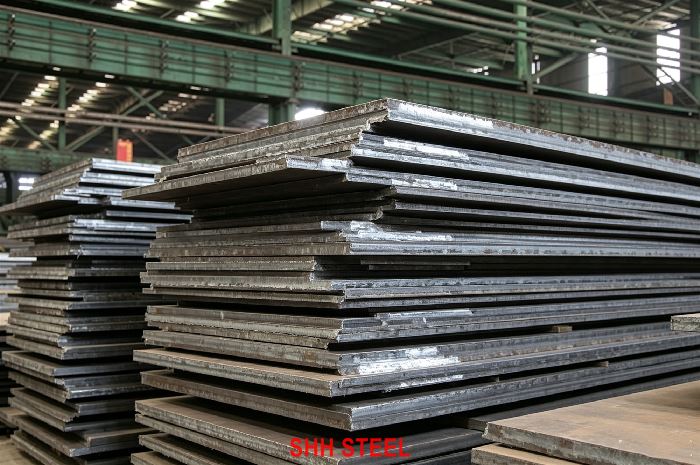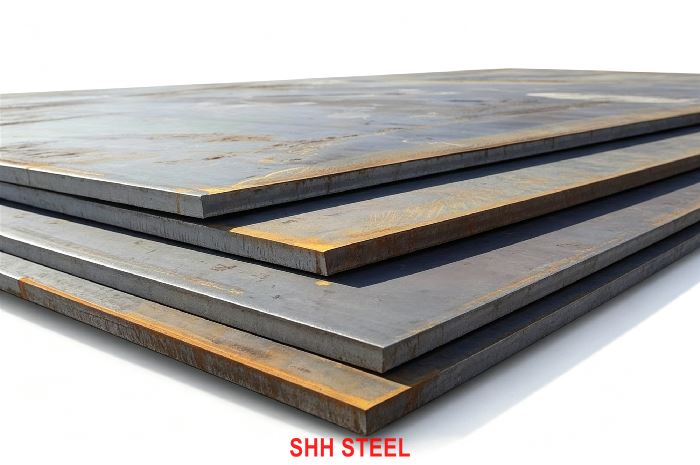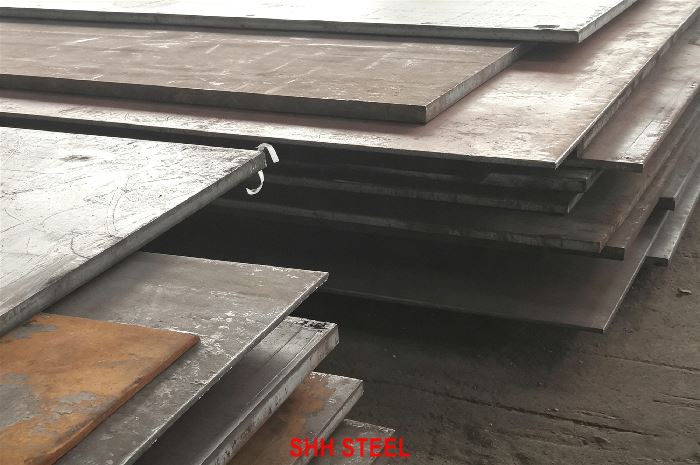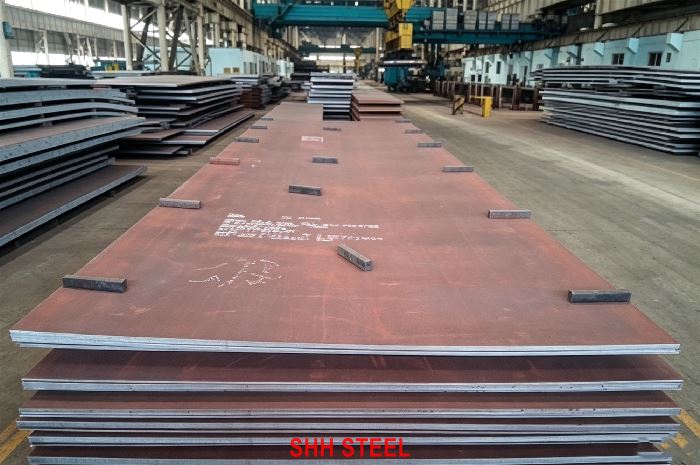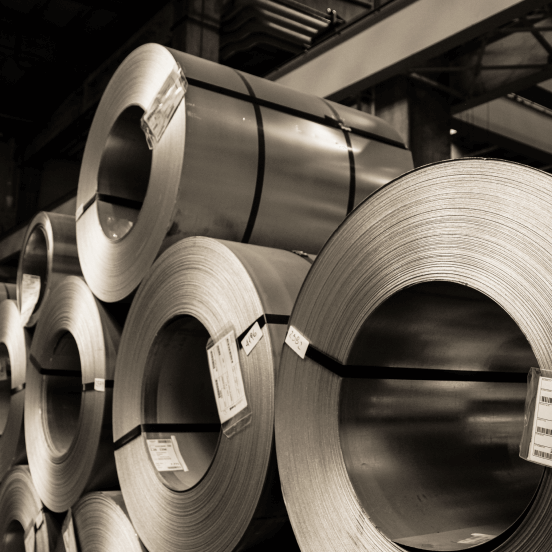

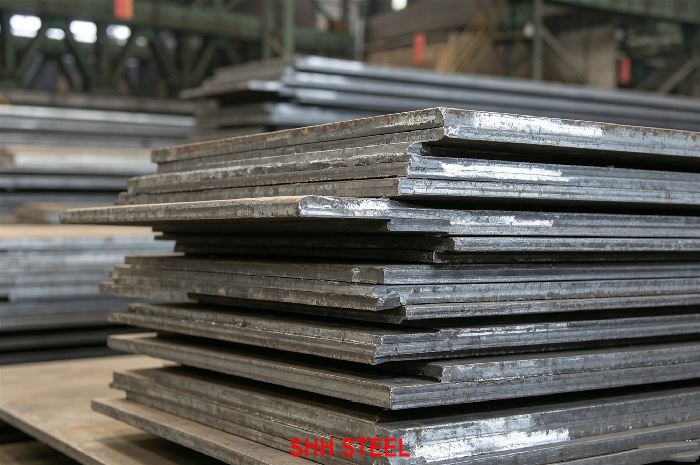
ASME SA736 Grade A Class 2 Steel Plate | SA736 Gr.A Cl.2 Age-Hardening Vessel Plate
What is ASME SA736 Grade A Class 2 Steel?
ASME SA736 Grade A Class 2, also written ASME SA736 GR.A CL.2, is low-carbon age-hardening alloy plate under ASME SA-736/SA-736M. The alloy family is nickel-copper-chromium-molybdenum-columbium (niobium). Class 2 is the mid-strength Class on Grade A. On the usual thin-plate line it is 450 MPa yield and 495–635 MPa tensile. Unlike Class 1, the Class 2 table continues through thicker plate, with yield stepping down as thickness rises. As Direct Mill Supply by SHH STEEL, the plate is produced to the SA-736 / A736 edition named on the purchase order.
Read the edition first. Current ASTM A736/A736M-17 and A736/A736M-25 say the product is available in Grade A, Class 3 only. Older ASME and ASTM listings still show Grade A Class 1, Grade A Class 2 and Grade C. If the drawing is written to a current book, Class 2 is not the listed product. If the drawing is written to an older book that still names Class 2, this page is the combination to quote. Do not assume Class 2 and Class 3 are interchangeable.
Buyers write ASME SA736 Grade A Class 2, ASME SA736 GR.A CL.2, SA736 Grade A Class 2, SA736 Gr.A Cl.2, SA736GRA CL2, SA-736 Grade A Class 2 and SA 736 Gr A Cl 2. ASTM A736 Grade A Class 2 is the companion name on older product specs. A purchase order that only says “SA736 Grade A” is incomplete.
This page is not SA537 Cl.1. SA537 is heat-treated C-Mn-Si. SA736 Grade A Class 2 is an age-hardening Ni-Cu-Cr-Mo-Nb alloy. It is not SA517 Gr.B. It is not SA841 TMCP. It is not ASME SA516 and not ASME SA387. Copper at about 1.00–1.30% and niobium are part of the precipitation system.
Class 2 is not Class 1 and not Class 3. Class 1 is the high thin-plate line, typically to 20 mm. Class 3 is the quenched-and-precipitation-treated line that current ASTM still lists. Class 2 on older tables is commonly the normalized-plus-precipitation route and the thickness-stepped mid line. Dual marking is available when the named edition still carries Class 2. Certificates can be EN 10204 3.1 or 3.2. Company scope: China steel Mill Agent-SHH STEEL.
Material Specification
| Specification Element | Requirement | SHH STEEL Compliance |
|---|---|---|
| Grade / Class | ASME SA736 Grade A Class 2 | Confirmed against named edition |
| Product Specification | ASME SA-736/SA-736M | Applied |
| Companion Spec | ASTM A736 Grade A Class 2 | When that edition lists it |
| Current ASTM note | A736-17 / A736-25 list Grade A Class 3 only | Flagged on inquiry |
| General Requirements | ASME SA-20 / ASTM A20 | Applied |
| Alloy family | Ni-Cu-Cr-Mo-Nb, low carbon | Confirmed |
| Class 2 idea | Mid-strength line, thickness-stepped | Confirm on order |
| Intended use | Welded pressure vessels and piping components | As specified |
| Certification | EN 10204 3.1 or 3.2 / third-party | As ordered |
This plate sits in the pressure vessel steel plates family. It does not sit with carbon steel plates and it does not sit with structural steel plates or ASTM A36/A36M. If a buyer sends an HSLA cutting list from ASTM A572 and an age-hardening vessel drawing on the same email, those are two different books.
SA-20 still governs marking, testing location, retests and repair rules.
Chemical Composition
ASME SA736 Grade A Class 2 / ASME SA736 GR.A CL.2 uses Grade A chemistry. Class only changes heat treatment and tensile. Grade C, when it appeared in older tables, used higher manganese and dropped the chromium band.
Heat Analysis and Product Analysis — ASME SA736 Grade A
| Element | Heat Analysis (%) | Product Analysis (%) |
|---|---|---|
| Carbon (C), max | 0.07 | 0.09 |
| Manganese (Mn) | 0.40 – 0.70 | 0.35 – 0.78 |
| Phosphorus (P), max | 0.025 | 0.025 |
| Sulfur (S), max | 0.025 | 0.025 |
| Silicon (Si), max | 0.40 | 0.45 |
| Nickel (Ni) | 0.70 – 1.00 | 0.67 – 1.03 |
| Copper (Cu) | 1.00 – 1.30 | 0.95 – 1.35 |
| Chromium (Cr) | 0.60 – 0.90 | 0.56 – 0.94 |
| Molybdenum (Mo) | 0.15 – 0.25 | 0.12 – 0.28 |
| Niobium (Nb / Cb), min | 0.02 | 0.01 |
Carbon at 0.07% heat maximum is the low-carbon marker. Copper at 1.00–1.30% and niobium drive precipitation hardening. Chromium 0.60–0.90% and molybdenum 0.15–0.25% belong to Grade A. If chromium is missing and manganese jumps to the old Grade C band, the ladle is not Grade A.
If the drawing wants Cr-Mo without copper-niobium aging, look at SA387 Gr.11 Cl.1 or SA387 Gr.12 Cl.2. If it wants QT Mn-Mo-Ni, look at SA533 Type B Class 1. SHH STEEL reports heat analysis on every certificate, including Cu, Ni, Cr, Mo and Nb.
Mechanical Properties
Class 2 is the mid line. Yield falls as thickness rises.
Tensile Requirements — ASME SA736 Grade A Class 2 (typical older table)
| Thickness | Yield strength, min | Tensile strength |
|---|---|---|
| ≤ 20 mm | 450 MPa (65 ksi) | 495 – 635 MPa (72 – 92 ksi) |
| > 20 mm to 25 mm | 450 MPa (65 ksi) | 495 – 635 MPa (72 – 92 ksi) |
| > 25 mm to 50 mm | 415 MPa (60 ksi) | 495 – 635 MPa (72 – 92 ksi) |
| > 50 mm to 100 mm | 380 MPa (55 ksi) | Per Class 2 table |
| > 100 mm | 345 MPa (50 ksi) | Per Class 2 table |
| Density | 7.85 g/cm³ | 7.85 g/cm³ |
Class 1 on the same Grade is 550 MPa yield and 620–760 MPa tensile, typically only to 20 mm. Class 3 on the common thin-to-medium band is 515 MPa yield and 585–725 MPa tensile. Do not stamp Class 2 as Class 1 because someone wants the higher name. Do not stamp Class 3 as Class 2 because current ASTM lists Class 3.
Density is 7.85 g/cm³. Notch toughness belongs in this family. Write the impact temperature when the vessel specification names one.
Do not treat 450 MPa yield as permission to substitute ASTM A36 steel plate, high strength low alloy plates or SA516 Gr.70.
Material Comparison
| Grade | Route | Strength / thickness idea | Swap? |
|---|---|---|---|
| SA736 Grade A Class 1 | Age-hardening Grade A | 550 MPa, typically ≤ 20 mm | No |
| SA736 Gr.A Cl.2 | Age-hardening Grade A | 450 MPa thin line, thicker stack | This page |
| SA736 Grade A Class 3 | Quench + precipitation HT | Current ASTM listing | No |
| SA736 Grade C (older) | Age-hardening, no Cr band | Different Grade | No |
| SA537 Cl.1 | Heat-treated C-Mn-Si | No Cu-Nb aging | No |
| SA517 Gr.B | QT alloy | Different book | No |
| SA387 Gr.22 Cl.2 | Cr-Mo | No age-hardening Cu-Nb | No |
SA299 Gr.B, SA225 Gr.D, SA455 and SA285 Gr.C are also vessel plates. None of them is ASME SA736 GR.A CL.2.
Age-Hardening Vessel Service
ASME SA736 Grade A Class 2 / ASME SA736 GR.A CL.2 is selected when an older vessel or piping specification still names Class 2 and the designer wants the mid tensile line through thicker plate. Allowable stress comes from the Code year that actually lists Grade A Class 2. Do not copy a current Class 3 allowable onto a Class 2 drawing.
Typical use is welded pressure vessels and piping components written specifically to SA-736 Grade A Class 2. It is not nickel low-temp plate like SA203 Gr.A or SA203 Gr.E. It is not layered QT carbon like SA724. Stainless inquiries belong on ASME SA240/SA240M, ASTM A240/A240M or stainless steel sheets and plates.
Precipitation hardening is the product. A later high-temperature cycle can over-age or under-age the copper-niobium strengthening. Simulated coupons are required when the vessel specification already knows a PWHT hold.
Weldability
SA736 Gr.A Cl.2 is killed, low-carbon, age-hardening alloy plate at the mid Class. Welding is Code welding.
Qualify procedures to ASME Section IX. Use low-hydrogen consumables chosen for the Ni-Cu-Cr-Mo-Nb system and the Class 2 tensile band after any permitted aging or PWHT cycle. Carbon is low. Copper at 1.00–1.30% and niobium do not weld like SA516 Gr.70.
Preheat, interpass and any post-weld aging follow the qualified WPS. Do not copy a SA387 Gr.12 Cl.1 Cr-Mo procedure or a SA533 Type A Class 2 QT procedure onto Grade A Class 2 without review. The fabricator owns the WPS.
Heat Treatment
Class 2 on older SA-736 / A736 tables is an age-hardening Class, commonly described as normalized and then precipitation heat treated. It is not the Class 1 as-rolled-plus-age route and it is not the current Class 3 sentence “quenched and precipitation heat treated.” Do not run a Class 3 quench route and stamp Class 2 because the coupon looks close.
If the vessel will see warm forming or PWHT, test coupons shall follow a simulated cycle so the precipitation response is measured after that hold. This is not the normalize-only route used for SA516 Gr.60 and not the QT route used for SA537 Cl.2. SHH STEEL prints the heat-treatment route, Grade A and Class 2 on the certificate when that edition is the contract.
Delivery Condition
Usual delivery is precipitation heat treated Grade A Class 2 plate against the named edition.
The certificate lists ASME SA736 Grade A Class 2 and, when dual certified, ASTM A736 Grade A Class 2; the specification year; heat number; heat analysis including Cu, Ni, Cr, Mo and Nb; product analysis when ordered; tensile results by thickness to the Class 2 table; heat-treatment statement; impact results when ordered; and supplementary tests. Certificates may be EN 10204 3.1 or EN 10204 3.2.
Dimensions
Usual supply range from SHH STEEL for SA736 Gr.A Cl.2 age-hardening vessel plate:
- Thickness: commonly 8 mm – 100 mm, with yield stepping down above 25 mm, 50 mm and 100 mm
- Width: 1500 mm – 4000 mm
- Length: 3000 mm – 12000 mm
- Cut-to-length shells, piping components and nest sizes inside those limits
A 12 mm inquiry that wants 550 MPa yield is Class 1, not Class 2. Structural sizes belong on EN 10025-2 or JIS G3106. Weathering plate belongs on EN 10025-5 or Corten A/B. Fine-grain structural belongs on EN 10025-3 or EN 10025-4. QT structural belongs on EN 10025-6.
Tolerances
Dimensional limits follow ASME SA-20. Thickness, width, length, flatness and camber are vessel-plate tolerances. UT to A435 / A577 / A578 is commonly added on thicker Class 2 plate.
Supplementary Requirements
Most export ASME SA736 Grade A Class 2 / ASME SA736 GR.A CL.2 orders add extras. SHH STEEL does not assume them.
Specification year. Write the ASME or ASTM year. Current A736 does not list Class 2.
Charpy / notch toughness details. Temperature, energy, location and orientation.
Simulated PWHT / aging cycle. Same-heat coupons follow the vessel hold.
NDE. UT to A435 / A577 / A578.
Third-party. EN 10204 3.2.
Equivalent Material Grades
| Designation | Standard | Notes |
|---|---|---|
| ASME SA736 Grade A Class 2 / ASME SA736 GR.A CL.2 | ASME SA-736/SA-736M | Older Code listing on this page |
| ASTM A736 Grade A Class 2 | ASTM A736/A736M | Older product listing |
| SA736 Grade A Class 3 | Current ASTM availability | Different Class |
| SA736 Grade A Class 1 | Older listing | Higher thin-plate line |
| SA736 Grade C Class 1 / 3 | Older listings | Different Grade |
| EN / JIS / GB Ni-Cu-Nb related | EN / JIS / GB | Project comparison only |
| ASME SA537 | SA-537 | Heat-treated carbon, not this alloy |
| ASTM A537 | A537 | Same caution |
DIN 17100, ASTM A516, ASME SA515 and ASTM A285 are not SA736 Grade A Class 2.
Applications
| Industry | Typical components |
|---|---|
| Pressure vessels | ASME SA736 Grade A Class 2 shells and ASME SA736 GR.A CL.2 heads |
| Piping components | SA736 Gr.A Cl.2 age-hardening plate |
| Dual-certified export | Dual mark only when the named edition lists Class 2 |
| Fabrication | SA736 Gr.A Cl.2 cut to nest sizes |
Ship plate inquiries belong on shipbuilding steel plates or BV Rules. Weathering inquiries belong on weathering steel plates. Stainless inquiries belong on stainless steel products, JIS G4305 or AISI stainless.
Other vessel comparisons: SA203 Gr.B, SA302 Gr.C, A516 Gr.70, SA533 Type C Class 2, SA517 Gr.P.
Why Choose SHH STEEL
SHH STEEL works as a China Mill Direct Exporter for plates to ASME SA-736/SA-736M. On ASME SA736 Grade A Class 2 / ASME SA736 GR.A CL.2 that means we first check the Code year. If the order names a current A736 that lists Class 3 only, we say so. If the order names an older edition that still carries Class 2, we supply Grade A chemistry, precipitation heat treatment, Class 2 tensile results by thickness, 3.1 as standard and 3.2 when specified.
We keep Grade and Class on the order. Class 2 is not Class 1 and is not Class 3. Grade A is not Grade C. SA736 is not SA516 Gr.55. SA736 is not SA387 Gr.91 Cl.2. SA736 Gr.A Cl.2 is not SA533 Type C Class 1. If the drawing wants 550 MPa at 12 mm, that is Class 1. If the shop plans a normalize-only delivery with no aging, we will say this specification is age-hardening.
Company scope: China steel Mill Agent-SHH STEEL.
FAQ
- What names are used for ASME SA736 Grade A Class 2 / ASME SA736 GR.A CL.2?Buyers write ASME SA736 Grade A Class 2, ASME SA736 GR.A CL.2, SA736 Grade A Class 2, SA736 Gr.A Cl.2, SA736GRA CL2, SA-736 Grade A Class 2 and SA 736 Gr A Cl 2. SHH STEEL prints the wording on the purchase order.
- Is ASME SA736 Grade A Class 2 still in current ASTM A736?Current ASTM A736/A736M-17 and -25 list Grade A, Class 3 only. Class 2 appears in older listings. Write the edition on the order.
- Is ASME SA736 GR.A CL.2 the same as ASTM A736 Grade A Class 2?On editions that list Class 2, chemistry and tensile limits match. ASME SA-736 is the Code version. ASTM A736 is the product spec. As China mill-Direct Supply, SHH STEEL dual-certifies both names when that edition is the contract.
- What is the yield strength of SA736 Gr.A Cl.2?450 MPa minimum through about 25 mm. Then 415 MPa, 380 MPa and 345 MPa as thickness rises. Tensile on the thin-to-medium band is 495–635 MPa.
- How is ASME SA736 Grade A Class 2 different from Class 1 and Class 3?Same Grade A chemistry. Class 1 is 550 MPa yield, typically to 20 mm. Class 2 is the mid line through thicker plate. Class 3 is the current quenched-and-precipitation-treated listing.
- Is ASME SA736 GR.A CL.2 the same as SA537 or SA517?No. SA537 is heat-treated C-Mn-Si. SA517 is QT alloy. SA736 Grade A Class 2 is age-hardening Ni-Cu-Cr-Mo-Nb.
- Can SHH STEEL issue EN 10204 3.2 for ASME SA736 Grade A Class 2?Yes. EN 10204 3.1 is standard. EN 10204 3.2 is arranged when written on the order.
Conclusion
ASME SA736 Grade A Class 2 Steel Plate, also searched as ASME SA736 GR.A CL.2, is low-carbon age-hardening Ni-Cu-Cr-Mo-Nb plate under older SA-736 / A736 listings, with 450 MPa yield on the thin Class 2 line and a stepped table through thicker plate. Whether the inquiry says ASME SA736 Grade A Class 2, ASME SA736 GR.A CL.2, SA736 Gr.A Cl.2 or SA736GRA CL2, SHH STEEL first checks the Code year, then supplies Grade A chemistry, recorded precipitation heat treatment, Class 2 tensile results, and EN 10204 3.1 or 3.2 certification when that edition is the contract.
As a China mill Distributor, SHH STEEL provides ASME SA736 Grade A Class 2 / ASME SA736 GR.A CL.2 Age-Hardening Vessel Plate for work that actually names this Grade and Class.
Contact SHH STEEL for mill rolling, edition confirmation, dual marking, 3.2 inspection or a quotation.
ASME SA736 Grade A Class 2 Steel Plate, ASME SA736 GR.A CL.2, SA736 Gr.A Cl.2, SA736GRA CL2, SA-736 Grade A Class 2, age-hardening vessel plate, Direct Mill Supply by SHH STEEL
Quality Steel Needed? Inquire for Offers
Related Products