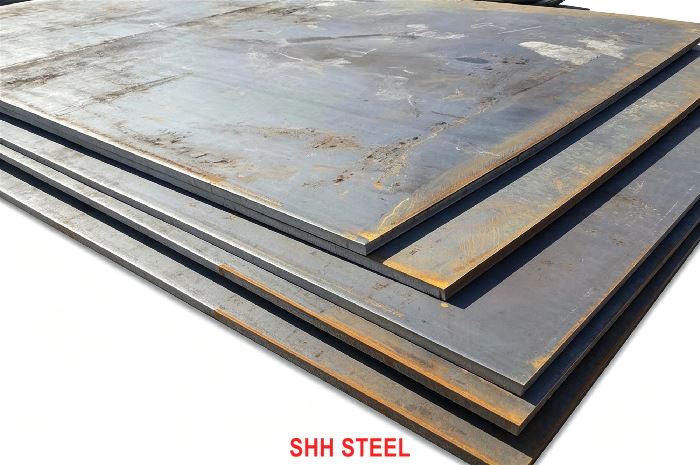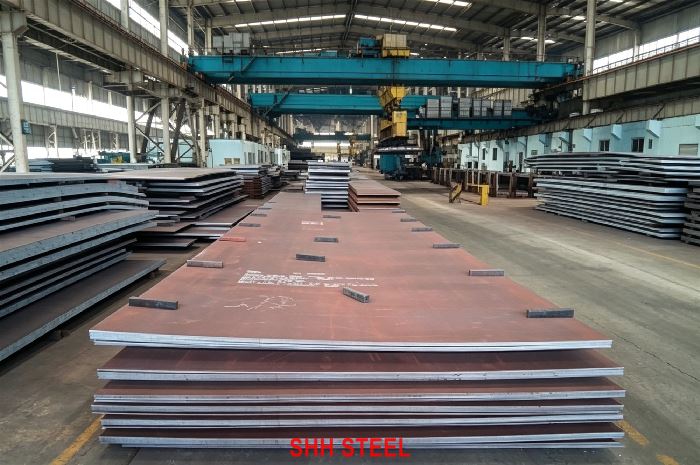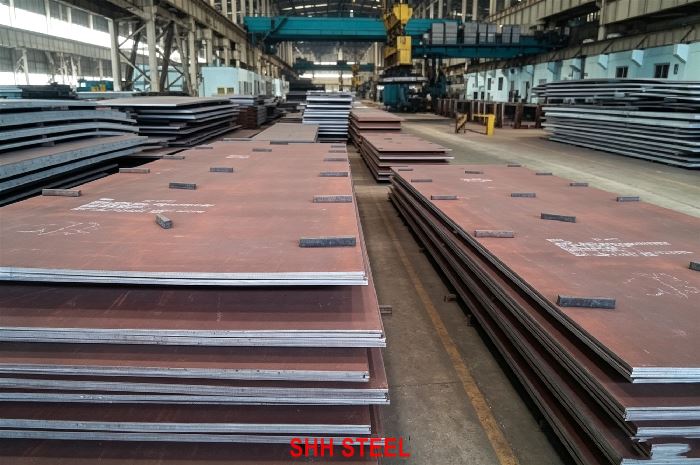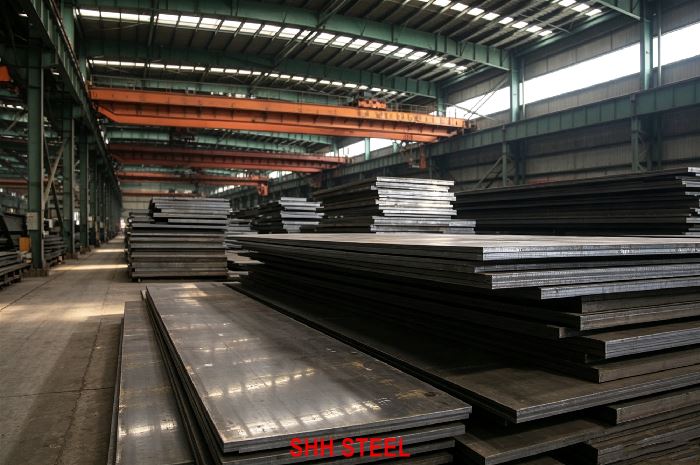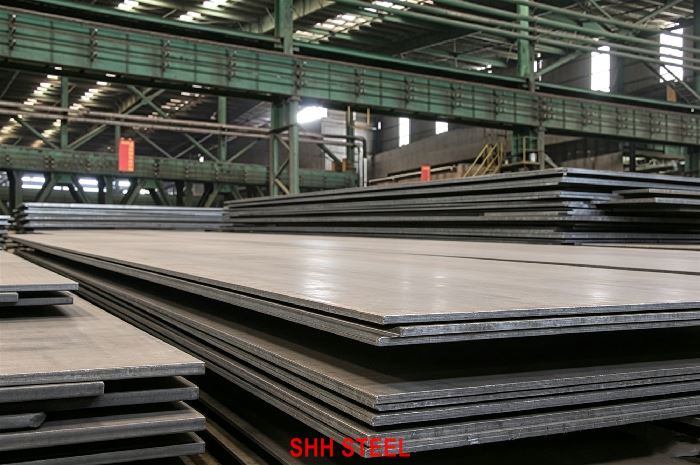

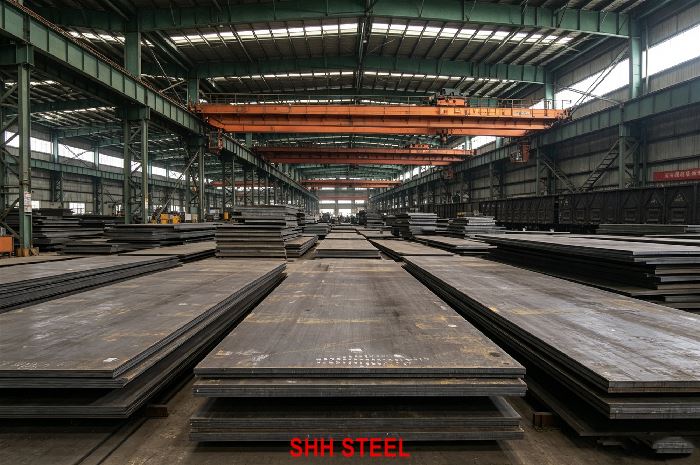
ASME SA543 Type C Class 1 Steel Plate | SA543 Type C Cl.1 QT Ni-Cr-Mo Vessel Plate
What is ASME SA543 Type C Class 1 Steel?
ASME SA543 Type C Class 1, also written ASME SA543 TYPE C CL.1, is quenched-and-tempered nickel-chromium-molybdenum alloy plate under ASME SA-543/SA-543M. The specification is identical with ASTM A543/A543M. It covers plates intended for welded pressure vessels and other pressure equipment, normally considered for construction involving plate thicknesses of 50 mm or greater. Type B and Type C are the only Types in the current book. Type A is not a live listing. Each Type is available as Class 1, Class 2 and Class 3. Class 1 is 585 MPa yield and 725–860 MPa tensile. SHH STEEL is a global steel mill sourcing partner and steel manufacturer & exporter (mill-direct, China origin) for this Type and Class. Plate is produced to ASME SA-543/SA-543M and shipped to buyers in the USA, Europe, Middle East and Southeast Asia.
Buyers write ASME SA543 Type C Class 1, ASME SA543 TYPE C CL.1, SA543 Type C Class 1, SA543 Type C Cl.1, SA543C CL1, SA-543 Type C Class 1, SA 543 Type C Cl 1 and A543 Type C Class 1. A purchase order that only says “SA543 Type C” is incomplete. A purchase order that says “SA543 Grade C Class 1” is mixing Type language with Grade language. This book uses Type + Class, the same naming idea as SA542, not the Grade A/B/C idea used on SA516 Gr.70.
This page is not Type B. Type B nickel heat is 2.25–4.00% and carbon heat is 0.20% max. Type C nickel heat is 2.00–3.50% and carbon heat is 0.18% max. Chromium and molybdenum bands stay in the same family. This page is not Class 2 (690 MPa yield, 795–930 MPa tensile) and not Class 3 (485 MPa yield, 620–795 MPa tensile). It is not SA387 Gr.22 Cl.2. It is not SA542 Type C. It is not SA517 Gr.B. It is not SA533 Type B Cl.1. Minimum thickness in the specification is 5 mm. Maximum thickness is limited only by the ability of the chemistry to meet Class 1 after quench and temper. In practice, SA543 Type C is asked for thick reactor shells, not for thin tank floors.
The specification warns that these alloy plates in the as-rolled condition are sensitive to cracking during flame cutting, transit and handling. They should be shipped as-rolled only by mutual agreement. The product on this page is quenched and tempered. Dual marking SA543 / A543 Type C Class 1 is available. Certificates can be EN 10204 3.1 or 3.2. Company scope: global steel mill sourcing partner – SHH STEEL.
Material Specification
| Specification Element | Requirement | SHH STEEL Compliance |
|---|---|---|
| Type / Class | ASME SA543 Type C Class 1 | Confirmed |
| Product Specification | ASME SA-543/SA-543M | Applied |
| Companion Spec | ASTM A543 Type C Class 1 | Dual cert available |
| General Requirements | ASME SA-20 / ASTM A20 | Applied |
| Process | Quenched and tempered | Confirmed |
| Alloy idea | Ni-Cr-Mo, Type C | Confirmed |
| Typical thickness idea | Often 50 mm and thicker | Confirm on order |
| Minimum thickness | 5 mm | Confirm on order |
| Supply role | Global steel mill sourcing partner | SHH STEEL |
| Markets | USA, Europe, Middle East, Southeast Asia | FOB / CIF as ordered |
| Certification | EN 10204 3.1 or 3.2 / third-party | As ordered |
This plate sits in pressure vessel steel plates and next to the ASME SA387 family, not as a substitute. It does not sit with carbon steel plates or ASTM A36 steel plate.
SA-20 still governs marking, testing location, retests, repair rules and supplementary requirements unless the product specification overrides them. Vacuum carbon-deoxidized steel under S17 is sometimes added on thick Ni-Cr-Mo heats bound for US or European reactor work.
Chemical Composition
ASME SA543 Type C Class 1 / ASME SA543 TYPE C CL.1 uses Type C chemistry. Class only changes strength. Nickel, chromium and molybdenum are the alloy idea. Manganese is held low compared with ordinary C-Mn vessel plate.
Heat Analysis and Product Analysis — ASME SA543 Type C (typical Table 1 limits)
| Element | Heat Analysis (%) | Product Analysis (%) |
|---|---|---|
| Carbon (C), max | 0.18 | 0.18 |
| Manganese (Mn), max | 0.40 | 0.40 |
| Phosphorus (P), max | 0.020 | 0.020 |
| Sulfur (S), max | 0.020 | 0.020 |
| Silicon (Si) | 0.15 – 0.40 | 0.13 – 0.45 |
| Nickel (Ni) | 2.00 – 3.50 | 1.93 – 3.57 |
| Chromium (Cr) | 1.00 – 1.90 | 0.94 – 1.96 |
| Molybdenum (Mo) | 0.20 – 0.65 | 0.16 – 0.69 |
Type B carbon heat is 0.20% max and nickel heat is 2.25–4.00%. Do not ship Type B as Type C because both are Ni-Cr-Mo. Do not treat this chemistry as SA387 Gr.11 Cl.2 or SA387 Gr.12 Cl.2. Those books are Cr-Mo without this nickel band.
SHH STEEL reports heat analysis on every certificate, including Ni, Cr and Mo, and product analysis when SA-20 requires it. If a Houston, Rotterdam or Jebel Ali specification tightens phosphorus or sulfur below the table, write that on the order. Do not assume a hydroprocessing residual package.
Mechanical Properties
Class 1 is the mid-high line. Type C uses the same Class table as Type B.
Tensile Requirements — ASME SA543 Type C Class 1
| Property | Requirement |
|---|---|
| Yield strength, min | 585 MPa (85 ksi) |
| Tensile strength | 725 – 860 MPa (105 – 125 ksi) |
| Elongation in 50 mm, min | 14% |
| Density | 7.85 g/cm³ |
| Hardness | Not a default substitute for tensile |
Class 2 is 690 MPa yield and 795–930 MPa tensile, still 14% elongation. Class 3 is 485 MPa yield, 620–795 MPa tensile and 16% elongation. Do not stamp Class 3 as Class 1 because a coupon came in high. Do not quote Class 2 numbers on a thickness the mill cannot quench through.
Density is 7.85 g/cm³. Notch toughness is commonly added on reactor plate for US and European projects. Write the temperature, energy, location and orientation. Simulated PWHT is common because thick Ni-Cr-Mo vessels see long furnace cycles after welding. Through-thickness properties and ultrasonic quality matter more on this grade than on thin SA285 Gr.C.
Do not treat 585 MPa yield as permission to substitute A516 Grade 70, SA533 Type C Cl.1 or high strength low alloy plates. Those families do not carry Type C nickel.
Material Comparison
| Grade | Route | Alloy / strength idea | Swap? |
|---|---|---|---|
| SA543 Type C Cl.1 | QT Ni-Cr-Mo | 585 / 725–860, Ni 2.00–3.50 | This page |
| SA543 Type C Class 2 | QT Ni-Cr-Mo | 690 / 795–930 | No |
| SA543 Type C Class 3 | QT Ni-Cr-Mo | 485 / 620–795 | No |
| SA543 Type B Class 1 | QT Ni-Cr-Mo | Same Class, higher Ni / C | No |
| SA542 Type B Class 1 | QT 2.25Cr-1Mo | No Type C nickel band | No |
| SA387 Gr.22 Cl.2 | Cr-Mo family | 2.25Cr-1Mo, not Ni-Cr-Mo QT | No |
| SA517 Gr.B | QT alloy | Different book | No |
| SA533 Type B Cl.1 | QT Mn-Mo-Ni | Different alloy idea | No |
SA299 Gr.A, SA225 Gr.C, SA455 steel plate and SA203 Gr.A are also vessel plates. None of them is ASME SA543 TYPE C CL.1.
QT Ni-Cr-Mo Vessel Service
ASME SA543 Type C Class 1 / ASME SA543 TYPE C CL.1 is selected when the vessel wants quenched-and-tempered Ni-Cr-Mo at the Class 1 strength line, with Type C nickel and carbon limits. Typical equipment is large welded reactors, high-pressure shells and other pressure equipment written to SA-543 Type C Class 1. The specification itself notes that these compositions are normally considered for construction involving plate 50 mm or greater. Allowable stress comes from ASME Section II Part D after the Code lists this Type and Class.
SHH STEEL supplies this plate to fabricators in the United States, Europe, the Middle East and Southeast Asia. It is not nickel low-temp plate like SA203 Gr.D or SA203 Gr.E. Those grades use nickel for toughness at low temperature, not this Ni-Cr-Mo QT combination. It is not layered QT carbon like SA724. It is not SA302 Gr.B. Stainless inquiries belong on ASME SA240 or ASTM A240.
Do not form this plate as if it were as-rolled SA285 Gr.A. Quench-and-temper properties are the product. Flame cutting of as-rolled mother plate is a cracking risk. A later PWHT cycle has to be planned and, when required, simulated on coupons. Residual stress in heavy welded joints is a real shop issue on this grade, whether the shop is in Texas, Rotterdam or Jurong. The fabricator owns preheat, hydrogen control and PWHT, not the mill certificate alone.
Weldability
SA543 Type C Cl.1 is killed Ni-Cr-Mo at Class 1 strength. Welding is Code welding.
Qualify procedures to ASME Section IX. Use consumables written for QT Ni-Cr-Mo at 725–860 MPa tensile, not a Type B procedure copied across without checking nickel and carbon, and not an unreviewed SA387 Gr.22 Cl.2 procedure. Nickel, chromium and molybdenum all belong in the WPS review. Hydrogen control, preheat, interpass and PWHT follow the qualified procedure and the vessel specification. Thick joints without a planned heat cycle can leave residual stress that later shows up as cracking in service.
Do not copy a SA387 Gr.12 Cl.2 procedure onto Type C Class 1 without review. The fabricator owns the WPS. SHH STEEL can share mill heat data, cooling practice and simulated PWHT coupon results for that review, including packages prepared for US, EU or Middle East inspectors.
Heat Treatment
Plates shall be quenched and tempered. Austenitize, quench in a suitable liquid medium, then temper. Soak times follow the mill procedure and the thickness. The specification does not use the SA542 Type A/B/C Class 1 temper floor of 565 °C as a copy-paste rule. Print the actual austenitizing and tempering temperatures on the certificate when the mill record carries them.
As-rolled shipment is a special agreement, not the default. The specification states that as-rolled plates of this alloy are sensitive to cracking during flame cutting, transit and handling. SHH STEEL treats QT as the delivery condition unless the purchase order and the mill both accept as-rolled with handling limits.
If the vessel will see a long PWHT, test coupons shall follow a simulated cycle. This is not the SA832 N+T route and not the SA537 Cl.1 heat-treated carbon route. Do not apply a carbon-plate normalize cycle and call the plate SA543 Type C Class 1. Special heat-treatment routes, extra PWHT simulation or third-party hold points add time. Plan about two months when those extras are on the order.
Delivery Condition
Usual delivery from SHH STEEL is quenched-and-tempered ASME SA543 Type C Class 1 / ASME SA543 TYPE C CL.1 plate.
The certificate lists ASME SA543 Type C Class 1 and, when dual certified, ASTM A543 Type C Class 1; heat number; heat analysis including Ni, Cr and Mo; product analysis when ordered; tensile results to the Class 1 table; QT statement; impact and simulated PWHT when ordered. Certificates may be EN 10204 3.1 or EN 10204 3.2.
Surface is mill scale unless the order names shot blast, paint or machine allowance. Cutting, beveling and rolling sketches belong on the purchase order. Do not assume stock lengths on a 100 mm reactor plate bound for Houston or Rotterdam.
Dimensions
Usual supply range from SHH STEEL for SA543 Type C Cl.1 QT Ni-Cr-Mo vessel plate:
- Thickness: commonly 20 mm – 150 mm, minimum 5 mm. The specification is written with heavy plate in mind. Confirm the mill can hold 585 MPa yield through the ordered thickness
- Width: 1500 mm – 4000 mm
- Length: 3000 mm – 12000 mm
- Cut-to-length shells, heads and nest sizes inside those limits
Structural sizes belong on EN 10025-2 or JIS G3106. Weathering plate belongs on EN 10025-5 or Corten A/B. Fine-grain structural belongs on EN 10025-3 or EN 10025-4. QT structural belongs on EN 10025-6.
Tolerances
Dimensional limits follow ASME SA-20. Thickness, width, length, flatness and camber are vessel-plate tolerances, not structural-plate tolerances from ASTM A36/A36M. UT to A435 / A577 / A578 is commonly added on reactor plate. Write the UT level on the order. Do not assume Class C scanning if the vessel specification names a tighter level.
Crown, waviness and residual stress after quench matter on wide thick plate. If the shop will roll a tight diameter, say so before rolling. Repair welding of surface defects follows SA-20 rules unless the order forbids repair.
Supplementary Requirements
Most export ASME SA543 Type C Class 1 / ASME SA543 TYPE C CL.1 orders add extras. SHH STEEL does not assume them.
Charpy details. Temperature, energy, location and orientation. Thick Ni-Cr-Mo plate often needs more than a single default temperature.
Simulated PWHT. Same-heat coupons follow the vessel cycle, including hold time at the PWHT temperature.
NDE. UT to A435 / A577 / A578. Magnetic particle on cut edges when specified.
Vacuum carbon deoxidation (S17). Sometimes specified on heavy heats.
Hydrogen-service extras. When the vessel specification names them.
Through-thickness / Z-direction testing. When the drawing names it.
Third-party. EN 10204 3.2, with inspectors arranged for US, European or Middle East documentation packages.
Equivalent Material Grades
These names are project-comparison grades. They are not automatic substitutes.
| Designation | Standard / region | Notes |
|---|---|---|
| ASME SA543 Type C Class 1 / ASME SA543 TYPE C CL.1 | ASME SA-543/SA-543M | Code name on this page |
| ASTM A543 Type C Class 1 | ASTM A543/A543M | Companion US product spec |
| SA543 Type C Class 2 / Class 3 | SA-543 | Same Type, other Classes |
| SA543 Type B Class 1 | SA-543 | Different Ni and C limits |
| SA542 Type B Class 1 | SA-542 | 2.25Cr-1Mo QT, not Ni-Cr-Mo |
| SA387 Gr.22 Cl.2 | SA-387 | Cr-Mo family |
| SA517 Gr.B | SA-517 | Different QT alloy book |
| 15NiCuMoNb5 related | EN / older German | Ni-Cu-Mo comparison only |
| 10NiCrMo related | EN project specs | Confirm Ni-Cr-Mo and QT |
| JIS Ni-Cr-Mo vessel related | JIS project specs | Confirm Type C limits |
| GB Ni-Cr-Mo QT vessel related | GB project specs | Confirm Class 1 tensile |
| ASME SA387 | SA-387 family | Related alloy family, not this Type |
DIN 17100, ASTM A516, ASME SA515 and ASTM A285 are not SA543 Type C Class 1.
Applications
| Industry | Typical components |
|---|---|
| High-pressure reactors | ASME SA543 Type C Class 1 shells and ASME SA543 TYPE C CL.1 heads |
| Thick-wall QT Ni-Cr-Mo equipment | SA543 Type C Cl.1 courses |
| Dual-certified export | SA543 / A543 Type C Class 1 plate from SHH STEEL |
| Fabrication | SA543 Type C Cl.1 cut to nest sizes |
Ship plate inquiries belong on shipbuilding steel plates or BV Rules. Weathering inquiries belong on weathering steel plates. Stainless inquiries belong on stainless steel products, JIS G4305 or AISI stainless.
Other vessel comparisons: SA203 Gr.B, SA302 Gr.C, A516 Grade 70, SA533 Type C Cl.2, SA517 Gr.P.
Global Delivery & Markets
SHH STEEL is a global steel mill sourcing partner with mill partnerships in China. We supply ASTM, ASME, EN and JIS steel to the USA, Europe, Middle East and Southeast Asia. Origin is mill-direct, China origin. We do not treat this grade as an Asia-only stock item. Inquiry packages are written for fabricators and EPC buyers in Houston, Rotterdam, Antwerp, Jebel Ali, Dammam, Singapore and surrounding ports.
Typical trade terms:
- FOB Shanghai
- CIF Houston
- CIF Rotterdam
- CIF Jebel Ali
- Other CIF / CFR ports on request (Los Angeles, New York, Hamburg, Genoa, Jeddah, Mundra, Ho Chi Minh)
Typical lead time for ASME SA543 Type C Class 1 / ASME SA543 TYPE C CL.1:
- Ex-stock / ready plate: about 5–7 days after order confirmation, subject to actual warehouse size and cutting
- Mill rolling, standard QT: about 45 days
- Special heat treatment, simulated PWHT, 3.2 hold or extra NDE: about 2 months
Documents travel with the cargo: mill certificate, packing list, commercial invoice, bill of lading, and EN 10204 3.1 or 3.2 as ordered. Third-party inspection can be arranged before loading for US, European or Middle East projects. Packing is seaworthy, with edge protection and marking in English as specified on the order.
If the buyer needs a dual ASTM A543 / ASME SA543 stamp for a Section VIII vessel in the United States, say so on the inquiry. If the buyer needs a PED / 3.2 file for Europe, say so on the inquiry. Do not assume a domestic Chinese certificate format will pass at destination.
Why Choose SHH STEEL
SHH STEEL is a global steel mill sourcing partner and steel manufacturer & exporter (mill-direct, China origin). We supply ASTM / EN / JIS steel to the USA, Europe, the Middle East and Southeast Asia. On ASME SA543 Type C Class 1 / ASME SA543 TYPE C CL.1 that means mill pricing, dual SA543/A543 marking, Type C chemistry with Ni-Cr-Mo reported, recorded quench and temper, tensile results at 585 MPa yield and 725–860 MPa tensile, 3.1 as standard and 3.2 when specified. Trade terms include FOB Shanghai and CIF Houston / Rotterdam / Jebel Ali.
We keep Type and Class on the order. Type C is not Type B. Class 1 is not Class 2 and is not Class 3. SA543 is not SA542. SA543 is not SA387 Gr.22 Cl.2. SA543 is not SA516 Gr.55. SA543 Type C Cl.1 is not SA533 Type C Cl.1. If the drawing names Type B, we will not ship Type C and call it close. If the shop wants as-rolled delivery on this alloy, we will say the specification treats that as a cracking risk.
Company scope: global steel mill sourcing partner – SHH STEEL.
FAQ
- What names are used for ASME SA543 Type C Class 1 / ASME SA543 TYPE C CL.1?Buyers write ASME SA543 Type C Class 1, ASME SA543 TYPE C CL.1, SA543 Type C Class 1, SA543 Type C Cl.1, SA543C CL1, SA-543 Type C Class 1 and SA 543 Type C Cl 1. SHH STEEL prints the wording on the purchase order.
- Is ASME SA543 Type C Class 1 the same as ASTM A543 Type C Class 1?Chemistry and tensile limits match. ASME SA-543 is the Code version. ASTM A543 is the product spec. SHH STEEL dual-certifies both names when the vessel must be stamped in the United States or elsewhere.
- What is the yield strength of SA543 Type C Cl.1?585 MPa minimum. Tensile is 725–860 MPa. Elongation is 14% in 50 mm.
- How is ASME SA543 TYPE C CL.1 different from Type B Class 1?Same Class 1 tensile table. Type C nickel heat is 2.00–3.50% and carbon heat is 0.18% max. Type B nickel heat is 2.25–4.00% and carbon heat is 0.20% max.
- How is ASME SA543 Type C Class 1 different from Class 2 and Class 3?Class 1 is 585 / 725–860. Class 2 is 690 / 795–930. Class 3 is 485 / 620–795.
- Is SA543 Type C Class 1 the same as SA542 or SA387 Grade 22?No. SA542 is QT Cr-Mo or Cr-Mo-V. SA387 Grade 22 is 2.25Cr-1Mo in the SA387 family. SA543 Type C Class 1 is QT Ni-Cr-Mo.
- Can SHH STEEL ship ASME SA543 Type C Class 1 outside Asia?Yes. SHH STEEL is a global steel mill sourcing partner. We supply this plate to the USA, Europe, the Middle East and Southeast Asia on FOB Shanghai or CIF Houston / Rotterdam / Jebel Ali.
- hat is the delivery time for SA543 Type C Cl.1?Ex-stock about 5–7 days. Standard mill QT about 45 days. Special heat treatment, simulated PWHT or 3.2 inspection about 2 months
- Can welding of SA543 Type C Cl.1 be qualified to ASME Section IX?Yes. Use a WPS written for QT Ni-Cr-Mo at Class 1 strength. The fabricator owns the procedure.
- Can SHH STEEL issue EN 10204 3.2 for ASME SA543 Type C Class 1?Yes. EN 10204 3.1 is standard. EN 10204 3.2 is arranged when written on the order.
- What is the density of ASME SA543 TYPE C CL.1?7.85 g/cm³.
Conclusion
ASME SA543 Type C Class 1 Steel Plate, also searched as ASME SA543 TYPE C CL.1, is quenched-and-tempered Ni-Cr-Mo plate under ASME SA-543/SA-543M, with Type C nickel and Class 1 strength. Whether the inquiry says ASME SA543 Type C Class 1, ASME SA543 TYPE C CL.1, SA543 Type C Cl.1 or SA543C CL1, SHH STEEL as a global steel mill sourcing partner and steel manufacturer & exporter (mill-direct, China origin) supplies plate with Type C chemistry, recorded QT delivery, 585 MPa yield, and EN 10204 3.1 or 3.2 certification.
SHH STEEL supplies ASME SA543 Type C Class 1 / ASME SA543 TYPE C CL.1 QT Ni-Cr-Mo Vessel Plate to the USA, Europe, the Middle East and Southeast Asia for ASME Section VIII work that actually names this Type and Class. FOB Shanghai / CIF Houston / Rotterdam / Jebel Ali.
Contact SHH STEEL for mill rolling, stock inquiry, dual SA543/A543 marking, simulated PWHT testing, 3.2 inspection or a quotation.
ASME SA543 Type C Class 1 Steel Plate, ASME SA543 TYPE C CL.1, SA543 Type C Cl.1, SA543C CL1, SA-543 Type C Class 1, QT Ni-Cr-Mo vessel plate, global steel mill sourcing partner SHH STEEL
Quality Steel Needed? Inquire for Offers
Related Products