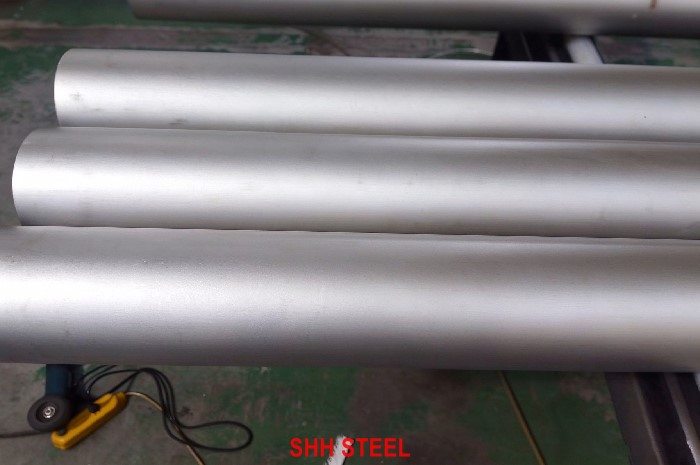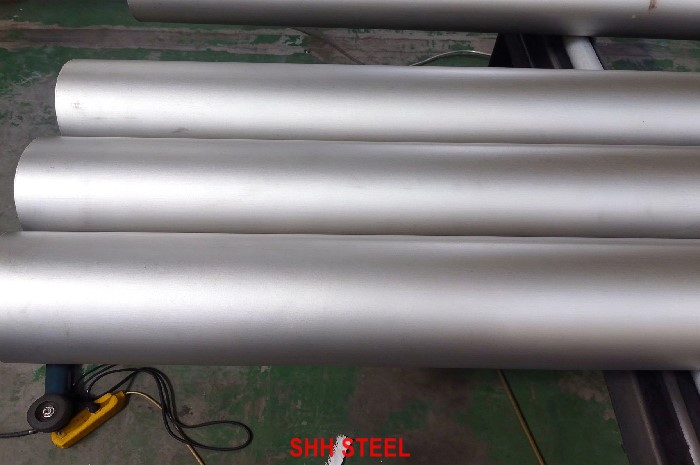
ASTM A312 TP316 Stainless Steel Pipe
What is ASTM A312 TP316 Stainless Steel Pipe
ASTM A312 / A312M is the ASTM International product standard for seamless (SML), welded (WLD), and heavily cold-worked (HCW) austenitic stainless steel pipe intended for high-temperature and general corrosive service. It stands on its own as a materials specification; ASME SA-312 / SA-312M is a separate Code Book adoption used when a piping or boiler code requires an ASME-listed material, and the two documents are not interchangeable titles even when their grade tables align. This page covers TP316 / UNS S31600 under ASTM A312 / A312M as the primary ordering standard.
Table 1 of ASTM A312 lists TP316 with C ≤0.08%, Mn ≤2.00%, P ≤0.045%, S ≤0.030%, Si ≤1.00%, Cr 16.0–18.0%, Ni 10.0–14.0%, and Mo 2.00–3.00%. Molybdenum at 2.00–3.00% is a required element and is what separates the 316 family from the 304 family in chloride and reducing-acid service. Table 4 sets the room-temperature tensile floor at 75 ksi [515 MPa] tensile and 30 ksi [205 MPa] yield minimum, with 35% longitudinal / 25% transverse elongation Because TP316 is not individually listed in Table 2, the default solution-anneal minimum of 1900 °F [1040 °C] applies, followed by water quenching or another rapid cool. Table 6 identifies ER316 (UNS S31680 / W31640) as the matching filler metal for fabrication and repair welds.
SHH STEEL can supply ASTM A312 TP316 stainless steel pipe to the edition named on the enquiry, in seamless (SML), welded (WLD), and heavily cold-worked (HCW) form. We quote ASME B36.19 schedules together with special OD/wall by agreement, ship with EN 10204 3.1 mill test certificates that report the full Table 1 chemistry and the 75/30 ksi tensile results, and offer dual A312/SA-312 marking only when the purchase order asks for it — never as a default synonym. Please confirm NPS, wall or schedule, finish, any owner restrictions, and supplementary requirements when you enquire.
Common names for the same ordered product are listed below; put both TP grade and UNS number on the order and certificate.
- ASTM A312 TP316 / UNS S31600 — preferred marking language for ASTM-ordered pipe
- A312 Grade TP316 — shortened specification reference when the edition year is stated elsewhere on the PO
- “316” stainless pipe — common shorthand; the certificate must still show the ASTM grade and the controlling chemistry limits
- EN 1.4401 (X5CrNiMo17-12-2) / JIS SUS316 — commonly cited regional equivalents, approximate only and not code substitutes
When a project is written to an ASME Section I, III, VIII, or B31 Code Book material listing, the sister page SA312 TP316ASME SA312 TP316 stainless steel pipe explains SA-312 marking as a separate standard; do not merge the two titles on the same line item. Sister ASTM grades buyers compare with TP316 include A312 TP316LASTM A312 TP316L, A312 TP316LNASTM A312 TP316LN, A312 TP316NASTM A312 TP316N, A312 TP304ASTM A312 TP304, A312 TP317ASTM A312 TP317. Grade hub: A312/A312MASTM A312 / A312M product hub.
Manufacturing Types (SML / WLD / HCW)
ASTM A312 defines three manufacturing routes that may be marked on finished TP316 pipe. Selecting the route is a purchase-order decision driven by design code, size range, wall thickness, and inspection preference; it does not change the Table 1 chemistry of TP316 / UNS S31600.
- Seamless (SML) — no welding at any stage of manufacture. Seamless suits heavy walls and specifications that exclude welded pipe. SML TP316 still has to be solution annealed before release.
- Welded (WLD) — automatic welding without filler metal, followed by cold working of the weld (when required by the edition) and full solution annealing. WLD is economical in thinner walls and larger diameters.
- Heavily cold-worked (HCW) — welded pipe that is cold worked to a high reduction before the final anneal, producing a wrought structure across the weld.
Chemical Composition of ASTM A312 TP316
Two chemistry layers matter on every ASTM A312 TP316 order: melting (heat / ladle) analysis — mandatory per heat under Table 1 — and product analysis when ordered under Supplementary Requirement S1 or an equivalent purchase-order clause. A312 defers product-analysis tolerances through ASTM A999/A999M to ASTM A480/A480M Table A1.1.
Melting analysis (heat / ladle analysis) — Table 1
Heat analysis for Grade TP316 / UNS S31600 from ASTM A312 / A312M Table 1 is reproduced below. Values are maximum unless a range is shown, and an ellipsis (…) means the ordered edition sets no requirement for that element.
| Element | TP316 (UNS S31600) melting analysis |
|---|---|
| Carbon (C) | ≤ 0.08 |
| Manganese (Mn) | ≤ 2.00 |
| Phosphorus (P) | ≤ 0.045 |
| Sulfur (S) | ≤ 0.030 |
| Silicon (Si) | ≤ 1.00 |
| Chromium (Cr) | 16.0 – 18.0 |
| Nickel (Ni) | 10.0 – 14.0 |
| Molybdenum (Mo) | 2.00 – 3.00 |
| Nitrogen (N) | … (no requirement) |
Read the melting table against the certificate ladle line: carbon must satisfy ≤0.08%, chromium must sit inside 16.0–18.0%, and nickel must sit inside 10.0–14.0%. Molybdenum must fall inside 2.00–3.00%; it is required, not optional, for TP316-family grades.
Product analysis limits (A480 Table A1.1 tolerances applied)
When product analysis is ordered, the finished-pipe limits below are the melting limits plus the A480 A1.1 tolerances.
| Element | Melting (Table 1) | Tolerance (A480 A1.1) | Product analysis limit |
|---|---|---|---|
| Carbon (C) | ≤ 0.08 | 0.01 over | ≤ 0.09 |
| Manganese (Mn) | ≤ 2.00 | 0.04 over | ≤ 2.04 |
| Phosphorus (P) | ≤ 0.045 | 0.010 over | ≤ 0.055 |
| Sulfur (S) | ≤ 0.030 | 0.005 over | ≤ 0.035 |
| Silicon (Si) | ≤ 1.00 | 0.05 over | ≤ 1.05 |
| Chromium (Cr) | 16.0 – 18.0 | 0.20 under / over | 15.80 – 18.20 |
| Nickel (Ni) | 10.0 – 14.0 | 0.10 under / 0.15 over | 9.90 – 14.15 |
| Molybdenum (Mo) | 2.00 – 3.00 | 0.05 under / 0.10 over | 1.95 – 3.10 |
On product analysis the finished pipe may read up to C 0.09%, Mn 2.04%, P 0.055%, S 0.035%, and Si 1.05%, with Cr 15.80–18.20%, Ni 9.90–14.15%, and Mo 1.95–3.10%. State any owner-tighter carbon, cobalt, ferrite, or residual limits on the purchase order before the heat is selected.
Buyers comparing TP316 with its ASTM sisters should open A312 TP316LASTM A312 TP316L, A312 TP316LNASTM A312 TP316LN, A312 TP316NASTM A312 TP316N, A312 TP304ASTM A312 TP304, A312 TP317ASTM A312 TP317 for the matching Table 1 and Table 4 floors rather than assuming interchangeability from a shared family label.
Mechanical Properties of ASTM A312 TP316
Room-temperature tensile requirements for TP316 are set in ASTM A312 Table 4. The floors below are acceptance minima for the ordered grade; they are not design allowables, which come from the governing piping or vessel code and the edition of the allowable-stress tables listed for UNS S31600.
| Property | TP316 requirement (ASTM A312 Table 4) |
|---|---|
| Tensile strength, min | 75 ksi [515 MPa] |
| Yield strength (0.2% offset), min | 30 ksi [205 MPa] |
| Elongation in 2 in. or 50 mm (or 4D) | 35% longitudinal / 25% transverse, min |
The 75/30 ksi floor, together with 35% longitudinal / 25% transverse elongation, is the mechanical identity of TP316 under A312. Table 4 lists no hardness maximum for this grade, so write any hardness limit on the purchase order if fabrication or owner rules need one — do not invent a catalog HB or HRB value and treat it as a specification number.
The 75/30 ksi floor matches A312 TP304ASTM A312 TP304 even though chromium is lower and molybdenum is required; molybdenum is there for corrosion resistance, not for a higher tensile number. A312 TP316LASTM A312 TP316L drops to 70/25 ksi because of the low-carbon limit, and A312 TP316NASTM A312 TP316N / A312 TP316LNASTM A312 TP316LN add nitrogen when a higher floor is specified. Do not substitute TP316L for TP316 (or the reverse) on strength alone without checking both chemistry and allowables.
Dimensions and Tolerances
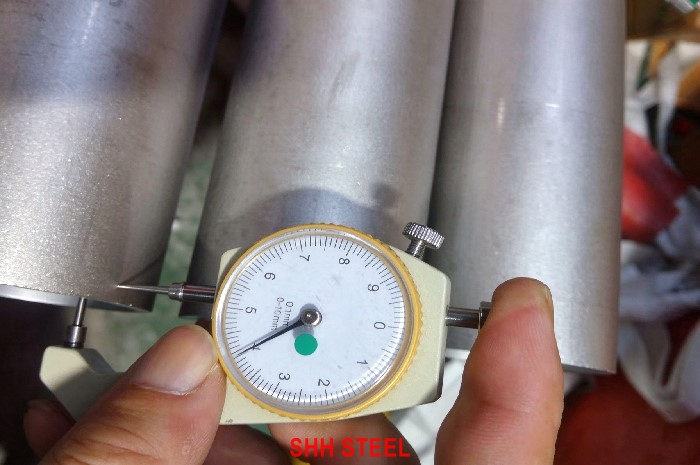
ASTM A312 pipe is commonly ordered to ASME B36.19 stainless-steel pipe schedules (Sch 5S, 10S, 40S, 80S and others) and may also be ordered to special outside diameter and wall combinations by agreement. Outside-diameter and wall-thickness tolerances follow the tables referenced by A312 through the general requirements specifications; the wall-thickness tolerance summary below is the Table 3 pattern buyers use when checking nominal wall on receipt.
| NPS designator | Wall over | Wall under |
|---|---|---|
| 1/8 to 2-1/2 incl., all t/D | 20.0% | 12.5% |
| 3 to 18 incl., t/D up to 5% | 22.5% | 12.5% |
| 3 to 18 incl., t/D over 5% | 15.0% | 12.5% |
| 20 and larger, welded, all t/D | 17.5% | 12.5% |
| 20 and larger, seamless, t/D up to 5% | 22.5% | 12.5% |
| 20 and larger, seamless, t/D over 5% | 15.0% | 12.5% |
Read “wall over” and “wall under” as percentages of the ordered nominal wall. Light-wall and large-diameter sizes carry the wider bands; if the purchase order invokes Supplementary Requirement S8, wall is interpreted as minimum rather than nominal, and that choice must be visible on the order and the MTC.
Representative stock sizes and common OD × wall examples are listed in the Stock / available sizes table under Supply Capability below; special OD/wall and cut lengths are quoted on enquiry rather than promised from a fixed warehouse list.
Equivalent Grades
Cross-references help purchasing conversations, but they do not authorize substitution on a pressure-code line item. The governing product standard for pipe ordered from this page is ASTM A312 / A312M Grade TP316 / UNS S31600. The table lists related designations as approximate relationships only.
| Designation | Relationship to TP316 |
|---|---|
| ASTM A312 / A312M TP316 | Governing pipe grade for this article |
| UNS S31600 | Unified number in Table 1 |
| ASME SA-312 TP316 | Separate Code Book adoption; dual-mark only when the PO asks |
| ASTM A240 / ASME SA-240 316 | Plate/sheet counterpart (separate specification) |
| EN 1.4401 (X5CrNiMo17-12-2) | Commonly cited European designation — approximate only; verify in the EN text |
| JIS SUS316 | Commonly cited Japanese counterpart — approximate only |
EN 1.4401 (X5CrNiMo17-12-2) and JIS SUS316 are commonly cited approximate equivalents that were not verified line-by-line against the EN or JIS texts for this page; they do not replace an engineered approval when a project specification names A312. Within ASTM A312, sister grades such as A312 TP316LASTM A312 TP316L, A312 TP316LNASTM A312 TP316LN, A312 TP316NASTM A312 TP316N, A312 TP304ASTM A312 TP304, A312 TP317ASTM A312 TP317 share family traits but differ in carbon, nitrogen, molybdenum, or tensile floor, and none is a silent substitute for TP316.
Heat Treatment and Delivery Condition
All pipe furnished to ASTM A312 has to be heat treated. TP316 is not individually listed in Table 2, so it takes the default solution anneal at a minimum of 1900 °F [1040 °C], followed by water quenching or another rapid cool sufficient to prevent precipitation. The anneal dissolves carbides and restores the fully austenitic structure on which both strength and corrosion behaviour rely, and the anneal statement belongs on the mill test certificate for every lot.
Seamless pipe may be quenched directly after hot forming when the ordered edition allows it and the finishing temperature is not below the minimum anneal temperature; TP316 is not an H grade, so the H-grade reheat rules do not apply. HCW cold reduction is performed before the final anneal, so delivery is always the annealed condition. Any re-anneal in fabrication should follow the same minimum temperature and rapid cool, and long holds in the sensitization range should be avoided.
Corrosion Resistance
ASTM A312 has no corrosion-rate table; the remarks below are selection commentary. Molybdenum at 2.00–3.00% is why buyers move from the 304 family to TP316: it improves resistance to pitting and crevice attack in chloride-bearing waters and helps in many reducing-acid streams. It is not a license to ignore temperature, crevice geometry, or oxidizers such as free chlorine.
- Chloride pitting / crevice — better than A312 TP304ASTM A312 TP304, still limited in warm seawater and under deposits
- Welded construction — carbon up to 0.08% means A312 TP316LASTM A312 TP316L is often preferred for heavy welding without post-weld anneal
- Process acids — widely used in chemical lines; confirm fluid compatibility case by case
Cleanliness after fabrication, drainage of dead legs, and avoidance of iron embedment often decide field life as much as the Mo figure on the certificate.
Applications of ASTM A312 TP316 Pipe
Applications for ASTM A312 TP316 pipe follow from its Table 1 chemistry and Table 4 floor. The table below is a buyer’s map of typical service and the point to check on each enquiry, not a substitute for corrosion engineering or code design.
| Application area | Typical use of TP316 pipe | Selection note |
|---|---|---|
| Chemical and petrochemical | Process lines handling chlorides, acids, and solvents ordered to A312 | Confirm fluid compatibility; prefer higher alloys if PREN/corrosion design demands it |
| Offshore / marine topside | Seawater-exposed or brine-adjacent stainless piping | Often TP316L preferred for welded service; confirm project grade |
| Food, beverage, pharma | Hygienic and utility lines where 316 stainless is accepted | State Ra/polish and docs when required |
| Pulp and paper | Bleaching chemicals and aggressive process streams | Review chloride and temperature with corrosion engineering |
| Power and utility | Condensate, feedwater auxiliary, and plant stainless piping | Dual SA312/A312 marking often requested |
| General corrosive service | Where Mo austenitic pipe is specified over 304-class | Do not substitute TP304 when Mo is required on the datasheet |
For chloride-heavy or seawater service, confirm whether TP316 is adequate or whether a higher-Mo or duplex grade is the better answer.
Weldability
TP316 is welded by the GTAW, GMAW, SMAW, and orbital processes common on 300-series pipe. ASTM A312 Table 6 lists ER316 (UNS S31680 / W31640) as the filler for this grade; record it on the WPS and PQR so the deposit matches the intent of the ordered pipe. Mill longitudinal welds on WLD and HCW pipe are made without filler, so Table 6 applies to repairs and shop or field girth welds.
In practice, qualify the procedure on TP316 with any owner ferrite or NDE extras included, control heat input and interpass temperature on thin Sch 5S/10S walls, back-purge roots on high-integrity lines, and keep joints free of oil, paint, and carbon-steel contamination. Girth-weld NDE is separate from the mill hydro or electric test and should be agreed before fabrication.
Surface Finishes
The standard delivery finish for ASTM A312 TP316 pipe is solution annealed and pickled, so the surface is free of heat-treat scale. Bright-annealed, polished, or special cleanliness finishes are available when the purchase order states them, and any roughness limit or end bevel should be written as a number. Owners with marking-ink or chloride cleanliness rules should state them on the order so the mill can plan the route.
Inspection and Testing
Every length of ASTM A312 TP316 pipe receives the mandatory tests of the specification: heat analysis, tensile testing at the required frequency, flattening or bend testing as applicable, and either a hydrostatic test or a permitted nondestructive electric test. Supplementary requirements stay optional until the purchase order invokes them; the common ones are summarized below.
| Option | Purpose |
|---|---|
| S1 product analysis | Confirms chemistry on finished pipe |
| S5 radiography | Weld integrity on WLD pipe |
| S7 intergranular corrosion | A262 Practice E after sensitizing treatment |
| S8 minimum wall | Wall interpreted as minimum rather than nominal |
| S9 weld decay | Compares weld and base-metal loss rates |
Receiving review should confirm the stencil reads TP316, the ladle chemistry meets Table 1 including ≤0.08% carbon and Mo 2.00–3.00%, tensile results meet 75/30 ksi, the anneal statement is present, and ordered S-numbers appear on the MTC. Look-alike sisters such as A312 TP316LASTM A312 TP316L, A312 TP316LNASTM A312 TP316LN should be bundled and tagged separately.
Packaging and Shipping
Packaging for ASTM A312 TP316 pipe is planned around surface protection and identity. Bundles are strapped with protected banding, ends are capped, and packing lists carry heat numbers that match the certificates, so receiving can tie every length back to its MTC without guesswork. Export loads go in seaworthy bundles or cases, and mixed-grade loads are tagged piece by piece.
Why Choose SHH STEEL
SHH STEEL supplies ASTM A312 TP316 / UNS S31600 as an ASTM-ordered product first. We quote the edition you name, report the full Table 1 chemistry on the EN 10204 3.1 certificate, and verify the 75/30 ksi floor before shipment. Dual SA-312 marking is added only when the order asks for Code Book identity, and we never blur the two standards into one title.
We check supplier certificates against Table 1 and Table 4 before shipment, so a missing molybdenum value or a sister-grade tensile floor is caught at the mill, not at your fabricator.
- Specification control — Table 1 and Table 4 checked for TP316; 1900 °F [1040 °C] anneal stated
- Routes — SML, WLD, and HCW quoted to the route you name
- Documents — EN 10204 3.1 standard; 3.2 when arranged with the inspector
- No silent substitution — sister grades are never shipped in place of TP316
Supply Capability
SHH STEEL quotes ASTM A312 TP316 against the size list, manufacturing type, and edition year on your enquiry. The table below is our commercial envelope, not a live inventory.
| Item | SHH STEEL capability for TP316 |
|---|---|
| Standard | ASTM A312 / A312M (dual SA-312 marking when the PO asks) |
| Grade | TP316 / UNS S31600 |
| Manufacturing types | SML, WLD, HCW |
| Size | NPS 1/8 and up per ASME B36.19; special OD/wall by agreement |
| Schedules | 5S, 10S, 40S, 80S and non-standard walls |
| Length | SRL, DRL, or cut-to-length |
| Finish | Annealed and pickled; bright annealed or polished on enquiry |
| Certification | EN 10204 3.1 MTC; 3.2 when arranged |
| Supplementary tests | S1, S5, S7, S8, S9 and owner extras on order |
Stock / available sizes
For stock enquiries we work from the representative range below, which follows common B36.19 stainless schedules and frequently requested OD × wall combinations. Ask for a confirmed list against your matrix, because availability changes with heat cycles.
| Item | Representative supply / stock enquiry range |
|---|---|
| NPS (typical) | 1/2, 3/4, 1, 1-1/2, 2, 3, 4, 6, 8, 10, 12, 14, 16, 18, 20, 24 (confirm on enquiry) |
| Schedules (B36.19) | Sch 5S, 10S, 40S, 80S; heavier or lighter walls by agreement |
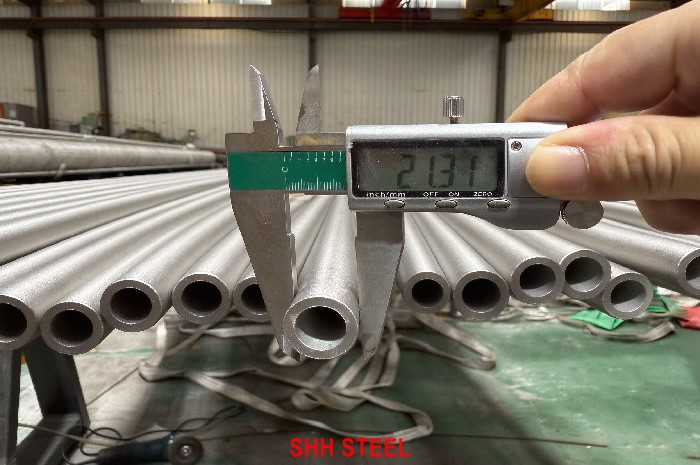
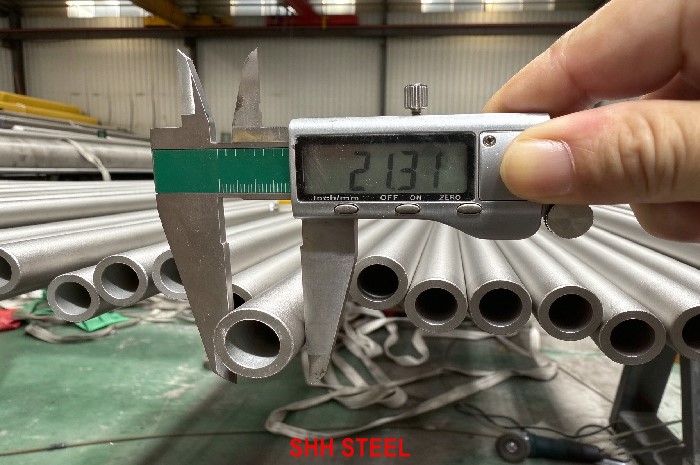
| Common OD × wall examples | 21.3 × 2.11 mm (NPS 1/2 Sch 40S); 33.4 × 3.38 mm (NPS 1 Sch 40S); 60.3 × 3.91 mm (NPS 2 Sch 40S); 88.9 × 5.49 mm (NPS 3 Sch 40S); 114.3 × 6.02 mm (NPS 4 Sch 40S); 168.3 × 7.11 mm (NPS 6 Sch 40S) |
| Special sizes | Non-B36.19 OD/wall, cut-to-length, and HCW finishes — quoted on enquiry, not a fixed warehouse SKU list |
| Length | SRL, DRL, or cut-to-length per PO |
Sch 10S and 40S lengths in popular NPS are the most likely stock-turn items for TP316, while heavy-wall seamless and special OD/wall remain mill-run items. Send the size matrix, edition year, route, finish, and S-number extras for a priced availability reply. Hub: A312/A312MASTM A312 / A312M product hub.
FAQ
-
Is ASTM A312 the same as ASME SA-312 for TP316?
- No. ASTM A312 / A312M is the ASTM product standard, while ASME SA-312 / SA-312M is a separate Code Book adoption used when a boiler or pressure-vessel code requires an ASME-listed material. The grade tables usually align and one heat can be dual-marked when the order asks, but the names are not synonyms. Order ASTM A312 TP316 when your project cites ASTM, and add SA-312 marking only for Code work.
-
What is the UNS number and chemistry of TP316?
- ASTM A312 Table 1 lists TP316 as UNS S31600 with C ≤0.08%, Mn ≤2.00%, P ≤0.045%, S ≤0.030%, Si ≤1.00%, Cr 16.0–18.0%, Ni 10.0–14.0%, and Mo 2.00–3.00%. Those limits define the grade on the mill certificate. Put both TP316 and UNS S31600 on the purchase order so the heat cannot be confused with a sister grade that looks identical but differs in carbon, nitrogen, or molybdenum.
-
Seamless vs welded TP316 pipe — which should I order?
- SML, WLD, and HCW are all legitimate ASTM A312 routes for TP316, and chemistry does not change between them. Seamless suits heavy walls and specifications that exclude welds. Welded and HCW are economical in thinner walls and larger diameters, and HCW gives a wrought weld zone. Choose by design code, size, and inspection preference, and check the route letters on the certificate.
-
Does ASTM A312 set a hardness limit for TP316?
- No. Table 4 sets tensile strength, yield strength, and elongation minima for TP316 but lists no hardness maximum for this grade. If fabrication or an owner specification needs a hardness ceiling, write it on the purchase order as an extra requirement. Do not treat a catalog HB or HRB figure as an A312 number when reviewing certificates.
-
What filler metal and heat treatment apply to TP316?
- ASTM A312 Table 6 lists ER316 (UNS S31680 / W31640) for TP316, and because the grade is not individually listed in Table 2 it takes the default 1900 °F [1040 °C] minimum solution anneal with rapid cooling. Record the filler on the WPS and PQR, and confirm the anneal statement appears on every mill certificate before the pipe is released to fabrication.
-
What wall-thickness tolerance applies to ASTM A312 TP316 pipe?
- Wall tolerance follows the Table 3 pattern: for example, NPS 1/8 to 2-1/2 at all t/D carries +20.0% / −12.5% on nominal wall, with different over-tolerance bands for larger sizes and t/D ratios. When Supplementary Requirement S8 is invoked, wall is treated as a minimum rather than nominal, so state S8 on the order when your design is based on minimum wall.
-
TP316 vs TP316L — which should I order?
- Order TP316L when the line will be heavily welded and a post-weld anneal is impractical, because its carbon is limited to 0.035%. Order TP316 when the design needs the 75/30 ksi floor rather than 70/25 ksi and welding is controlled. The two have different tensile floors and carbon limits, so neither is a silent substitute for the other.
-
TP316 vs TP304 — what does molybdenum buy?
- Molybdenum at 2.00–3.00% improves pitting and crevice resistance in chloride-bearing water and helps in many reducing acids compared with TP304. It does not raise the Table 4 floor above 75/30 ksi, and it does not make TP316 immune in warm seawater under deposits, so the fluid and temperature still drive the final alloy choice.
-
What product-analysis limits apply to TP316?
- When S1 product analysis is ordered, A480 Table A1.1 tolerances are applied to Table 1. Finished pipe may read up to C 0.09%, Mn 2.04%, P 0.055%, S 0.035%, and Si 1.05%, with Cr 15.80–18.20%, Ni 9.90–14.15%, and Mo 1.95–3.10%. These are acceptance limits for the check, not melting targets.
-
Which sister grades do buyers compare with TP316?
- The usual ASTM A312 comparisons are TP316L for low carbon, TP316N and TP316LN for nitrogen-raised strength, TP316Ti for titanium stabilization, TP304 when molybdenum is unnecessary, and TP317 for higher molybdenum. Each differs in Table 1 chemistry or Table 4 floor, so open the sister page before treating any of them as a substitute.
Conclusion
ASTM A312 TP316 / UNS S31600 is ordered under ASTM A312 / A312M as a stand-alone product standard, with C ≤0.08%, Mn ≤2.00%, P ≤0.045%, S ≤0.030%, Si ≤1.00%, Cr 16.0–18.0%, Ni 10.0–14.0%, and Mo 2.00–3.00% in Table 1, a 75/30 ksi Table 4 floor with 35% L / 25% T elongation, the default 1900 °F [1040 °C] solution anneal, and ER316 (UNS S31680 / W31640) filler from Table 6. ASME SA-312 remains a separate Code Book document, so request dual marking only when the order needs it. Specify route, size and wall, finish, chemistry reporting, and supplementary tests explicitly, and compare sister grades such as A312 TP316L, A312 TP316LN, A312 TP316N before substituting. For availability against your size matrix, contact SHH STEEL at admin@steelspecs.com.
Quality Steel Needed? Inquire for Offers
Related Products