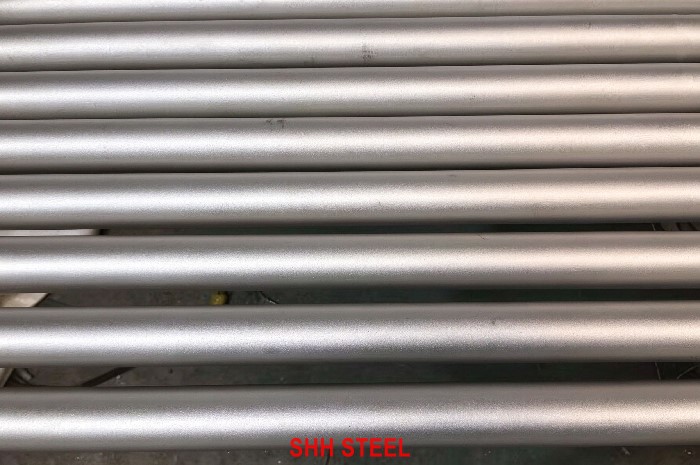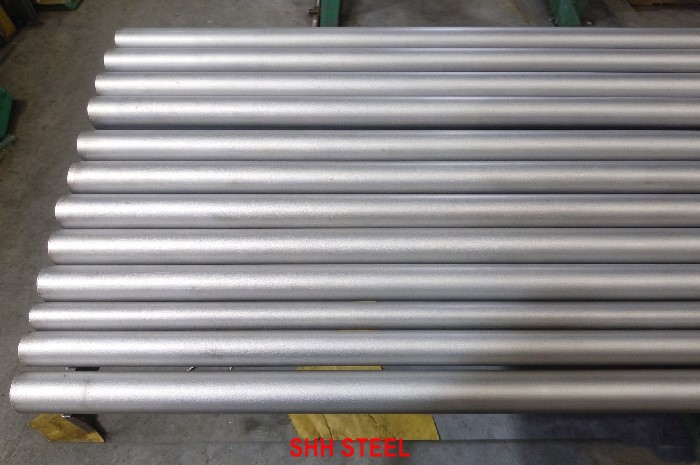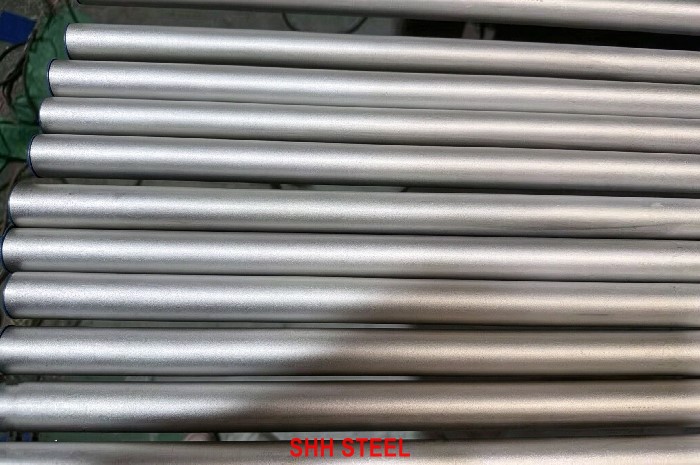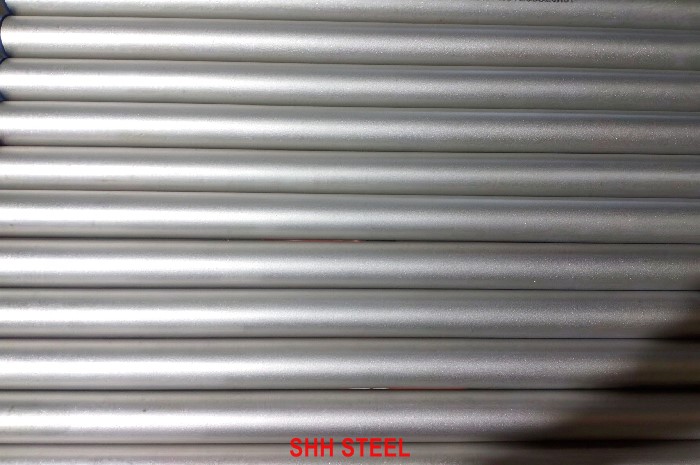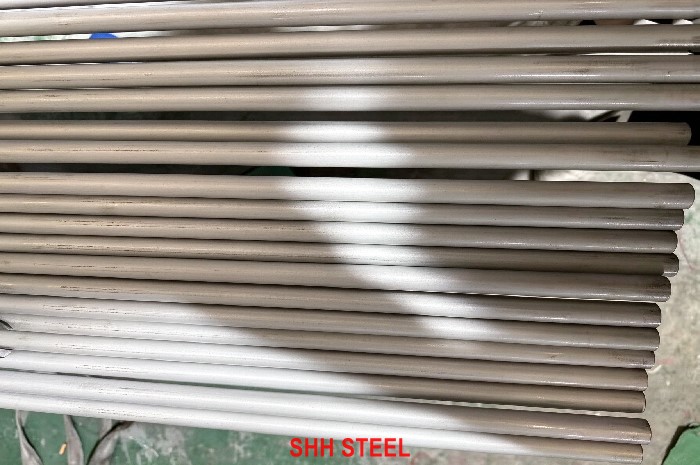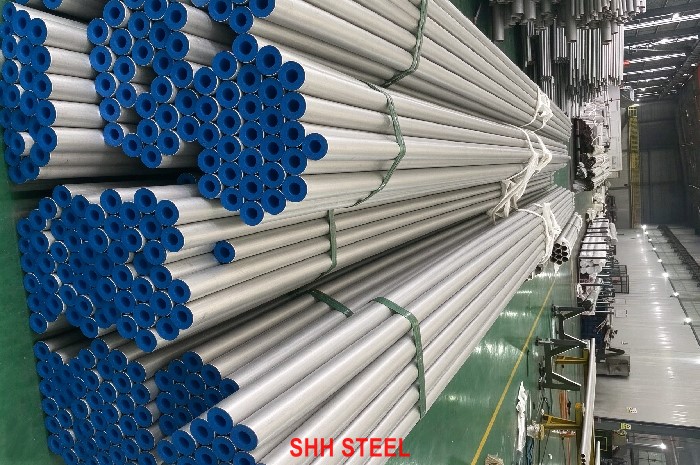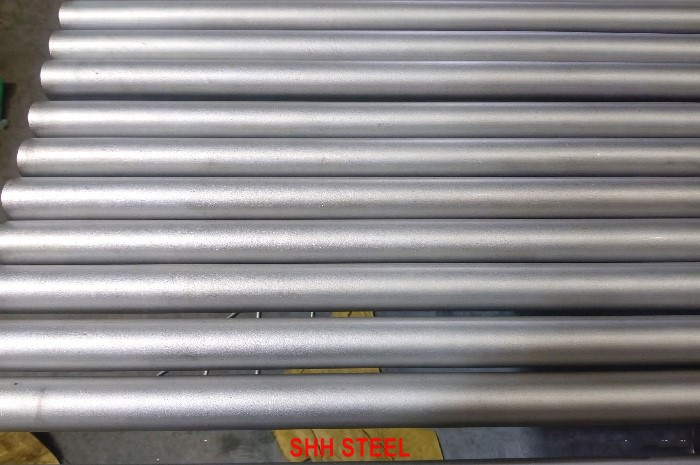
ASME SA213 TP310MoCbN Stainless Steel Tube
What is ASME SA213 TP310MoCbN Stainless Steel Tube
ASME SA-213 / SA-213M is the ASME Boiler and Pressure Vessel Code Book adoption of the seamless ferritic and austenitic alloy-steel boiler, superheater, and heat-exchanger tube product text. When a Code-stamped boiler, superheater, or registered heat-exchanger specification invokes that adoption by name, the governing product standard for this grade is SA-213 — written independently of the ASTM sister and not treated as a synonym stamp. Start from the hub SA213/SA213M when the enquiry is Code Book led.
Grade TP310MoCbN / UNS S31025 is the molybdenum–niobium–nitrogen–boron austenitic row with inverted chromium–nickel windows inside that SA-213 stainless family. Reviewers should read Cr 19.5–23.0% / Ni 23.0–26.0% first — not the classic 24–26 / 19–22 310 pattern — then Mo 1.0–2.0%, N 0.10–0.25%, Nb 0.10–0.40%, Ti ≤0.20%, and B 0.002–0.010% together. Missing boron, swapping in S31035, or treating the heat as MoLN chemistry means the product is not TP310MoCbN under SA-213.
SHH STEEL can supply ASME SA213 TP310MoCbN as seamless cold-finished and hot-finished tube in the usual OD × wall / BWG band, with EN 10204 3.1 certificates that report Mo, Nb, N, B, the 2100 °F [1150 °C] solution practice, and ASTM grain size No. 7 or coarser. Dual SA-213/A213 marking is added only when the purchase order asks; the live ASTM twin is A213 TP310MoCbN.
Shop language may say “310MoCbN,” “S31025,” or “Mo–Nb–N 310.” Those labels help RFQ routing, but the purchase order should still carry ASME SA-213 Grade TP310MoCbN / UNS S31025 (explicitly not S31035), wall basis, OD × wall or BWG, finish route, and any Supplementary Requirements. Sister SA213 pages buyers compare on the same spine include SA213 TP310MoLN, SA213 TP310HCbN, and SA213 TP310S. This pack is seamless tube only — no Manufacturing Types (SML / WLD / HCW) H2.
Chemical Composition of SA213 TP310MoCbN
Two chemistry layers matter for TP310MoCbN under ASME SA-213. Melting analysis is mandatory for every heat; product analysis on finished tube applies only when Supplementary Requirement wording or the purchase order invokes it through the general requirements (commonly ASTM A1016/A1016M), with tolerances typically from ASTM A480/A480M Table A1.1. The inverted Cr–Ni pair plus Mo, N, Nb, Ti, and B must be read as one grade definition — cherry-picking Mo alone or Nb alone will not recreate S31025.
UNCERTAIN: exact SA-213 / A213 edition year; stainless chemistry table number (Table 1 vs Table 2 by edition); titanium printed as 0.20 treated as a maximum; A480 boron product-tolerance path (confirm ordered A480 / PO); A480 N/Nb/Ti digits for these bands; grain-size clause number — labeled honestly and confirmed on the ordered edition.
Melting analysis
| Element | TP310MoCbN (UNS S31025) melting analysis |
|---|---|
| Carbon (C) | ≤ 0.10 |
| Manganese (Mn) | ≤ 1.50 |
| Phosphorus (P) | ≤ 0.030 |
| Sulfur (S) | ≤ 0.030 |
| Silicon (Si) | ≤ 1.00 |
| Chromium (Cr) | 19.5 – 23.0 |
| Nickel (Ni) | 23.0 – 26.0 |
| Molybdenum (Mo) | 1.0 – 2.0 |
| Nitrogen (N) | 0.10 – 0.25 |
| Niobium (Nb / Cb) | 0.10 – 0.40 |
| Titanium (Ti) | ≤ 0.20 |
| Boron (B) | 0.002 – 0.010 |
That melt table is the acceptance chemistry for every heat of SA213 TP310MoCbN. Manganese is capped at 1.50% (tighter than many 2.00% austenitic rows), nickel sits above chromium, molybdenum is the 1–2% band rather than MoLN’s 2–3%, and boron is a required band — not an optional residual. Niobium 0.10–0.40% is a fixed window here, not a 10×C formula borrowed from other Nb grades.
Product analysis (when required)
| Element | Melting | Tolerance (A480 A1.1) | Product analysis limit |
|---|---|---|---|
| Carbon (C) | ≤ 0.10 | 0.01 over | ≤ 0.11 |
| Manganese (Mn) | ≤ 1.50 | 0.04 over | ≤ 1.54 |
| Phosphorus (P) | ≤ 0.030 | 0.005 over | ≤ 0.035 |
| Sulfur (S) | ≤ 0.030 | 0.005 over | ≤ 0.035 |
| Silicon (Si) | ≤ 1.00 | 0.05 over | ≤ 1.05 |
| Chromium (Cr) | 19.5 – 23.0 | 0.25 under / over | 19.25 – 23.25 |
| Nickel (Ni) | 23.0 – 26.0 | 0.15 under / 0.20 over | 22.85 – 26.20 |
| Molybdenum (Mo) | 1.0 – 2.0 | 0.05 under / over | 0.95 – 2.05 |
| Nitrogen (N) | 0.10 – 0.25 | 0.01 under / 0.02 over | 0.09 – 0.27 |
| Niobium (Nb) | 0.10 – 0.40 | 0.05 under / over | 0.05 – 0.45 |
| Titanium (Ti) | ≤ 0.20 | 0.05 over | ≤ 0.25 |
| Boron (B) | 0.002 – 0.010 | UNCERTAIN — confirm A480 path | confirm ordered A480 / PO |
When product analysis is invoked, the A480 tolerances above apply. Boron’s product-tolerance path is left UNCERTAIN in public A480 excerpts used for this pack — state the ordered A480 practice or PO wording before accepting a boron product result near either edge of the melt band. Nb, N, and Mo product windows still have to preserve the grade intent.
Snapshot vs sister grades
| Element | TP310MoCbN (S31025) | TP310MoLN (S31050) | TP310HCbN (S31042) |
|---|---|---|---|
| C | ≤ 0.10 | ≤ 0.025 | 0.04 – 0.10 |
| Cr / Ni | 19.5–23 / 23–26 | 24–26 / 21–23 | 24–26 / 19–22 |
| Mo | 1.0 – 2.0 | 2.00 – 3.00 | … |
| N | 0.10 – 0.25 | 0.10 – 0.16 | 0.15 – 0.35 |
| Nb | 0.10 – 0.40 | … | 0.20 – 0.60 |
| B | 0.002 – 0.010 | … | … |
| Table 4 TS/YS | 93 / 39 ksi | 84/39 or 78/37 | 95 / 43 ksi |
Against SA213 TP310MoLN, MoCbN uses inverted Cr–Ni, lower Mo, required Nb+B, higher single tensile floor, and a hotter anneal. Against SA213 TP310HCbN, MoCbN adds Mo+B and flips the Cr–Ni windows while HCbN stays on classic 24–26 / 19–22 with a higher N band and 95/43 ksi. Do not confuse UNS S31025 with S31035 — different chemistry rows.
Mechanical Properties of SA213 TP310MoCbN
ASME SA-213 sets the tensile acceptance floor for TP310MoCbN at 93 ksi [640 MPa] tensile strength and 39 ksi [270 MPa] yield strength (0.2% offset), with elongation of 30% minimum in 2 in. or 50 mm and hardness capped at 256 HBW / 270 HV or 100 HRB. Those numbers sit above MoLN’s wall-class floors and just below HCbN’s 95/43 ksi row — they belong with the multi-element Mo–Nb–N–B chemistry, not with classic 75/30 ksi 310S.
| Property | TP310MoCbN requirement |
|---|---|
| Tensile strength, min (Table 4) | 93 ksi [640 MPa] |
| Yield strength (0.2% offset), min (Table 4) | 39 ksi [270 MPa] |
| Elongation in 2 in. or 50 mm, min (Table 4) | 30% |
| Hardness, max (Table 4) | 256 HBW / 270 HV or 100 HRB |
| Grain size | ASTM No. 7 or coarser (per heat-treatment lot) |
Grain size ASTM No. 7 or coarser is checked per heat-treatment lot and belongs on the mill certificate with the 2100 °F anneal practice. Hardness at 256 HBW / 100 HRB matches the high-strength 310 family cap used on HCbN rather than the 192 HBW / 90 HRB 316-family cap — certificate reviewers should not flag a compliant 220 HBW MoCbN result against a 192 HBW expectation borrowed from TP316.
Flattening, flaring, and reverse-bend tests follow the SA-213 / general-requirements path for the ordered size. Hydrostatic testing or nondestructive electric testing is selected per specification and PO. When dual-marking to ASTM is ordered, mechanical floors still clear the SA-213 text named on the Code job — see A213 TP310MoCbN.
Dimensions and Tolerances
Dimensional supply for ASME SA213 TP310MoCbN is tube language — outside diameter × wall thickness (minimum wall or average wall) and, commercially, BWG / gauge — not ASME B36.19 pipe schedules as the primary size story. Usual SA-213 sizes run from about 1/8 in. [3.2 mm] inside diameter to 5 in. [127 mm] outside diameter, with minimum wall from about 0.015 to 0.500 in. [0.4 to 12.7 mm]; other diameters may be furnished when all other requirements are met.
High-temperature boiler and process datasheets that pick MoCbN for strength almost always assume minimum wall — state wall basis on the purchase order. Outside-diameter and wall variations follow the general requirements invoked by SA-213 (commonly ASTM A1016/A1016M). Cold-finished tubes commonly hold tighter OD control; hot-finished tubes allow wider OD and wall windows.
| Item | Typical SA213 TP310MoCbN dimensional practice |
|---|---|
| Product form | Seamless only (cold-finished or hot-finished) |
| Usual size band | ~1/8 in. [3.2 mm] ID to 5 in. [127 mm] OD; wall ~0.015–0.500 in. [0.4–12.7 mm] |
| Wall basis | Minimum wall (common for boiler / HX datasheets) or average wall if PO says so |
| OD / wall tolerance | Per general requirements (commonly A1016/A1016M) for the ordered finish |
| Length | Straight random / cut-to-length; U-bend by agreement |
BWG / gauge callouts are accepted on enquiry, but the certificate should still show OD and wall in inch or millimetre units. Cut lengths and U-bends are commercial options on top of SA-213 dimensional rules — they do not replace minimum-wall discipline or the 93/39 ksi tensile floor.
Equivalent Grades
Equivalence talk around TP310MoCbN is risky when mill catalogues blur S31025 with neighboring 310 Mo or Nb rows. ASME SA-213 Grade TP310MoCbN / UNS S31025 is the governing designation for this article; S31035 is a different unified number and must not be substituted by nickname.
| Designation | Notes |
|---|---|
| ASME SA-213 / SA-213M Grade TP310MoCbN | Governing ASME Code Book seamless boiler / HX tube product standard for this article |
| UNS S31025 | Unified number — not S31035 |
| ASTM A213 TP310MoCbN | Separate ASTM product specification — dual-mark only when the PO asks |
| Related MoLN | SA213 TP310MoLN — L carbon, Mo 2–3, classic-high Cr, no Nb/B |
| Related HCbN | SA213 TP310HCbN — H-grade Nb+N on 24–26 / 19–22, no Mo/B |
| Related 310S | SA213 TP310S — classic 24–26 / 19–22 without Mo/Nb/N/B |
| Related plate | A240 / SA240 flat product — order plate and tube under their own standards |
If a datasheet says “310MoCbN or equivalent,” confirm UNS S31025, Mo 1–2, Nb, B, inverted Cr–Ni, 93/39 ksi, and 2100 °F anneal before accepting a substitute. Plate under A240 / SA240 does not automatically qualify as SA-213 tube. For non-Code ASTM purchase, use A213 TP310MoCbN.
Heat Treatment and Delivery Condition
TP310MoCbN under ASME SA-213 is furnished solution treated at a minimum of 2100 °F [1150 °C], then quenched in water or cooled rapidly by other means — a distinctly higher anneal temperature than the 1900 °F [1040 °C] used on classic 310S / 310H / HCbN rows. The heat-treatment table carries ASTM grain size No. 7 or coarser for the heat-treatment lot. That higher solution temperature belongs with the multi-element Mo–Nb–N–B chemistry and should appear on the mill certificate.
Cold-finished versus hot-finished is a process and dimensional route, not a substitute for the 2100 °F anneal or the grain-size check. Delivery condition for SHH STEEL TP310MoCbN is solution annealed and pickled (or bright annealed by agreement), with anneal temperature, quench method, Mo/Nb/N/B results, and E112 grain-size result on the EN 10204 3.1 certificate.
Do not accept a certificate that only shows a 1900 °F classic-310 anneal and calls the product TP310MoCbN without edition-backed justification. If the purchaser orders additional stabilizing or corrosion-test Supplementary Requirements, those steps are additive to the 2100 °F solution treatment required by the grade’s heat-treatment row.
Corrosion Resistance
TP310MoCbN’s inverted high-nickel austenitic balance with Mo, Nb, N, and controlled boron is selected for high-temperature strength and oxidation/corrosion duty where classic 310S chemistry and 75/30 ksi floors are not enough, yet the buyer’s datasheet names S31025 rather than HCbN or MoLN. Molybdenum in the 1–2% band supports localized-corrosion resistance relative to non-Mo 310 rows without copying MoLN’s 2–3% window.
Niobium and nitrogen contribute to high-temperature strength and structural stability; boron in the required micro-alloy band is part of the grade definition and should appear on the MTC. None of those additions make MoCbN immune to chloride stress-corrosion cracking, severe pitting, or wrong-temperature oxidation — selection still needs process chemistry and design temperature on the table.
When the circuit is urea/nitric Mo+N at classic-high Cr with C ≤0.025%, stewards usually want SA213 TP310MoLN. When creep-oriented USC duty wants H-grade Nb+N on 24–26 / 19–22 without Mo/B, see SA213 TP310HCbN. Forcing MoCbN into either datasheet by nickname is how wrong heats get released.
Applications of SA213 TP310MoCbN Tube
TP310MoCbN shows up on Code and near-Code boiler, superheater, and heat-exchanger circuits whose specifications name UNS S31025 or the Mo–Nb–N–B inverted Cr–Ni chemistry explicitly. Buyers often come from high-temperature process exchangers or strength-driven replacements where 93/39 ksi and the 2100 °F anneal are already written into the project standards.
Enquiry patterns typically ask for seamless cold-finished or hot-finished tube in boiler / HX OD × minimum-wall sizes, sometimes with cut-to-length packages for retube campaigns. Because boron and niobium are required melt lines, PMI and MTC review should look for those elements rather than stopping at Cr–Ni–Mo.
Sister-grade steering: classic oxidation 310 without Mo/Nb/N/B → SA213 TP310S; L-carbon Mo+N high-Cr → SA213 TP310MoLN; H-grade Nb+N on 24–26 / 19–22 → SA213 TP310HCbN.
Weldability
TP310MoCbN tube welding needs procedures that respect the multi-element chemistry and the higher solution-anneal temperature used at the mill. Matching or engineered nickel-bearing austenitic fillers are selected for the service temperature and corrosion environment; a generic 308 filler playbook is not automatic engineering cover for S31025.
Tube-to-tubesheet and attachment welds should name TP310MoCbN / S31025 on the WPS. Heat input control matters because Nb and B micro-alloying plus the inverted Ni balance change solidification and HAZ behavior relative to MoLN or classic 310S. Post-weld solution treatment, when required by the project specification, is a fabrication decision separate from mill delivery anneal.
If corrosion testing after welding is ordered, name the practice on the purchase order. Dual-marked SA-213/A213 heats do not change filler selection — only the stencil and certificate names. Confirm boron and niobium on the heat before welding procedures assume a simpler Mo-only 310 variant.
Surface Finishes
Standard mill delivery for ASME SA213 TP310MoCbN is solution annealed at the grade’s 2100 °F practice and pickled, leaving a clean matte finish suitable for boiler and heat-exchanger tube duty. Bright annealing is available by agreement when appearance or downstream polish favors it.
ID/OD polish, special cleanliness, or bend-zone conditioning are commercial additions — they do not replace chemistry, 93/39 ksi tensile, grain-size, or anneal temperature on the certificate. End caps and dry export packaging matter more than paint on pickled stainless.
SHH STEEL notes the ordered surface route on the packing list and keeps it aligned with the MTC finish description so receiving inspection can match bundles to documents without guesswork.
Inspection and Testing
Base ASME SA-213 testing for TP310MoCbN includes heat analysis (Mo, Nb, N, B, Ti reported inside grade windows), tension tests to the 93/39 ksi floors, hardness to the 256 HBW / 100 HRB cap, grain-size check to ASTM No. 7 or coarser per heat-treatment lot, and flattening / flaring tests required for the ordered size. Hydrostatic or NDE follows the path selected on the purchase order.
Certificate review should confirm 2100 °F [1150 °C] solution practice rather than a borrowed 1900 °F classic-310 line. Product analysis, when ordered, applies A480 tolerances — with boron’s product path confirmed per ordered A480 / PO because that digit path is UNCERTAIN in the public excerpts used here.
Supplementary Requirements and third-party witness are available when named. EN 10204 3.1 is default; 3.2 when the PO requires it. Dual SA-213/A213 names appear only when dual marking was ordered.
Packaging and Shipping
TP310MoCbN tube leaves SHH STEEL bundled, capped or end-protected, and tagged for export or domestic delivery according to length mix and bend form. Bundle tags repeat ASME SA-213 Grade TP310MoCbN, UNS S31025, heat number, size, and wall basis so receivers can match the 3.1 certificate — including Nb and B — without opening every bundle.
Export packing uses seaworthy bundling with moisture protection appropriate for pickled stainless. Marking follows SA-213 requirements and any dual-mark text the PO adds, referencing A213 TP310MoCbN only when dual ASTM marking was ordered.
Why Choose SHH STEEL
SHH STEEL treats ASME SA213 TP310MoCbN as a Code Book grade with inverted Cr–Ni, required Mo–Nb–N–B chemistry, 93/39 ksi floors, 2100 °F anneal, and grain-size rules — not as a nickname for “310 Mo with columbium.” Enquiry review checks UNS S31025 (not S31035), boron band, Nb window, and anneal temperature before release.
That prevents silent substitution with MoLN, HCbN, or classic 310S heats that may look similar on a partial PMI gun reading. We keep SA-213 and A213 independent, dual-mark only on request, and put Mo/Nb/N/B + grain size + 2100 °F practice on the 3.1 certificate.
Cross-links on the same Code Book spine: SA213 TP310MoLN, SA213 TP310HCbN, SA213 TP310S, and hub SA213/SA213M.
Supply Capability
SHH STEEL can supply ASME SA213 TP310MoCbN stainless steel tube against the edition and finish route named on your enquiry. The capability table below summarizes sizes, finishes, and documents we regularly quote, followed by the Stock / Available sizes map for strength-driven boiler and heat-exchanger tube with Mo–Nb–N–B chemistry.
| Item | SHH STEEL capability for TP310MoCbN |
|---|---|
| Standard | ASME SA213 / SA213M (dual A213 marking on request) |
| Grade | TP310MoCbN / UNS S31025 (not S31035) |
| Product form | Seamless only — cold-finished and hot-finished |
| Size | Typical OD × min wall (or average wall) in the SA-213 usual band; other diameters by agreement |
| Wall / gauge | Minimum wall or average wall; BWG / gauge callouts accepted on enquiry |
| Length | Cut-to-length for boiler / superheater / HX; U-bend by agreement |
| Documentation | EN 10204 3.1 MTC with Mo + Nb + N + B + grain size + 2100 °F anneal; witness on request |
| Trade terms | FOB / CFR / CIF / EXW and other agreed Incoterms |
Stock / Available sizes
SHH STEEL quotes TP310MoCbN against a stock-and-mill enquiry range rather than a frozen SKU or tonnage list. Representative OD × wall / BWG combinations below are an enquiry map for boiler, superheater, and process HX tube — confirm live availability and cut lengths on the RFQ.
| OD (in.) | Typical wall / BWG enquiry band | Notes |
|---|---|---|
| 1/2 – 1 | BWG 16–12 / ~0.065–0.109 in. | Small HX / instrument sizes |
| 1-1/4 – 2 | BWG 14–10 / ~0.083–0.134 in. | Process and boiler tube band |
| 2-1/2 – 3 | 0.120 – 0.250 in. min wall | Heavier wall HX / superheater |
| 3-1/2 – 5 | 0.180 – 0.300 in. min wall | Upper usual SA-213 OD by agreement |
Send OD × wall (or BWG), wall basis, quantity, finish route, and whether dual A213 marking is required. SHH STEEL returns capability against ASME SA213 TP310MoCbN / UNS S31025 — not a MoLN or HCbN substitute.
FAQ
-
Is ASME SA-213 the same as ASTM A213 for TP310MoCbN?
- No. ASME SA-213 / SA-213M is the ASME Code Book adoption; ASTM A213 / A213M is the separate ASTM product specification. Chemistry, 93/39 ksi tensile, hardness, 2100 °F anneal, and grain-size floors align closely for a given referenced edition, but they remain independent standards. Dual-mark only when the purchase order asks for both names on the stencil and MTC.
-
Does ASME SA213 TP310MoCbN include welded or HCW tube?
- No. This page covers seamless boiler, superheater, and heat-exchanger tube only. WLD and HCW manufacturing-type labels from pipe standards are not product-form options here. If the datasheet needs welded stainless pipe, that belongs to a different product-standard family.
-
What is the UNS number and chemistry focus of ASME SA213 TP310MoCbN?
- UNS S31025 — not S31035. Check inverted Cr 19.5–23.0 / Ni 23.0–26.0, Mo 1.0–2.0%, N 0.10–0.25%, Nb 0.10–0.40%, Ti ≤0.20%, B 0.002–0.010%, C ≤0.10%, and Mn ≤1.50% together. Those lines define the grade; Mo alone or Nb alone is not enough.
-
TP310MoCbN vs TP310MoLN — which SA213 tube should I order?
- Order MoCbN when the datasheet wants inverted Cr–Ni, Mo 1–2, Nb+B, 93/39 ksi, and 2100 °F anneal. Order MoLN when it wants C ≤0.025%, Mo 2–3, N 0.10–0.16, Cr 24–26 / Ni 21–23, and wall-class 84/39 or 78/37 ksi. They are not interchangeable by “310 Mo” nickname.
-
Is UNS S31035 the same as SA213 TP310MoCbN?
- No. This pack’s grade is UNS S31025. S31035 is a different unified number and must not be substituted because a shop drawing said “310 Mo Cb N” without the UNS. Confirm S31025 on the purchase order and mill certificate before release.
-
Why is the solution anneal 2100 °F for SA213 TP310MoCbN?
- The heat-treatment table for TP310MoCbN / S31025 calls for a minimum 2100 °F [1150 °C] solution treatment with rapid cool, hotter than the 1900 °F [1040 °C] classic-310 line. That temperature belongs with the Mo–Nb–N–B chemistry and should appear on the MTC with ASTM grain size No. 7 or coarser. Do not accept a silent 1900 °F substitute without edition-backed justification.
-
Does SA-213 require grain-size testing for TP310MoCbN?
- Yes. ASTM grain size No. 7 or coarser is required per heat-treatment lot for this grade’s heat-treatment row. The result belongs on the EN 10204 3.1 certificate with anneal temperature. That requirement is part of why MoCbN is not a dual stamp of MoLN, which does not carry the same public grain-size mandate in the excerpts used here.
-
Does SA-213 set a hardness limit for TP310MoCbN?
- Yes. Table 4 caps hardness at 256 HBW / 270 HV or 100 HRB, alongside 93 ksi tensile, 39 ksi yield, and 30% elongation. That hardness cap matches other high-strength 310-family rows rather than the 192 HBW / 90 HRB 316-family cap — do not mix the two expectations when reviewing certificates.
-
Minimum wall vs average wall — which should I order for SA213 TP310MoCbN?
- Most boiler and heat-exchanger datasheets assume minimum wall; average wall only when the PO says so. Usual SA-213 sizes run about 1/8 in. ID to 5 in. OD with min wall about 0.015–0.500 in.; other diameters by agreement. Prefer OD × wall / BWG language over B36.19 pipe schedules as the primary size story.
-
Should boron appear on the SA213 TP310MoCbN mill certificate?
- Yes. Boron 0.002–0.010% is a required melt band for UNS S31025, not an optional residual. SHH STEEL reports B with Mo, Nb, and N on the 3.1 MTC. Product-analysis tolerance for boron is UNCERTAIN in the public A480 path used here — confirm ordered A480 / PO wording if product analysis is invoked near either band edge.
-
Can you dual-certify ASME SA-213 and ASTM A213 TP310MoCbN?
- Yes, when the purchase order asks for dual marking and the heat meets both named editions. Dual marking is a stencil and documentation choice, not proof the names are synonyms. Otherwise SA-213 stands alone for Code Book jobs; the ASTM twin page remains A213 TP310MoCbN for non-Code purchase language.
Conclusion
ASME SA213 TP310MoCbN / UNS S31025 is the molybdenum–niobium–nitrogen–boron seamless stainless steel tube grade with inverted 19.5–23% Cr / 23–26% Ni windows for Code boiler, superheater, and heat-exchanger service when the datasheet needs Mo 1–2%, Nb 0.10–0.40%, B 0.002–0.010%, a 93/39 ksi tensile floor, ASTM No. 7 or coarser grain size, and a 2100 °F solution anneal. SHH STEEL supplies cold-finished and hot-finished seamless tube in the usual OD × wall / BWG band with EN 10204 3.1 MTCs that report Mo, Nb, N, B, grain size, and anneal practice. Compare sister grades on the same Code Book spine, or start from SA213/SA213M. Enquire with OD × wall, wall basis, quantity, and document needs at admin@steelspecs.com.
Quality Steel Needed? Inquire for Offers
Related Products