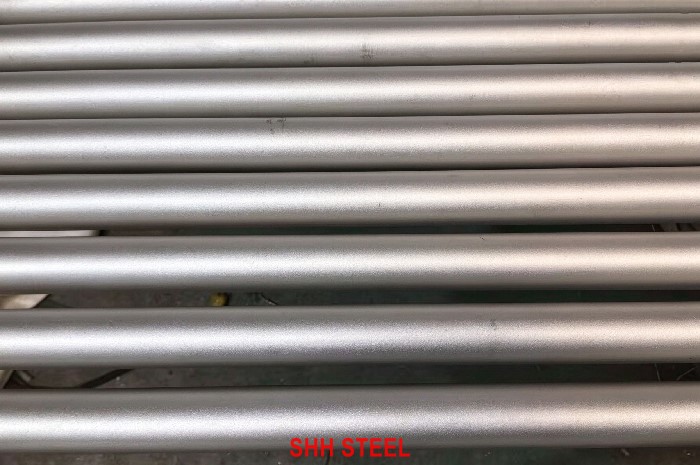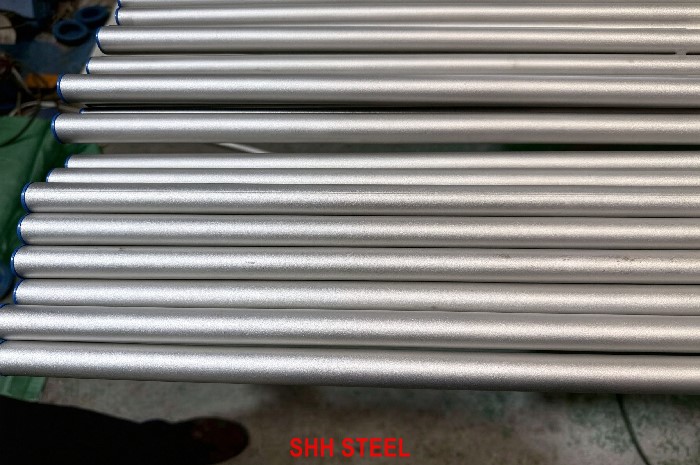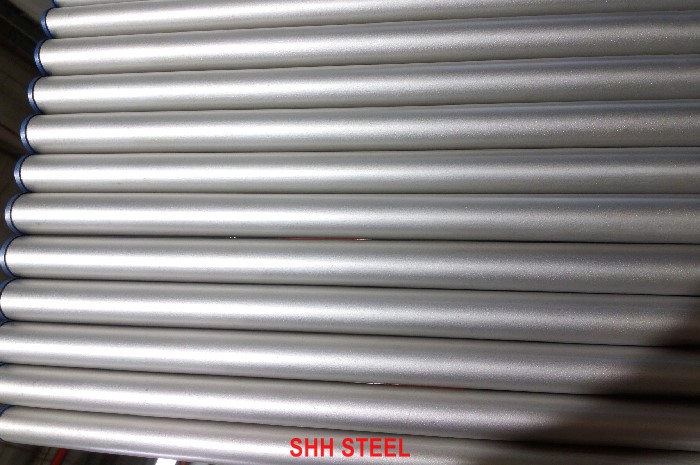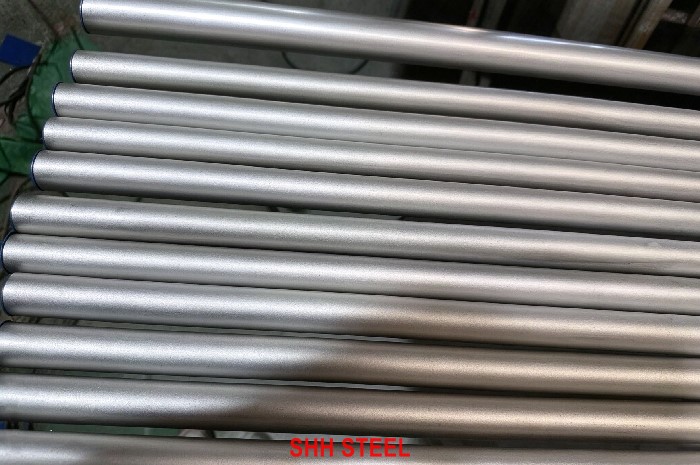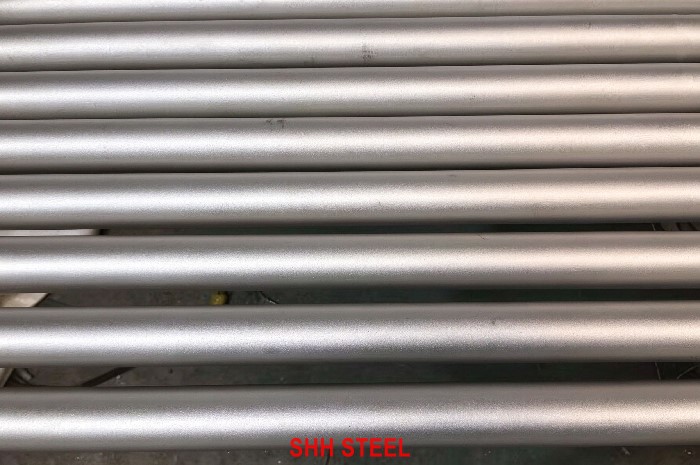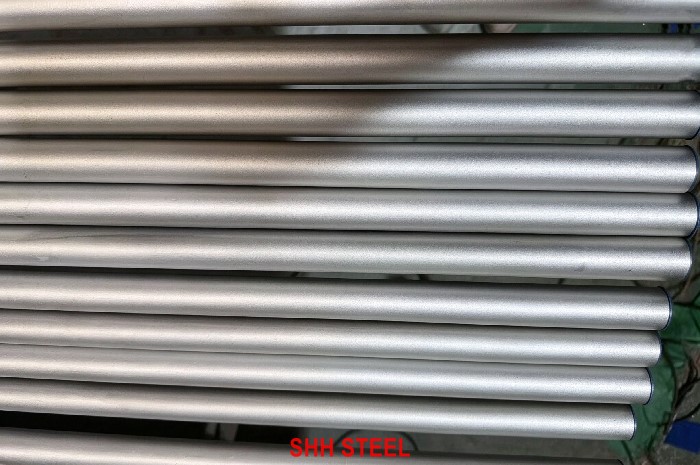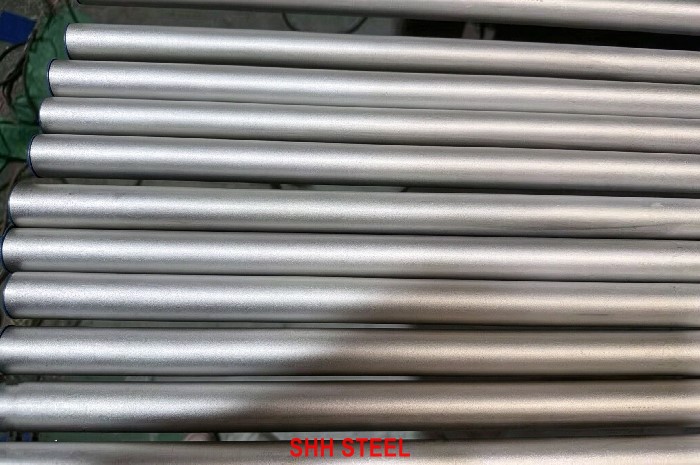
ASME SA213 TP202 Stainless Steel Tube
What is ASME SA213 TP202 Stainless Steel Tube
ASME SA-213 / SA-213M is the ASME Boiler and Pressure Vessel Code Book adoption of the seamless ferritic and austenitic alloy-steel boiler, superheater, and heat-exchanger tube product standard. Grade TP202 under that Code Book text is the higher-manganese manganese-nitrogen austenitic listed as UNS S20200, with melting limits of carbon ≤0.15%, manganese 7.5–10.0%, chromium 17.0–19.0%, nickel 4.0–6.0%, and nitrogen ≤0.25%. When a Code-stamped boiler, superheater, or heat-exchanger datasheet calls for SA-213 TP202, the purchase order and mill test certificate should carry the ASME designation and the 90/45 ksi tensile floor that belongs to this grade — not a borrowed 304 mechanical row and not a silent relabel of SA213 TP201.
SHH STEEL can supply ASME SA213 TP202 stainless steel tube as seamless cold-finished and hot-finished product in the usual boiler and heat-exchanger OD × wall / BWG band, documented on EN 10204 3.1 mill test certificates that report the full ladle chemistry — including manganese and nitrogen — and the tensile plus hardness acceptance set. Dual SA-213 / A213 marking on the same lengths is available only when the purchase order asks for both independent standards; ASME SA213 and ASTM A213 remain separate documents even when the grade text aligns closely for a referenced edition. Browse the grade family on the SA213/SA213M hub.
Commercially the same tube is still called 202, S20200 boiler tube, high-Mn austenitic HX tube, or SA213 202 tube; none of those phrases replace the ASME grade on the stencil or MTC. Sister grades under the same ASME standard include SA213 TP201, SA213 TP304 / SA213 TP304L, and the molybdenum pair SA213 TP316 / SA213 TP316L. SA-213 covers seamless tube only — there is no welded or HCW manufacturing type under this product standard — so cold-finished versus hot-finished seamless route is the process choice, not a WLD/HCW stencil letter. For the sister ASTM product page on the same UNS, see A213 TP202.
Chemical Composition of SA213 TP202
Two chemistry layers matter for TP202 under ASME SA-213. The melting (heat or ladle) analysis is mandatory for every heat, while product analysis on finished tube applies only when Supplementary Requirement wording or the purchase order invokes product analysis through the general requirements path (commonly ASTM A1016/A1016M as referenced by the ordered SA-213 edition). Product-analysis tolerances are not reprinted as a standalone chemistry table inside SA-213 itself; when ordered, they typically flow from ASTM A480/A480M Table A1.1. SHH STEEL reports the actual ladle values — and the product values when ordered — and does not advertise tighter catalogue chemistry windows that the Code Book text does not publish.
The tables below reproduce the heat analysis for TP202 / UNS S20200 and the product-analysis limits that result from applying A480 Table A1.1 tolerances. Values are maximum unless a range is shown, and an ellipsis (…) means the ordered edition sets no requirement for that element. UNCERTAIN: exact SA-213 / A213 edition year and whether austenitic grades sit in Table 1 or Table 2 of that edition; some public PDF OCR excerpts print nitrogen as “.025” while accepted stainless-table practice for S20200 is N ≤0.25% (matching A240/A312 sister chemistry) — confirm the ordered edition and nitrogen analysis method (by agreement) on the purchase order before treating secondary catalogues as acceptance text.
Melting analysis (heat / ladle analysis)
Source: public SA-213 / A213 grade-table summaries for TP202 / UNS S20200. Confirm the ordered ASME edition on the purchase order.
| Element | TP202 (UNS S20200) melting analysis |
|---|---|
| Carbon (C) | ≤ 0.15 |
| Manganese (Mn) | 7.5 – 10.0 |
| Phosphorus (P) | ≤ 0.060 |
| Sulfur (S) | ≤ 0.030 |
| Silicon (Si) | ≤ 1.00 |
| Chromium (Cr) | 17.0 – 19.0 |
| Nickel (Ni) | 4.0 – 6.0 |
| Molybdenum (Mo) | … (no requirement) |
| Nitrogen (N) | ≤ 0.25 |
Product analysis — A480/A480M Table A1.1 tolerances applied
| Element | Melting | Tolerance (A480 A1.1) | Product analysis limit |
|---|---|---|---|
| Carbon (C) | ≤ 0.15 | 0.01 over | ≤ 0.16 |
| Manganese (Mn) | 7.5 – 10.0 | 0.06 under / 0.10 over | 7.44 – 10.10 |
| Phosphorus (P) | ≤ 0.060 | 0.010 over | ≤ 0.070 |
| Sulfur (S) | ≤ 0.030 | 0.005 over | ≤ 0.035 |
| Silicon (Si) | ≤ 1.00 | 0.05 over | ≤ 1.05 |
| Chromium (Cr) | 17.0 – 19.0 | 0.20 under / over | 16.80 – 19.20 |
| Nickel (Ni) | 4.0 – 6.0 | 0.07 under / 0.15 over | 3.93 – 6.15 |
| Nitrogen (N) | ≤ 0.25 | 0.02 over | ≤ 0.27 |
The 7.5–10.0% manganese band and ≤0.25% nitrogen are why TP202 sits above TP201 on the manganese ladder and why its yield floor under SA-213 is 45 ksi rather than TP201’s 38 ksi or TP304’s 30 ksi. Chromium at 17–19% and nickel at 4–6% keep the structure austenitic after the 1900 °F [1040 °C] solution treatment, but the lean nickel and absent molybdenum mean chloride pitting resistance is not the selling point of this grade. Phosphorus is capped at 0.060% on the melt — higher than the 0.045% ceiling on many 18-8 rows — so do not import a TP304 phosphorus limit onto a TP202 certificate.
When product analysis is ordered, finished tube may read up to C 0.16%, P 0.070%, S 0.035%, Si 1.05%, and N 0.27%, with Mn 7.44–10.10%, Cr 16.80–19.20%, and Ni 3.93–6.15%. Those are the only product limits we quote from the A480 A1.1 path for this grade. Put any tighter project manganese, nitrogen, or sulfur ceiling on the purchase order before the heat is selected, and agree the nitrogen analysis method in writing when N reporting must follow a named technique.
Mechanical Properties of SA213 TP202
ASME SA-213 sets the tensile acceptance floor for TP202 at 90 ksi [620 MPa] tensile strength and 45 ksi [310 MPa] yield strength (0.2% offset), with elongation of 35% minimum in 2 in. or 50 mm. The yield floor sits above TP201’s 38 ksi and well above TP304’s 30 ksi — a direct result of the manganese-nitrogen solid-solution strengthening that the product standard captures in this row. The same mechanical table lists a hardness maximum of 219 HBW / 230 HV or 95 HRB, matching the TP201 hardness cap, and hardness tests are part of the lot acceptance scheme. Every lot sampled under the edition’s specimen rules must meet those numbers after the final solution treatment.
Source: public SA-213 / A213 mechanical-table summaries for TP202 / UNS S20200 (commonly Table 4). Mechanical property requirements do not apply to tubing smaller than 1/8 in. [3.2 mm] inside diameter or thinner than 0.015 in. [0.4 mm] wall.
| Property | TP202 requirement |
|---|---|
| Tensile strength, min | 90 ksi [620 MPa] |
| Yield strength (0.2% offset), min | 45 ksi [310 MPa] |
| Elongation in 2 in. or 50 mm, min | 35% |
| Hardness, max | 219 HBW / 230 HV or 95 HRB |
Flattening and flaring tests are also required on a lot basis for finished tube; they sit beside tension and hardness rather than replacing them. The 45 ksi yield floor is why some designers look at TP202 when wall thickness or pressure drop is tight in a utility exchanger — but only after corrosion and weld reviews clear the lean chemistry. Actual mill certificates often clear the 90/45 ksi floor with margin; design calculations should still use the Code Book floor unless the purchase order states higher guaranteed values that the mill has accepted in writing. Do not import SA312 / A312 pipe tensile language onto this SA-213 tube page.
Dimensions and Tolerances
Dimensional supply for ASME SA213 TP202 is tube language — outside diameter × wall thickness (minimum wall or average wall) and, commercially, BWG / gauge — not ASME B36.19 pipe schedules as the primary size story. The sizes usually furnished under SA-213 run from about 1/8 in. [3.2 mm] inside diameter to 5 in. [127 mm] outside diameter, with minimum wall from about 0.015 to 0.500 in. [0.4 to 12.7 mm]; tubing with other diameters may be furnished when all other requirements of the specification are met. State on the purchase order whether wall is minimum or average, because that choice changes how the mill interprets tolerance and how the designer reads remaining wall after fabrication.
Outside-diameter and wall variations follow the general requirements invoked by SA-213 (commonly ASTM A1016/A1016M), with cold-finished and hot-finished routes carrying different practical bands. Cold-finished tubes commonly hold tighter OD control; hot-finished tubes allow wider OD and wall windows. Permissible variations from a specified average wall for cold-finished tube are often summarized as ±10% of the specified average wall, while minimum-wall product is accepted to the minimum-wall tables rather than a symmetric ± window. Confirm the exact general-requirements rows for the OD and finish route on the ordered edition — do not treat a catalogue one-liner as a substitute for the table.
| Item | Typical SA213 TP202 dimensional practice |
|---|---|
| Product form | Seamless only (cold-finished or hot-finished) |
| Usual size band | ~1/8 in. [3.2 mm] ID to 5 in. [127 mm] OD; wall ~0.015–0.500 in. [0.4–12.7 mm] min (or average wall if PO says so) |
| Wall basis | Minimum wall (default commercial practice) or average wall when specified |
| OD / wall tolerances | Per general requirements for the finish route and size; cold-finished average wall often ±10% |
| Length | Cut lengths for HX / boiler bundles, or mill random lengths by agreement |
| Secondary size note | ASME B36.19 schedules may appear only when a buyer asks for a pipe-schedule cross-reference — not as the primary SA-213 size callout |
Put the cut list, U-bend or straight-tube preference, and end preparation on the enquiry so mill and stock lengths can be mixed efficiently. High-Mn grades work-harden more readily than standard 18-8 during U-bending, so bend radius and any post-bend anneal should be discussed early. Minimum wall is a first-class SA-213 concept: if the datasheet assumes average wall, say so explicitly before the heat is rolled.
Equivalent Grades
Equivalence language around TP202 tube is often looser than a Code or heat-exchanger purchase order can afford. ASME SA-213 Grade TP202 / UNS S20200 is the governing designation for this article; EN 1.4373 and JIS SUS202 are approximate wrought names that point to similar Mn–N chemistry families but are not automatic substitutes on an SA-213 mill test certificate. When a datasheet says “equivalent to 202,” confirm which product standard, tensile/hardness table, and heat-treatment clause the mill will actually certify.
| Designation | Notes |
|---|---|
| ASME SA-213 / SA-213M Grade TP202 | Governing ASME Code Book seamless boiler / HX tube product standard for this article |
| UNS S20200 | Unified number listed with the grade chemistry |
| ASTM A213 TP202 | Separate ASTM International product specification — dual-mark only when the PO asks; see A213 TP202 |
| EN 1.4373 (X12CrMnNiN17-7-5) | Approximate wrought stainless designation; order EN tube forms under the relevant EN tube specs, not by EN number alone on an SA-213 MTC |
| JIS SUS202 | Approximate Japanese grade name; confirm the Japanese tube product standard when ordering JIS product |
| Related plate | A240 / SA240 flat product in the same UNS family — order plate and tube under their own product standards |
ASTM A213 TP202 is the separate ASTM product specification sharing the same grade family; dual SA-213/A213 marking is a purchase-order option, not a claim that the two standards are one document. Compare the lower-manganese sister SA213 TP201 and the 18-8 reference SA213 TP304 on their own ASME pages before swapping grades in a tube bundle.
Heat Treatment and Delivery Condition
TP202 under ASME SA-213 is furnished solution treated at a minimum of 1900 °F [1040 °C], then quenched in water or cooled rapidly by other means at a rate sufficient to prevent carbide reprecipitation. That heat-treatment row applies to both cold-finished and hot-finished seamless tube. With carbon allowed up to 0.15%, incomplete solution treatment or slow cool is an invitation to sensitization — not a paperwork detail that can be waived because the grade is “only utility HX.”
Cold-finished versus hot-finished is a process and dimensional route, not a substitute for the anneal: cold-finished tube is typically drawn after hot working and then solution treated; hot-finished tube may be quenched after hot forming when the edition allows and finishing temperature is not below the minimum anneal. Delivery condition for SHH STEEL TP202 is solution annealed and pickled (or bright annealed by agreement), with heat-treatment temperature and quench method stated on the EN 10204 3.1 certificate. Straightening, cutting, and end finishing follow heat treatment.
When Supplementary Requirement language for intergranular-corrosion capability (commonly tied to ASTM A262 Practice E on as-shipped specimens for non-L grades) is ordered, the corrosion test report travels with the heat-treatment record. After heavy U-bending, ask whether a re-solution anneal of the bend zone is part of the fabrication sequence — high-Mn grades work-harden and can pick up residual stress that a fabricator needs to manage deliberately.
Corrosion Resistance
TP202’s chromium-rich passive film handles many oxidizing process fluids, clean steam-side and water-side duties, and organic media that do not lean heavily on chlorides — similar in broad outline to other austenitics in the Mn–N family. The lean nickel band and the absence of molybdenum mean chloride pitting and crevice attack become limiting sooner than on SA213 TP316 / SA213 TP316L, and often sooner than on standard SA213 TP304 in the same cooling circuit. Intergranular corrosion risk after tube-to-tubesheet welding or after sensitizing thermal cycles is managed by solution treating after fabrication when the sequence allows, or by invoking the contractual corrosion test on the tube PO.
ASME SA-213 itself does not publish a corrosion-rate table for TP202; selection remains engineering judgment against fluid, temperature, velocity, and inspection philosophy inside the boiler or exchanger. When a specification calls for ASTM A262 Practice E, write that Supplementary Requirement onto the purchase order so the test is contractual rather than assumed from a verbal “full certs” note. SHH STEEL will not rank TP202 as equal to 304 or 316 in chlorides — that claim is not supported by the product standard, and the higher strength floor does not rewrite the corrosion story.
Applications of SA213 TP202 Tube
Because TP202 pairs a higher yield floor with a leaner nickel bill than standard 18-8, it shows up where designers want Mn–N austenitic strength in utility heat exchangers, moderate-duty boiler tube, and general corrosive tube duty that does not demand molybdenum. The table below pairs typical application areas with a selection note so the grade is chosen for the fluid, temperature, and fabrication route — not only for the familiar “202” name on the BOM.
| Application area | Typical use of TP202 tube | Selection note |
|---|---|---|
| Utility heat exchangers | Seamless HX tubes where 90/45 ksi helps wall or pressure-drop economics | Clear chloride and weld reviews before substituting for TP304 |
| Boiler / moderate-temperature steam | Seamless generating and process steam tubing ordered to SA-213 | For creep-critical H-grade service open TP304H, not TP202 |
| Condensers / coolers (low chloride) | Straight and U-bend tubes in clean cooling circuits | Prefer TP316/TP316L if chlorides dominate |
| Chemical and process (oxidizing) | Tube-side circuits with mild oxidizing media | Confirm sensitization risk after fabrication |
| General corrosive tube duty | Seamless tube where SA-213 documentation is preferred over pipe forms | Do not substitute SA312 / A312 pipe paperwork for SA-213 tube acceptance |
| Cost-sensitive Mn–N programs | Projects that specified TP201/TP202 chemistry deliberately | Compare SA213 TP201 95/38 vs TP202 90/45 before swapping |
For as-welded tube-to-tubesheet joints in sensitizing service consider a low-carbon 18-8 sister rather than stretching TP202; for chloride-rich cooling water move to the molybdenum grades on the same SA213/SA213M hub.
Weldability
TP202 tube welds with austenitic practice appropriate to the Mn–N family, but filler selection and heat-input control should follow a WPS written for this chemistry rather than a blind copy of a 308L procedure used on TP304. Matching or near-matching fillers used on 201/202 wrought product are the starting point for tube-to-tubesheet joints and fabrication joins; many shops qualify a dedicated procedure because the higher manganese and nitrogen change solidification and hot-cracking risk relative to standard 18-8. Heat input control, interpass limits, and post-weld cleaning remain the fabricator’s responsibility under the applicable boiler or pressure-vessel Code — SA-213 governs the seamless tube product, not the field or shop weld procedure.
Because SA213 TP202 is seamless, there is no mill longitudinal weld to radiograph the way welded pipe standards describe. Focus inspection language on tube integrity (hydro or NDE of each length), tube-to-tubesheet joint quality, and any contractual corrosion test on the base metal. High-Mn work hardening after U-bending can leave residual stress in the bend; discuss whether a local re-anneal is part of the fabrication sequence before the bundle ships. Specify end preparation and surface finish on the tube PO when orbital or clean-service joins are planned.
Surface Finishes
Standard mill delivery for ASME SA213 TP202 is solution annealed and pickled, leaving a clean matte finish suitable for most boiler and heat-exchanger tube duty. Bright annealing under protective atmosphere produces a smoother reflective surface used on some clean-process and instrumentation tube lines and must be called out because it changes the heat-treatment route. Light polish or specified Ra on the bore or OD is a commercial or service-center operation on top of SA-213 product, not automatic with the grade stamp.
When a fouling-sensitive exchanger specification quotes an Ra maximum on the bore, put it on the tube purchase order with its own acceptance language and sampling plan. SHH STEEL stencils grade and heat treatment as standard requirements; polish, special OD grind, and passivation after fabrication remain commercial extras unless the contract says otherwise. End preparation (plain, slightly beveled, or as needed for tube expanding) should be ordered together with finish so receiving inspection shares one acceptance language.
Inspection and Testing
Base ASME SA-213 testing for TP202 includes heat analysis (with manganese and nitrogen reported), tension tests to the 90/45 ksi floor, hardness tests to the 219 HBW / 95 HRB maximum, flattening and flaring tests on a lot basis, and either hydrostatic testing or nondestructive electric testing of each length. The manufacturer may choose hydro versus NDE unless the purchase order fixes the method; both are acceptance routes inside the product standard, not informal upgrades. Marking includes the ASME designation, grade, size, heat number, and other clause-required data so receiving inspection can tie each length back to the MTC.
Supplementary Requirements commonly added on TP202 tube orders are summarized below. Invoke them by number or clear purchase-order wording; mills will not assume product analysis or intergranular-corrosion testing from a verbal “full certs” note.
| Option | Purpose |
|---|---|
| Product analysis | Confirms chemistry on finished tube (via general requirements / PO language) |
| Intergranular corrosion | A262 Practice E (or agreed practice) as a contractual Supplementary Requirement |
| Minimum vs average wall | States which wall basis the size callout uses |
| Fixed hydro or NDE method | Removes manufacturer’s option when the end user mandates one route |
| Third-party inspection / EN 10204 3.2 | Witnessed testing and certificate when the project requires it |
Lot definitions for continuous heat treatment or direct quench after hot forming follow the size-based lot sizes in SA-213; ask the mill to state lot identity clearly on the certificate so hardness and tension specimens map cleanly to the bundle you receive. An MTC that omits manganese or nitrogen is incomplete for S20200 — reject it before the heat leaves the mill.
Packaging and Shipping
TP202 tube leaves SHH STEEL bundled, capped or end-protected, and tagged for export or domestic delivery according to the length mix and bend form on the order. Bundle tags repeat the ASME SA213 grade, OD × wall (or BWG), heat number, and PO reference so site receiving can check the shipment without opening every certificate packet first. U-bent tubes need extra cradle or case protection so bend radii and legs are not distorted in transit — especially important on work-hardening Mn–N grades.
Export packing can be bare bundles, wrapped bundles, or wooden-cased lengths for bright-annealed, polished, or small-bore material. We ship under the Incoterms on the order acknowledgement — FOB, CFR, CIF, EXW, or other agreed terms. Inland trucking, bilingual destination marks, or project color coding for bundle tags should be stated on the enquiry beside the metallurgical notes.
Why Choose SHH STEEL
SHH STEEL treats ASME SA213 TP202 as a Code Book product standard with enforceable chemistry, tensile, hardness, heat-treatment, and marking rules — not as a catalogue nickname for “any high-Mn tube.” The MTC reports the full ladle chemistry including manganese and nitrogen and the 90/45 ksi tensile plus hardness acceptance set; the stencil carries seamless tube identity under SA-213; and dual SA-213/A213 marking is offered only when requested so Code and non-Code jobs stay cleanly documented.
We keep the Mn–N conversation honest for boiler and HX duty. If the datasheet actually wants the lower-manganese sister with its own 95/38 ksi floor, we open SA213 TP201. If nickel-rich 18-8 chemistry and the 75/30 ksi floor are what the engineer wrote, we open SA213 TP304 / SA213 TP304L. If chlorides dominate the cooling water, we open SA213 TP316 / SA213 TP316L. The SA213/SA213M hub is organized the same way — grade by grade under ASME, seamless tube only.
Lead times combine near-term stock lengths with mill schedules; we say which is which on the quotation. Cut-to-length, U-bending, polish, and third-party inspection are defined extras. The tube that arrives should match the ASME callout the engineer wrote, with paperwork a third-party inspector can read without translation.
Supply Capability
SHH STEEL can supply ASME SA213 TP202 stainless steel tube against the edition and finish route named on your enquiry. The capability table below summarizes the sizes, finishes, and documents we regularly quote for this grade, followed by the Stock / Available sizes map buyers ask for when they need a quick sense of what to enquire against for boiler and heat-exchanger duty.
| Item | SHH STEEL capability for TP202 |
|---|---|
| Standard | ASME SA213 / SA213M (dual A213 marking on request) |
| Grade | TP202 / UNS S20200 |
| Product form | Seamless only — cold-finished and hot-finished |
| Size | Typical OD × min wall (or average wall) in the SA-213 usual band; other diameters by agreement |
| Wall / gauge | Minimum wall or average wall; BWG / gauge callouts accepted on enquiry |
| Length | Cut-to-length for HX / boiler bundles; mill random by agreement; U-bends on enquiry |
| Finish | Annealed and pickled; bright annealed or light polish by agreement |
| Testing | Tension (90/45 ksi), hardness (max 219 HBW / 95 HRB), flattening, flaring, hydro or NDE per length; full ladle chemistry including Mn+N on MTC; product analysis / IGC on order |
| Documents | EN 10204 3.1 with full ladle chemistry; third-party inspection / 3.2 on request |
| Trade terms | FOB / CFR / CIF / EXW and other agreed Incoterms |
Stock / Available sizes
SHH STEEL quotes TP202 tube against a practical stock-and-mill enquiry range rather than a frozen warehouse SKU list. The sizes below are the OD × wall / BWG combinations buyers most often request for Mn–N boiler and heat-exchanger tube; availability of any single line on a given week depends on mill drawing and our inbound schedule, so treat the table as a supply map for enquiry — not a guarantee that every line sits on the floor with a published tonnage.
| Item | Typical stock / enquiry range for TP202 |
|---|---|
| Outside diameter | 12.7, 15.88, 19.05, 25.4, 31.8, 38.1, 50.8, 63.5, 76.2 mm (and other HX/boiler ODs on enquiry; up through the usual SA-213 ~5 in. [127 mm] band) |
| Wall / BWG | BWG 10–20 class walls and metric min-wall equivalents; lighter and heavier walls by agreement |
| Common OD × wall examples | 19.05 × 1.65 mm; 19.05 × 2.11 mm; 25.4 × 2.11 mm; 25.4 × 2.77 mm; 31.8 × 2.77 mm; 38.1 × 2.77 mm — illustrative HX/boiler sizes, confirm min vs average wall |
| Length | Cut lengths for exchanger bundles; U-bends and straight random lengths on enquiry |
| Special | Non-standard OD/wall, bright anneal, polished bore, and dual SA-213/A213 marking — confirm on enquiry before the heat is reserved |
When you send an enquiry, list OD × wall (or BWG), wall basis (minimum or average), cold-finished or hot-finished preference, quantity or cut list, required marking (SA-213 alone or dual SA-213/A213), and any Supplementary Requirements. We reply with what we can ship from near-term stock versus what needs a mill run, without inventing fake warehouse codes or tonnage claims.
Send the size list, finish route, quantity or cut lengths, required marking (SA-213 or dual SA-213/A213), Supplementary Requirements, and destination on one enquiry. We will confirm chemistry (including Mn and N), tensile, and hardness against the ordered edition, state what ships from near-term availability versus mill production, and keep the offer aligned with the ASME SA213 / SA213M product standard that governs this page. Related grades such as SA213 TP201, SA213 TP304, and SA213 TP XM-19 sit on the same hub when the datasheet steps beyond TP202.
FAQ
-
Is ASME SA-213 the same as ASTM A213 for TP202?
- No. ASME SA-213 / SA-213M is the ASME Code Book adoption of the seamless boiler, superheater, and heat-exchanger tube grade text; ASTM A213 / A213M is the separate ASTM International product specification. Chemistry, tensile, and hardness floors align closely for a given referenced edition, but they remain two independent standards. Dual-mark SA-213/A213 tube only when the purchase order asks for both names on the stencil and MTC.
-
Does ASME SA213 TP202 include welded or HCW tube?
- No. ASME SA-213 covers seamless tube only. There is no WLD or HCW manufacturing type under this product standard the way ASME SA312 describes pipe. The process choice for TP202 under SA-213 is cold-finished versus hot-finished seamless tube, plus the heat-treatment and testing clauses of the ordered edition. If you need welded stainless pipe, that is a different product standard and a different steelspecs page family.
-
Minimum wall vs average wall — which should I order for SA213 TP202?
- Order minimum wall when the design and datasheet are written around a guaranteed minimum thickness after tolerance. Order average wall only when the purchase order explicitly allows average-wall product and the designer has accepted that basis. The two readings produce different tube from the same OD × wall line, so put the wall basis on the enquiry before the mill selects tooling and tolerance tables from the general requirements.
-
Hydrostatic test vs NDE — which do I get on SA213 TP202 tube?
- ASME SA-213 requires each tube to be hydrostatically tested or nondestructively electrically tested. The manufacturer may choose the method unless the purchase order fixes one. Neither route is an informal upgrade over the other inside the product standard. State the preferred method on the enquiry if your end user or inspector mandates hydro only or a named NDE technique.
-
Does SA-213 set a hardness limit for TP202?
- Yes. The mechanical table for TP202 lists tensile strength, yield strength, elongation, and a hardness maximum of 219 HBW / 230 HV or 95 HRB. Hardness tests are part of lot acceptance under SA-213, which differs from many SA312 / A312 pipe rows for related UNS numbers that omit a hardness cap. If a project needs a tighter hardness window than the table, write it into the purchase order as an additional requirement.
-
What is the UNS number and chemistry of ASME SA213 TP202?
- TP202 is UNS S20200. Melting limits include carbon ≤0.15%, manganese 7.5–10.0%, phosphorus ≤0.060%, sulfur ≤0.030%, silicon ≤1.00%, chromium 17.0–19.0%, nickel 4.0–6.0%, and nitrogen ≤0.25%, with molybdenum as a no-requirement ellipsis. Product-analysis limits apply only when ordered, typically from A480 Table A1.1 tolerances via the general-requirements path. Confirm the ordered SA-213 edition and nitrogen analysis method before treating a secondary catalogue as acceptance text.
-
TP202 vs TP201 — which SA213 Mn–N tube should I order?
- Order TP202 when the specification calls for the higher manganese band (7.5–10.0%) and the 90/45 ksi tensile floor that belongs to S20200. Order TP201 when the datasheet wants Mn 5.5–7.5%, Ni 3.5–5.5%, Cr 16–18%, and the 95/38 ksi floor. They are sister Mn–N grades under SA-213, not interchangeable stamps — ask for the grade the engineer wrote rather than assuming a PMI gun reading of "200-series" is enough.
-
TP202 vs TP304 — can I substitute SA213 TP202 for 304 tube?
- Only when the design explicitly accepts the leaner nickel, higher manganese, higher phosphorus ceiling, and the different 90/45 ksi mechanical row. TP304 remains the reference 18-8 with Cr 18–20%, Ni 8–11%, C ≤0.08%, and a 75/30 ksi floor. Corrosion, weld procedure, and Code allowable stress reviews should clear any substitution — do not treat TP202 as a silent drop-in for TP304 on a Code MTC.
-
What heat treatment does ASME SA-213 require for TP202?
- TP202 is solution treated at a minimum of 1900 °F [1040 °C] and then water quenched or rapidly cooled to prevent carbide reprecipitation. Both cold-finished and hot-finished seamless tube follow that heat-treatment requirement. Ask the mill to state anneal temperature and quench method on the EN 10204 3.1 certificate so receiving inspection can clear the heat without chasing verbal confirmations.
-
Why is TP202 yield strength higher than TP304 under SA213?
- Manganese and nitrogen solid-solution strengthening raise the SA-213 tensile floor for TP202 to 90 ksi tensile and 45 ksi yield, versus 75/30 ksi for TP304. That strength advantage does not rewrite chloride corrosion resistance or weld procedure — it is a mechanical-table fact, not a blanket upgrade. Use the higher floor only when the datasheet and corrosion review support the Mn–N chemistry.
-
Can you dual-certify ASME SA-213 and ASTM A213 TP202?
- Yes when the heat and testing support it. Dual SA-213/A213 marking is available when the purchase order requests both independent standards on the stencil and MTC. Spell the required marking on the enquiry so the heat is selected correctly, and do not assume dual marking from a verbal "full certs" note. Dual TP202/TP201 is not automatic — the manganese bands and tensile floors differ.
Conclusion
ASME SA213 TP202 / UNS S20200 is the higher-manganese Mn–N seamless stainless steel tube grade under the Code Book text when a project needs the 90/45 ksi floor, Mn 7.5–10.0%, and N ≤0.25% rather than standard 18-8 chemistry. SHH STEEL supplies cold-finished and hot-finished seamless tube in the usual OD × wall / BWG band, solution annealed, tested to the tensile and hardness acceptance floors, and documented on EN 10204 3.1 certificates — with dual A213 marking only when the order asks for that separate ASTM standard. For sister grades and stock-oriented size discussions, start from the SA213/SA213M hub, then send your OD × wall list, wall basis, and marking requirements so we can align mill and near-term availability to the ASME callout.
Contact: admin@steelspecs.com
Quality Steel Needed? Inquire for Offers
Related Products