GB/T 3531 16MnDR Steel Plate | 16MnDR -40°C Vessel Plate
What is GB/T 3531-2014 16MnDR steel plate?
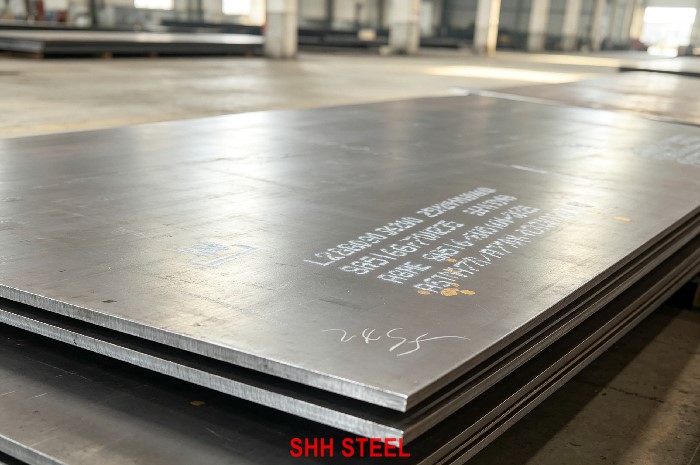
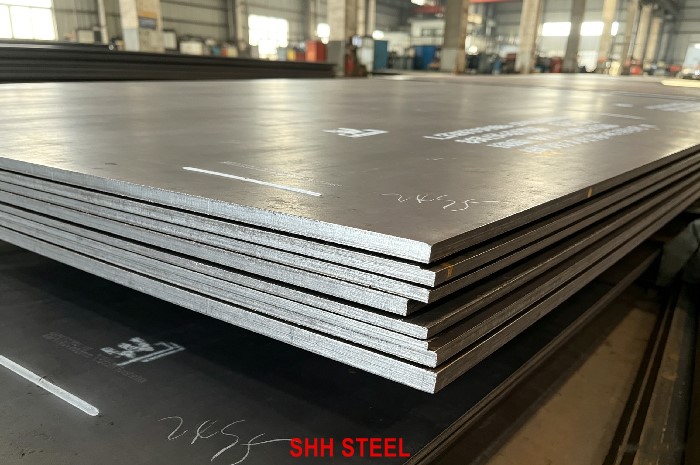
GB/T 3531 16MnDR Steel Plate is carbon-manganese, aluminium-killed plate for welded pressure vessels in low-temperature service, ordered to GB/T 3531-2014. The name gives the average carbon (about 0.16 %), the manganese alloying and the letters DR for low-temperature vessel. It is the base grade of the 2014 book and the most widely used.
GB/T 3531-2014, Steel plates for low temperature pressure vessels, was issued on 24 June 2014 as GB 3531-2014 and implemented on 1 April 2015, replacing GB 3531-2008. It was later converted to a recommended national standard, which is why it is cited as GB/T 3531-2014. It covers plates 5 mm to 120 mm thick for pressure vessels working from -196°C to below -20°C. The edition was withdrawn on 1 March 2024 and replaced by GB/T 713.3-2023, with the nickel grades moved to GB/T 713.4-2023.
Buyers usually order this page when a drawing, data sheet or replacement-part record still names GB/T 3531-2014 or GB 3531-2014. New designs written to the 2023 book should be ordered as GB/T 713.3 16MnDR instead.
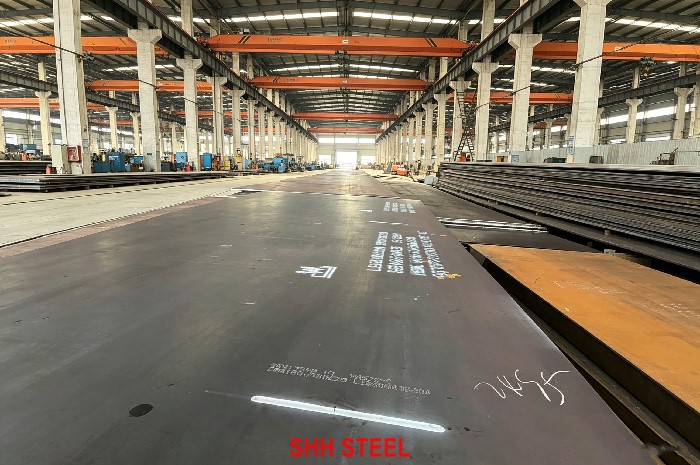
SHH STEEL produces and exports GB/T 3531-2014 16MnDR plate to the ordered edition, delivery condition, dimensions and extra tests written on the enquiry. This grade is listed in our GB/T 3531 range under Nuclear-Grade Steel Plates.
Material specification for GB/T 3531 16MnDR
The items below follow GB/T 3531-2014. Thickness, width, length and the inspection document are stated on the enquiry rather than listed here as stock or capacity ranges.
| Parameter | Detail |
|---|---|
| Standard | GB/T 3531-2014, Steel plates for low temperature pressure vessels (issued as GB 3531-2014; replaced GB 3531-2008) |
| Edition status | Withdrawn 1 March 2024. Replaced by GB/T 713.3-2023 for the low-alloy grades and GB/T 713.4-2023 for 08Ni3DR and 06Ni9DR. This page covers the 2014 edition only |
| Scope of the standard | Plates 5 mm to 120 mm thick for low-temperature pressure vessels from -196°C to below -20°C |
| Grades in the 2014 edition | 16MnDR, 15MnNiDR, 15MnNiNbDR, 09MnNiDR, 08Ni3DR, 06Ni9DR |
| Grade | 16MnDR |
| Delivery condition (Table 2) | Normalized, or normalized and tempered |
| Impact requirement | -40°C / 47 J for 6–60 mm; -30°C / 47 J for over 60–120 mm |
| Thickness tabulated for this grade | 6–120 mm (standard limits in Table 2, not a stock range) |
| Steelmaking | Basic oxygen or electric furnace with secondary refining. Reduction ratio at least 3 from continuous-cast slab or ingot, at least 2 from electroslag remelted slab |
| Dimensions and tolerances | GB/T 709-2006, thickness tolerance Class B; Class C or tighter tolerances by agreement |
| Ultrasonic testing | Plate by plate for N or N+T plate over 20 mm and Q+T plate over 16 mm; method JB/T 4730.3, GB/T 2970 or GB/T 28297, class stated on the contract |
| Our supply | We produce and export 16MnDR plate to GB/T 3531-2014 with the dimensions, tests and inspection document written on the enquiry |
Chemical composition of GB/T 3531-2014 16MnDR
The heat analysis below is the 16MnDR row of GB/T 3531-2014 Table 1. Nickel is not an intended alloying element for this grade; the 0.40 % figure is an upper limit.
| Element | Heat analysis, GB/T 3531-2014 Table 1 (wt. %) |
|---|---|
| Carbon (C) | ≤0.20 |
| Silicon (Si) | 0.15–0.50 |
| Manganese (Mn) | 1.20–1.60 |
| Nickel (Ni) | ≤0.40 |
| Total aluminium (Alt) | ≥0.020 |
| Phosphorus (P) | ≤0.020 |
| Sulfur (S) | ≤0.010 |
Notes to Table 1: Als may be determined instead of Alt, in which case Als shall be not less than 0.015 %; when Nb + V + Ti exceeds 0.015 %, aluminium is not an acceptance requirement. Nb, V and Ti may be added to improve properties, with Nb + V + Ti not more than 0.12 %, and the amounts added reported on the certificate. As residual elements, Cr and Cu are each limited to 0.25 % and Mo to 0.08 %, and Ni to 0.40 % where nickel is not a specified alloying element; the supplier need not analyse them when it guarantees compliance. Product analysis tolerances follow GB/T 222.
Mechanical properties of GB/T 3531-2014 16MnDR
Table 2 of GB/T 3531-2014 sets tensile, yield, elongation, impact and bend requirements for 16MnDR by nominal thickness. Tensile and yield step down as thickness rises, and the Charpy test temperature changes from -40°C to -30°C above 60 mm.
| Nominal thickness (mm) | Tensile strength Rm (MPa) | Yield strength ReL, min (MPa) | Elongation A, min (%) | Charpy V test temperature | KV2, min (J) | 180° bend, b = 2a |
|---|---|---|---|---|---|---|
| 6–16 | 490–620 | 315 | 21 | -40°C | 47 | D = 2a |
| >16–36 | 470–600 | 295 | 21 | -40°C | 47 | D = 3a |
| >36–60 | 460–590 | 285 | 21 | -40°C | 47 | D = 3a |
| >60–100 | 450–580 | 275 | 21 | -30°C | 47 | D = 3a |
| >100–120 | 440–570 | 265 | 21 | -30°C | 47 | D = 3a |
Charpy V-notch energy is the mean of three specimens. One single value may fall below the Table 2 figure, but not below 70 % of it. Plates under 12 mm are tested with sub-size specimens: 10 × 7.5 × 55 mm for plate over 8 mm and under 12 mm, with results not less than 75 % of the Table 2 value, and 10 × 5 × 55 mm for 6–8 mm plate, with results not less than 50 %. Plate thinner than 6 mm is not impact tested. Higher impact energy than Table 2 may be agreed and written on the contract. Yield is ReL; where yielding is not distinct, Rp0.2 is measured instead. In the bend column, a is the specimen thickness and D the mandrel diameter; the bend test may be waived when the supplier guarantees it.
Delivery conditions for GB/T 3531 16MnDR
Table 2 lists 16MnDR as normalized, or normalized and tempered. The mechanical and impact values apply to the condition supplied, so the order should state which one is wanted, or accept either.
As-rolled or thermomechanically rolled 16MnDR is not a GB/T 3531-2014 delivery condition. If the fabricator will apply post-weld heat treatment, request simulated PWHT testing on the order so the plate is qualified in the condition it will see in service.
Welding and thermal cutting
16MnDR has a low carbon ceiling and controlled phosphorus and sulfur, which suit welded low-temperature vessels. The critical point is not cracking but the toughness of the weld metal and heat-affected zone at the vessel test temperature.
Qualify welding procedures with impact tests at the required temperature. Heat input, preheat, interpass temperature and any post-weld heat treatment are set by the qualified procedure, the thickness and the vessel code. Thermal cutting edges should be dressed where the design or the forming route requires it.
Dimensions, tolerances and inspection
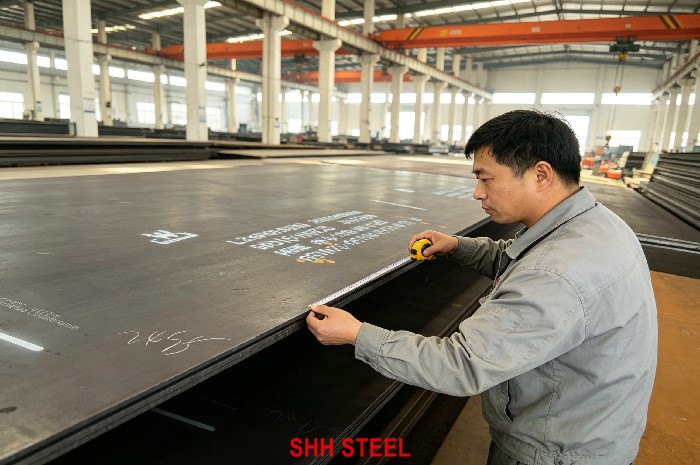
Dimensions, shape and permitted deviations follow GB/T 709-2006. Thickness tolerance is Class B unless the purchaser asks for Class C, and tighter tolerances may be agreed. Plates are invoiced on theoretical weight, calculated from the mean of the maximum and minimum permitted thickness.
Cracks, blisters, scabs, folds and inclusions are not permitted on the surface. They may be removed by dressing, provided the dressed depth does not exceed half the thickness tolerance and the minimum permitted thickness is kept. Dressed areas must be smooth.
Acceptance is by batch: one grade, one heat, one thickness and one heat-treatment condition, not more than 30 t per batch; a single plate heavier than 30 t is its own batch. Each batch receives one tensile test, one bend test and a set of three Charpy specimens; chemical analysis is one per heat. Ultrasonic testing is plate by plate for normalized or normalized-and-tempered plate thicker than 20 mm; thinner plate may be tested by agreement.
Applications and specification limits
We produce and export 16MnDR for low-temperature pressure vessels and storage equipment such as LPG and liquid ammonia tanks, refrigerated separators and spherical tanks, where the design code accepts a -40°C class carbon-manganese plate. The allowable minimum design temperature is set by the vessel code, the thickness and the impact test, not by the grade name.
For thick plate the 2014 impact test temperature is -30°C, not -40°C. A design that needs -40°C toughness in plate over 60 mm should write that requirement on the order or select a nickel-bearing grade such as GB/T 3531 09MnNiDR.
Edition note. This page is the GB/T 3531-2014 product. Its 2023 successor coverage is GB/T 713.3 16MnDR, in which the minimum thickness changed from 6 mm to 5 mm and the chemistry and mechanical tables were revised. The 2014 and 2023 books are not the same specification, and a certificate to one edition is not an automatic substitute for an order written to the other.
GB/T 3531-2014 is a low-temperature pressure vessel plate standard. On its own it does not impose nuclear-class requirements; where a nuclear or other special code applies, its supplementary requirements must be written on the order.
Compare GB/T 3531 16MnDR with other low-temperature plates
The comparison below places 16MnDR against its 2014 siblings, its 2023 successor and a familiar ASTM plate. These grades are related by service, not interchangeable.
| Material | Type | Delivery | Key requirement | Substitution limit |
|---|---|---|---|---|
| GB/T 3531 16MnDR (this plate) | C-Mn, Al-killed | N or N+T | ReL 315 MPa min at 6–16 mm; -40°C / 47 J to 60 mm, -30°C / 47 J over 60 mm | 2014 edition only |
| GB/T 3531 15MnNiDR | Mn-Ni | N or N+T | ReL 325 MPa min at 6–16 mm; -45°C / 60 J; tabulated to 60 mm | Lower temperature class; not a drop-in for 16MnDR documents |
| GB/T 3531 09MnNiDR | Low-C Mn-Ni | N or N+T | ReL 300 MPa min at 6–16 mm; -70°C / 60 J | Lower strength, deeper cold service |
| GB/T 713.3 16MnDR | C-Mn (2023 edition) | N or N+T | 2023 tables; see that page | Successor coverage, not the same specification |
| ASTM A516 Grade 70 | C-Mn vessel plate | Per ASTM A516 | Impact testing only by supplementary requirement | Not a low-temperature grade unless impact testing is ordered |
Equivalent and related grades by country
The designations below are near equivalents by service class and chemistry family, not certified equivalents. Strength bands, impact temperature, thickness limits and delivery condition must be checked against the project specification before any substitution.
| Country / region | Standard | Grade | Similarity and key differences | Caveat |
|---|---|---|---|---|
| China | GB/T 3531-2014 | 16MnDR | This product | — |
| China | GB/T 713.3-2023 | GB/T 713.3 16MnDR | Same designation in the successor book with revised tables | Different edition; not automatic |
| Europe | EN 10028-3 | EN 10028-3 P355NL1 | Normalized fine-grain C-Mn vessel plate with low-temperature impact | Different strength bands and impact rules |
| United States | ASTM A662 | ASTM A662 Grade C | C-Mn plate for moderate and lower temperature vessels | Impact by supplementary requirement |
| United States | ASTM A516 | ASTM A516 Grade 70 | C-Mn vessel plate often ordered with added Charpy tests | Not low-temperature rated by default |
| Japan | JIS G3126 | JIS G3126 SLA325B | Low-temperature C-Mn vessel plate | Different impact temperature and strength class |
Why choose SHH STEEL for GB/T 3531 16MnDR
- SHH STEEL produces and exports GB/T 3531-2014 16MnDR plate as a producer, exporter and mill agent
- We quote to the edition written on your order and keep GB/T 3531-2014 values separate from GB/T 713.3 or GB/T 713.4 values
- We check the thickness band so that -30°C plate over 60 mm is not quoted against a -40°C requirement
- We review impact temperature, ultrasonic class and any simulated PWHT before quoting, not after rolling
- We match the inspection document to what the purchase order requires
How to enquire for GB/T 3531 16MnDR plate
| Item | What to specify |
|---|---|
| Standard and grade | GB/T 3531-2014 16MnDR; state the edition year rather than only GB/T 3531 |
| Delivery condition | Normalized, or normalized and tempered; state if simulated PWHT is required |
| Dimensions | Thickness, width and length; we confirm production and export feasibility against the enquiry |
| Impact testing | Table 2 temperature and energy, or a higher agreed energy; state specimen orientation if the project specifies it |
| Ultrasonic testing | JB/T 4730.3, GB/T 2970 or GB/T 28297, with the acceptance class |
| Supplementary tests | Simulated post-weld heat treatment, through-thickness or product analysis only when written on the order |
| Documentation | Inspection document type required by the project, for example EN 10204 3.1 or 3.2 |
| Other editions | If GB/T 713.3-2023 or GB/T 713.4-2023 must also be met, say so on the enquiry; we review both editions before quoting |
FAQ
-
Is GB/T 3531-2014 still the current standard for 16MnDR?
- No. GB/T 3531-2014 was withdrawn on 1 March 2024 and replaced by GB/T 713.3-2023. We still produce 16MnDR to the 2014 edition when the purchase documents require it, and to GB/T 713.3-2023 for new designs.
-
What is the impact test temperature for GB/T 3531-2014 16MnDR?
- Table 2 specifies -40°C with 47 J minimum for plate 6–60 mm, and -30°C with 47 J minimum for plate over 60 mm up to 120 mm.
-
How does this page differ from the GB/T 713.3 16MnDR page?
- This page is the 2014 edition. GB/T 713.3-2023 is the successor book with revised chemistry and mechanical tables and a 5 mm minimum thickness. Order the edition your design documents name.
-
What is the yield strength of 16MnDR?
- Minimum ReL is 315 MPa at 6–16 mm, falling to 295, 285, 275 and 265 MPa in the thicker bands up to 120 mm.
-
What should a quotation enquiry include?
- GB/T 3531-2014, grade 16MnDR, delivery condition, thickness by width by length, quantity, impact and ultrasonic requirements, any simulated PWHT, and the inspection document.
Request a quotation
Contact SHH STEEL for a quotation for GB/T 3531-2014 16MnDR low-temperature pressure vessel plate. Please include your required quantity, plate thickness, width and length, delivery destination and preferred delivery schedule so we can review your production and export requirements.
State the delivery condition, the Charpy test temperature and energy if they differ from Table 2, the ultrasonic testing standard and class, any simulated post-weld heat treatment, and the inspection document required by the project.
If you are considering 15MnNiDR, 09MnNiDR or the GB/T 713.3-2023 version of 16MnDR, send the design temperature and project specification with your enquiry. We will review the differences rather than assume the grades or editions are interchangeable.
For a detailed quotation, email your material specification, quantity and delivery requirements to our team.
Contact: admin@steelspecs.com
Quality Steel Needed? Inquire for Offers
Related Products