GB/T 3531 15MnNiNbDR Steel Plate | 15MnNiNbDR -50°C Vessel Plate
What is GB/T 3531-2014 15MnNiNbDR steel plate?
GB/T 3531 15MnNiNbDR Steel Plate is a niobium-microalloyed manganese-nickel plate for welded low-temperature pressure vessels, ordered to GB/T 3531-2014. It was one of the three grades added in the 2014 edition. Niobium of 0.015–0.040 % refines the grain and lifts yield strength above 15MnNiDR while keeping toughness at -50°C.
GB/T 3531-2014, Steel plates for low temperature pressure vessels, was issued on 24 June 2014 as GB 3531-2014 and implemented on 1 April 2015, replacing GB 3531-2008. It was later converted to a recommended national standard, which is why it is cited as GB/T 3531-2014. It covers plates 5 mm to 120 mm thick for pressure vessels working from -196°C to below -20°C. The edition was withdrawn on 1 March 2024 and replaced by GB/T 713.3-2023, with the nickel grades moved to GB/T 713.4-2023.
The same designation continues in the 2023 book as GB/T 713.3 15MnNiNbDR. Order this page when the drawing or data sheet still names GB/T 3531-2014.
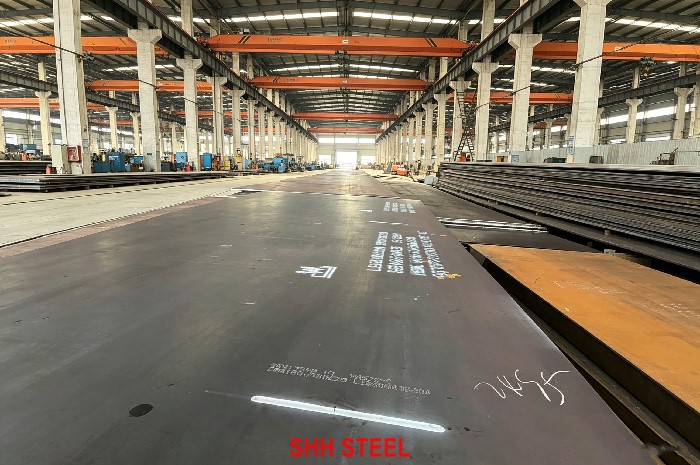
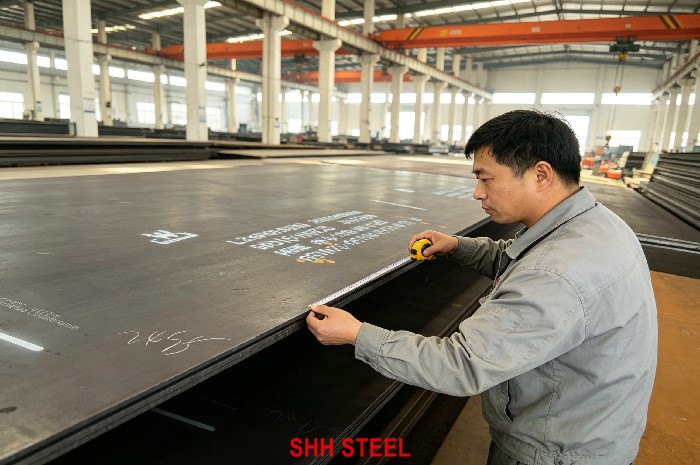
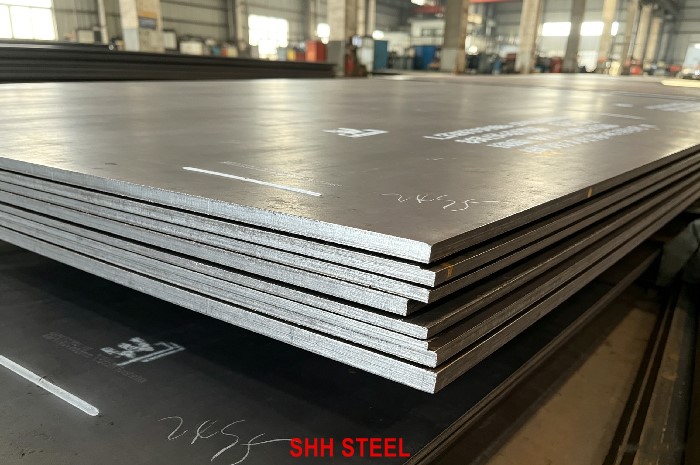
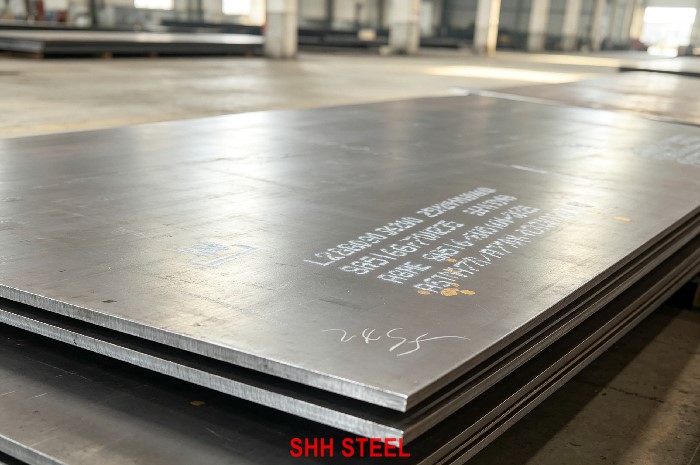
SHH STEEL produces and exports GB/T 3531-2014 15MnNiNbDR plate to the ordered edition, delivery condition, dimensions and extra tests written on the enquiry. This grade is listed in our GB/T 3531 range under Nuclear-Grade Steel Plates.
Material specification for GB/T 3531 15MnNiNbDR
The items below follow GB/T 3531-2014. Thickness, width, length and the inspection document are stated on the enquiry rather than listed here as stock or capacity ranges.
| Parameter | Detail |
|---|---|
| Standard | GB/T 3531-2014, Steel plates for low temperature pressure vessels (issued as GB 3531-2014; replaced GB 3531-2008) |
| Edition status | Withdrawn 1 March 2024. Replaced by GB/T 713.3-2023 for the low-alloy grades and GB/T 713.4-2023 for 08Ni3DR and 06Ni9DR. This page covers the 2014 edition only |
| Scope of the standard | Plates 5 mm to 120 mm thick for low-temperature pressure vessels from -196°C to below -20°C |
| Grades in the 2014 edition | 16MnDR, 15MnNiDR, 15MnNiNbDR, 09MnNiDR, 08Ni3DR, 06Ni9DR |
| Grade | 15MnNiNbDR |
| Delivery condition (Table 2) | Normalized, or normalized and tempered |
| Impact requirement | -50°C / 60 J for all tabulated thicknesses |
| Minimum thickness in 2014 Table 2 | 10 mm (the 2023 book lowered it to 6 mm) |
| Thickness tabulated for this grade | 10–60 mm (standard limits in Table 2, not a stock range) |
| Steelmaking | Basic oxygen or electric furnace with secondary refining. Reduction ratio at least 3 from continuous-cast slab or ingot, at least 2 from electroslag remelted slab |
| Dimensions and tolerances | GB/T 709-2006, thickness tolerance Class B; Class C or tighter tolerances by agreement |
| Ultrasonic testing | Plate by plate for N or N+T plate over 20 mm and Q+T plate over 16 mm; method JB/T 4730.3, GB/T 2970 or GB/T 28297, class stated on the contract |
| Our supply | We produce and export 15MnNiNbDR plate to GB/T 3531-2014 with the dimensions, tests and inspection document written on the enquiry |
Chemical composition of GB/T 3531-2014 15MnNiNbDR
The heat analysis below is the 15MnNiNbDR row of GB/T 3531-2014 Table 1. Niobium is a specified addition, and no minimum Alt is tabulated for this grade.
| Element | Heat analysis, GB/T 3531-2014 Table 1 (wt. %) |
|---|---|
| Carbon (C) | ≤0.18 |
| Silicon (Si) | 0.15–0.50 |
| Manganese (Mn) | 1.20–1.60 |
| Nickel (Ni) | 0.30–0.70 |
| Niobium (Nb) | 0.015–0.040 |
| Phosphorus (P) | ≤0.020 |
| Sulfur (S) | ≤0.008 |
Notes to Table 1: Als may be determined instead of Alt, in which case Als shall be not less than 0.015 %; when Nb + V + Ti exceeds 0.015 %, aluminium is not an acceptance requirement. Nb, V and Ti may be added to improve properties, with Nb + V + Ti not more than 0.12 %, and the amounts added reported on the certificate. As residual elements, Cr and Cu are each limited to 0.25 % and Mo to 0.08 %, and Ni to 0.40 % where nickel is not a specified alloying element; the supplier need not analyse them when it guarantees compliance. Product analysis tolerances follow GB/T 222.
Mechanical properties of GB/T 3531-2014 15MnNiNbDR
Table 2 of GB/T 3531-2014 tabulates 15MnNiNbDR from 10 mm to 60 mm. Yield is the highest of the four low-alloy grades in the 2014 book, and the impact requirement is -50°C / 60 J in every band.
| Nominal thickness (mm) | Tensile strength Rm (MPa) | Yield strength ReL, min (MPa) | Elongation A, min (%) | Charpy V test temperature | KV2, min (J) | 180° bend, b = 2a |
|---|---|---|---|---|---|---|
| 10–16 | 530–630 | 370 | 20 | -50°C | 60 | D = 3a |
| >16–36 | 530–630 | 360 | 20 | -50°C | 60 | D = 3a |
| >36–60 | 520–620 | 350 | 20 | -50°C | 60 | D = 3a |
Charpy V-notch energy is the mean of three specimens. One single value may fall below the Table 2 figure, but not below 70 % of it. Plates under 12 mm are tested with sub-size specimens: 10 × 7.5 × 55 mm for plate over 8 mm and under 12 mm, with results not less than 75 % of the Table 2 value, and 10 × 5 × 55 mm for 6–8 mm plate, with results not less than 50 %. Plate thinner than 6 mm is not impact tested. Higher impact energy than Table 2 may be agreed and written on the contract. Yield is ReL; where yielding is not distinct, Rp0.2 is measured instead. In the bend column, a is the specimen thickness and D the mandrel diameter; the bend test may be waived when the supplier guarantees it.
Delivery conditions for GB/T 3531 15MnNiNbDR
Table 2 lists 15MnNiNbDR as normalized, or normalized and tempered. The niobium-strengthened properties depend on that heat treatment, so state the condition on the order or accept either. Request simulated PWHT testing if the vessel will be stress relieved.
Welding and thermal cutting
Niobium microalloying and controlled carbon give good weldability for a plate of this strength, but heat input must be controlled to keep heat-affected-zone toughness at -50°C. Weld metal must also meet the higher strength and the impact requirement.
Preheat, heat input, interpass temperature and post-weld heat treatment are set by the qualified procedure, the thickness and the vessel code.
Dimensions, tolerances and inspection
Dimensions, shape and permitted deviations follow GB/T 709-2006. Thickness tolerance is Class B unless the purchaser asks for Class C, and tighter tolerances may be agreed. Plates are invoiced on theoretical weight, calculated from the mean of the maximum and minimum permitted thickness.
Cracks, blisters, scabs, folds and inclusions are not permitted on the surface. They may be removed by dressing, provided the dressed depth does not exceed half the thickness tolerance and the minimum permitted thickness is kept. Dressed areas must be smooth.
Acceptance is by batch: one grade, one heat, one thickness and one heat-treatment condition, not more than 30 t per batch; a single plate heavier than 30 t is its own batch. Each batch receives one tensile test, one bend test and a set of three Charpy specimens; chemical analysis is one per heat. Ultrasonic testing is plate by plate for normalized or normalized-and-tempered plate thicker than 20 mm.
Applications and specification limits
We produce and export 15MnNiNbDR for low-temperature vessels where a higher design stress than 16MnDR or 15MnNiDR reduces shell thickness, notably large spherical tanks and refrigerated storage designed around a -50°C impact class. The allowable minimum design temperature is set by the vessel code and the impact test.
Table 2 covers this grade from 10 mm to 60 mm only. Thinner plate was added in the 2023 book, so plate under 10 mm is not a GB/T 3531-2014 product.
Edition note. This page is the GB/T 3531-2014 product. Its 2023 successor coverage is GB/T 713.3 15MnNiNbDR, in which the minimum thickness changed from 10 mm to 6 mm and the chemistry and mechanical tables were revised. The 2014 and 2023 books are not the same specification, and a certificate to one edition is not an automatic substitute for an order written to the other.
GB/T 3531-2014 is a low-temperature pressure vessel plate standard. On its own it does not impose nuclear-class requirements; where a nuclear or other special code applies, its supplementary requirements must be written on the order.
Compare GB/T 3531 15MnNiNbDR with other low-temperature plates
The comparison below places 15MnNiNbDR against the other 2014 low-alloy grades, its successor, and higher-strength 2023 options. These grades are related, not interchangeable.
| Material | Type | Delivery | Key requirement | Substitution limit |
|---|---|---|---|---|
| GB/T 3531 15MnNiNbDR (this plate) | Mn-Ni-Nb | N or N+T | ReL 370 MPa min at 10–16 mm; Rm 530–630 MPa; -50°C / 60 J | 2014 edition only |
| GB/T 3531 15MnNiDR | Mn-Ni | N or N+T | ReL 325 MPa min at 6–16 mm; -45°C / 60 J | Lower strength and higher test temperature |
| GB/T 3531 16MnDR | C-Mn | N or N+T | ReL 315 MPa min at 6–16 mm; -40°C / 47 J to 60 mm | Lower strength; not a substitute |
| GB/T 713.3 15MnNiNbDR | Mn-Ni-Nb (2023 edition) | N or N+T | 2023 tables; see that page | Successor coverage, not the same specification |
| GB/T 713.3 Q420DR / GB/T 713.3 Q460DR | Strength-named 2023 grades | See those pages | 2023 tables | New 2023 grades, not in GB/T 3531-2014 |
Equivalent and related grades by country
The grades below are near equivalents by strength and impact class, not certified equivalents. Check strength bands, impact temperature and thickness limits against the project specification.
| Country / region | Standard | Grade | Similarity and key differences | Caveat |
|---|---|---|---|---|
| China | GB/T 3531-2014 | 15MnNiNbDR | This product | — |
| China | GB/T 713.3-2023 | GB/T 713.3 15MnNiNbDR | Same designation in the successor book with revised tables | Different edition; not automatic |
| Europe | EN 10028-3 | EN 10028-3 P460NL1 / EN 10028-3 P460NL2 | Normalized fine-grain high-strength vessel plate with low-temperature impact | Higher strength class; different rules |
| Europe | EN 10028-3 | EN 10028-3 P355NL2 | Normalized fine-grain C-Mn plate with low-temperature impact | Lower strength |
| Japan | JIS G3126 | JIS G3126 SLA365 | Low-temperature vessel plate of a similar yield class | Different impact temperature and chemistry |
Why choose SHH STEEL for GB/T 3531 15MnNiNbDR
- SHH STEEL produces and exports GB/T 3531-2014 15MnNiNbDR plate as a producer, exporter and mill agent
- We quote to the edition written on your order and keep GB/T 3531-2014 values separate from GB/T 713.3 or GB/T 713.4 values
- We check that the ordered thickness is inside the 10–60 mm range tabulated for this grade in the 2014 edition
- We review impact temperature, ultrasonic class and any simulated PWHT before quoting, not after rolling
- We match the inspection document to what the purchase order requires
How to enquire for GB/T 3531 15MnNiNbDR plate
| Item | What to specify |
|---|---|
| Standard and grade | GB/T 3531-2014 15MnNiNbDR; state the edition year rather than only GB/T 3531 |
| Delivery condition | Normalized, or normalized and tempered; state if simulated PWHT is required |
| Dimensions | Thickness, width and length; we confirm production and export feasibility against the enquiry |
| Impact testing | Table 2 temperature and energy, or a higher agreed energy; state specimen orientation if the project specifies it |
| Ultrasonic testing | JB/T 4730.3, GB/T 2970 or GB/T 28297, with the acceptance class |
| Supplementary tests | Simulated post-weld heat treatment, through-thickness or product analysis only when written on the order |
| Documentation | Inspection document type required by the project, for example EN 10204 3.1 or 3.2 |
| Other editions | If GB/T 713.3-2023 or GB/T 713.4-2023 must also be met, say so on the enquiry; we review both editions before quoting |
FAQ
-
When was 15MnNiNbDR added to GB/T 3531?
- It was one of three grades added in the 2014 edition, together with 08Ni3DR and 06Ni9DR. It was not in GB 3531-2008.
-
What is the yield strength of GB/T 3531-2014 15MnNiNbDR?
- Minimum ReL is 370 MPa at 10–16 mm, 360 MPa over 16–36 mm and 350 MPa over 36–60 mm.
-
Can I order 8 mm 15MnNiNbDR to GB/T 3531-2014?
- No. Table 2 of the 2014 edition starts at 10 mm. The 2023 successor GB/T 713.3-2023 lowered the minimum to 6 mm.
-
How does this page differ from the GB/T 713.3 15MnNiNbDR page?
- This page is the 2014 edition. The 2023 book revised the chemistry, the mechanical tables and the thickness range. Order the edition your design documents name.
-
What should a quotation enquiry include?
- GB/T 3531-2014, grade 15MnNiNbDR, delivery condition, thickness by width by length, quantity, impact and ultrasonic requirements, any simulated PWHT, and the inspection document.
Request a quotation
Contact SHH STEEL for a quotation for GB/T 3531-2014 15MnNiNbDR low-temperature pressure vessel plate. Please include your required quantity, plate thickness, width and length, delivery destination and preferred delivery schedule so we can review your production and export requirements.
State the delivery condition, the Charpy test temperature and energy if they differ from Table 2, the ultrasonic testing standard and class, any simulated post-weld heat treatment, and the inspection document required by the project.
If you are considering 15MnNiDR, Q420DR or the GB/T 713.3-2023 version of 15MnNiNbDR, send the design temperature and project specification. We will review the differences rather than assume the grades or editions are interchangeable.
For a detailed quotation, email your material specification, quantity and delivery requirements to our team.
Contact: admin@steelspecs.com
Quality Steel Needed? Inquire for Offers
Related Products