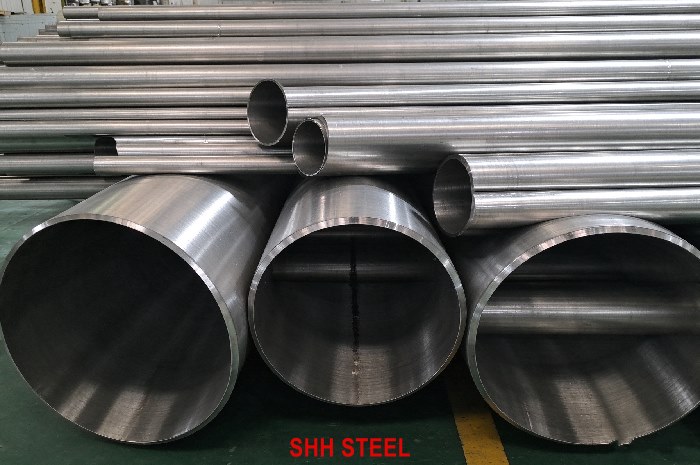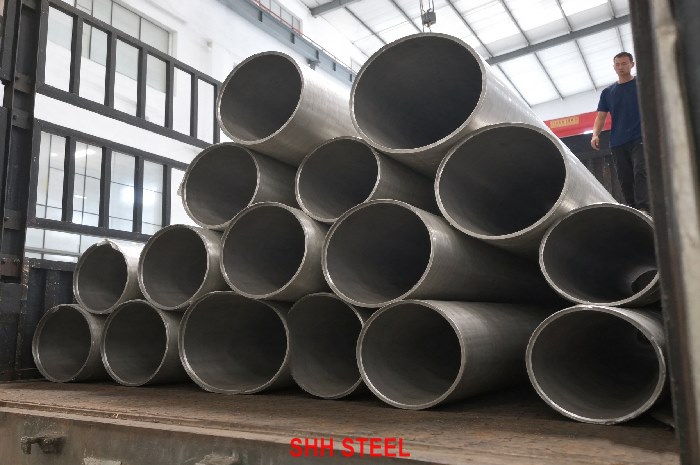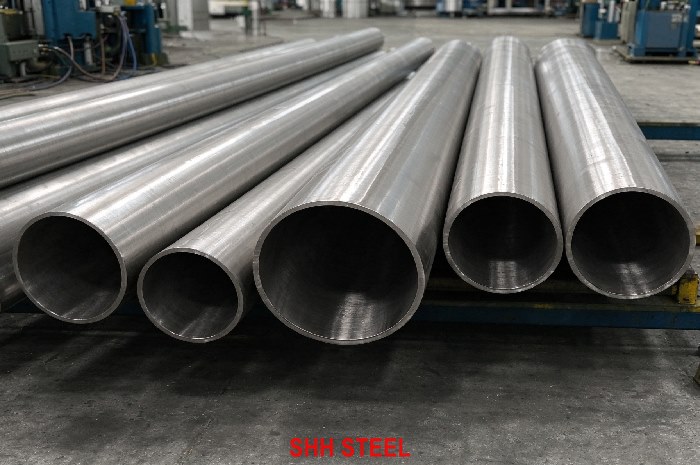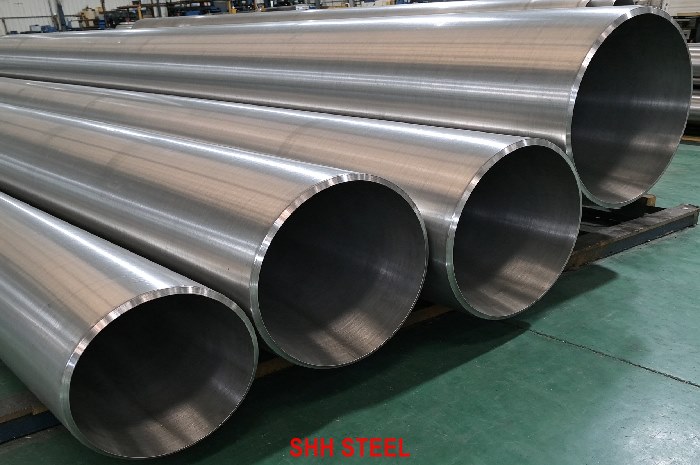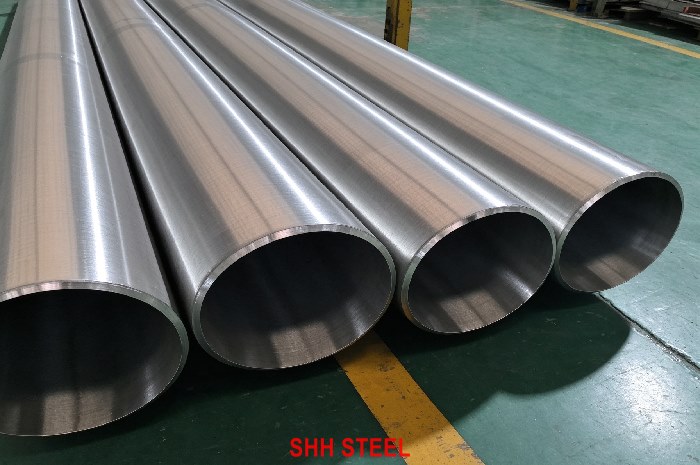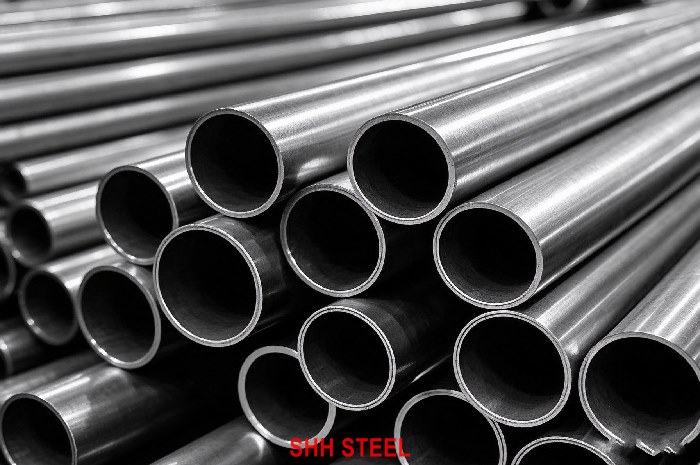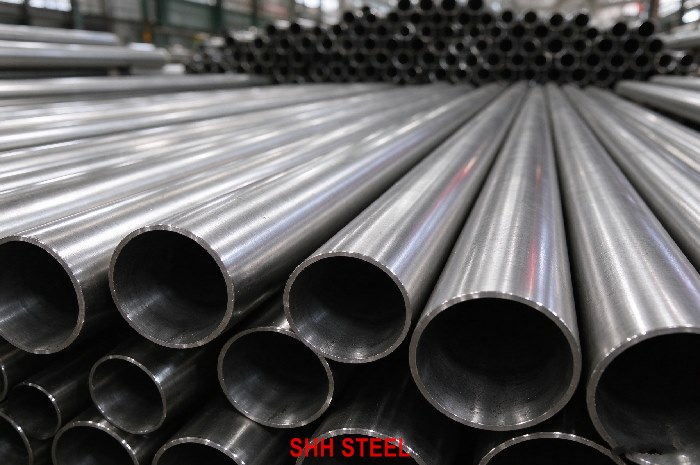
EN 10296-2 1.4301 Welded Stainless Steel Tube
What is EN 10296-2 1.4301 Welded Stainless Steel Tube
Mechanical, decorative, and general engineering projects that need welded stainless tube under a European product standard look to EN 10296-2:2005 — Part 2 of EN 10296 — rather than a PED pressure Part 7 page or an ASTM tubing habit alone. 1.4301 / X5CrNi18-10 sits in the austenitic corrosion-resisting tables. When a bill of materials still says “304 welded tube” without a product standard, EN 10296-2 plus 1.4301 closes the gap for general-purpose welded stainless — not for PED pressure unless Part 7 is also named. Primary application sketch: process water, food utilities, HVAC mechanical lines, furniture and architectural welded tube, instrumentation, and general engineering that still says “304 welded”.
SHH STEEL can make and supply EN 10296-2 1.4301 / X5CrNi18-10 as welded general-purpose tube across broad welded mechanical/decorative OD×wall, W1A/W2A/WCA/WCR per Annex A, annealed or solution annealed as the grade tables and order require, documented on EN 10204 3.1 MTCs tied to cast analysis and mechanical results. Filler/shop note for 1.4301: 308/308L-class fillers; heat input control still matters for as-welded IGC when carbon is not in the L band — mill seam HT does not clear site joints automatically.
On the shop floor people still say “304 tube,” yet that commercial alias does not select cast chemistry, welded process route, delivery-condition heat treatment, or optional tests. The purchase order has to name EN 10296-2, 1.4301, the Annex A process/surface symbol, the delivery condition (+AR / +A / +AT as applicable), and any Options so the mill applies the correct analysis, forming/welding route, heat treatment, mechanical floors, and marking. This number’s job on welded general-purpose duty is: workhorse 18-8 austenitic welded tube for general mechanical, decorative, and utility duty where molybdenum is not required. Typical duties include process water, food utilities, HVAC mechanical lines, furniture and architectural welded tube, instrumentation, and general engineering that still says “304 welded”. Design caution: as-welded sensitisation risk sits above the L grades when cast carbon approaches the 0.07% ceiling — prefer 1.4307 or stabilised sisters for corrosive as-welded joints Filler/shop note for 1.4301: 308/308L-class fillers; heat input control still matters for as-welded IGC when carbon is not in the L band — mill seam HT does not clear site joints automatically.
Scope discipline matters: 1.4301 under EN 10296-2 is welded general-purpose tube. Sister pages for pressure seamless (EN 10216-5) or welded pressure (EN 10217-7) share chemistry families but not acceptance text. Order the standard that the drawing and regulatory file actually require. Caution thread: as-welded sensitisation risk sits above the L grades when cast carbon approaches the 0.07% ceiling — prefer 1.4307 or stabilised sisters for corrosive as-welded joints.
Inside this welded general-purpose series, compare EN 10296-2 1.4307, EN 10296-2 1.4311, EN 10296-2 1.4541, EN 10296-2 1.4404. Hub: EN 10296-2. Pressure seamless sister (different acceptance): EN 10216-5 1.4301. ASTM/ASME related product pages (not interchangeable by default): A269 TP304, A213 TP304, A312 TP304.
Chemical Composition of EN 10296-2 1.4301
Cast analysis for EN 10296-2 1.4301 follows the X5CrNi18-10 limits published for this standard’s corrosion- or heat-resisting tables. Key windows on a typical certificate include C ≤0.07, Cr 17.0–19.5, Ni 8.0–10.5, N ≤0.11, Si ≤1.00, S ≤0.015. SHH STEEL ties the heat number on the tube marking to the same cast line on the MTC. Size context for 1.4301: broad welded mechanical/decorative OD×wall, W1A/W2A/WCA/WCR per Annex A.
Chemical limits for 1.4301 / X5CrNi18-10 under EN 10296-2 appear in the table underneath. Source priority is BSSA’s EN 10296-2 article cross-checked to the 2005 grade list. If your client specification cites a different edition footnote for 304-family welded tube, send it before the heat is melted. Corrosion thread: chromium-nickel passive film for aqueous and mild chemical media; chloride pitting remains the usual outdoor limiter.
| Steel | C | Si | Mn | P | S | Cr | Ni | N |
|---|---|---|---|---|---|---|---|---|
| 1.4301 / X5CrNi18-10 | ≤0.07 | ≤1.00 | ≤2.00 | ≤0.045 | ≤0.015 | 17.0–19.5 | 8.0–10.5 | ≤0.11 |
Mechanical Properties of EN 10296-2 1.4301
Table mechanical floors for 1.4301 / X5CrNi18-10 are delivery-condition values at room temperature, not elevated-temperature design allowables. Summary: Rp0.2 min 195 MPa, Rp1.0 min 230 MPa, Rm min 500 MPa, longitudinal elongation min 40%. SHH STEEL reports actual tensile results on the EN 10204 3.1 document for the ordered test unit. Use thread: process water, food utilities, HVAC mechanical lines, furniture and architectural welded tube, instrumentation, and general engineering that still says “304 welded”.
| Delivery condition | Rp0.2 min (MPa) | Rp1.0 min (MPa) | Rm (MPa) | A long. min (%) | A trans. min (%) | IGC |
|---|---|---|---|---|---|---|
| +AT | 195 | 230 | 500 min | 40 | 35 | Yes* (normally not sensitised) |
Ambient values from EN 10296-2:2005 Tables 4–5 for 1.4301 / X5CrNi18-10. Guideline solution/anneal band (Annex B): 1000–1100 °C; cooling: water, air or gas.
Welded Tube Manufacture for EN 10296-2 1.4301
EN 10296-2 does not offer a seamless route for 1.4301. Tube in X5CrNi18-10 is made by longitudinal automatic welding across abutting strip or plate edges, with or without filler as agreed, on one of the Table A.1 process routes, then heat-treated to the ordered delivery condition. For 1.4301, SHH STEEL aligns the Annex A symbol to the duty: W0 for as-welded economy, W1A/W2A for descaled engineering tube, W2R/WCR for brighter OD, and WG/WP when a measured roughness target is part of the order text. Caution thread: as-welded sensitisation risk sits above the L grades when cast carbon approaches the 0.07% ceiling — prefer 1.4307 or stabilised sisters for corrosive as-welded joints.
For austenitic 1.4301, cold-rolled strip routes (W2/W2A/W2R) are the usual path to tighter OD and surface control; hot-rolled strip routes (W1/W1A/W1R) cover other starting stock. WCA/WCR add cold work and recrystallised weld metal when bead appearance matters. Austenitic 1.4301 is delivered as-welded (+AR) or solution annealed (+AT) as the purchaser specifies. Corrosive and hygienic duties usually lock +AT. Public Annex B guidance places solution annealing near 1000–1100 °C with water, air or gas cooling — fabricator HT after hot work should chase the lower end of the band when further processing applies. Weld thread: 308/308L-class fillers; heat input control still matters for as-welded IGC when carbon is not in the L band — mill seam HT does not clear site joints automatically.
When dual documentation against EN 10217-7 is requested for the same 1.4301 chemistry, each standard’s mechanical and test regime still has to be satisfied on its own terms — SHH STEEL will not pretend one MTC covers both without the tests. Size context for 1.4301: broad welded mechanical/decorative OD×wall, W1A/W2A/WCA/WCR per Annex A.
Dimensions and Tolerances for EN 10296-2 1.4301
SHH STEEL aligns OD × wall, tolerance class, and process-route symbol for 1.4301 / X5CrNi18-10 before strip forming and welding slots are locked. Broad welded mechanical/decorative od×wall, w1a/w2a/wca/wcr per annex a. Use thread: process water, food utilities, HVAC mechanical lines, furniture and architectural welded tube, instrumentation, and general engineering that still says “304 welded”.
Length supply for 1.4301 may be mill random, fixed, or multiple cut lengths. Bundle make-up and end protection are confirmed against the packaging clause so bright or polished finishes are not marked in transit. Duty thread: workhorse 18-8 austenitic welded tube for general mechanical, decorative, and utility duty where molybdenum is not required.
Equivalent Grades for EN 10296-2 1.4301
Do not treat ASTM welded or seamless pages as drop-in equals for EN 10296-2 1.4301 / X5CrNi18-10. Wall bases, mechanical tables, and optional tests differ. Body alias 304 is fine in BOM notes; H1 and order line stay on the steel number. Compare 1.4307, 1.4311, 1.4541, 1.4404 when the medium outgrows this analysis. Caution thread: as-welded sensitisation risk sits above the L grades when cast carbon approaches the 0.07% ceiling — prefer 1.4307 or stabilised sisters for corrosive as-welded joints.
Heat Treatment and Delivery Condition for EN 10296-2 1.4301
Austenitic 1.4301 is delivered as-welded (+AR) or solution annealed (+AT) as the purchaser specifies. Corrosive and hygienic duties usually lock +AT. Public Annex B guidance places solution annealing near 1000–1100 °C with water, air or gas cooling — fabricator HT after hot work should chase the lower end of the band when further processing applies. Apps that usually decide +AT versus +AR for this number: process water, food utilities, HVAC mechanical lines, furniture and architectural welded tube, instrumentation, and general engineering that still says “304 welded”. Primary application sketch: process water, food utilities, HVAC mechanical lines, furniture and architectural welded tube, instrumentation, and general engineering that still says “304 welded”.
Hot-working temperature bands in Annex B for X5CrNi18-10 are guidance during further processing (for example hot bending). Cooling type matters — chase the rapid cool required for austenitic and duplex solution anneal; ferritic anneal practice differs. Size context for 1.4301: broad welded mechanical/decorative OD×wall, W1A/W2A/WCA/WCR per Annex A.
Corrosion Resistance of EN 10296-2 1.4301
304-family marketing claims do not override EN 10296-2 tabulated IGC notes for 1.4301. Corrosion thread: chromium-nickel passive film for aqueous and mild chemical media; chloride pitting remains the usual outdoor limiter. Move to sisters 1.4307, 1.4311, 1.4541, 1.4404 when the medium outgrows this analysis.
For heat-resisting grades, oxidation and carburisation resistance dominate over aqueous IGC talk; for corrosion-resisting grades, aqueous and chemical media dominate. 1.4301 is filed as austenitic corrosion-resisting — pick tests that match that filing. Corrosion thread: chromium-nickel passive film for aqueous and mild chemical media; chloride pitting remains the usual outdoor limiter.
Applications of EN 10296-2 1.4301 Tube
Applications of EN 10296-2 1.4301 tube centre on mechanical, decorative, and general engineering rather than PED pressure shells: process water, food utilities, HVAC mechanical lines, furniture and architectural welded tube, instrumentation, and general engineering that still says “304 welded”. Role summary: workhorse 18-8 austenitic welded tube for general mechanical, decorative, and utility duty where molybdenum is not required. When the same chemistry is required as pressure seamless tube, open the EN 10216-5 sister page where that steel number exists and is live. Primary application sketch: process water, food utilities, HVAC mechanical lines, furniture and architectural welded tube, instrumentation, and general engineering that still says “304 welded”.
Typical BOM language pairs EN 10296-2 1.4301 with OD × wall, Annex A symbol, and delivery condition. Downstream fabricators should inherit the same steel number on cut lists so informal “304” substitutions do not creep in. Size context for 1.4301: broad welded mechanical/decorative OD×wall, W1A/W2A/WCA/WCR per Annex A.
Weldability of EN 10296-2 1.4301
Even though 1.4301 is already a welded tube product, site joints still need a WPS matched to X5CrNi18-10. Filler and heat-input guidance: 308/308L-class fillers; heat input control still matters for as-welded IGC when carbon is not in the L band — mill seam HT does not clear site joints automatically. Alias on the shop traveler may say 304; the WPS should cite the steel number. Family filing for 1.4301 is austenitic corrosion-resisting.
Filler selection should match or over-alloy the base X5CrNi18-10 chemistry as the WPS demands. Heat input, interpass temperature, and shielding practice follow the family — austenitic, ferritic, duplex, or heat-resisting — not a single shop habit. Caution thread: as-welded sensitisation risk sits above the L grades when cast carbon approaches the 0.07% ceiling — prefer 1.4307 or stabilised sisters for corrosive as-welded joints.
Surface Finishes for EN 10296-2 1.4301
Interior Ra limits, electropolish, or special protection for X5CrNi18-10 fall under explicit order text. SHH STEEL can produce and supply pickled/descaled, bright-annealed, and polished 1.4301 when the mill can measure and report the finish. Use thread: process water, food utilities, HVAC mechanical lines, furniture and architectural welded tube, instrumentation, and general engineering that still says “304 welded”.
Special measures to protect 1.4301 / X5CrNi18-10 during delivery or storage may be agreed at enquiry. Bright and polished tubes take sleeve or paper wrap; descaled engineering finishes still need end caps and dry bundling so chloride-bearing dirt does not sit on the OD in transit — especially important for 304-family decorative or hygienic OD. Size context for 1.4301: broad welded mechanical/decorative OD×wall, W1A/W2A/WCA/WCR per Annex A.
Inspection and Testing for EN 10296-2 1.4301
NDT and technological-test intensity on 1.4301 is Option-driven under EN 10296-2 — leak, flattening, drift expanding, bend, or NDT methods are selected at enquiry. That is a different framing from EN 10217-7 pressure categories; copy the Options you need. Corrosion thread: chromium-nickel passive film for aqueous and mild chemical media; chloride pitting remains the usual outdoor limiter.
IGC testing for 1.4301, when required, follows EN ISO 3651-2 as referenced by the grade tables. Hardness, flattening, drift expanding, or bend tests are applied when the order invokes them. Marking typically includes manufacturer identity, dimensions, EN 10296-2, steel name or number 1.4301, cast/code, delivery-condition symbol, and inspection correlation — not a bare 304 stencil alone. Corrosion thread: chromium-nickel passive film for aqueous and mild chemical media; chloride pitting remains the usual outdoor limiter.
Packaging and Shipping for EN 10296-2 1.4301
Finished EN 10296-2 1.4301 (X5CrNi18-10) welded tube is packed with end caps or plugs matched to the OD, sorted into same-size bundles or crates, and wrapped for weather when the route is ocean freight. Bright-annealed and polished OD (W*R/WCR/WG/WP) take sleeve or paper wrap so handling marks do not become rejectable scratches. Caution thread: as-welded sensitisation risk sits above the L grades when cast carbon approaches the 0.07% ceiling — prefer 1.4307 or stabilised sisters for corrosive as-welded joints.
Marking typically includes manufacturer identity, dimensions, EN 10296-2, steel name or number 1.4301, cast/code, inspection mark, delivery-condition symbol, and correlation number; Annex A process-route symbols appear when agreed. SHH STEEL keeps stencil or inkjet marking legible without damaging bright or polished surfaces. Weld thread: 308/308L-class fillers; heat input control still matters for as-welded IGC when carbon is not in the L band — mill seam HT does not clear site joints automatically.
Ocean-freight wrap for X5CrNi18-10 repeats cast/code on tags inside and outside the wrap. Duty thread for why identity matters: process water, food utilities, HVAC mechanical lines, furniture and architectural welded tube, instrumentation, and general engineering that still says “304 welded”. Filler/shop note for 1.4301: 308/308L-class fillers; heat input control still matters for as-welded IGC when carbon is not in the L band — mill seam HT does not clear site joints automatically.
Why Choose SHH STEEL
SHH STEEL can produce and supply X5CrNi18-10 as EN 10296-2 1.4301 welded tube with honest scope boundaries. General engineering welded acceptance is what this page sells; pressure welded, seamless pressure, and seamless general-purpose sisters are separate standards with separate MTCs. Use thread: process water, food utilities, HVAC mechanical lines, furniture and architectural welded tube, instrumentation, and general engineering that still says “304 welded”.
Grade advice for 1.4301 stays practical. If the duty needs a sister chemistry, we point to 1.4307, 1.4311, 1.4541, 1.4404. Design caution for this number: as-welded sensitisation risk sits above the L grades when cast carbon approaches the 0.07% ceiling — prefer 1.4307 or stabilised sisters for corrosive as-welded joints Contact the engineering desk with OD × wall, delivery condition, and medium notes before the cast is locked. Family filing for 1.4301 is austenitic corrosion-resisting.
Supply Capability
SHH STEEL can produce and supply EN 10296-2 1.4301 welded stainless steel tube against the edition, delivery condition, Annex A symbol, and Options named on your enquiry. The capability table and Stock / Available sizes enquiry map below frame a first-pass size list for X5CrNi18-10 — role: workhorse 18-8 austenitic welded tube for general mechanical, decorative, and utility duty where molybdenum is not required. Filler/shop note for 1.4301: 308/308L-class fillers; heat input control still matters for as-welded IGC when carbon is not in the L band — mill seam HT does not clear site joints automatically.
| Item | Capability |
|---|---|
| Standard | EN 10296-2:2005 welded general-purpose |
| Steel | 1.4301 / X5CrNi18-10 |
| Product form | Welded tube (W0 / W1A / W2A / W2R / WCA / WCR / WG / WP) |
| Delivery condition | +AT |
| Documents | EN 10204 3.1 (Options as ordered) |
| Typical enquiry OD | ~6–219 mm (other by agreement) |
| Typical enquiry wall | ~0.5–12.7 mm within welded family practice (other by agreement) |
Stock / Available sizes
Enquiry-oriented Stock / Available sizes map for EN 10296-2 1.4301 — not a frozen warehouse SKU list with tonnages. Availability tracks mill heats of X5CrNi18-10, strip/plate starting stock, and welding/finishing slots for the ordered Annex A symbol; send the OD × wall list, delivery-condition preference, and any Optional tests tied to process water, food utilities, HVAC mechanical lines, furniture and architectural welded tube, instrumentation, and general engineering that still says “304 welded”. Primary application sketch: process water, food utilities, HVAC mechanical lines, furniture and architectural welded tube, instrumentation, and general engineering that still says “304 welded”.
When the project needs both decorative WP and engineering W2A on 1.4301, say so up front — finishing slots differ. Apps that usually drive the mix: process water, food utilities, HVAC mechanical lines, furniture and architectural welded tube, instrumentation, and general engineering that still says “304 welded”. Primary application sketch: process water, food utilities, HVAC mechanical lines, furniture and architectural welded tube, instrumentation, and general engineering that still says “304 welded”.
FAQ
-
What is EN 10296-2 1.4301 welded stainless steel tube used for?
- EN 10296-2 1.4301 (X5CrNi18-10) is welded tube for mechanical and general engineering — process water, food utilities, HVAC mechanical lines, furniture and architectural welded tube, instrumentation, and general engineering that still says “304 welded”. It is not automatically PED pressure tube; when pressure seamless acceptance is mandatory, specify EN 10216-5 for the same chemistry where listed; when pressure welded acceptance is mandatory, specify EN 10217-7 where listed. Role summary: workhorse 18-8 austenitic welded tube for general mechanical, decorative, and utility duty where molybdenum is not required.
-
Is EN 10296-2 1.4301 the same as EN 10216-5 1.4301?
- Chemistry families may overlap, but acceptance differs. EN 10296-2 is welded general-purpose / mechanical engineering; EN 10216-5 is seamless pressure. An EN 10296-2 MTC for 1.4301 does not clear PED pressure duties by itself. Dual orders must satisfy each standard’s mechanical and test regime.
-
What delivery condition applies to 1.4301 / X5CrNi18-10?
- Delivery framing for 1.4301 is +AT under the EN 10296-2 family tables. Guideline heat-treatment temperatures sit in Annex B near 1000–1100 °C with water, air or gas cooling. State the delivery condition on the purchase order so marking and the MTC match.
-
What Annex A finishes can SHH STEEL supply for 1.4301?
- SHH STEEL can produce and supply W0, W1A, W2A, W2R, WCA, WCR, WG, and WP routes for EN 10296-2 1.4301 when the mill can meet the ordered surface. Descaled HFD/CFD covers most engineering duties; CFA is bright annealed; CFG/CFP need a written OD/ID roughness scope. Carbon-steel strapping never contacts the stainless OD.
-
How does 1.4301 compare with sister grades 1.4307, 1.4311, 1.4541?
- 1.4301 / X5CrNi18-10 is filed as austenitic corrosion-resisting. Typical sisters discussed on the same RFQ are 1.4307, 1.4311, 1.4541. Design caution: as-welded sensitisation risk sits above the L grades when cast carbon approaches the 0.07% ceiling — prefer 1.4307 or stabilised sisters for corrosive as-welded joints Pick the sister when the medium or strength floor outgrows this number rather than stretching surface finish alone.
-
How should fabricators weld EN 10296-2 1.4301 tube on site?
- 1.4301 already has a mill longitudinal weld; fabricator circumferential and attachment welds still need a WPS. Shop guidance: 308/308L-class fillers; heat input control still matters for as-welded IGC when carbon is not in the L band — mill seam HT does not clear site joints automatically. Mill heat treatment of the welded tube does not replace qualified procedures on site joints. For corrosive as-welded duty, confirm low-carbon, stabilisation, duplex ferrite control, or PWHT as applicable.
-
What tests should appear on the EN 10204 3.1 document for 1.4301?
- Expect cast analysis, room-temperature tensile results for the ordered delivery condition, dimensions, and every Optional test actually performed (leak, hydrostatic, eddy current, ultrasonic, IGC). SHH STEEL does not print surrogate NDT lines. EN 10296-2 Options are not identical to EN 10216-5 TC1/TC2 pressure categories.
-
What size range can SHH STEEL quote for EN 10296-2 1.4301?
- SHH STEEL can produce and supply enquiry-oriented OD × wall bands for 1.4301 — commonly instrumentation through mid-process sizes, with heavier walls by agreement. Size context: broad welded mechanical/decorative OD×wall, W1A/W2A/WCA/WCR per Annex A. Send the OD × wall list, Annex A symbol, and delivery condition for a firm acknowledgement. Stock / Available sizes on this page is an RFQ map, not a frozen tonnage catalogue.
-
Does commercial alias 304 belong in the purchase-order H1?
- No. On steelspecs.com product pages the H1 is the steel number only. Use 304 in body text and BOM notes, but lock EN 10296-2 and 1.4301 on the order line so cast analysis, delivery condition, and Options are unambiguous. Silent alias substitution is a common root cause of wrong MTCs.
-
When should I choose duplex or Mo austenitic instead of 1.4301?
- Move when chloride pitting, crevice attack, or SCC risk exceeds what austenitic corrosion-resisting practice can defend for the temperature and stress state. Caution for this number: as-welded sensitisation risk sits above the L grades when cast carbon approaches the 0.07% ceiling — prefer 1.4307 or stabilised sisters for corrosive as-welded joints Sister pointers: 1.4307, 1.4311, 1.4541. SHH STEEL will not invent PREN marketing digits — bring the medium data and we will map chemistry honestly.
-
Is EN 10296-2 1.4301 suitable for heat-resisting furnace duty?
- Only the heat-resisting grades in Table 9 are first-choice furnace numbers. 1.4301 is filed as austenitic corrosion-resisting. If you need oxidising heat service, confirm whether 1.4828 / 1.4835 / 1.4833 / 1.4845 / 1.4818 / 1.4854 is the intended family before ordering a corrosion-resisting analysis. Conversely, do not force a heat-resisting number into aqueous chloride process duty without review.
Conclusion
EN 10296-2 1.4301 (X5CrNi18-10) is welded stainless tube for mechanical and general engineering — workhorse 18-8 austenitic welded tube for general mechanical, decorative, and utility duty where molybdenum is not required. SHH STEEL can produce and supply it with the Annex A finish, delivery condition, and Optional tests named on your enquiry, documented on EN 10204 3.1 certificates. Sister grades often discussed alongside this number include 1.4307, 1.4311, 1.4541. For pressure seamless acceptance of the same chemistry family, see EN 10216-5 where listed; for pressure welded, see EN 10217-7 when published. Email admin@steelspecs.com with OD × wall, delivery condition, and medium notes to start the quote.
Quality Steel Needed? Inquire for Offers
Related Products