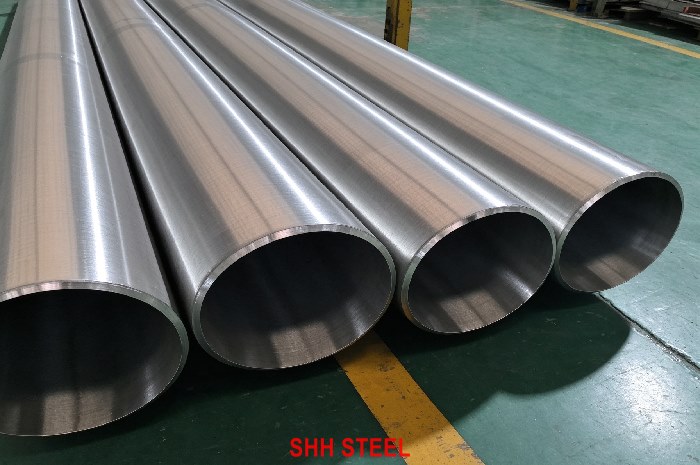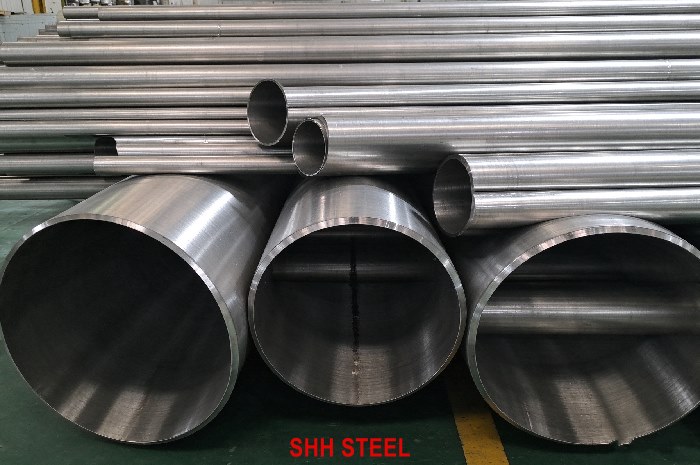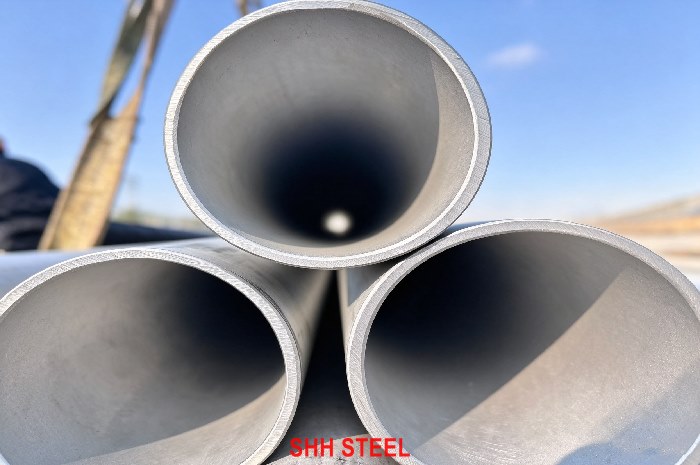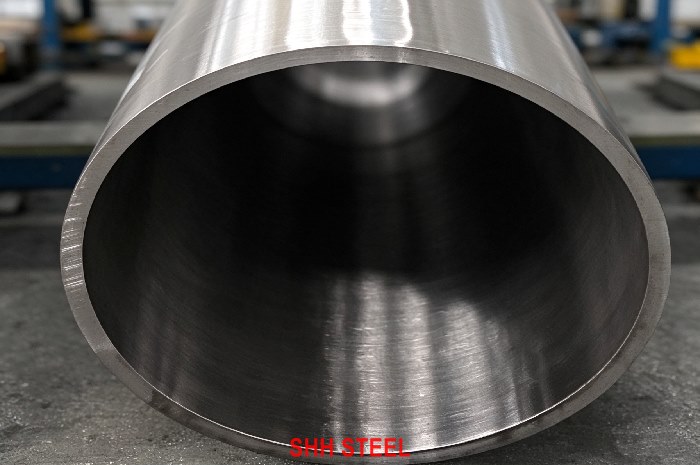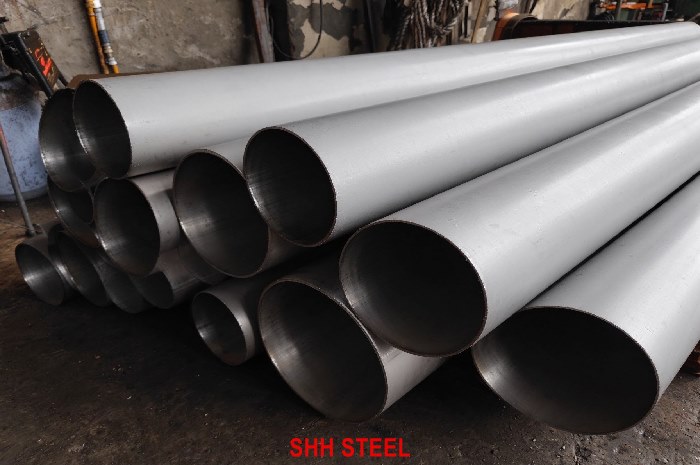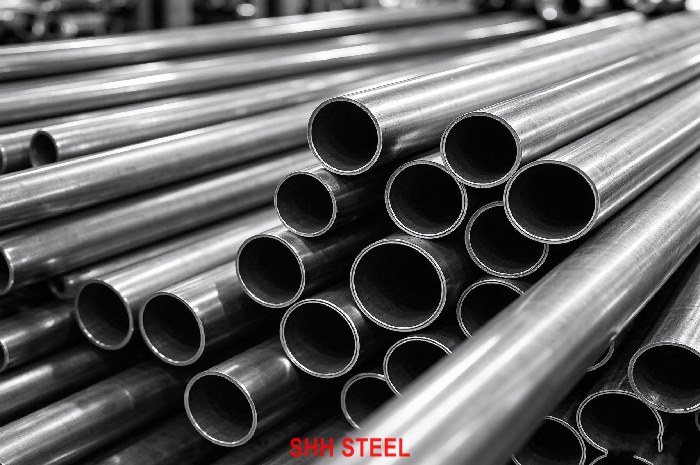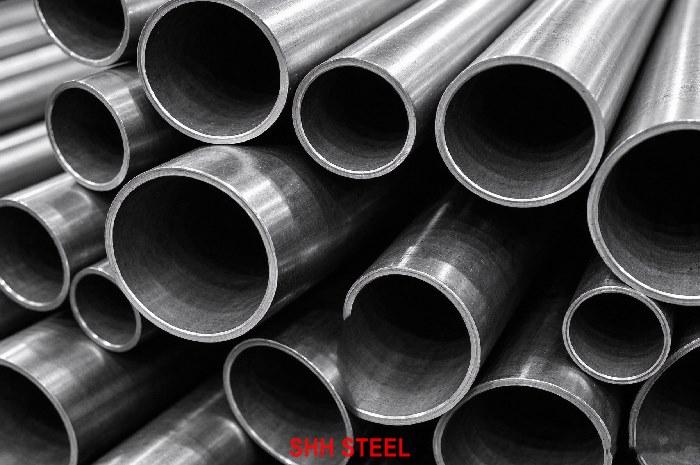
EN 10296-2 1.4306 Welded Stainless Steel Tube
What is EN 10296-2 1.4306 Welded Stainless Steel Tube
If the purchase file still names only a commercial alias such as 304L high-Ni without a product standard, the mill cannot know whether general-purpose welded acceptance or pressure-tube acceptance applies. EN 10296-2 plus steel number 1.4306 (X2CrNi19-11) selects welded tube for mechanical and general engineering. EN 10296-2 1.4306 is the welded general-purpose lock for high-Ni X2CrNi19-11 when leaner 1.4307 cast windows are not enough for the forming shop. Family filing for 1.4306 is austenitic corrosion-resisting.
SHH STEEL can make and supply EN 10296-2 1.4306 / X2CrNi19-11 as welded general-purpose tube across formable welded OD×wall on cold-rolled strip routes (W2/W2A/W2R), annealed or solution annealed as the grade tables and order require, documented on EN 10204 3.1 MTCs tied to cast analysis and mechanical results. Filler/shop note for 1.4306: 308L-class fillers; higher Ni base can ease hot-cracking risk on some fabricator joints — still follow austenitic WPS.
On the shop floor people still say “304L high-Ni tube,” yet that commercial alias does not select cast chemistry, welded process route, delivery-condition heat treatment, or optional tests. The purchase order has to name EN 10296-2, 1.4306, the Annex A process/surface symbol, the delivery condition (+AR / +A / +AT as applicable), and any Options so the mill applies the correct analysis, forming/welding route, heat treatment, mechanical floors, and marking. This number’s job on welded general-purpose duty is: high-nickel low-carbon 18-8 welded tube when ferrite control and forming behaviour drive the cast analysis above leaner 1.4307. Typical duties include deep-drawing fabrications, cryogenic-adjacent mechanical lines, and orders that literally name X2CrNi19-11 on the welded tube line. Design caution: still Mo-free for chlorides; higher Ni mainly helps forming/ferrite — not a seawater upgrade versus 1.4404 Primary application sketch: deep-drawing fabrications, cryogenic-adjacent mechanical lines, and orders that literally name X2CrNi19-11 on the welded tube line.
Scope discipline matters: 1.4306 under EN 10296-2 is welded general-purpose tube. Sister pages for pressure seamless (EN 10216-5) or welded pressure (EN 10217-7) share chemistry families but not acceptance text. Order the standard that the drawing and regulatory file actually require. Weld thread: 308L-class fillers; higher Ni base can ease hot-cracking risk on some fabricator joints — still follow austenitic WPS.
Inside this welded general-purpose series, compare EN 10296-2 1.4307, EN 10296-2 1.4311, EN 10296-2 1.4301. Hub: EN 10296-2. Pressure seamless sister (different acceptance): EN 10216-5 1.4306. ASTM/ASME related product pages (not interchangeable by default): A269 TP304L.
Chemical Composition of EN 10296-2 1.4306
Buying 304L high-Ni-family welded tube without locking 1.4306 invites silent chemistry drift. Under EN 10296-2 the cast must satisfy X2CrNi19-11; highlight elements for this grade include C ≤0.030, Cr 18.0–20.0, Ni 10.0–12.0, N ≤0.11, Si ≤1.00, S ≤0.015. Options for product analysis are agreed at enquiry when the purchaser wants them on the certificate. Duty thread: high-nickel low-carbon 18-8 welded tube when ferrite control and forming behaviour drive the cast analysis above leaner 1.4307.
The table below reproduces public BSSA EN 10296-2 chemical limits for 1.4306 / X2CrNi19-11, cross-checked against the EN 10296-2:2005 grade list. Values are maximum unless a range is shown. Commercial talk still says 304L high-Ni, but only the steel-number cast windows below belong on the MTC for this austenitic corrosion-resisting welded tube. Duty thread: high-nickel low-carbon 18-8 welded tube when ferrite control and forming behaviour drive the cast analysis above leaner 1.4307.
| Steel | C | Si | Mn | P | S | Cr | Ni | N |
|---|---|---|---|---|---|---|---|---|
| 1.4306 / X2CrNi19-11 | ≤0.030 | ≤1.00 | ≤2.00 | ≤0.045 | ≤0.015 | 18.0–20.0 | 10.0–12.0 | ≤0.11 |
Mechanical Properties of EN 10296-2 1.4306
Table mechanical floors for 1.4306 / X2CrNi19-11 are delivery-condition values at room temperature, not elevated-temperature design allowables. Summary: Rp0.2 min 180 MPa, Rp1.0 min 215 MPa, Rm min 460 MPa, longitudinal elongation min 40%. SHH STEEL reports actual tensile results on the EN 10204 3.1 document for the ordered test unit. Size context for 1.4306: formable welded OD×wall on cold-rolled strip routes (W2/W2A/W2R).
| Delivery condition | Rp0.2 min (MPa) | Rp1.0 min (MPa) | Rm (MPa) | A long. min (%) | A trans. min (%) | IGC |
|---|---|---|---|---|---|---|
| +AT | 180 | 215 | 460 min | 40 | 35 | Yes |
Ambient values from EN 10296-2:2005 Tables 4–5 for 1.4306 / X2CrNi19-11. Guideline solution/anneal band (Annex B): 1000–1100 °C; cooling: water, air or gas.
Welded Tube Manufacture for EN 10296-2 1.4306
EN 10296-2 does not offer a seamless route for 1.4306. Tube in X2CrNi19-11 is made by longitudinal automatic welding across abutting strip or plate edges, with or without filler as agreed, on one of the Table A.1 process routes, then heat-treated to the ordered delivery condition. Order EN 10296-2 1.4306 with an Annex A surface/process symbol — W0 when as-welded is acceptable, W1A/W2A for metallically clean heat-treated descaled tube, W1R/W2R when bright heat treatment is required, WCA/WCR when the weld must be scarcely recognizable, and WG/WP when ground or polished roughness is written into the purchase order. Duty thread: high-nickel low-carbon 18-8 welded tube when ferrite control and forming behaviour drive the cast analysis above leaner 1.4307.
For austenitic 1.4306, cold-rolled strip routes (W2/W2A/W2R) are the usual path to tighter OD and surface control; hot-rolled strip routes (W1/W1A/W1R) cover other starting stock. WCA/WCR add cold work and recrystallised weld metal when bead appearance matters. Austenitic 1.4306 is delivered as-welded (+AR) or solution annealed (+AT) as the purchaser specifies. Corrosive and hygienic duties usually lock +AT. Public Annex B guidance places solution annealing near 1000–1100 °C with water, air or gas cooling — fabricator HT after hot work should chase the lower end of the band when further processing applies. Corrosion thread: same Mo-free 18-8 aqueous story as 1.4307 with Ni floor raised for forming and residual ferrite control.
When dual documentation against EN 10217-7 is requested for the same 1.4306 chemistry, each standard’s mechanical and test regime still has to be satisfied on its own terms — SHH STEEL will not pretend one MTC covers both without the tests. Duty thread: high-nickel low-carbon 18-8 welded tube when ferrite control and forming behaviour drive the cast analysis above leaner 1.4307.
Dimensions and Tolerances for EN 10296-2 1.4306
SHH STEEL aligns OD × wall, tolerance class, and process-route symbol for 1.4306 / X2CrNi19-11 before strip forming and welding slots are locked. Formable welded od×wall on cold-rolled strip routes (w2/w2a/w2r). Duty thread: high-nickel low-carbon 18-8 welded tube when ferrite control and forming behaviour drive the cast analysis above leaner 1.4307.
Length supply for 1.4306 may be mill random, fixed, or multiple cut lengths. Bundle make-up and end protection are confirmed against the packaging clause so bright or polished finishes are not marked in transit. Use thread: deep-drawing fabrications, cryogenic-adjacent mechanical lines, and orders that literally name X2CrNi19-11 on the welded tube line.
Equivalent Grades for EN 10296-2 1.4306
1.4306 / X2CrNi19-11 is the EN 10296-2 designation for this chemistry as welded general-purpose tube. Commercial alias 304L high-Ni appears in body text only — not in the H1. ASTM/ASME pages that share a related chemistry are different product standards with different wall bases, mechanical tables, and tests. Confirm before treating them as interchangeable. Inside this welded general-purpose series, compare sisters 1.4307, 1.4311, 1.4301. Hook for buyers still using only the 304L high-Ni alias: lock EN 10296-2 1.4306 on the order line. Weld thread: 308L-class fillers; higher Ni base can ease hot-cracking risk on some fabricator joints — still follow austenitic WPS.
Heat Treatment and Delivery Condition for EN 10296-2 1.4306
Austenitic 1.4306 is delivered as-welded (+AR) or solution annealed (+AT) as the purchaser specifies. Corrosive and hygienic duties usually lock +AT. Public Annex B guidance places solution annealing near 1000–1100 °C with water, air or gas cooling — fabricator HT after hot work should chase the lower end of the band when further processing applies. Delivery framing on the certificate for 1.4306 should match the ordered +AR/+A/+AT symbol — alias 304L high-Ni alone is not enough. Corrosion thread: same Mo-free 18-8 aqueous story as 1.4307 with Ni floor raised for forming and residual ferrite control.
For 1.4306, purchasers who need verified IGC after fabrication should say so with the applicable Option and method (EN ISO 3651-2 framing). Mill +AT or +A of the tube does not automatically clear a fabricator’s as-welded joint without procedure control. Caution thread: still Mo-free for chlorides; higher Ni mainly helps forming/ferrite — not a seawater upgrade versus 1.4404.
Corrosion Resistance of EN 10296-2 1.4306
For 1.4306 / X2CrNi19-11, read corrosion through the austenitic corrosion-resisting lens rather than a generic “stainless” slogan. Plain-language summary: same Mo-free 18-8 aqueous story as 1.4307 with Ni floor raised for forming and residual ferrite control. IGC Options follow EN ISO 3651-2 where the tables say Yes — and still do not replace medium-specific design. Caution: still Mo-free for chlorides; higher Ni mainly helps forming/ferrite — not a seawater upgrade versus 1.4404 Family filing for 1.4306 is austenitic corrosion-resisting.
Chloride pitting, crevice attack, and stress-corrosion cracking limits depend on temperature, concentration, and tensile stress — move across sisters 1.4307, 1.4311, 1.4301 when the medium outgrows this number rather than hoping surface finish alone will hold. Corrosion thread: same Mo-free 18-8 aqueous story as 1.4307 with Ni floor raised for forming and residual ferrite control.
Applications of EN 10296-2 1.4306 Tube
Buyers pick EN 10296-2 1.4306 / X2CrNi19-11 when the duty list looks like this: deep-drawing fabrications, cryogenic-adjacent mechanical lines, and orders that literally name X2CrNi19-11 on the welded tube line. That is welded general-purpose work — not a silent PED pressure shell. Role in one line: high-nickel low-carbon 18-8 welded tube when ferrite control and forming behaviour drive the cast analysis above leaner 1.4307. Primary application sketch: deep-drawing fabrications, cryogenic-adjacent mechanical lines, and orders that literally name X2CrNi19-11 on the welded tube line.
Typical BOM language pairs EN 10296-2 1.4306 with OD × wall, Annex A symbol, and delivery condition. Downstream fabricators should inherit the same steel number on cut lists so informal “304L high-Ni” substitutions do not creep in. Weld thread: 308L-class fillers; higher Ni base can ease hot-cracking risk on some fabricator joints — still follow austenitic WPS.
Weldability of EN 10296-2 1.4306
1.4306 / X2CrNi19-11 arrives as a longitudinally welded product under EN 10296-2, and fabricators still add circumferential and attachment welds on mechanical assemblies. Shop guidance: 308L-class fillers; higher Ni base can ease hot-cracking risk on some fabricator joints — still follow austenitic WPS. Mill heat treatment of the tube does not replace qualified welding procedures on site joints. Filler/shop note for 1.4306: 308L-class fillers; higher Ni base can ease hot-cracking risk on some fabricator joints — still follow austenitic WPS.
When IGC testing of welded coupons is specified, align the EN ISO 3651-2 method with the grade’s tabulated expectations and the purchaser’s Option list. SHH STEEL can coordinate mill-supplied weld data only when it is part of the agreed scope. Weld thread: 308L-class fillers; higher Ni base can ease hot-cracking risk on some fabricator joints — still follow austenitic WPS.
Surface Finishes for EN 10296-2 1.4306
Surface finish on EN 10296-2 1.4306 is carried by the Annex A symbol: W0 as-welded where permitted, W1A/W2A descaled heat-treated for general mechanical tube, W1R/W2R/WCR for brighter OD, WCA when the weld must be scarcely recognizable, and WG/WP when roughness is agreed at enquiry. Carbon-steel strapping must not contact the stainless surface. Caution thread: still Mo-free for chlorides; higher Ni mainly helps forming/ferrite — not a seawater upgrade versus 1.4404.
Special measures to protect 1.4306 / X2CrNi19-11 during delivery or storage may be agreed at enquiry. Bright and polished tubes take sleeve or paper wrap; descaled engineering finishes still need end caps and dry bundling so chloride-bearing dirt does not sit on the OD in transit — especially important for 304L high-Ni-family decorative or hygienic OD. Duty thread: high-nickel low-carbon 18-8 welded tube when ferrite control and forming behaviour drive the cast analysis above leaner 1.4307.
Inspection and Testing for EN 10296-2 1.4306
SHH STEEL EN 10204 3.1 documents for 1.4306 report cast chemistry, tensile results, delivery condition, dimensions, and the Optional tests actually performed. We do not print a leak-test or NDT line unless that Option was executed. Use thread: deep-drawing fabrications, cryogenic-adjacent mechanical lines, and orders that literally name X2CrNi19-11 on the welded tube line.
Inspection intensity on 1.4306 tracks Options — leak, flattening, drift expanding, bend, NDT, IGC — not a silent EN 10217-7 pressure package. Role context for what those Options protect: high-nickel low-carbon 18-8 welded tube when ferrite control and forming behaviour drive the cast analysis above leaner 1.4307. Family filing for 1.4306 is austenitic corrosion-resisting.
Packaging and Shipping for EN 10296-2 1.4306
SHH STEEL ships EN 10296-2 1.4306 in end-protected, size-sorted bundles or wooden crates with waterproof wrap on export routes. Descaled W1A/W2A engineering finishes still get caps and separators; carbon-steel strapping never sits bare on the stainless OD. Corrosion thread: same Mo-free 18-8 aqueous story as 1.4307 with Ni floor raised for forming and residual ferrite control.
For 1.4306, inland trucking may use lighter wrap than ocean freight, but end protection and heat-identity tags remain mandatory. Chloride-bearing road salt exposure on open flats is avoided for bright finishes. Size context for 1.4306: formable welded OD×wall on cold-rolled strip routes (W2/W2A/W2R).
Ocean-freight wrap for X2CrNi19-11 repeats cast/code on tags inside and outside the wrap. Duty thread for why identity matters: deep-drawing fabrications, cryogenic-adjacent mechanical lines, and orders that literally name X2CrNi19-11 on the welded tube line. Primary application sketch: deep-drawing fabrications, cryogenic-adjacent mechanical lines, and orders that literally name X2CrNi19-11 on the welded tube line.
Why Choose SHH STEEL
SHH STEEL can produce and supply EN 10296-2 1.4306 as welded general-purpose tube when you need a mill partner who will not blur EN 10296-2 with EN 10217-7 or EN 10216-5 on the certificate. We can produce and supply the ordered Annex A finish, delivery condition, and Optional tests — and we say so in plain language on the quote. Duty thread: high-nickel low-carbon 18-8 welded tube when ferrite control and forming behaviour drive the cast analysis above leaner 1.4307.
Why this mill page exists: honest EN 10296-2 1.4306 welded supply with Annex A and delivery-condition clarity — not a generic 304L high-Ni rack pull. Sisters on the same RFQ conversation: 1.4307, 1.4311, 1.4301. Duty thread: high-nickel low-carbon 18-8 welded tube when ferrite control and forming behaviour drive the cast analysis above leaner 1.4307.
Supply Capability
Supply capability for 1.4306 / X2CrNi19-11 is enquiry-led: SHH STEEL can produce and supply welded general-purpose tube with the Annex A finish and +AR/+A/+AT condition you name. Size hint: formable welded OD×wall on cold-rolled strip routes (W2/W2A/W2R). Family filing for 1.4306 is austenitic corrosion-resisting.
| Item | Capability |
|---|---|
| Standard | EN 10296-2:2005 welded general-purpose |
| Steel | 1.4306 / X2CrNi19-11 |
| Product form | Welded tube (W0 / W1A / W2A / W2R / WCA / WCR / WG / WP) |
| Delivery condition | +AT |
| Documents | EN 10204 3.1 (Options as ordered) |
| Typical enquiry OD | ~6–219 mm (other by agreement) |
| Typical enquiry wall | ~0.5–12.7 mm within welded family practice (other by agreement) |
Stock / Available sizes
Enquiry-oriented Stock / Available sizes map for EN 10296-2 1.4306 — not a frozen warehouse SKU list with tonnages. Availability tracks mill heats of X2CrNi19-11, strip/plate starting stock, and welding/finishing slots for the ordered Annex A symbol; send the OD × wall list, delivery-condition preference, and any Optional tests tied to deep-drawing fabrications, cryogenic-adjacent mechanical lines, and orders that literally name X2CrNi19-11 on the welded tube line. Family filing for 1.4306 is austenitic corrosion-resisting.
Trial lengths of 1.4306 / X2CrNi19-11 help fabricators prove forming and weld procedures before a production heat. Sisters often sampled on the same RFQ: 1.4307, 1.4311, 1.4301. SHH STEEL can produce and supply those trials when strip slots allow. Corrosion thread: same Mo-free 18-8 aqueous story as 1.4307 with Ni floor raised for forming and residual ferrite control.
FAQ
-
What is EN 10296-2 1.4306 welded stainless steel tube used for?
- EN 10296-2 1.4306 (X2CrNi19-11) is welded tube for mechanical and general engineering — deep-drawing fabrications, cryogenic-adjacent mechanical lines, and orders that literally name X2CrNi19-11 on the welded tube line. It is not automatically PED pressure tube; when pressure seamless acceptance is mandatory, specify EN 10216-5 for the same chemistry where listed; when pressure welded acceptance is mandatory, specify EN 10217-7 where listed. Role summary: high-nickel low-carbon 18-8 welded tube when ferrite control and forming behaviour drive the cast analysis above leaner 1.4307.
-
Is EN 10296-2 1.4306 the same as EN 10216-5 1.4306?
- Chemistry families may overlap, but acceptance differs. EN 10296-2 is welded general-purpose / mechanical engineering; EN 10216-5 is seamless pressure. An EN 10296-2 MTC for 1.4306 does not clear PED pressure duties by itself. Dual orders must satisfy each standard’s mechanical and test regime.
-
What delivery condition applies to 1.4306 / X2CrNi19-11?
- Delivery framing for 1.4306 is +AT under the EN 10296-2 family tables. Guideline heat-treatment temperatures sit in Annex B near 1000–1100 °C with water, air or gas cooling. State the delivery condition on the purchase order so marking and the MTC match.
-
What Annex A finishes can SHH STEEL supply for 1.4306?
- SHH STEEL can produce and supply W0, W1A, W2A, W2R, WCA, WCR, WG, and WP routes for EN 10296-2 1.4306 when the mill can meet the ordered surface. Descaled HFD/CFD covers most engineering duties; CFA is bright annealed; CFG/CFP need a written OD/ID roughness scope. Carbon-steel strapping never contacts the stainless OD.
-
How does 1.4306 compare with sister grades 1.4307, 1.4311, 1.4301?
- 1.4306 / X2CrNi19-11 is filed as austenitic corrosion-resisting. Typical sisters discussed on the same RFQ are 1.4307, 1.4311, 1.4301. Design caution: still Mo-free for chlorides; higher Ni mainly helps forming/ferrite — not a seawater upgrade versus 1.4404 Pick the sister when the medium or strength floor outgrows this number rather than stretching surface finish alone.
-
How should fabricators weld EN 10296-2 1.4306 tube on site?
- 1.4306 already has a mill longitudinal weld; fabricator circumferential and attachment welds still need a WPS. Shop guidance: 308L-class fillers; higher Ni base can ease hot-cracking risk on some fabricator joints — still follow austenitic WPS. Mill heat treatment of the welded tube does not replace qualified procedures on site joints. For corrosive as-welded duty, confirm low-carbon, stabilisation, duplex ferrite control, or PWHT as applicable.
-
What tests should appear on the EN 10204 3.1 document for 1.4306?
- Expect cast analysis, room-temperature tensile results for the ordered delivery condition, dimensions, and every Optional test actually performed (leak, hydrostatic, eddy current, ultrasonic, IGC). SHH STEEL does not print surrogate NDT lines. EN 10296-2 Options are not identical to EN 10216-5 TC1/TC2 pressure categories.
-
What size range can SHH STEEL quote for EN 10296-2 1.4306?
- SHH STEEL can produce and supply enquiry-oriented OD × wall bands for 1.4306 — commonly instrumentation through mid-process sizes, with heavier walls by agreement. Size context: formable welded OD×wall on cold-rolled strip routes (W2/W2A/W2R). Send the OD × wall list, Annex A symbol, and delivery condition for a firm acknowledgement. Stock / Available sizes on this page is an RFQ map, not a frozen tonnage catalogue.
-
Does commercial alias 304L high-Ni belong in the purchase-order H1?
- No. On steelspecs.com product pages the H1 is the steel number only. Use 304L high-Ni in body text and BOM notes, but lock EN 10296-2 and 1.4306 on the order line so cast analysis, delivery condition, and Options are unambiguous. Silent alias substitution is a common root cause of wrong MTCs.
-
When should I choose duplex or Mo austenitic instead of 1.4306?
- Move when chloride pitting, crevice attack, or SCC risk exceeds what austenitic corrosion-resisting practice can defend for the temperature and stress state. Caution for this number: still Mo-free for chlorides; higher Ni mainly helps forming/ferrite — not a seawater upgrade versus 1.4404 Sister pointers: 1.4307, 1.4311, 1.4301. SHH STEEL will not invent PREN marketing digits — bring the medium data and we will map chemistry honestly.
-
Is EN 10296-2 1.4306 suitable for heat-resisting furnace duty?
- Only the heat-resisting grades in Table 9 are first-choice furnace numbers. 1.4306 is filed as austenitic corrosion-resisting. If you need oxidising heat service, confirm whether 1.4828 / 1.4835 / 1.4833 / 1.4845 / 1.4818 / 1.4854 is the intended family before ordering a corrosion-resisting analysis. Conversely, do not force a heat-resisting number into aqueous chloride process duty without review.
Conclusion
EN 10296-2 1.4306 (X2CrNi19-11) is welded stainless tube for mechanical and general engineering — high-nickel low-carbon 18-8 welded tube when ferrite control and forming behaviour drive the cast analysis above leaner 1.4307. SHH STEEL can produce and supply it with the Annex A finish, delivery condition, and Optional tests named on your enquiry, documented on EN 10204 3.1 certificates. Sister grades often discussed alongside this number include 1.4307, 1.4311, 1.4301. For pressure seamless acceptance of the same chemistry family, see EN 10216-5 where listed; for pressure welded, see EN 10217-7 when published. Email admin@steelspecs.com with OD × wall, delivery condition, and medium notes to start the quote.
Quality Steel Needed? Inquire for Offers
Related Products