EN 10025-2 S355J2 Equal and Unequal Steel Angles
What is EN 10025-2 S355J2 Steel Angle?
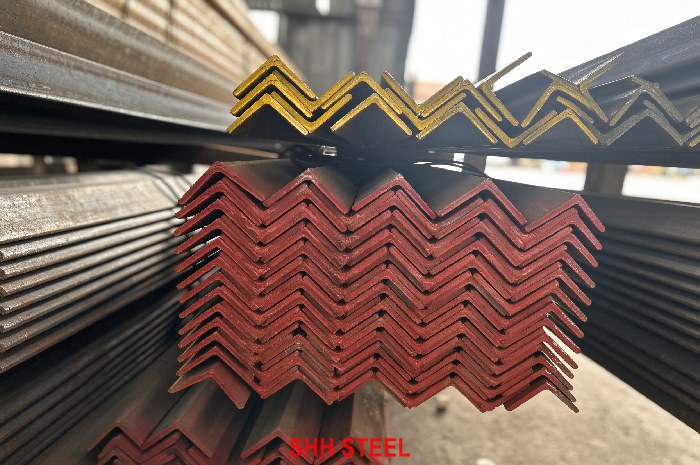
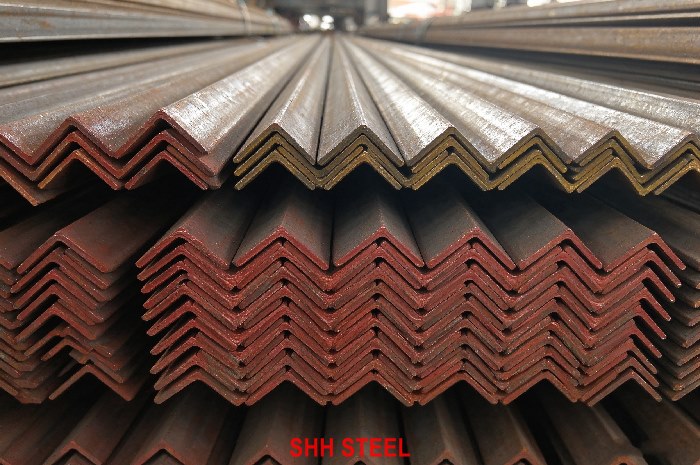
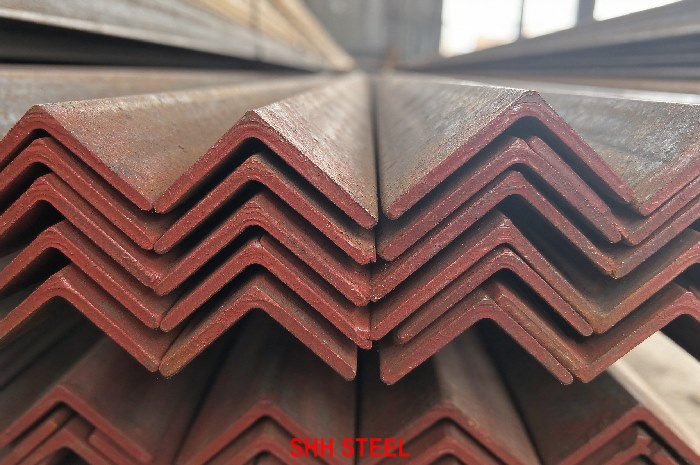
EN 10025-2 S355J2 steel angle is a hot-rolled European structural angle whose material grade is S355J2 under EN 10025-2 and whose shape, tolerances and theoretical mass are ordered to EN 10056, with tolerances to EN 10056-2. S355 is the 355 MPa minimum yield class in the thinnest tabulated thickness band, and J2 is the quality grade, which carries a longitudinal Charpy V-notch requirement of 27 J at −20 °C. The steel number is 1.0577. S355J2 is a fully killed steel with nitrogen-binding elements.
This page covers the rolled angle, not plate and not a channel. The same grade in plate form is listed separately as EN 10025-2 S355J2 steel plate. The plate page is not a substitute data sheet for angles, and neither is EN 10025-2 S355J2 H-beam.
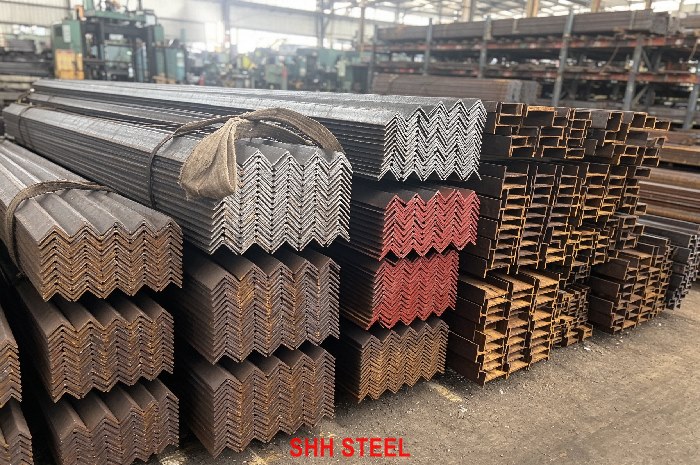
These bars are filed under steel angle profiles in the steel structural profiles category. They may be ordered as equal-leg or unequal-leg L sections. They are not American L shapes, Chinese GB/T 706 angles, or Japanese angles of a similar millimetre leg, and they are not EN 10025-5 S355J2W weathering sections. The +20 °C sister is EN 10025-2 S355JR steel angle. A S355J2 channel is a different product: see EN 10025-2 S355J2 steel channel.
S355J0 is a related quality at 0 °C and is noted here rather than given its own URL. S355K2 (40 J at −20 °C) is a different quality and is not given its own page.
This page covers Equal and Unequal Steel Angles in EN 10025-2 S355J2. The Equal Leg Steel Angles and Unequal Leg Steel Angles follow EN 10056-1; the material standard does not by itself define the dimensions.
Material, Dimensions and Tolerances for S355J2 Angles
Three documents should appear, separately, on the purchase order and on the inspection certificate:
- the material standard and edition, EN 10025-2:2019 unless the order names another edition, and the grade S355J2 (steel number 1.0577);
- the dimensional standard, EN 10056, with tolerances to EN 10056-2, with the angle designation;
- the delivery condition, inspection document type, and any agreed options such as a galvanizing chemistry or a clause 7.2.5 CEV approach.
EN 10025-2 is the material standard. It is not a size table. Size, tolerance and theoretical mass come from the dimensional standard named on the order.
EN 10025-2 S355J2 Equal Leg Steel Angles
The equal-leg tables cover 71 verified sizes, from L 80×80×8 to L 300×300×35. The unequal-leg table covers the verified L 200×100 family only (5 thicknesses, L 200×100×10 to L 200×100×16). This is not the complete EN 10056-1 series: smaller equal legs and a wider unequal series exist in that standard and may be supplied when specified and certified, but they are not invented here. Numeric dimensions use the verified EN 10056 set already published on the sister S235JR and S355JR angle pages, with shape tolerances to EN 10056-2. The edition named on the order governs.
Not every mill rolls every designation in S355J2. The order should name the sections actually required.
Equal-leg angles — L 80 to L 150 equal (15 sizes)
Swipe horizontally to view all dimensions.
Equal-leg angles — L 160 to L 200 equal (28 sizes)
Swipe horizontally to view all dimensions.
Equal-leg angles — L 250 to L 300 equal (28 sizes)
Swipe horizontally to view all dimensions.
EN 10025-2 S355J2 Unequal Leg Steel Angles
Unequal-leg angles — L 200×100×10 to L 200×100×16 (5 sizes)
Swipe horizontally to view all dimensions.
S355J2 Chemical Composition for Angles (EN 10025-2 Ladle Analysis)
The figures below are ladle-analysis maxima from EN 10025-2:2019 for long products in S355J2. Product analysis, where required, follows the standard’s permitted deviations; those deviations are not retabulated here.
For these angles the nominal thickness is ordinarily the leg thickness t, not the leg length.
S355J2 Carbon Equivalent for Angles
EN 10025-2:2019 publishes the following ladle-analysis CEV maxima for S355J2, using the IIW formula C + Mn/6 + (Cr + Mo + V)/5 + (Ni + Cu)/15.
For these angles the nominal thickness is ordinarily the leg thickness t, not the leg length. Clause 7.2.5 of EN 10025-2:2019 may adjust the CEV approach for S355 when that option is invoked on the order; this page does not invent alternative limits. In the verified equal-leg set, leg thickness ranges from 6 mm to 35 mm, so some rows sit in the 16 mm < t ≤ 40 mm mechanical band (345 MPa). None of the tabulated legs exceeds 40 mm, so they remain in the first CEV band. Later bands are still shown.
S355J2 Angle Mechanical Properties: Yield, Tensile and −20 °C Impact
The long-product tensile table for S355J2 is as follows. Tests on long products are normally longitudinal unless otherwise ordered. For these angles the nominal thickness is ordinarily the leg thickness t, not the leg length. For sections with nominal thickness greater than 100 mm, the mechanical values shall be agreed. No limits beyond 150 mm are given here.
When impact testing applies, S355J2 requires 27 J at −20 °C, longitudinally unless otherwise ordered. That is not the 40 J K2 requirement, and it is not the +20 °C JR test. In the verified equal-leg set, leg thickness ranges from 6 mm to 35 mm, so some rows sit in the 16 mm < t ≤ 40 mm mechanical band (345 MPa). None of the tabulated legs exceeds 40 mm, so they remain in the first CEV band. Later bands are still shown.
Delivery Conditions, Inspection and Identification
S355J2 angles are commonly delivered in the as-rolled condition of EN 10025-2, as a fully killed steel. The inspection document should identify EN 10025-2 and its edition, the grade S355J2, the EN 10056 designation and edition, ladle analysis and CEV, nitrogen-binding elements as required, and mechanical results including the −20 °C impact test, against the thickness at the test location, ordinarily the leg thickness. A plate, JR, channel or H-beam certificate does not, by itself, identify an S355J2 angle.
Weldability and Surface Condition of S355J2 Steel Angles
S355J2 is a weldable non-alloy structural steel. Preheat and consumable choice should use the certified CEV, the actual leg thickness and the joint design. Surface condition belongs to the ordered specification; this page does not reproduce those millimetre limits.
EN 10056-2 Shape Tolerances and Theoretical Mass
Shape, straightness, length and theoretical mass belong to the ordered editions of EN 10056-1 and EN 10056-2. The tables on this page are the verified subset already used on the sister S235JR and S355JR angle pages, not a claim that every EN 10056 size has been retabulated. Mass is the published theoretical figure. Millimetre tolerance tables are not reproduced here.
Applications and Service Limits
S355J2 angles are used in frames, towers, bracing and fabrication where a 355 MPa yield class in the first thickness band and a −20 °C impact quality are required. They are not a silent substitute for a JR or J0 order, and they are not S355K2. An L 80×80 is not a drop-in substitute for a GB/T 706 or ASTM angle of similar leg length.
S355J2 Steel Angle Compared with Related Grades
The comparisons below are an orientation only; they are not automatic substitutes.
Near-Equivalents: Not Automatic Substitutes
A near-equivalent is a starting point for a discussion, not a licence to swap certificates. EN 10025-2 S355J2 steel plate uses the same grade name but a different specimen orientation. EN 10025-2 S355JR steel angle is the +20 °C sister. Do not confuse this grade with EN 10025-5 S355J2W. ASTM A572 Grade 50 plate is a plate product with its own thickness limits.
Sourcing S355J2 Steel Angles from SHH STEEL
SHH STEEL supplies EN 10025-2 S355J2 steel angles against a named designation list, the material edition, the −20 °C impact requirement and the inspection document type. Enquiries should state equal-leg or unequal-leg designations, cut lengths or mill lengths, any processing, and whether EN 10025-2 S355JR steel angle is acceptable on part of the list.
The size tables are the verified subset, not a claim that every EN 10056 size is rolled in every heat. Once the list is clear, a quotation can be prepared against the stated edition and certificate.
S355J2 Steel Angle FAQs
-
Is S355J2 the same as S355JR or S355K2?
- S355J2 shares the S355 yield class with JR and K2, but JR is tested at +20 °C and K2 requires 40 J at −20 °C. S355J2 requires 27 J at −20 °C. S355J0 is a related 0 °C quality noted on this page, not a separate URL.
-
Which thickness is used for yield, CEV and impact?
- EN 10025-2 applies the bands to the nominal thickness of the part from which the test sample is taken. For these angles that is ordinarily the leg thickness, not the leg length. Some tabulated legs are thicker than 16 mm and therefore sit in the second yield band.
-
Is this the complete EN 10056 size series?
- No. The tables are the verified subset already published on the sister S235JR and S355JR angle pages: the listed equal-leg families and the L 200×100 unequal family. Smaller equal legs and a wider unequal series may be supplied when specified and certified, but they are not invented here.
-
Which standards should appear on the inspection document?
- At least EN 10025-2 and its edition, the grade S355J2, the EN 10056 designation and the EN 10056-2 edition used for tolerances, ladle analysis and CEV, nitrogen-binding elements as required, and mechanical results including the −20 °C impact test, against the leg thickness unless the order relocates the specimen.
Request a Quotation for EN 10025-2 S355J2 Steel Angle
EN 10025-2 S355J2 steel angle is a European structural angle with 355 MPa minimum yield in the first thickness band and a 27 J impact requirement at −20 °C. Nominate the designation (for example L 80×80×8 or L 200×100×10), EN 10025-2:2019 or the edition on the order, and the inspection document type. Send the size list, edition, certificate type and any processing notes; SHH STEEL will review the package and quote accordingly.
Quality Steel Needed? Inquire for Offers
Related Products