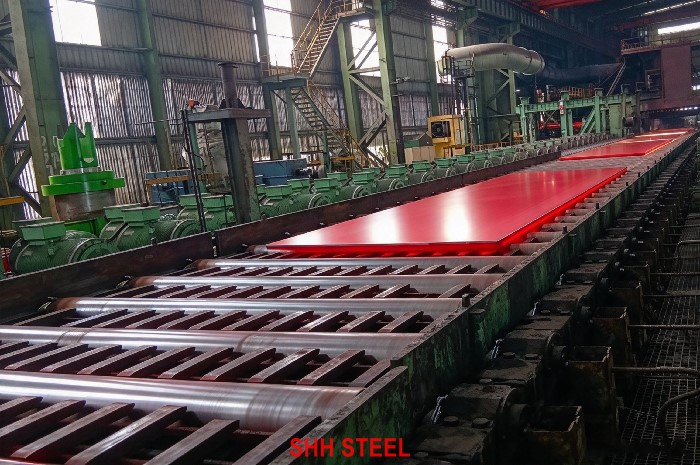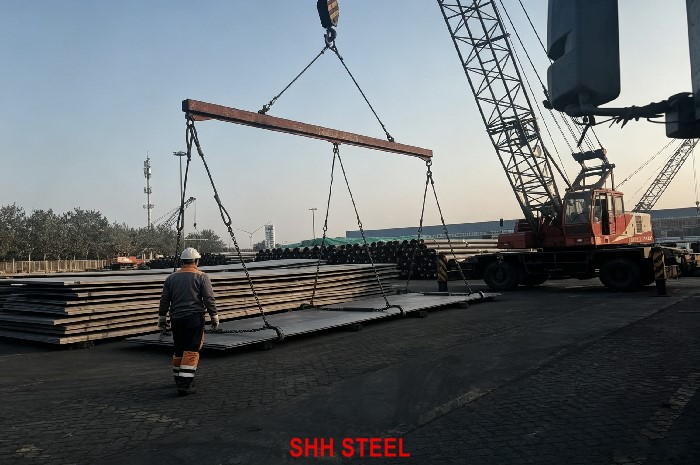
ASTM A829 8620 Alloy Steel Plate
What is ASTM A829 Grade 8620 plate?
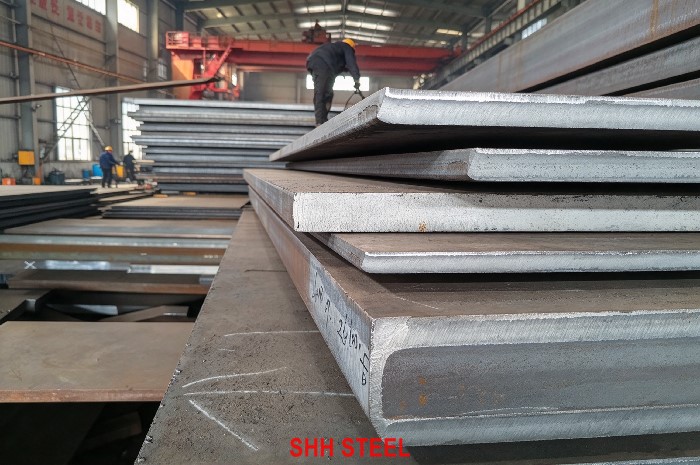
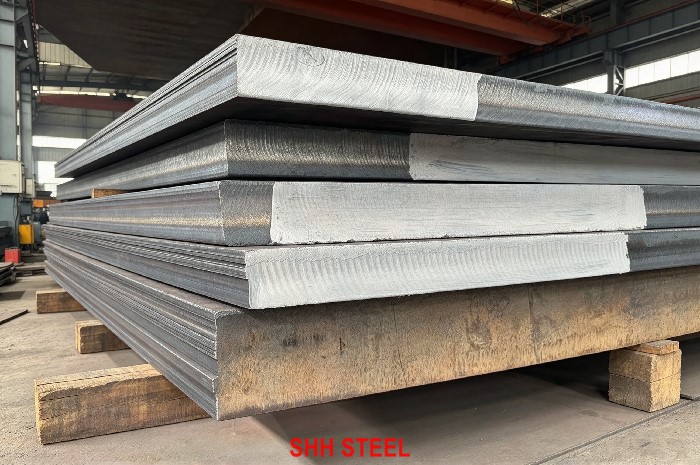
ASTM A829 8620 Alloy Steel Plate is structural-quality nickel-chromium-molybdenum alloy steel plate purchased to ASTM A829/A829M-25, Standard Specification for Alloy Structural Steel Plates. Grade 8620 is the nickel-chromium-molybdenum designation used for this A829 plate grade, and 8620 is the conventional AISI/SAE chemistry-family number. AISI/SAE 8620 is not itself a plate specification.
The plates are usually specified to chemical composition. Tensile properties may also be specified; when they are, the values must be compatible with the chemical composition, the delivery condition and the plate thickness.
Grade 8620 is a lower-carbon carburizing chemistry. Parts cut from the plate are often carburized and then hardened so that a wear-resistant case forms around a tougher core. That route is different from through-hardening grades such as 4140. Typical carburized-case or quenched-and-tempered bar figures should not be read as automatic as-delivered plate minima.
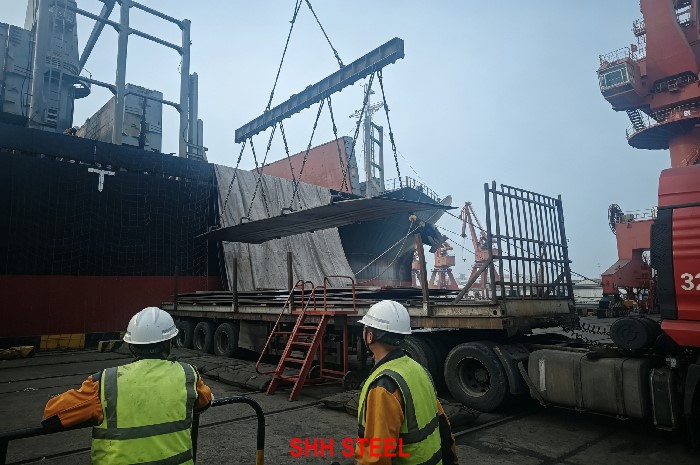
SHH STEEL produces and exports ASTM A829/A829M-25 Grade 8620 plate to the ordered edition, delivery condition, dimensions and extra tests written on the enquiry. This grade belongs to our Alloy Steel Plates range under ASTM A829/A829M.
Material specification for ASTM A829 Grade 8620
The items below follow ASTM A829/A829M-25. Thickness, width, length and the inspection document are stated on the enquiry rather than listed here as stock or capacity ranges.
| Parameter | Detail |
|---|---|
| Standard | ASTM A829/A829M-25, Standard Specification for Alloy Structural Steel Plates |
| Grade designation | Grade 8620, nickel-chromium-molybdenum alloy plate under ASTM A829/A829M, lower carbon carburizing chemistry |
| Product form | Alloy structural steel plate |
| Usual ordering basis | Chemical composition; tensile properties may also be specified when compatible with composition, condition and thickness |
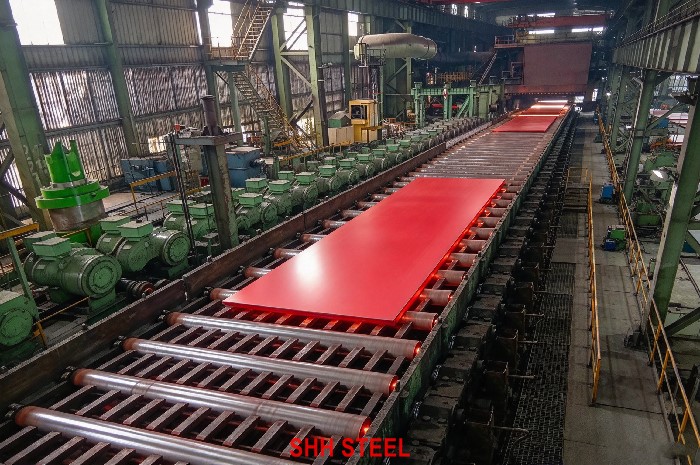
| Delivery conditions | Condition AR, as rolled (hot rolled); Condition A, annealed; Condition N, normalized; Condition NT, normalized and tempered; Condition QT, quenched and tempered |
| Forms | Form I rectangular; Form II circular and semi-circular; Form III sketch, including rings |
| Edge categories | Edge 1 mill edge; Edge 2 universal mill edge; Edge 3 sheared edge; Edge 4 gas-cut edge; Edge 5 special cut edge |
| Finishes | Finish 1 as-rolled (hot-rolled); Finish 2 blast cleaned; Finish 3 blast cleaned and oiled; Finish 4 pickled; Finish 5 pickled and oiled; Finish 6 painted, one prime coat; Finish 7 painted, one prime coat and one finish coat. Plates are usually specified to Finish 1 |
| Supplementary requirements | Additional requirements may be specified on the order |
| Heat-analysis elements named by ASTM | Carbon, manganese, phosphorus, sulfur, silicon, nickel, chromium, molybdenum, vanadium and copper |
| Units | SI units and inch-pound units are separate; do not combine the two systems |
| Our supply | We produce and export Grade 8620 to the ASTM form, edge, finish and delivery condition agreed on the order |
Chemical composition of ASTM A829 Grade 8620
ASTM A829/A829M-25 requires heat analysis to the composition specified for the ordered grade. The figures below are manufacturer heat-analysis values published for ASTM A829 Grade 8620 plate. They are reference data, not a substitute for the official ASTM composition table. Contractual chemistry and delivery condition are those of the ordered ASTM A829/A829M edition and the mill test certificate.
| Element | Reference heat analysis (wt. %) |
|---|---|
| Carbon (C) | 0.18-0.23 |
| Manganese (Mn) | 0.70-0.90 |
| Silicon (Si) | 0.15-0.35 |
| Nickel (Ni) | 0.40-0.70 |
| Chromium (Cr) | 0.40-0.60 |
| Molybdenum (Mo) | 0.15-0.25 |
Phosphorus and sulfur shall meet the ordered edition; some manufacturers apply tighter ladle maxima. Confirm both on the mill test certificate. If the project requires product analysis, agree it on the order and check the result on the certificate.
Mechanical properties and optional tests
ASTM A829/A829M-25 plates are usually specified to chemical composition. Tensile properties may also be specified when they are compatible with the composition, delivery condition and plate thickness. Mechanical tests are not assumed for every as-rolled order; if you need tensile, hardness or toughness results, state the values, delivery condition and thickness so we can confirm they are compatible.
Carburized-case hardness, case depth and core strength depend on the later carburizing and hardening cycle. They are not treated here as ASTM A829 as-delivered plate minima. Typical quenched-and-tempered 4140 or 8620 bar figures should likewise not be read as automatic plate values.
Delivery conditions for ASTM A829 Grade 8620
ASTM A829/A829M-25 lists five delivery conditions:
- Condition AR — as rolled (hot rolled)
- Condition A — annealed
- Condition N — normalized
- Condition NT — normalized and tempered
- Condition QT — quenched and tempered
We produce and export Grade 8620 to the agreed condition. Not every production route offers every condition on every thickness, so the purchase order should name the required state. An enquiry that only says “8620 plate” is incomplete, because as-rolled, annealed, normalized and quenched-and-tempered plate are not interchangeable supply states.
As-rolled plate is often used for parts that will be carburized or otherwise heat treated later. The later carburizing cycle, not the plate grade name alone, sets case depth and case hardness.
Welding and thermal cutting
When the steel is to be welded, ASTM A829/A829M-25 presupposes a welding procedure suitable for the grade and the intended use or service, and refers to Appendix X3 of ASTM A6/A6M for weldability information.
Nickel-chromium-molybdenum 8620 plate should be welded to a procedure suited to the grade and thickness. Low-hydrogen consumables and controlled hydrogen practice are commonly used. Electrodes and fluxes should be dry and properly stored. Slow cooling after welding and a post-weld heat treatment may be required to limit cold cracking. Preheat and interpass temperature depend on thickness, joint restraint and the qualified procedure.
Thermal cutting can harden the adjacent material. That heat-affected zone should be considered, and removed where later forming or welding requires it. Qualify cutting and welding procedures to the project specification, the ordered delivery condition and the actual plate thickness.
Form, edge, finish and dimensions
ASTM A829/A829M-25 defines form, edge and finish options. Numeric thickness, width, length and flatness tolerances should be stated on the purchase order and confirmed on the mill documents for the ordered edition. If the project requires ASTM A6 or another dimensional standard, write that requirement on the enquiry.
Applications and specification limits
We produce and export this grade for engineering parts that will later be carburized or otherwise heat treated after cutting. The combination of lower carbon with nickel, chromium and molybdenum is specified when a hard case and a tougher core are required after that later cycle.
As-delivered plate properties depend on the ordered delivery condition. Carburized case depth, case hardness and core strength are the result of the subsequent heat-treatment cycle, not an automatic ASTM A829 plate guarantee.
ASTM A829 is an alloy structural plate specification. It is not a tool-steel book such as ASTM A681, and it is not a boiler or pressure-vessel plate specification. Do not use this grade as an automatic substitute for through-hardening Grade 4140 or for those other product standards.
Compare ASTM A829 8620 with other steel plates
ASTM A829 Grade 8620 is chemistry-ordered alloy structural plate. The comparison below uses other plates we already publish. These grades are related by engineering use, not equivalents.
| Material | Alloy / type | Delivery condition | Mechanical requirements | Typical service | Substitution limit |
|---|---|---|---|---|---|
| ASTM A829 Grade 8620 (this plate) | Nickel-chromium-molybdenum alloy structural plate, usually ordered by heat chemistry, intended for later carburizing rather than as a through-hardening 4140 substitute | AR, annealed, normalized, NT or QT as ordered | No automatic as-delivered strength or case-hardness package; any tensile or hardness tests must be specified and compatible with composition, condition and thickness | Engineering parts that will be carburized or otherwise heat treated after cutting | Not a through-hardening 4140 plate, not a 100 ksi QT structural grade, and not an as-carburized finished part |
| ASTM A829 4140 Alloy Steel Plate | Chromium-molybdenum through-hardening plate, higher carbon and no specified nickel range | AR, annealed, normalized, NT or QT as ordered | No automatic as-delivered strength package; tensile or hardness only if specified and compatible | Machinery and general engineering parts, often through-hardened after cutting | Different chemistry family and heat-treatment route from carburizing Grade 8620; not an automatic substitute |
| ASTM A514 Grade B | Quenched-and-tempered alloy structural plate; chemistry includes chromium, molybdenum, vanadium, titanium and boron | Quenched and tempered | Strength-graded: to 32 mm, yield 100 ksi / 690 MPa min and tensile 110-130 ksi / 760-895 MPa (from our A514 Grade B page). Maximum thickness for Grade B is 1¼ in / 32 mm | Welded bridges and other structures that specify A514 QT plate | Not a substitute for chemistry-ordered A829 plate |
| ASTM A572 Grade 50 | High-strength low-alloy structural plate, microalloyed with niobium and vanadium | Hot-rolled or controlled-rolled | Strength-graded: minimum yield 345 MPa and tensile 450 MPa minimum (from our A572 Grade 50 page) | Bridges, buildings, construction equipment, transmission towers and heavy machinery frames | Not a nickel-chromium-molybdenum or chromium-molybdenum engineering-alloy plate of the A829 type |
Related published ranges: Structural Steel Plates, ASTM A514/A514M and ASTM A572/A572M.
Equivalent and related grades by country
The designations below are near equivalents or related chemistry-family grades, not certified or automatic equivalents. Chemistry windows, product form, delivery condition and any mechanical tests must match the project specification before a substitution is considered. Grades without a live page on this site are shown as plain text.
| Country / region | Standard | Grade | Similarity and key differences | Substitution caveat |
|---|---|---|---|---|
| United States | ASTM A829/A829M-25 | Grade 8620 | This plate specification. Nickel-chromium-molybdenum alloy structural plate, usually ordered by heat chemistry, with a lower carbon window than Grade 4140 and a specified nickel range. | This product |
| United States | AISI / SAE practice | 8620 | The conventional chemistry-family number used with this plate grade. AISI/SAE 8620 is not an independent plate specification. It is widely treated as a carburizing steel in bar and forging practice. | Do not treat an AISI/SAE 8620 bar or forging enquiry as an ASTM A829 plate order without restating product form, condition and tests. |
| China | — | — | No separately verified GB/T 11251 plate/strip grade table for a dedicated 8620 counterpart was opened for this page. | Do not assume a Chinese Ni-Cr-Mo bar designation is an ASTM A829 8620 plate equivalent. |
| Europe | — | — | No separately verified EN ISO 683 heat-analysis table for a dedicated 8620 flat-product counterpart was opened for this page. European case-hardening books are the usual comparison family, but a confirmed grade number is not listed here. | Do not assume a European case-hardening bar designation is an ASTM A829 plate equivalent. |
| Japan | JIS G 4053 | SNCM220 | Low-alloyed steel for machine structural use, made by hot rolling, hot forging or hot extruding, generally as uniform-section products. Published heat analysis for SNCM220: C 0.17-0.23, Si 0.15-0.35, Mn 0.60-0.90, P ≤ 0.030, S ≤ 0.030, Ni 0.40-0.70, Cr 0.40-0.60, Mo 0.15-0.25. Nickel, chromium, molybdenum and carbon sit close to manufacturer-published A829 8620 values (C 0.18-0.23, Mn 0.70-0.90, Ni 0.40-0.70, Cr 0.40-0.60, Mo 0.15-0.25); manganese is specified wider and starts lower. JIS G 4053 does not itself specify tensile or hardness minima. It is not a plate specification. | Not an automatic plate equivalent. Do not order A829 plate as a substitute for G4053 bar or section supply, or the reverse. |
| United Kingdom and other countries | — | — | No separately verified national plate counterpart was established for this page. | Do not assume a local carburizing-bar designation is an ASTM A829 plate equivalent. |
A related live A829 plate grade is ASTM A829 4140. Other A829 family grades such as 4130 and 4142 are not substitutes and do not have product pages on this site yet.
Why choose SHH STEEL for ASTM A829 Grade 8620
- We produce and export ASTM A829/A829M-25 Grade 8620 alloy structural steel plate
- We review the enquiry for edition, grade, delivery condition, dimensions and any extra mechanical or NDE tests
- We keep chemistry-ordered plate distinct from optional tensile or hardness testing
- We match documentation to what the purchase order requires
How to enquire for ASTM A829 8620 plate
| Item | What to specify |
|---|---|
| Standard and grade | ASTM A829/A829M-25 Grade 8620 |
| Delivery condition | AR, annealed (A), normalized (N), normalized and tempered (NT), or quenched and tempered (QT) |
| Dimensions | Required thickness, width and length; we confirm production and export feasibility against the enquiry |
| Form, edge and finish | Use the ASTM options above if needed. Finish 1 is the usual finish |
| Chemistry | Heat analysis to the ordered edition; request product analysis only if the project needs it |
| Mechanical tests | State any tensile, hardness or toughness values and confirm they are compatible with composition, condition and thickness |
| Other tests | Ultrasonic examination or other NDE only when written on the order |
| Documentation | State the inspection document type required by the project |
| Processing | Cutting or other processing only when requested; thermal-cutting practice depends on condition and thickness |
FAQ
-
Is ASTM A829 8620 ordered by chemistry or by mechanical properties?
- Usually by chemical composition. Tensile properties may also be specified when they are compatible with the composition, delivery condition and plate thickness. If you need mechanical tests, write them on the enquiry.
-
How does Grade 8620 differ from Grade 4140?
- Grade 8620 is a lower-carbon nickel-chromium-molybdenum chemistry used for later carburizing. Manufacturer-published A829 8620 heat analysis includes C 0.18-0.23, Ni 0.40-0.70 and Cr 0.40-0.60. Grade 4140 is a higher-carbon chromium-molybdenum through-hardening plate without a specified nickel range. They are related A829 grades, not automatic substitutes.
-
Does ASTM A829 8620 plate arrive already carburized?
- No. A829 orders the plate chemistry and the agreed delivery condition. Case depth and case hardness come from the later carburizing cycle specified by the fabricator, not from the plate grade name alone.
-
Is SNCM220 the same as ASTM A829 8620 plate?
- SNCM220 is a related JIS G 4053 machine-structural grade, not a plate specification and not an automatic substitute. Confirm product form, chemistry and tests before any replacement.
-
What should a quotation enquiry include?
- The ordered ASTM edition, Grade 8620, delivery condition, thickness by width by length, quantity, any extra chemical or mechanical tests, any NDE, and the inspection document required by the project.
Request a quotation
Contact SHH STEEL for a quotation for ASTM A829/A829M-25 Grade 8620 alloy steel plate. Please include your required quantity, plate thickness, width and length, delivery destination and preferred delivery schedule so we can review your production and export requirements.
Specify the delivery condition: as-rolled, annealed, normalized, normalized and tempered, or quenched and tempered. If your project requires tensile, hardness, toughness or ultrasonic testing, include the acceptance criteria and the inspection document required. Any mechanical requirements must be compatible with the chemistry, delivery condition and plate thickness. If later carburizing is planned, say so on the enquiry so the ordered plate condition can be reviewed against that process.
If you are considering SNCM220 or Grade 4140 as an alternative, send the applicable standard and project specification with your enquiry. We will review the differences in product form, chemistry and supply condition rather than assume that related grades are interchangeable.
For a detailed quotation, email your material specification, quantity and delivery requirements to our team.
Contact: admin@steelspecs.com
Quality Steel Needed? Inquire for Offers
Related Products