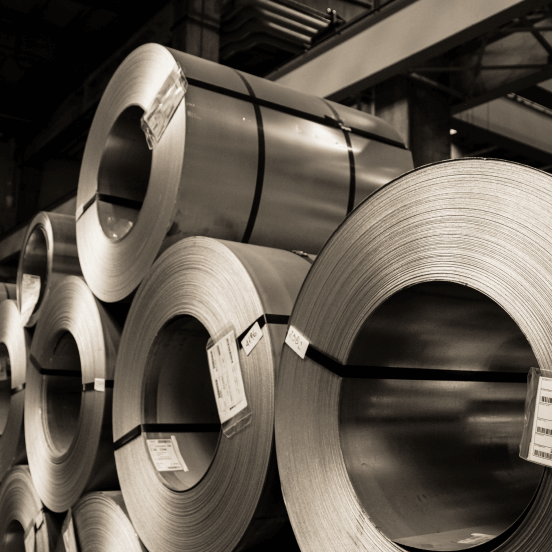

EN 10088-2 X20Cr13 1.4021 Stainless Steel Plate
1.4021 stainless steel plate: product overview and SHH STEEL sourcing
EN 10088-2 X20Cr13 1.4021 stainless steel plate is a martensitic flat product supplied to EN 10088-2, the European standard for stainless steel sheet, plate and strip for general purposes. X20Cr13 contains 0.16 – 0.25 % carbon and 12.0 – 14.0 % chromium, with up to 1.50 % manganese. With about twice the carbon of 1.4006 it reaches higher strength and hardness after quenching and tempering, while keeping the moderate corrosion resistance of 13 % chromium steels. EN 10088-2 lists cold rolled strip up to 8 mm and hot rolled strip up to 13.5 mm in the annealed condition (+A), thin cold rolled strip up to 3 mm in the hardened and tempered condition (+QT), and hot rolled plate up to 75 mm in +QT650 or +QT750, or annealed by agreement.
SHH STEEL works as a steel sourcing partner with long-term relationships with Chinese stainless mills that roll 13 % chromium martensitic strip and plate in annealed and heat-treated conditions. For large tonnages, the buyer can contract directly with a suitable mill, with SHH STEEL assisting for a modest service fee and handling follow-up and documents. For small orders we consolidate demand, so that 1 – 5 t lots are placed against genuine mill production instead of stock of unknown origin. Each shipment can be released after third-party inspection by TUV, ABS, BV, DNV, CCS or an agency the buyer nominates, and payment by TT or LC is accepted. The rest of this page covers the technical side of EN 10088-2 1.4021 and the steps we take so that the sheet that arrives is the sheet that was ordered.
The table below lists the concerns buyers raise most often when sourcing EN 10088-2 X20Cr13 sheet and plate from China, and how SHH STEEL deals with each of them.
| Buyer Concern | SHH STEEL Solution |
|---|---|
| Fake material or certificates | 1.4021 sits between 1.4006 and 1.4028 and differs from them mainly in carbon (0.16 – 0.25 %), which handheld XRF cannot measure; chemistry is checked by spark OES with chromium 12.0 – 14.0 %. Partner laboratories handle chemical analysis, hardness, surface inspection and ultrasonic testing, and 3.2 certificates with third-party witness are available. |
| Unsafe deposit | Payment by TT, LC or a TT + LC combination. For large valve, pump-shaft or turbine programmes the buyer can contract directly with the mill, with SHH STEEL assisting for a small service fee. |
| Quantity below mill minimum | 1.4021 plate is often bought as a few thick plates for shafts, valve trim or wear parts. SHH STEEL consolidates orders so 1 – 5 t lots can join a mill rolling or heat-treatment batch. |
| Delivery delays | A dedicated person follows up the delivery schedule with the mill, including quenching and tempering, and reports progress at rolling, heat treatment, testing and packing. |
| Fabrication needs | Our workshop provides plasma and laser cutting, sawing of thick plate and drilling to drawing; thermal cutting of hardenable 1.4021 is planned with edge allowance, and preheat is advised for any welding. |
EN 10088-2 vs ASTM A240 and JIS: standard selection for X20Cr13 plate
1.4021 is usually compared with ASTM A240 Type 420 sheet and plate (UNS S42000) and JIS SUS420J1. ASTM A240 Type 420 only sets a carbon minimum of 0.15 %, with chromium 12.0 – 14.0 % and manganese up to 1.00 %, so it covers 1.4021 and the higher-carbon 13 % chromium grades. JIS SUS420J1 has the same carbon range as 1.4021, 0.16 – 0.25 %.
| Item | EN 10088-2 1.4021 | ASTM A240 Type 420 | JIS SUS420J1 |
|---|---|---|---|
| Carbon | 0.16 – 0.25 % | 0.15 % min | 0.16 – 0.25 % |
| Chromium | 12.0 – 14.0 % | 12.0 – 14.0 % | 12.00 – 14.00 % |
| Manganese | ≤ 1.50 % | ≤ 1.00 % | ≤ 1.00 % |
| Delivery conditions | +A, +QT (strip), +QT650 / +QT750 (plate) | Annealed | Per JIS product standard |
Because Type 420 has an open-ended carbon range, a drawing that just says 420 does not fix the carbon level. SHH STEEL asks for the intended hardness or the EN grade so that 1.4021, 1.4028 or 1.4031 is matched correctly.
1.4021 does not appear in EN 10028-7:2016, whose martensitic grades are 1.4313 and 1.4418, so it is not a pressure-equipment grade under that standard.
EN 10088-2 1.4021 specification overview
| Item | EN 10088-2:2014 requirement / SHH STEEL practice |
|---|---|
| Standard | EN 10088-2:2014, Stainless steels, Part 2: Technical delivery conditions for sheet/plate and strip of corrosion resisting steels for general purposes |
| Steel name / number | X20Cr13 / 1.4021 |
| Structure | Martensitic, 13 % chromium, about 0.2 % carbon; standard grade in EN 10088-2 |
| Chemistry | Table 4 (cast analysis); product analysis tolerances in Table 5 |
| Room-temperature properties | Table 10, martensitic steels in the heat-treated condition |
| Delivery conditions | +A for C (≤ 8 mm) and H; +QT for C ≤ 3 mm; +QT650 or +QT750 for P, or +A by agreement |
| Elevated-temperature 0.2 % proof strength | Table 15, +QT650, 100 – 400 °C |
| Product forms listed | C (cold rolled strip) up to 3 mm (+QT) and 8 mm (+A); H (hot rolled strip) up to 13.5 mm (+A); P (hot rolled plate) up to 75 mm (+QT650, +QT750, or +A by agreement) |
| Heat treatment | Table A.4: annealing 730 – 790 °C; +QT strip: quench 950 – 1 050 °C, temper 200 – 350 °C; +QT650 / +QT750 plate: quench 950 – 1 010 °C, temper 700 – 780 / 620 – 700 °C |
| Process route / finish | 1C, 1E, 1D for hot rolled material; 2D, 2B for cold rolled |
| Dimensions and tolerances | EN ISO 18286 for hot rolled plate; EN ISO 9444-2 for hot rolled strip; EN ISO 9445 for cold rolled |
| Inspection document | EN 10204 2.2 by default; SHH STEEL normally issues 3.1, and 3.2 with a third-party inspector |
Edition note: the values on this page are taken from EN 10088-2:2014. A revised edition (EN 10088-2:2024) has since been published. If your contract names the newer edition, SHH STEEL checks the order against that text before production, and any difference is raised at the quotation stage rather than after rolling.
1.4021 chemical composition: heat analysis and product analysis tolerances
The 1.4021 chemical composition below is the cast (heat) analysis from EN 10088-2:2014 Table 4. Values are percentages by mass; a single figure is a maximum.
| C | Si | Mn | P | S | Cr |
|---|---|---|---|---|---|
| 0.16 – 0.25 | 1.00 | 1.50 | 0.040 | 0.015 | 12.0 – 14.0 |
Carbon defines the grade: below 0.16 % the steel would fall into the range of 1.4006 or 1.4024, and above 0.25 % into 1.4028. SHH STEEL checks carbon on every certificate as part of the 1.4021 chemical composition review, and can arrange spark OES analysis through a partner laboratory.
Product analysis tolerances (EN 10088-2 Table 5)
A product analysis is a check made on the delivered sheet. It is not mandatory under EN 10088-2; it is carried out when agreed at the time of enquiry and order, and SHH STEEL can arrange it through a partner laboratory. The permissible tolerances on the cast limits are:
| Element | Cast limit, % | Permissible tolerance, % | Product analysis limit, % |
|---|---|---|---|
| C | 0.16 – 0.25 | ± 0.01 (≤ 0.20 %) / ± 0.02 (> 0.20 %) | 0.15 – 0.27 |
| Si | ≤ 1.00 | + 0.05 | ≤ 1.05 |
| Mn | ≤ 1.50 | ± 0.04 | ≤ 1.54 |
| P | ≤ 0.040 | + 0.005 | ≤ 0.045 |
| S | ≤ 0.015 | + 0.003 | ≤ 0.018 |
| Cr | 12.0 – 14.0 | ± 0.15 | 11.85 – 14.15 |
Where several product analyses are made on one cast, individual results may exceed the maximum or fall below the minimum, but not both for the same element. If a product analysis is required, it should be stated in the order together with the Table 5 tolerances.
1.4021 mechanical properties in the annealed and quenched and tempered conditions
The 1.4021 mechanical properties below are the room-temperature values from EN 10088-2:2014 Table 10 for martensitic steels in the heat-treated condition. The values depend on the heat-treatment condition as well as on the product form.
| Product form | Max. thickness, mm | Condition | Hardness | Rp0.2 min, MPa | Rm, MPa | A min, % | KV2 |
|---|---|---|---|---|---|---|---|
| C – cold rolled strip | 3 | +QT | 44 – 50 HRC / 440 – 530 HV | — | — | — | — |
| C – cold rolled strip | 8 | +A | max. 95 HRB / 225 HBW | — | max. 700 | 15 | — |
| H – hot rolled strip | 13.5 | +A | max. 95 HRB / 225 HBW | — | max. 700 | 15 | — |
| P – hot rolled plate | 75 | +QT650 | — | 450 | 650 – 850 | 12 | by agreement |
| P – hot rolled plate | 75 | +QT750 | — | 550 | 750 – 950 | 10 | by agreement |
For product forms C and H in the annealed condition, hardness is normally determined, and the tensile test is used in referee testing. Thin hardened strip is specified by hardness only. Plates may also be delivered annealed, in which case the mechanical properties are agreed at enquiry and order.
Impact energy for quenched and tempered plate is by agreement, so it should be written into the order where toughness matters. SHH STEEL can arrange hardness, tensile and impact tests, witnessed by a third-party inspector when required.
Minimum 0.2 % proof strength at elevated temperature (EN 10088-2 Table 15, +QT650)
| Temperature, °C | 100 | 150 | 200 | 250 | 300 | 350 | 400 |
|---|---|---|---|---|---|---|---|
| Rp0.2 min, MPa | 420 | 410 | 400 | 385 | 365 | 335 | 305 |
EN 10088-2 gives these values for +QT650 only. For long service at higher temperatures, creep data from other sources are needed.
Heat treatment of X20Cr13 plate: annealing, hardening and tempering
EN 10088-2 Table A.4 gives the following guideline temperatures for 1.4021:
| Operation | Temperature, °C | Cooling |
|---|---|---|
| Hot forming | 1 100 – 800 | Slow cooling |
| Annealing (+A) | 730 – 790 | — |
| Hardening for +QT strip | 950 – 1 050 | Oil or air |
| Tempering for +QT strip | 200 – 350 | — |
| Hardening for +QT650 / +QT750 | 950 – 1 010 | Oil or air |
| Tempering for +QT650 | 700 – 780 | — |
| Tempering for +QT750 | 620 – 700 | — |
Table A.4 asks for slow cooling after hot forming, because 1.4021 hardens readily and can crack if cooled too quickly from forging or rolling temperatures. The annealed condition is soft and suited to blanking, forming and machining.
Low-temperature tempering at 200 – 350 °C, used for the hardened strip condition, keeps high hardness for wear and cutting duty; high-temperature tempering for +QT650 or +QT750 gives tougher plate for shafts and valve parts. The +QT650 and +QT750 designations refer to the minimum tensile strength levels. The Annex A temperatures are guidelines; actual furnace settings are chosen by the mill or heat treater, and we check that the delivery condition is stated on each certificate.
Physical properties of 1.4021 martensitic plate
The values below are approximate reference figures for X20Cr13 at room temperature, as listed in EN 10088-1 and reproduced in stockholder datasheets. They are suitable for design estimates and weight calculation; where a figure is critical, use EN 10088-1 itself.
| Property | Approximate value |
|---|---|
| Density | about 7.7 g/cm³ |
| Modulus of elasticity at 20 °C | about 215 GPa |
| Mean thermal expansion, 20 – 100 °C | 10.5 × 10⁻⁶ /K |
| Thermal conductivity at 20 °C | 30 W/(m·K) |
| Specific heat at 20 °C | about 460 J/(kg·K) |
| Electrical resistivity at 20 °C | 0.60 Ω·mm²/m |
| Magnetic behaviour | Ferromagnetic (magnetic) |
The steel is magnetic in both the annealed and the hardened condition. Thermal conductivity is about twice that of austenitic grades, which helps in shafts and turbine parts exposed to temperature changes.
Corrosion behaviour of X20Cr13 1.4021
1.4021 has the moderate corrosion resistance typical of 12 – 14 % chromium martensitic steels. A producer datasheet for 1.4021 (Ugima-X 4021) describes good resistance on suitably polished surfaces in moderately aggressive, non-chloride media and good resistance to oxidising atmospheres up to 600 °C, and reports a salt spray (ISO 9227) resistance of less than 300 h, similar to the other 12 – 14 % chromium martensitic grades. Corrosion resistance is best in the hardened condition with a smooth, clean surface.
| Environment | Typical behaviour |
|---|---|
| Fresh water and steam | Good; a main application in valves and turbines |
| Mild atmospheres and indoor use | Adequate when polished |
| Food contact | Possible; the producer datasheet cites suitability under EU regulation 1935/2004 for chromium above 13 % |
| Chlorides and seawater | Not recommended |
| Strong acids | Not recommended |
| Salt spray (ISO 9227) | Below 300 h per the producer datasheet |
Where corrosion resistance matters more than hardness, a ferritic grade such as EN 10088-2 1.4000 plate or an austenitic grade is usually a better choice. The statements above are taken from producer data and are not part of EN 10088-2.
Food-contact suitability depends on the actual chromium content and the surface finish, so it should be confirmed for the specific heat and part.
Weldability of 1.4021 martensitic plate: SHH STEEL workshop practice
1.4021 is weldable only with a controlled procedure. With about 0.2 % carbon, the weld and heat-affected zone harden strongly on cooling and are prone to cold cracking, more so than 1.4006.
- Preheat the parts; the temperature depends on thickness and restraint and should be taken from the qualified welding procedure or the filler supplier’s guidance.
- Use low-hydrogen processes and dry consumables: a matching martensitic filler where strength must match, or an austenitic filler where toughness is more important.
- Temper or re-harden and temper after welding to restore toughness, according to the procedure.
- Avoid welding quenched and tempered plate without a procedure that restores its properties.
- EN 10088-2 does not specify welding procedures; these are general industry practices.
These points reflect industry practice for 13 % chromium martensitic stainless steels rather than requirements of EN 10088-2, which does not specify welding procedures. In the SHH STEEL workshop, blanks and slit strips are cut with clean, burr-free edges so that seam, spot and tube welding run without edge preparation problems.
Formability, machinability and cutting of X20Cr13 plate in the SHH STEEL workshop
In the annealed condition 1.4021 strip can be blanked, bent and formed, and parts are often hardened afterwards. Quenched and tempered plate is normally only cut and machined.
Thermal cutting of hardenable plate creates a hard edge zone, so allowance for machining or a softening treatment may be needed; preheating thick plate before plasma or oxy-fuel cutting reduces the risk of edge cracks. Machinability is good in the annealed or high-tempered condition.
We run our own workshop next to the warehouse, so 1.4021 martensitic sheet and X20Cr13 plate can be delivered as cut pieces, sawn blocks, drilled parts or sheared strip instead of raw mill sizes. Details are on our steel cutting services and bending and forming services pages.
1.4021 plate sizes, thickness limits and tolerances
1.4021 covers thin hardened strip, annealed strip and heavy plate in EN 10088-2.
| Product form | Thickness range covered by EN 10088-2 | Typical width supplied (by mill) | Tolerance standard |
|---|---|---|---|
| C – cold rolled strip, +QT | up to 3 mm | by mill | EN ISO 9445-1 / EN ISO 9445-2 |
| C – cold rolled strip, +A | up to 8 mm | 1 000 – 1 250 mm | EN ISO 9445-1 / EN ISO 9445-2 |
| H – hot rolled strip, +A | up to 13.5 mm | 1 000 – 1 500 mm | EN ISO 9444-2 |
| P – hot rolled plate | up to 75 mm (+QT650 / +QT750, or +A by agreement) | 1 500 – 2 000 mm by enquiry | EN ISO 18286 |
For thick plate, state the heat-treatment condition, flatness and any ultrasonic testing requirement in the order. For bigger sizes than those in Table 10, mechanical values are to be agreed.
SHH STEEL can supply 1.4021 hot rolled plate and cold rolled strip in standard sizes or cut to your drawing, including cut blanks of thick plate for shafts and valve parts.
Surface finishes for EN 10088-2 X20Cr13 plate
Surface finish is ordered by the process route symbols of EN 10088-2 Table 6; trade names from ASTM and JIS are shown for reference. Not every route is available for every grade, and the mill confirms which ones it can supply.
| EN symbol | Description | Common trade name | Use for 1.4021 |
|---|---|---|---|
| 1C | Hot rolled, heat treated, not descaled | — | Plate to be machined all over |
| 1E | Hot rolled, heat treated, mechanically descaled | — | Plate for machining |
| 1D | Hot rolled, heat treated, pickled | No.1 | General hot rolled supply |
| 2D / 2B | Cold rolled, heat treated, pickled (skin passed for 2B) | No.1 (cold) / 2B | Strip for blanking and hardening |
Most 1.4021 plate is machined, so 1C or 1E is often the economical choice. Parts that rely on corrosion resistance in service should be ground or polished after heat treatment.
1.4021 equivalent grades: ASTM, GB and JIS cross-reference
Buyers looking for a 420 stainless steel equivalent in EN terms are most often offered 1.4021. The Chinese and Japanese grades match its carbon range closely; the American grade is broader.
| System | Nearest grade | Comment |
|---|---|---|
| EN / ISO | X20Cr13 / 1.4021 | Reference grade |
| ASTM / ASME | ASTM A240 Type 420 sheet and plate (UNS S42000) | Approximate; C 0.15 % min (no maximum), Mn ≤ 1.00 %, Ni ≤ 0.75 %, Mo ≤ 0.50 % |
| China (GB) | 20Cr13, ISC S42020, formerly 2Cr13, in GB/T 20878 and GB/T 4237 / GB/T 3280 | Close; C 0.16 – 0.25 %, Cr 12.00 – 14.00 % |
| Japan (JIS) | JIS G4305 SUS420J1 plate | Close; C 0.16 – 0.25 %, Mn ≤ 1.00 % |
As a 1.4021 equivalent, SUS420J1 and 20Cr13 are the closest matches; Type 420 also covers higher-carbon steels such as JIS G4305 SUS420J2 plate or 1.4028, so the carbon level should be agreed when a drawing names 420. See also AISI 420 stainless steel plate.
1.4021 vs 1.4006, 1.4028 and 1.4031
Compared with EN 10088-2 1.4006 plate, 1.4021 has more carbon and reaches higher strength after heat treatment, at the cost of weldability and toughness. Compared with 1.4028 and 1.4031, it has less carbon, so it is tougher and easier to weld but cannot reach the same hardness. Compared with ASTM A240 Type 410 sheet and plate, which corresponds to 1.4006, it is the stronger choice for shafts and wear parts.
Applications of 1.4021 martensitic plate
Typical applications of 1.4021 martensitic plate and sheet, as listed in stockholder datasheets, include:
- Turbine blades and parts
- Shafts and spindles
- Valve cones and seats in steam and water fittings
- Pump parts machined from plate
- Non-cutting surgical instruments such as tweezers and pliers
- Wear plates and liners in mildly corrosive service
1.4021 is not a pressure-equipment grade under EN 10028-7. Where welding is a main fabrication step, a lower-carbon grade such as 1.4006 or a weldable ferritic such as EN 10088-2 1.4003 plate may be simpler.
For machined parts, +QT650 and +QT750 give different balances of strength and machinability; for parts hardened after machining, order +A. SHH STEEL can advise on the condition for the part.
Common buyer concerns and our solutions
Most problems with 1.4021 come from confusion with neighbouring 13 % chromium grades and from the heat-treatment condition.
| Concern | What Usually Happens | How SHH STEEL Handles It |
|---|---|---|
| Wrong carbon level | 1.4006 or 1.4028 is supplied as 1.4021. | Carbon is checked on the certificate and by spark OES when required. |
| Wrong delivery condition | Plate arrives hardened when annealed was needed, or the reverse. | +A, +QT650 or +QT750 is written into the mill order and checked by hardness. |
| Weld or cutting cracks | Edges or welds crack because preheat was skipped. | Preheat and post-weld treatment guidance is given with the order. |
| Internal defects in thick plate | Laminations show during machining. | Ultrasonic testing to an agreed standard before shipment. |
| 420 ambiguity | The drawing says 420 without a carbon range. | The carbon level or EN grade is agreed before the order. |
None of these steps is complicated, but they need to be agreed at the start. When you send an enquiry, tell us which of these points matters most to you, and the order will be built around it.
Testing, certificates and lead time at SHH STEEL
Every 1.4021 order is supported by documents and checks that make the material traceable to the heat:
- Cast analysis with carbon and chromium checked
- Hardness test for +A strip; hardness (HRC/HV) for +QT strip; tensile test for +QT plate
- Impact test (KV2) for +QT650 plate when agreed
- Ultrasonic testing of thick plate when agreed
- Additional checks through our third-party testing service: PMI, dimensional, flatness and surface inspection
If the order does not name an inspection document, EN 10088-2 requires only a test report 2.2. Because this is rarely enough for valve and turbine or export work, SHH STEEL supplies an EN 10204 3.1 inspection certificate as standard and a 3.2 certificate when an independent inspector (TUV, ABS, BV, DNV, CCS or an agency you nominate) witnesses testing and countersigns the document.
Ordering example and lead time
Following the pattern of the example in EN 10088-2, a typical order line would read: 4 t hot rolled plate, 40 mm × 1 500 mm × 3 000 mm, EN 10088-2, steel X20Cr13 (1.4021), heat-treatment condition +QT650, process route 1D, inspection certificate 3.1 to EN 10204. Mill production lead time is generally 30 – 40 days from order confirmation, depending on the rolling schedule, the size and the tests requested; quenched and tempered plate includes the heat-treatment stage at the mill. Consolidated small lots follow the same mill schedule, and we send progress updates at rolling, testing and packing.
Why Work with SHH STEEL
- Mill relationships: long-term cooperation with Chinese stainless mills helps us secure competitive pricing and steadier delivery for 1.4021 and related martensitic and ferritic grades.
- Direct mill contracts: for larger tonnages you can contract directly with a suitable mill, for a modest service fee, while we handle follow-up and documents.
- Order consolidation: 1 – 5 t lots are combined so they can be placed against genuine mill production.
- Own workshop: slitting, cut-to-length, laser cutting, bending and protective film before shipment.
- Inspection and certificates: third-party inspection by TUV, ABS, BV, DNV, CCS or your nominated agency, with EN 10204 3.1 or 3.2 certificates.
- Flexible payment: TT, LC or a combination of both.
- Port logistics: coil and sheet are packed seaworthy with heat-number labels and shipped through our worldwide shipping service, together with other grades if needed.
As a 1.4021 plate supplier SHH STEEL also stocks and sources the wider range of stainless steel sheets and plates, so mixed orders of different stainless grades can travel in one container with one set of paperwork.
FAQ
- What is 1.4021 stainless steel equivalent to?
- The closest matches are JIS SUS420J1 and Chinese 20Cr13. SUS420J1 in JIS G 4304 and G 4305 has the same carbon range as 1.4021, 0.16 – 0.25 %, with 12.00 – 14.00 % chromium. 20Cr13, ISC code S42020 and formerly 2Cr13, in GB/T 20878, GB/T 4237 and GB/T 3280 also has 0.16 – 0.25 % carbon and 12.00 – 14.00 % chromium. In America, Type 420, UNS S42000, in ASTM A240 and ASME SA-240 is the usual cross-reference, but it only sets a carbon minimum of 0.15 % and limits manganese to 1.00 %, so it also covers higher-carbon grades such as 1.4028; it is an approximate equivalent. The EN grade allows up to 1.50 % manganese. If a drawing names 420, SHH STEEL agrees the carbon level or EN grade before ordering, so the hardness after heat treatment is what the designer expects.
- What is the chemical composition of 1.4021?
- EN 10088-2:2014 Table 4 gives a cast analysis of 0.16 – 0.25 % carbon, maximum 1.00 % silicon, 1.50 % manganese, 0.040 % phosphorus and 0.015 % sulphur, and 12.0 – 14.0 % chromium. No nickel or molybdenum is specified. Carbon defines the grade and its hardness after quenching: below the range the steel overlaps 1.4006 or 1.4024, above it 1.4028. A product analysis is not mandatory, but can be agreed in the order, with tolerances from Table 5; for carbon these are ± 0.01 % up to 0.20 % and ± 0.02 % above 0.20 %. Because handheld XRF analysers cannot measure carbon reliably, SHH STEEL checks carbon on each mill certificate and can arrange spark optical emission analysis through a partner laboratory when a buyer needs proof of the grade.
- What are the mechanical properties of 1.4021?
- EN 10088-2:2014 Table 10 gives properties by product form and condition. Annealed (+A) cold rolled strip up to 8 mm and hot rolled strip up to 13.5 mm must have no more than 95 HRB or 225 HBW, a tensile strength of no more than 700 MPa and at least 15 % elongation. Hardened and tempered (+QT) cold rolled strip up to 3 mm must have 44 – 50 HRC or 440 – 530 HV. Hot rolled plate up to 75 mm in +QT650 needs a minimum proof strength of 450 MPa, a tensile strength of 650 – 850 MPa and 12 % elongation; in +QT750 the figures are 550 MPa, 750 – 950 MPa and 10 %. Impact energy is by agreement. Table 15 gives proof strength in +QT650 from 420 MPa at 100 °C to 305 MPa at 400 °C. SHH STEEL can arrange added tests.
- Which delivery condition should I order for 1.4021?
- It depends on what you do with the material. For parts machined from plate and used as delivered, such as shafts or valve trim, +QT650 gives a tougher, more machinable plate and +QT750 a stronger one. For parts that are blanked, formed or machined and then hardened by the buyer, order annealed material, +A, which is soft and easy to work. For thin parts that need high hardness straight away, EN 10088-2 lists hardened and tempered cold rolled strip up to 3 mm with 44 – 50 HRC. Annealed plate is possible by agreement, with properties agreed in the order. Whatever the choice, state it clearly together with any impact test requirement. SHH STEEL writes the condition into the mill order, checks it on the certificate and can confirm it by hardness testing before shipment.
- Can 1.4021 be welded?
- It can, but only with a controlled procedure, and it is less weldable than 1.4006 because of its higher carbon. On cooling, the weld and heat-affected zone form hard martensite that is prone to cold cracking, especially if hydrogen is present. Industry practice is to preheat the parts, keep the interpass temperature controlled, use low-hydrogen processes and dry consumables, and temper or re-harden and temper after welding to restore toughness. The preheat and post-weld temperatures depend on thickness and restraint and should come from a qualified procedure or the filler supplier. A matching martensitic filler gives similar strength; an austenitic filler gives a tougher, softer weld. EN 10088-2 does not specify welding procedures. If welding is a main fabrication step, SHH STEEL can help compare 1.4021 with lower-carbon or ferritic alternatives.
- What is the lead time and minimum order for 1.4021 plate?
- Mill production lead time is usually 30 – 40 days from order confirmation, depending on the rolling schedule, the size, the heat-treatment condition and the tests required. Quenched and tempered plate includes a heat-treatment stage at the mill, and ultrasonic or impact testing adds a little time. 1.4021 is a standard grade and is rolled regularly, but thick plate in a specific condition is not always available from stock. Mill minimum quantities for a dedicated rolling are often higher than a single project needs. SHH STEEL deals with this by consolidating several customer orders into one mill rolling or heat-treatment batch, which makes lots of 1 – 5 t practical. For larger tonnages, a buyer can contract directly with a suitable mill, with SHH STEEL assisting for a modest service fee. Cutting and drilling in our workshop normally adds a few days.
Ordering EN 10088-2 1.4021 Plate from SHH STEEL
EN 10088-2 X20Cr13 1.4021 is the 0.2 % carbon, 13 % chromium martensitic steel of the 420 type, supplied annealed or quenched and tempered for shafts, valve parts, turbine components and instruments. Choosing it is the easy part. Getting genuine material that matches the certificate, in the gauge and finish your parts need and on a predictable schedule, is where a sourcing partner earns its place, and that is the work SHH STEEL does every day through long-term mill cooperation, consolidation and its own workshop.
The next step is simple. Send SHH STEEL your drawing, or an enquiry with the quantity, thickness, width, finish and delivery destination, and we will judge whether a direct mill contract or consolidation with processing fits your order better, and quote accordingly. Send your sizes and quantities for a quotation.
Quality Steel Needed? Inquire for Offers
Related Products