

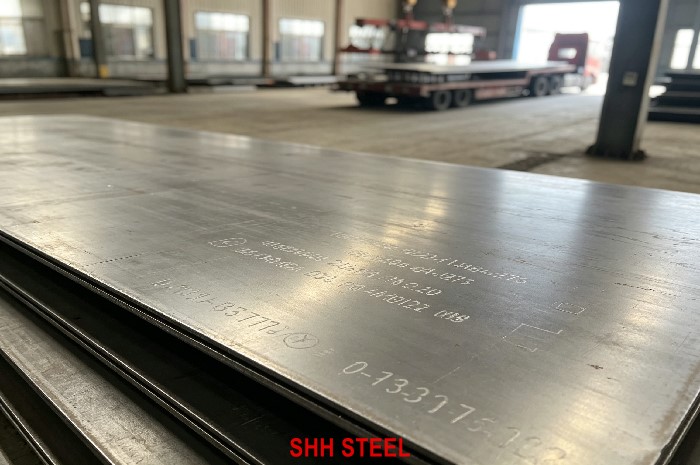
ASTM A508/A508M Pressure Vessel Forgings | A508 Vacuum-Treated Steel Forgings
What are ASTM A508/A508M pressure vessel forgings?
ASTM A508/A508M Pressure Vessel Forgings covers quenched and tempered, vacuum-treated carbon and alloy steel forgings for pressure vessels, such as those used in reactor systems. Typical parts are vessel closures, shells, flanges, tube sheets, rings, heads and similar forged components. These are forgings made to a purchaser-approved drawing, not steel plates.
The current ASTM edition is A508/A508M-23a, approved 1 November 2023 and published November 2023, which replaced A508/A508M-23. ASTM notes that for ASME Code applications the related specification is SA-508/SA-508M in Section II of the Code. The companion page is ASME SA508/SA508M. The two are closely related and dual certification is often available, but an order written to one is not automatically satisfied by a certificate to the other.
The specification lists Grade 1, Grade 1A, Grade 2 Classes 1 and 2, Grade 3 Classes 1 and 2, Grade 4N Classes 1, 2 and 3, Grade 5 Classes 1 and 2, Grade 22 Classes 3, 4, 5, 6 and 7, Grade 3V, Grade 3VCb and Grade 6 Classes 1 to 4. All grades are regarded as weldable under proper conditions with an approved welding procedure. Values may be ordered in inch-pound units or, by naming the M designation, in SI units; the two systems are used independently.
SHH STEEL produces and exports ASTM A508/A508M forgings as a producer, exporter and mill agent, to the grade, class, drawing, tests and inspection document written on the enquiry. This standard is listed in our ASTM A508 range under Nuclear-Grade Steel Plates.
Historical designations: earlier editions used Class numbers. The current grade-and-class designations correspond as follows.
| Current designation | Former designation |
|---|---|
| Grade 1 | Class 1 |
| Grade 1A | Class 1A |
| Grade 2 Class 1 | Class 2 |
| Grade 2 Class 2 | Class 2A |
| Grade 3 Class 1 | Class 3 |
| Grade 3 Class 2 | Class 3A |
| Grade 4N Class 1 | Class 4 |
| Grade 4N Class 2 | Class 4A |
| Grade 4N Class 3 | Class 4B |
| Grade 5 Class 1 | Class 5 |
| Grade 5 Class 2 | Class 5A |
| Grade 22 Class 3 | Class 22B |
| Grade 22 Classes 4, 5, 6 and 7 | No former designation |
| Grade 3V | Class 3V |
Material specification for ASTM A508/A508M forgings
The items below summarise the specification structure. Forging size, weight, shape and the inspection document are stated on the enquiry and the forging drawing, not listed here as stock or capacity.
| Parameter | Detail |
|---|---|
| Specification | ASTM A508/A508M-23a, Standard Specification for Quenched and Tempered Vacuum-Treated Carbon and Alloy Steel Forgings for Pressure Vessels |
| Product form | Forgings: vessel closures, shells, flanges, tube sheets, rings, heads and similar parts |
| Grades and classes | Grade 1, Grade 1A, Grade 2 Classes 1 and 2, Grade 3 Classes 1 and 2, Grade 4N Classes 1, 2 and 3, Grade 5 Classes 1 and 2, Grade 22 Classes 3, 4, 5, 6 and 7, Grade 3V, Grade 3VCb and Grade 6 Classes 1 to 4 |
| General requirements | ASTM A788/A788M, for ordering, manufacture, testing, retesting, marking, certification and product-analysis tolerances; where A508 and A788 conflict, A508 prevails |
| Melting | Basic electric furnace, or secondary ladle refining or remelting under the A788 rules |
| Vacuum treatment | Molten steel vacuum treated before or during ingot pouring to remove objectionable gases, particularly hydrogen |
| Heat treatment | Preliminary heat treatment, then austenitize, liquid quench by spray or immersion, and temper at a subcritical temperature |
| Mechanical tests | Tension tests to Table 2 and Charpy V-notch tests to Table 3, or Supplementary Requirement S10 instead of Table 3 |
| Nondestructive examination | Magnetic particle and ultrasonic examination (longitudinal wave and angle beam) as the specification requires |
| Ordering documents | Purchaser-approved forging drawing with pre-quench and finished dimensions, significantly loaded surfaces and test locations |
| Our supply | We produce and export ASTM A508/A508M forgings to the grade, class, test method and supplementary requirements written on the order |
Chemical composition of ASTM A508/A508M grades
Heat analysis shall meet Table 1 of the specification. The values below are those of A508/A508M-23a. Classes within a grade share the grade chemistry. Grades 1 and 1A have different chemistries but the same mechanical requirements.
| Element | Grade 1 | Grade 1A | Grade 2 | Grade 3 | Grade 4N |
|---|---|---|---|---|---|
| C | 0.35 max | 0.30 max | 0.27 max | 0.25 max | 0.23 max |
| Mn | 0.40–1.05 | 0.70–1.35 | 0.50–1.00 | 1.20–1.50 | 0.20–0.40 |
| P | 0.025 max | 0.025 max | 0.025 max | 0.025 max | 0.020 max |
| S | 0.025 max | 0.025 max | 0.025 max | 0.025 max | 0.020 max |
| Si | 0.40 max | 0.40 max | 0.40 max | 0.40 max | 0.40 max |
| Ni | 0.40 max | 0.40 max | 0.50–1.00 | 0.40–1.00 | 2.8–3.9 |
| Cr | 0.25 max | 0.25 max | 0.25–0.45 | 0.25 max | 1.50–2.00 |
| Mo | 0.10 max | 0.10 max | 0.55–0.70 | 0.45–0.60 | 0.40–0.60 |
| V | 0.05 max | 0.05 max | 0.05 max | 0.05 max | 0.03 max |
| Nb (Cb) | 0.01 max | 0.01 max | 0.01 max | 0.01 max | 0.01 max |
| Cu | 0.20 max | 0.20 max | 0.20 max | 0.20 max | 0.25 max |
| Ca | 0.015 max | 0.015 max | 0.015 max | 0.015 max | 0.015 max |
| B | 0.003 max | 0.003 max | 0.003 max | 0.003 max | 0.003 max |
| Ti | 0.015 max | 0.015 max | 0.015 max | 0.015 max | 0.015 max |
| Al (total) | 0.030 max | 0.030 max | 0.030 max | 0.030 max | 0.025 max |
| Element | Grade 5 | Grade 22 | Grade 3V | Grade 3VCb | Grade 6 |
|---|---|---|---|---|---|
| C | 0.23 max | 0.11–0.15 | 0.10–0.15 | 0.10–0.15 | 0.28–0.33 |
| Mn | 0.20–0.40 | 0.30–0.60 | 0.30–0.60 | 0.30–0.60 | 0.75–1.15 |
| P | 0.020 max | 0.015 max | 0.020 max | 0.020 max | 0.025 max |
| S | 0.020 max | 0.015 max | 0.020 max | 0.010 max | 0.025 max |
| Si | 0.30 max | 0.35 max | 0.10 max | 0.10 max | 0.35 max |
| Ni | 2.8–3.9 | 0.25 max | — | 0.25 max | 0.75–0.95 |
| Cr | 1.50–2.00 | 2.00–2.50 | 2.8–3.3 | 2.7–3.3 | 0.70–1.00 |
| Mo | 0.40–0.60 | 0.90–1.10 | 0.90–1.10 | 0.90–1.10 | 0.30–0.45 |
| V | 0.08 max | 0.02 max | 0.20–0.30 | 0.20–0.30 | 0.05 max |
| Nb (Cb) | 0.01 max | 0.01 max | 0.01 max | 0.015–0.070 | 0.01 max |
| Cu | 0.25 max | 0.25 max | 0.25 max | 0.25 max | 0.25 max |
| Ca | 0.015 max | 0.015 max | 0.015 max | 0.0005–0.0150 | 0.015 max |
| B | 0.003 max | 0.003 max | 0.001–0.003 | 0.003 max | 0.003 max |
| Ti | 0.015 max | 0.015 max | 0.015–0.035 | 0.015 max | 0.015 max |
| Al (total) | 0.025 max | 0.025 max | 0.015 max | 0.015 max | 0.025 max |
Notes to Table 1: for Grade 22 Classes 5, 6 and 7 with a section thickness at heat treatment of 8 in. [200 mm] or more, carbon is held to 0.13–0.15 % and manganese to 0.50–0.60 %. When required by the purchaser, a minimum silicon of 0.15 % applies to Grades 1, 1A, 2, 3 and 4N. Columbium and niobium are alternative names for the same element. Aluminium is reported as total soluble plus insoluble aluminium.
A product analysis is made from a forging representing each heat or multiple heat. Product-analysis tolerances of A788/A788M apply to manganese, nickel, chromium, molybdenum and vanadium only, and boron is not subject to product analysis. Supplementary Requirements S7, S8, S9 and S11 add further chemistry controls when ordered.
Mechanical properties of ASTM A508/A508M grades and classes
Table 2 of the specification (A508/A508M-23a) sets tensile strength, 0.2 % offset yield strength, elongation and reduction of area. Grades sharing a column share the same requirements, for example Grade 2 Class 1 and Grade 3 Class 1. The minimum tempering temperatures are those of clause 5.2.2, which apply unless Supplementary Requirement S13 is specified for Grades 2 and 3.
| Grade and class | Former designation | Tensile strength, MPa [ksi] | Yield strength 0.2 % offset, min, MPa [ksi] | Elongation in 50 mm [2 in.], min, % | Reduction of area, min, % | Minimum tempering temperature |
|---|---|---|---|---|---|---|
| Grade 1 | Class 1 | 485–655 [70–95] | 250 [36] | 20 | 38 | 620 °C [1150 °F] |
| Grade 1A | Class 1A | 485–655 [70–95] | 250 [36] | 20 | 38 | 620 °C [1150 °F] |
| Grade 2 Class 1 | Class 2 | 550–725 [80–105] | 345 [50] | 18 | 38 | 650 °C [1200 °F] |
| Grade 3 Class 1 | Class 3 | 550–725 [80–105] | 345 [50] | 18 | 38 | 650 °C [1200 °F] |
| Grade 2 Class 2 | Class 2A | 620–795 [90–115] | 450 [65] | 16 | 35 | 620 °C [1150 °F] |
| Grade 3 Class 2 | Class 3A | 620–795 [90–115] | 450 [65] | 16 | 35 | 620 °C [1150 °F] |
| Grade 4N Class 1 | Class 4 | 725–895 [105–130] | 585 [85] | 18 | 45 | 595 °C [1100 °F] |
| Grade 5 Class 1 | Class 5 | 725–895 [105–130] | 585 [85] | 18 | 45 | 595 °C [1100 °F] |
| Grade 4N Class 2 | Class 4A | 795–965 [115–140] | 690 [100] | 16 | 45 | 595 °C [1100 °F] |
| Grade 5 Class 2 | Class 5A | 795–965 [115–140] | 690 [100] | 16 | 45 | 595 °C [1100 °F] |
| Grade 4N Class 3 | Class 4B | 620–795 [90–115] | 485 [70] | 20 | 48 | 605 °C [1125 °F] |
| Grade 22 Class 3 | Class 22B | 585–760 [85–110] | 380 [55] | 18 | 45 | 650 °C [1200 °F] |
| Grade 22 Class 4 | — | 585–760 [85–110] | 415 [60] | 20 | 35 | 593 °C [1100 °F] |
| Grade 22 Class 5 | — | 655–825 [95–120] | 515 [75] | 18 | 35 | 593 °C [1100 °F] |
| Grade 22 Class 6 | — | 690–860 [100–125] | 550 [80] | 18 | 35 | 593 °C [1100 °F] |
| Grade 22 Class 7 | — | 725–895 [105–130] | 585 [85] | 18 | 35 | 593 °C [1100 °F] |
| Grade 3V | Class 3V | 585–760 [85–110] | 415 [60] | 18 | 45 | 675 °C [1250 °F] |
| Grade 3VCb | — | 585–760 [85–110] | 415 [60] | 18 | 45 | 675 °C [1250 °F] |
| Grade 6 Class 1 | — | 585–760 [85–110] | 415 [60] | 20 | 35 | Per specification |
| Grade 6 Class 2 | — | 655–825 [95–120] | 515 [75] | 18 | 35 | Per specification |
| Grade 6 Class 3 | — | 690–860 [100–125] | 550 [80] | 18 | 35 | Per specification |
| Grade 6 Class 4 | — | 725–895 [105–130] | 585 [85] | 18 | 35 | Per specification |
Specimens are standard 0.5 in. [12.5 mm] round tension bars with a 2 in. [50 mm] gauge length, taken after quenching and tempering. Their number and position depend on forging weight and heat-treated length, from one prolongation specimen for smaller forgings up to two specimens at each end for forgings over 10 000 lb [4540 kg] and 80 in. [2032 mm] long. Test locations follow Method 1 (t by 2t from the area of significant loading) or Method 2 (1/4 TC by TC, where TC is the controlling cross-section thickness), as stated on the order. Small forgings up to 1000 lb [455 kg] heat treated in one charge are all Brinell tested, and untested pieces must be within 20 HB of the tested forging.
Charpy V-notch impact testing is required to Table 3 of the specification, with one set of three specimens from each tension-test location, or to Supplementary Requirement S10 when that is ordered instead. Impact temperature and energy values depend on the grade and class; we confirm them against the current specification on each order rather than reprint them here. Simulated post-weld heat treatment of the test material applies when Supplementary Requirement S1 is ordered.
Heat treatment and delivery condition of ASTM A508/A508M forgings
All A508 grades are delivered quenched and tempered. After forging, the parts are cooled for substantially complete transformation of austenite; a preliminary heat treatment may be applied for machinability and to condition the forging for the final treatment.
- Heat treatment for properties: austenitize, then liquid quench by spraying or immersion. For Grade 4N Classes 1 and 3 the austenitizing temperature is 840–895 °C [1540–1640 °F].
- Tempering: subcritical, held at least one-half hour per inch of maximum section thickness, at not less than the grade minimum shown in Mechanical Properties.
- Grades 1, 1A, 2 and 3 may use a multiple-stage austenitizing cycle: full austenitize and quench, then intercritical reheating and a second quench, followed by subcritical tempering.
- Grade 22 Classes 4 to 7 are melted to a fine-grain practice giving a prior austenite grain size of 5 or finer.
- Supplementary Requirement S14 adds specified cooling rates from the tempering temperature; S1 adds simulated post-weld heat treatment of test material.
We produce and export ASTM A508/A508M forgings in the quenched-and-tempered condition only. Forgings are supplied rough-machined or finish-machined to the approved drawing as written on the order.
Welding and repair welding
The specification regards all grades as weldable under proper conditions, provided the welding procedure and inspection follow approved methods for the grade. Higher-strength and higher-alloy grades such as Grade 4N, Grade 5, Grade 22 and Grade 3V need closer control of preheat, interpass temperature, heat input and post-weld heat treatment, set by the qualified procedure and the construction code.
Repair welding of the forging is permitted only at the option of the purchaser, with qualified procedures and welders and with the repair recorded as the specification requires. An order that does not permit repair welding should say so.
Dimensions, drawing control and examination
A508 forgings are made to a purchaser-approved drawing that shows the pre-quench dimensions, the finished dimensions, the surfaces under significant loading and the mechanical test locations. Dimensional tolerances, machining allowances and surface finish follow that drawing and the general requirements of A788/A788M; there is no plate-style thickness tolerance table.
Magnetic particle examination is performed to Practice A275/A275M, or by AC yoke to Practice A966/A966M when the purchaser specifies it. Ultrasonic examination uses longitudinal-wave and angle-beam methods with A388/A388M practice. Examination stage, scanning coverage and acceptance criteria are those of the specification and the purchase order; we do not substitute our own acceptance levels. Drop-weight testing to ASTM E208 applies where a supplementary or Code requirement calls for it.
Applications and specification limits
We produce and export these forgings for pressure-vessel parts that need quenched-and-tempered, vacuum-degassed steel with controlled chemistry and through-section properties, for example reactor and steam-generator shells and heads, closure flanges, nozzles, tube sheets and rings, and heavy-wall hydroprocessing or power-plant vessel forgings. Grade 3 Class 1 and Grade 2 Class 1 are the classic Mn-Ni-Mo and Ni-Cr-Mo reactor-vessel forging grades; Grades 4N and 5 are Ni-Cr-Mo steels with 2.8–3.9 % nickel for higher strength and toughness; Grade 22 is a 2¼Cr-1Mo forging steel and Grades 3V and 3VCb are vanadium-modified 3Cr-1Mo steels, used for elevated-temperature and hydrogen-service vessels; Grade 6 is a Ni-Cr-Mo grade offered in four strength classes.
Allowable stresses, temperature limits and toughness rules come from the construction code, not from the grade name.
A508/A508M and SA-508/SA-508M forgings are widely used for reactor pressure vessel parts, but neither the specification nor its listing in our Nuclear-Grade Steel Plates range is in itself a nuclear-class qualification, an RCC-M qualification or an ASME Section III certification. Nuclear construction adds its own requirements, such as Section III fracture-toughness testing, material organization quality-system rules, supplementary requirements and project-specific chemistry limits, and these must be written on the purchase order.
Compare ASTM A508/A508M forgings with related vessel steels
A508/SA508 forgings are often used together with reactor and heavy-vessel plate in the same vessel. The plates below are related by service, not equivalent products: a forging specification and a plate specification have different product forms, test rules and Code listings.
| Product | Form | Chemistry family | Heat treatment | Relation to A508 / SA508 |
|---|---|---|---|---|
| ASTM A508/A508M Grade 3 Class 1 (this standard) | Forging | Mn-Ni-Mo | Quenched and tempered, vacuum treated | — |
| ASME SA533 Type B Class 1 | Plate | Mn-Mo-Ni | Quenched and tempered | Plate partner for Grade 3 Class 1 type vessels; not a forging substitute |
| ASME SA533 Type B Class 2 | Plate | Mn-Mo-Ni | Quenched and tempered | Higher-strength plate class; not a forging substitute |
| ASTM A302 Grade B / ASME SA302 Grade B | Plate | Mn-Mo | Normalized or as specified | Older vessel plate chemistry; not a forging substitute |
| ASME SA387 Grade 22 Class 2 / ASTM A387 Grade 22 Class 2 | Plate | 2¼Cr-1Mo | Normalized and tempered or Q&T | Plate partner for Grade 22 type forgings |
| EN 10028-2 20MnMoNi4-5 | Plate | Mn-Mo-Ni | Q&T | European plate of similar chemistry family |
| ASTM A336/A336M | Forging | Various alloy grades | As specified per grade | Alloy forgings for pressure and high-temperature parts; different scope, no vacuum-treated Q&T reactor focus |
| ASTM A541/A541M | Forging | Carbon and alloy grades | Quenched and tempered | Q&T pressure-vessel component forgings with similar grade names; a separate specification |
Equivalent and related forging grades by country
The designations below are near equivalents or related forging grades, mostly for Grade 3 Class 1 and Grade 2 Class 1. They are not certified equivalents. Chemistry windows, heat treatment, test location, impact and drop-weight rules, and the governing code must match the project before any substitution. Grades without a live page on this site are shown as plain text.
| Country / region | Standard | Grade | Similarity | Caveat |
|---|---|---|---|---|
| United States | ASME SA508/SA508M | Same grade and class | ASME Code companion of the ASTM specification | Order and certify to the designation the design requires; dual certification by agreement |
| Europe | EN 10222-2 | 20MnMoNi4-5 | Mn-Mo-Ni forging steel for pressure purposes, similar family to Grade 3 Class 1 | Different test and heat-treatment rules |
| Germany (legacy) | DIN / KTA | 20MnMoNi5-5 | Mn-Mo-Ni reactor forging steel similar to Grade 3 Class 1 | Nuclear code rules apply separately |
| France | RCC-M M2111 | 16MND5 / 18MND5 | Mn-Ni-Mo reactor forging steels similar to Grade 3 Class 1 | A separate code with its own qualification; not covered by A508 certification |
| Japan | JIS G3204 | SFVQ1A / SFVQ2A | Q&T vacuum-treated forgings for pressure vessels, similar to Grade 3 Class 1 and Grade 2 Class 1 | Different strength and test details |
| United States | ASTM A541/A541M | Grade 3 Class 1, Grade 2 Class 1 | Similar grade naming for Q&T pressure-vessel component forgings | Separate specification; not interchangeable by name |
Why choose SHH STEEL for ASTM A508/A508M forgings
- SHH STEEL produces and exports ASTM A508/A508M quenched-and-tempered, vacuum-treated forgings as a producer, exporter and mill agent
- We review the forging drawing, test location method and supplementary requirements before quoting
- We keep ASTM A508/A508M and ASME SA-508/SA-508M designations distinct and quote dual certification only when it is confirmed
- We do not present the listing as a nuclear qualification; project and Code requirements are written on the order
- We match certification and inspection documents to the purchase order
How to enquire for ASTM A508/A508M forgings
| Item | What to specify |
|---|---|
| Specification and edition | ASTM A508/A508M, with edition year, grade and class |
| Forging drawing | Purchaser-approved drawing with pre-quench and finished dimensions, significantly loaded surfaces and test locations |
| Test location method | Method 1 (t by 2t) or Method 2 (1/4 TC by TC) |
| Supplementary requirements | For example S1 simulated PWHT, S10 impact alternative, S13 tempering, S14 cooling rates, and chemistry supplements S7, S8, S9, S11, only when needed |
| NDE | Magnetic particle method (A275 or AC yoke A966) and ultrasonic requirements beyond the specification, if any |
| Repair welding | Permitted or not permitted |
| Code and project requirements | ASME Section III or VIII, nuclear quality-system or other project rules, written on the order |
| Documentation | Certification required, for example EN 10204 3.1 or 3.2, or the Code-required certification |
FAQ
-
What is the current edition of ASTM A508/A508M?
- A508/A508M-23a, approved 1 November 2023, which replaced A508/A508M-23. Order the edition your design documents name.
-
Is ASTM A508 a plate specification?
- No. A508 covers quenched and tempered, vacuum-treated forgings such as shells, heads, closures, flanges, tube sheets and rings, made to a purchaser-approved drawing.
-
What do the old A508 Class numbers correspond to?
- Former classes were redesignated as grades: Class 1 is now Grade 1, Class 2 is Grade 2 Class 1, Class 2A is Grade 2 Class 2, Class 3 is Grade 3 Class 1, Class 3A is Grade 3 Class 2, Class 4 is Grade 4N Class 1, and Class 22B is Grade 22 Class 3.
-
Are Grade 1 and Grade 1A the same?
- They have the same mechanical requirements but different chemistries. Grade 1A allows higher manganese and lower carbon than Grade 1.
-
What should a quotation enquiry include?
- The A508/A508M edition, grade and class, forging drawing, test location method, supplementary requirements, NDE and repair-welding position, any Code or project rules, and the certification required.
Request a quotation
Contact SHH STEEL for a quotation for ASTM A508/A508M quenched and tempered vacuum-treated steel forgings. Please send the forging drawing, grade and class, quantity, finished weight if known, delivery destination and preferred delivery schedule so we can review your production and export requirements.
State the test location method, any supplementary requirements, NDE beyond the specification, whether repair welding is permitted, and the certification and inspection document required.
If your design also names ASME SA-508/SA-508M, or a related forging such as EN 10222-2 20MnMoNi4-5 or RCC-M 16MND5, send the specification set with your enquiry. We will review dual certification and differences rather than assume the designations are interchangeable.
For a detailed quotation, email your material specification, drawing, quantity and delivery requirements to our team.
Contact: admin@steelspecs.com
Quality Steel Needed? Inquire for Offers
Related Products

