GB/T 9943 W4Mo3Cr4VSi High Speed Tool Steel Plate
What is W4Mo3Cr4VSi high-speed tool steel plate?
GB/T 9943 W4Mo3Cr4VSi High Speed Tool Steel Plate is a silicon-bearing tungsten-molybdenum high-speed steel for tools that need a durable cutting or wear surface after final heat treatment. The silicon-bearing designation distinguishes this alloy from otherwise similar high-speed steels; steelmaking route, surface condition and the complete alloy balance matter when planning conversion.
GB/T 9943-2025 includes high-speed tool steel plate as well as other product forms. W4Mo3Cr4VSi is a separate grade designation, and the complete symbol belongs on the enquiry, drawing and material identification.
For W4Mo3Cr4VSi, the practical selection question is how to control surface condition and distortion during tool manufacture. Blank thickness, edge geometry, cutting continuity, coolant and the planned regrinding method all influence the result.
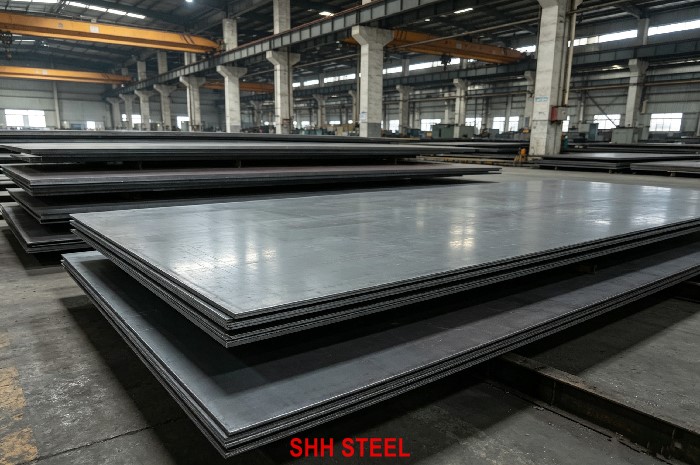
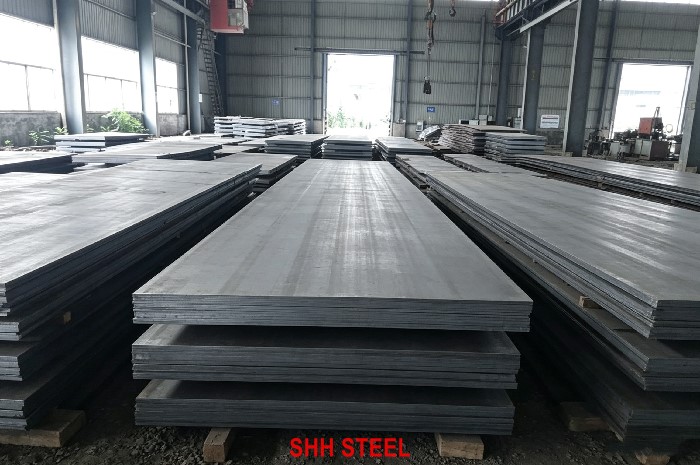
SHH STEEL produces and exports W4Mo3Cr4VSi plate for agreed toolmaking and inspection requirements. State whether the order is for raw plate, machining blanks or pieces with a specified surface finish.
Material specification for W4Mo3Cr4VSi
GB/T 9943 W4Mo3Cr4VSi should be ordered with the standard edition, product route and delivery condition stated explicitly. A plate enquiry needs plate dimensions and acceptance details, not a bar diameter or an assumed finished-tool hardness.
| Item | Order information |
|---|---|
| Designation | GB/T 9943 W4Mo3Cr4VSi |
| Standard edition | GB/T 9943-2025 |
| Product form | High-speed tool steel plate |
| Standard plate scope | Cold-rolled plate up to 4 mm nominal thickness; hot-rolled plate up to 15 mm nominal thickness |
| Usual delivery | Annealed; subsequent processing and finish as agreed |
| Annealed hardness | 255 HBW maximum |
| Dimensions | Thickness, width, length and machining allowance to the order |
| Inspection | Heat identity, analysis, delivery hardness and agreed plate examination |
Standard product-form limits are not a stock or manufacturing-capacity promise. Confirm the proposed rolling route, requested dimensions and finish when placing the enquiry.
Alloying and composition highlights for W4Mo3Cr4VSi
W4Mo3Cr4VSi derives its behavior from the combined alloy system, not from one element in isolation. Tungsten and molybdenum contribute to resistance to softening and secondary-hardening response; vanadium contributes wear-resisting carbides, while chromium influences hardenability.
| Element | Composition highlight, mass % |
|---|---|
| C | 0.83–0.93 |
| V | 1.20–1.80 |
| Cu | ≤0.25 |
| Ni | ≤0.30 |
Use the ordered grade and edition for heat-analysis acceptance. Check the heat certificate against the complete order chemistry, including residual elements and any agreed special requirements. A product-analysis requirement should state its acceptance basis separately from heat analysis.
Hardness and performance of W4Mo3Cr4VSi
W4Mo3Cr4VSi plate is normally machined in the annealed condition. The maximum annealed delivery hardness is 255 HBW. This describes the material supplied to the toolmaker, not the hardness of a finished cutting edge.
The silicon-bearing designation distinguishes this alloy from otherwise similar high-speed steels; steelmaking route, surface condition and the complete alloy balance matter when planning conversion. Final hardness, edge stability and toughness depend on section size, austenitizing, quenching, tempering and subsequent finishing. Specify finished-tool acceptance separately from delivery hardness.
For thin or finely profiled tools, distortion and local edge damage can matter as much as a hardness reading. Agree hardness measurement locations, surface preparation and any additional examination appropriate to the blank and its intended conversion.
Delivery condition and processing of W4Mo3Cr4VSi
Annealed W4Mo3Cr4VSi plate provides a practical starting condition for machining, blank preparation and tool shaping. State any ground, machined or other agreed finish separately so that dimensions and surface allowance refer to the same supply state.
Complete heavy stock removal before the final hardening route where the tool design allows it. Heat treatment should be selected for the exact alloy, section, furnace and tool geometry. Control decarburization, distortion and retained austenite as part of that route; a single universal temperature cycle is not suitable for every blank.
The supplied annealed condition, a hardened test specimen and the finished production tool are different acceptance states. Identify who performs the final treatment and finishing, and define the inspection responsibility for each stage.
Cutting, grinding and repair of W4Mo3Cr4VSi
W4Mo3Cr4VSi is a toolmaking material rather than ordinary weldable structural plate. Welding or local repair can create hard, crack-sensitive regions and should use a procedure developed for the actual alloy, section and existing heat-treatment condition.
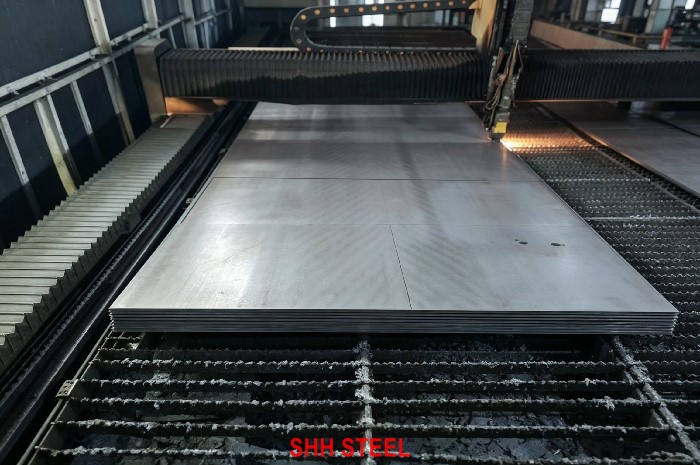
Thermal cutting and electrical discharge machining can leave an altered surface layer. Allow suitable cleanup before final service. During grinding, control heat input and coolant delivery to avoid burns, tensile surface damage and edge cracking.
For this grade, control surface condition and distortion during tool manufacture. Surface integrity and edge preparation should be checked after the operations most likely to affect the working surface.
Dimensions and surface requirements for W4Mo3Cr4VSi
GB/T 9943-2025 addresses cold-rolled and hot-rolled plate separately. Specify the actual route when agreeing thickness tolerance, flatness, edge condition and dimensional inspection. Bar straightness or equivalent-diameter rules should not be substituted for plate requirements.
For W4Mo3Cr4VSi blanks, allow for removal of surface scale, decarburized material and any cutting-affected layer before forming the working edge. State whether the specified dimensions are raw blank sizes or dimensions after machining or grinding.
Critical thin sections and long cutting edges need a clear flatness and finish requirement. Agree the inspection method and the allowance for later heat-treatment movement rather than assuming that a raw plate tolerance guarantees final tool geometry.
Applications and selection of W4Mo3Cr4VSi
W4Mo3Cr4VSi can be considered for form tools, small cutters and shaped cutting blanks. The silicon-bearing designation distinguishes this alloy from otherwise similar high-speed steels; steelmaking route, surface condition and the complete alloy balance matter when planning conversion.
Its selection should control surface condition and distortion during tool manufacture. Continuous cutting places different demands on the edge from interrupted cutting, where local impact and unsupported corners can cause chipping.
Compare workpiece material, cutting speed, coolant practice, chip load and the proposed sharpening method before choosing the blank. A harder or more highly alloyed tool is not automatically the most economical option if grinding cost, fracture risk or distortion dominates the job.
These are tool-selection considerations. Tool life and the allowable cutting duty depend on the complete tool design and manufacturing process, not the plate designation alone.
Compare W4Mo3Cr4VSi with other tool and engineering plates
W4Mo3Cr4VSi is a high-speed tool steel. The comparisons below distinguish it from carbon tool steels and an engineering alloy plate; they are not equivalent-grade declarations.
| Material | Alloy / type | Delivery condition | Typical application | Substitution limit |
|---|---|---|---|---|
| JIS G 4401 SK105 | Water-hardening carbon tool steel | As-hot-rolled plate; annealed or cold-rolled supply by agreement | Carbon-tool route for gauges, chisels and general cutting edges | Different alloy system and resistance to cutting heat; not a high-speed-steel substitute |
| JIS G 4401 SK120 | Carbon tool steel for wear-resistant cutting edges | As-hot-rolled plate; annealed or cold-rolled supply by agreement | Files, small punches and cutting tools | Wear resistance must be balanced against toughness; do not transfer its treatment or hardness rules |
| ASTM A829 Grade 4140 | Chromium-molybdenum alloy structural plate | Specify the condition and applicable ASTM edition on the order | Machinery parts and engineering components | An engineering alloy plate, not a high-speed cutting-tool specification |
For a proposed replacement for W4Mo3Cr4VSi, compare the complete chemistry, product form, delivery state, heat-treatment response and tool duty. Similar names or one overlapping hardness result do not establish interchangeability.
Equivalent and related designations for W4Mo3Cr4VSi
An overseas material can be selected only after comparing its complete specification with the purchase requirement. A family resemblance does not transfer chemical acceptance limits, sampling rules or heat-treatment instructions.
| System | Material selection approach | Substitution boundary |
|---|---|---|
| China | GB/T 9943 W4Mo3Cr4VSi | Keep the complete symbol, including any CW, Co or Al designation |
| Japan | High-speed tool steels under JIS G 4403 | Compare the individual grade and product-form provisions; JIS G 4401 carbon tool steels are a different family |
| United States | High-speed tool steels under ASTM A600 | Check the exact type, chemistry and acceptance state instead of treating a common workshop name as an alias |
| EN / ISO and national adoptions | High-speed tool steels under the specification required by the drawing | Match the exact designation and order requirements; do not infer a steel number from the GB name |
Send the proposed alternative designation with the drawing and tool application when requesting W4Mo3Cr4VSi. Substitution needs the purchaser’s agreement and an examination of both material requirements.
Why choose SHH STEEL for W4Mo3Cr4VSi
SHH STEEL produces and exports W4Mo3Cr4VSi plate for toolmaking enquiries that need a clear connection between alloy identity, delivery condition and the intended conversion route.
- Review the exact grade, rolling route and blank dimensions.
- Coordinate the required surface finish and machining allowance.
- State heat identification, analysis reporting and delivery-hardness requirements on the order.
- Plan inspection, packing and delivery details around the agreed material specification.
Availability, processing options and lead time are confirmed for the actual enquiry. Inspection documents and additional examination should be specified before order acceptance.
How to enquire for W4Mo3Cr4VSi plate
For W4Mo3Cr4VSi, send the drawing or blank schedule together with the intended tooling duty. Describe the operations that follow supply, including machining, final heat treatment and grinding, so the requested delivery condition and allowance suit the manufacturing plan.
| Enquiry item | Information to provide |
|---|---|
| Grade and edition | GB/T 9943 W4Mo3Cr4VSi; GB/T 9943-2025 or the edition required by the drawing |
| Dimensions | Thickness, width, length, quantity and raw or finished size basis |
| Delivery and finish | Annealed condition, rolling route and any ground or machined finish |
| Acceptance | Heat analysis, delivery hardness, surface condition and agreed inspection documents |
| Toolmaking | Cutting duty, edge geometry and responsibility for final treatment |
| Delivery | Packing, destination and required schedule |
FAQ
-
What is W4Mo3Cr4VSi used for?
- It can be considered for form tools, small cutters and shaped cutting blanks. Choose it by the actual cutting or wear duty, blank geometry and planned heat-treatment and finishing route.
-
Is W4Mo3Cr4VSi supplied at finished-tool hardness?
- Annealed plate is intended for further tool manufacture. Its maximum annealed delivery hardness is 255 HBW; final tool hardness and acceptance are agreed separately after the production treatment.
-
Does GB/T 9943-2025 include plate?
- Yes. Its scope includes cold-rolled plate up to 4 mm nominal thickness and hot-rolled plate up to 15 mm nominal thickness. Specify the actual product route and dimensions on the order.
-
Can a similar foreign grade be substituted?
- Only after the exact chemistry, delivery state, product form and acceptance requirements have been compared and the purchaser has agreed. Carbon tool steel and alloy structural plate are not automatic high-speed-steel replacements.
-
What should an enquiry for W4Mo3Cr4VSi include?
- Provide the full grade, standard edition, thickness, width, length, quantity, delivery condition and finish. Add the drawing, tooling duty, inspection requirements, destination and delivery schedule. Email SHH STEEL at admin@steelspecs.com.
Request a quotation
Request a quotation for GB/T 9943 W4Mo3Cr4VSi High Speed Tool Steel Plate by email. Send the grade and standard edition, quantity, thickness, width, length and required delivery condition. Identify the rolling route, surface finish and machining allowance, and state whether dimensions refer to raw blanks or finished pieces.
Include the drawing or blank schedule, intended cutting or wear duty, heat-analysis and hardness requirements, and the inspection documents needed for the order. State who will perform the final hardening, tempering and grinding. Add packing instructions, delivery destination and the required schedule.
Email SHH STEEL: admin@steelspecs.com
Quality Steel Needed? Inquire for Offers
Related Products