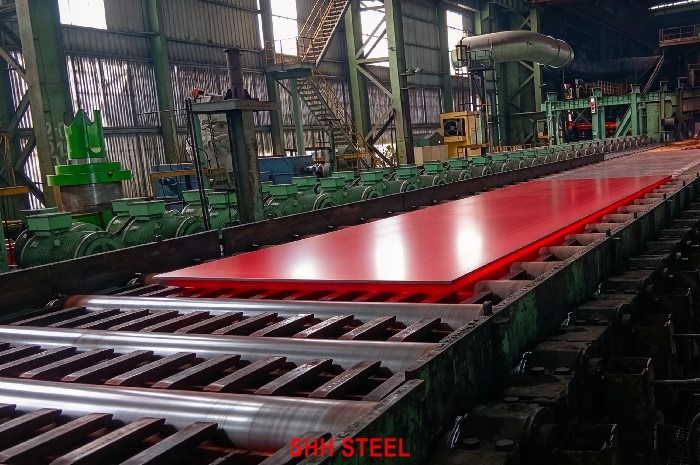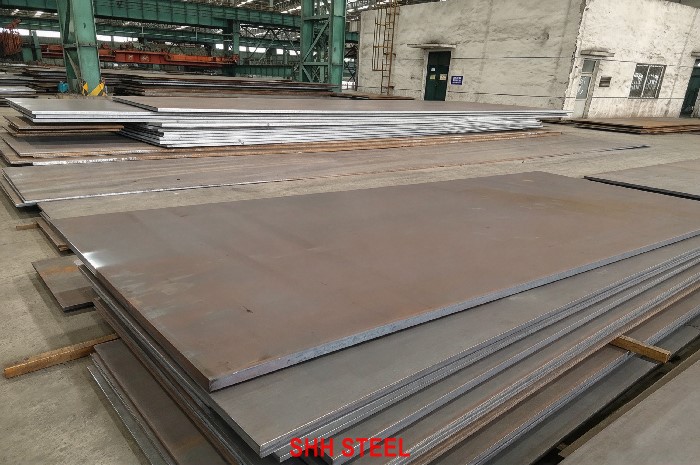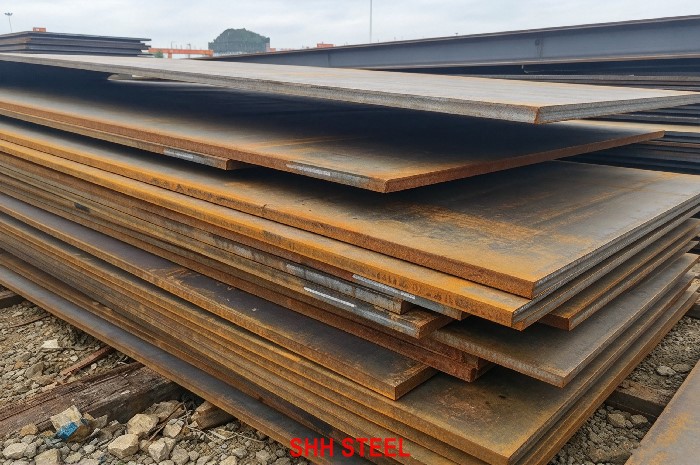
BS 1501 621 Steel Plate
What is BS 1501 621 plate?
We produce and export BS 1501 621 as chromium-molybdenum alloy steel plate for pressure purposes. Typical service is alloy pressure equipment that specifies type 621.
BS 1501-2:1988 is the last final edition of the alloy-plate part of BS 1501. It was published on 29 July 1988 and superseded on 15 January 1995. It replaced Addendum No. 1 (1973) and Addendum No. 2 (1975) to BS 1501: Part 2: 1970. The official designation used on this page is 621, the type number recorded for this steel in the opened 1993 national annex. A Part 1-style A or B suffix is not added, and the mill label 621B is not used as the official title. This page is not type 620, 622/515, 622/690 or 660, and it is not a BS 1501-1 carbon or BS 1501-3 stainless plate.
The chemical, room-temperature tensile, impact and elevated-temperature proof figures on this page follow BS EN 10028-2:1993, National Annex NC (normative), Non-conflicting national additions, opened as a public reprint on 8 November 2026 (Asia/Shanghai). That annex records steels 271, 281, 621 and 660 as United Kingdom national additional steels after EN 10028-2 superseded part of BS 1501-2. Amendment No. 3 to BS 1501-2 was to be published at the same time. The figures are not taken from a photographed BS 1501-2:1988 Table 1, and they are not current EN 10028-2 Table 1 values for 16Mo3, 13CrMo4-5, 10CrMo9-10 or 11CrMo9-10. Project acceptance should be agreed against the named edition.
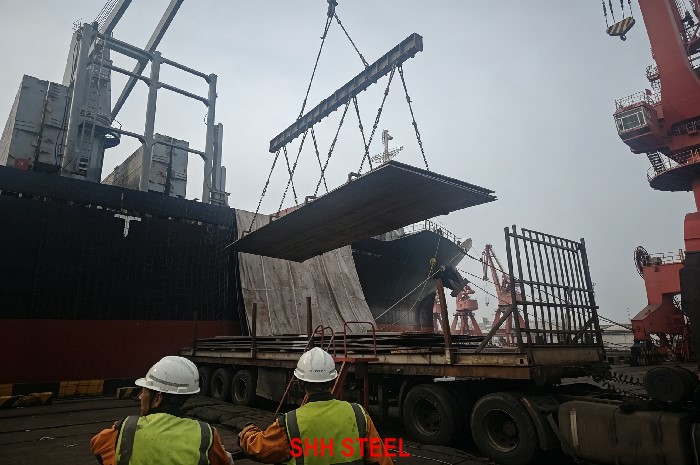
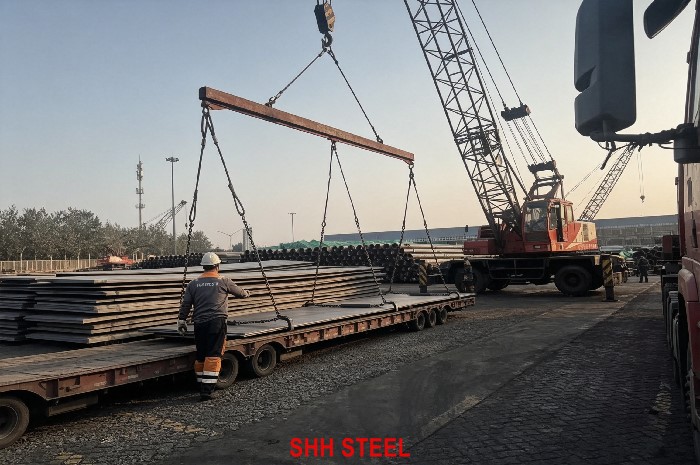
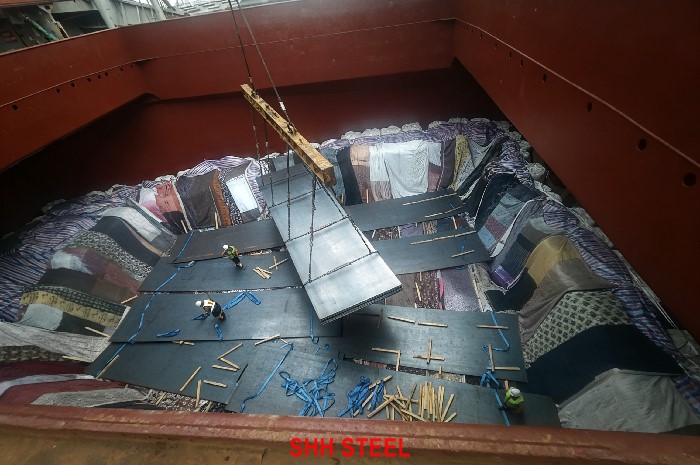
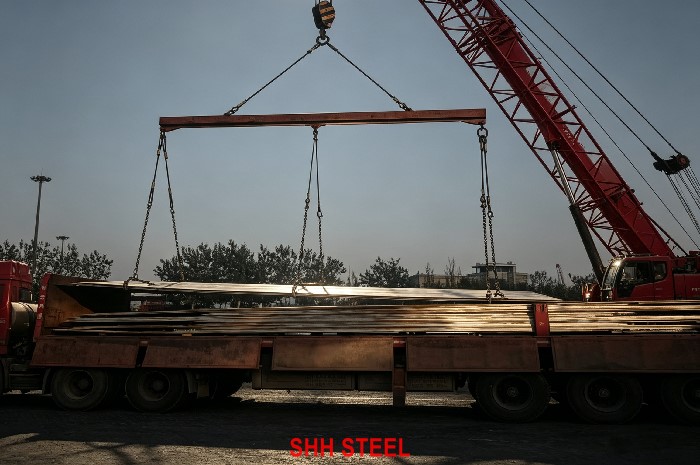
SHH STEEL produces and exports BS 1501 621 plate to the ordered edition, delivery condition, dimensions and extra tests written on the enquiry.
Material specification for BS 1501 621
The items below follow BS 1501-2:1988 as the historical alloy-plate book, with numerical tables taken from BS EN 10028-2:1993 National Annex NC as stated in the chemical and mechanical sections. Thickness, width, length and the inspection document are stated on the enquiry rather than listed here as stock or capacity ranges.
| Parameter | Detail |
|---|---|
| Standard | BS 1501-2:1988, Steels for pressure purposes — Specification for alloy steels: plates. Numerical tables below follow BS EN 10028-2:1993 National Annex NC (normative) |
| Official designation used here | BS 1501 621 |
| Steel type | Chromium-molybdenum alloy steel |
| Product form | Alloy steel plate for pressure purposes (this part does not cover bars, sections, forgings, tubes or stainless sheet) |
| How designations are listed | The opened 1993 national annex uses the type number alone (271, 281, 621, 660), without a Part 1-style A or B suffix. Mill names such as 620B, 621B or 622B are commercial and are not treated as official titles on this page |
| Applicable thickness in the opened tensile table | Up to and including 150 mm for tensile properties; impact table opened to 100 mm |
| Usual heat treatment | Normalized and tempered at 900–960 °C then 650–720 °C. |
| Chemical analysis | Cast analysis from Table NC.3 of BS EN 10028-2:1993 |
| Tensile properties | Yield strength, tensile strength and elongation, by thickness, from Table NC.5 |
| Our supply | We produce and export 621 plate to the ordered edition, delivery condition, dimensions and extra tests |
Chemical composition of BS 1501 621
The figures below are cast analysis for steel 621 from Table NC.3 of BS EN 10028-2:1993. Values are in weight percent. The chemical, room-temperature tensile, impact and elevated-temperature proof figures on this page follow BS EN 10028-2:1993, National Annex NC (normative), Non-conflicting national additions, opened as a public reprint on 8 November 2026 (Asia/Shanghai). That annex records steels 271, 281, 621 and 660 as United Kingdom national additional steels after EN 10028-2 superseded part of BS 1501-2. Amendment No. 3 to BS 1501-2 was to be published at the same time. The figures are not taken from a photographed BS 1501-2:1988 Table 1, and they are not current EN 10028-2 Table 1 values for 16Mo3, 13CrMo4-5, 10CrMo9-10 or 11CrMo9-10. Project acceptance should be agreed against the named edition.
| Element | 621 cast analysis, Table NC.3 (wt. %) |
|---|---|
| Carbon (C) | 0.09–0.17 |
| Silicon (Si) | 0.50–0.80 |
| Manganese (Mn) | 0.40–0.65 |
| Phosphorus (P) | 0.025 max |
| Sulfur (S) | 0.015 max |
| Chromium (Cr) | 1.00–1.50 |
| Molybdenum (Mo) | 0.45–0.60 |
| Nickel (Ni) | 0.30 max |
| Copper (Cu) | 0.30 max |
| Aluminium (metal) (Al) | 0.020 max |
Where a maximum aluminium (metal) content of 0.020 % is specified, determination of the total aluminium content, provided that it does not exceed the specified value, shall be deemed to meet this requirement. In cases of dispute, the metallic aluminium content shall be determined. Vanadium is not specified for type 621 in Table NC.3. Total Materia public cells opened for this type showed C 0.09–0.17, Cr 1.00–1.50 and Al ≤ 0.020, matching the annex for those three elements. Hidden Total Materia fields were not used to fill any cell.
Tensile, impact and elevated-temperature properties for BS 1501 621
Type 621 has thickness-dependent yield strength, tensile strength and elongation at room temperature. Values below are from Table NC.5 of BS EN 10028-2:1993. Strength values are in N/mm², equivalent to MPa.
| Thickness | Tensile strength Rm, N/mm² | Yield strength Re, N/mm² min | Elongation A, % min |
|---|---|---|---|
| Up to and including 75 mm | 515–690 | 340 | 18 |
| Over 75 mm up to and including 100 mm | 500–670 | 320 | 16 |
| Over 100 mm up to and including 150 mm | 490–650 | 310 | 16 |
Transverse Charpy V-notch values from Table NC.6, for use at room temperature or elevated temperatures, are a minimum average of 27 J and a minimum individual value of 19 J at 20 °C, for nominal thickness up to and including 100 mm. The opened impact table does not list a 621 row above 100 mm; that cell is omitted rather than inferred from the 150 mm tensile band.
Minimum yield strength (Re) or 0.2 % proof stress (Rp0.2) at elevated temperature from Table NC.8 is tabulated below. These figures come from the 1993 national annex for type 621. They are not copied from BS 1501-1 appendices.
| Thickness | 100 °C | 150 °C | 200 °C | 250 °C | 300 °C | 350 °C | 400 °C | 450 °C | 500 °C | 550 °C |
|---|---|---|---|---|---|---|---|---|---|---|
| Up to and including 75 mm | 315 | 305 | 291 | 280 | 266 | 255 | 251 | 245 | 238 | 227 |
| Over 75 mm up to and including 100 mm | 300 | 290 | 277 | 265 | 250 | 238 | 234 | 228 | 221 | 211 |
| Over 100 mm up to and including 150 mm | 290 | 280 | 268 | 256 | 239 | 227 | 222 | 217 | 211 | 201 |
Informative stress-rupture values for steels 621 and 660 appear in Table NC.11 of the same annex. That grid is informative and is not copied here. A public database listing showed a single tensile window of 420–690 MPa without a visible yield value; that wide window is not used in place of Table NC.5. The chemical, room-temperature tensile, impact and elevated-temperature proof figures on this page follow BS EN 10028-2:1993, National Annex NC (normative), Non-conflicting national additions, opened as a public reprint on 8 November 2026 (Asia/Shanghai). That annex records steels 271, 281, 621 and 660 as United Kingdom national additional steels after EN 10028-2 superseded part of BS 1501-2. Amendment No. 3 to BS 1501-2 was to be published at the same time. The figures are not taken from a photographed BS 1501-2:1988 Table 1, and they are not current EN 10028-2 Table 1 values for 16Mo3, 13CrMo4-5, 10CrMo9-10 or 11CrMo9-10. Project acceptance should be agreed against the named edition.
Delivery conditions for BS 1501 621
Steels 271, 281, 621 and 660 shall be supplied normalized and tempered in accordance with Table NC.1. For type 621 the opened ranges are normalizing at 900–960 °C and tempering at 650–720 °C. Name the required delivery condition on the purchase order.
If the project has moved to EN 10028-2, order the successor designation and edition expressly. A later European name is not by itself a substitute instruction for type 621.
The purchase order should name the official designation, the edition required, thickness, width and length, the delivery condition, any extra tests, and the inspection document required.
This page does not offer heat-treatment or fabrication services.
Welding and thermal cutting
BS 1501-2:1988 and the 1993 national annex do not themselves set a welding procedure for type 621. Welding and thermal cutting should be qualified for the alloy content, thickness and the normalized-and-tempered delivery condition.
Type 621 is a chromium-molybdenum plate. Consumables and hydrogen control should match the qualified procedure for that alloy family.
Heat input and any required post-weld heat treatment belong in the project specification.
Form, appearance, dimensions and thickness tolerances
Thickness, width, length, flatness and mass tolerances should be stated on the purchase order against the dimensional standard named by the project. The historical replacement set includes BS EN 10029 for plate tolerances when that standard is specified.
Appearance, repair welding and any ultrasonic class are taken from the enquiry. This page does not list stock sizes or mill capacity.
Applications and specification limits
We produce and export 621 plate as chromium-molybdenum alloy steel plate for pressure purposes. Typical service is alloy pressure equipment that specifies type 621.
BS 1501-2:1988 is a historical alloy-plate standard. It is not the current EN 10028-2 order unless that successor standard is written on the enquiry, and it is not a BS 1501-1 carbon, BS 1501-3 stainless, BS 1502 bar or BS 1503 forging order.
Compare BS 1501 621 with other steel plates
Type 621 is a historical BS 1501-2 chromium-molybdenum pressure-vessel plate. The comparison below is for selection only; these materials are not equivalents.
| Material | Alloy / type | Delivery condition | Mechanical requirements | Typical service | Substitution limit |
|---|---|---|---|---|---|
| BS 1501 621 (this plate) | Cr-Mo alloy plate; Cr 1.00–1.50 %, Mo 0.45–0.60 %, Si 0.50–0.80 % | Normalized and tempered at 900–960 °C then 650–720 °C | Up to 75 mm: yield 340 N/mm² minimum; tensile 515–690 N/mm² | Alloy pressure equipment that specifies type 621 | Mill 621B is a commercial label, not a separate official title on this page |
| EN 10028-2 13CrMo4-5 | Chromium-molybdenum elevated-temperature vessel plate, steel number 1.7335 | As specified in EN 10028-2 | Live published yield 300 MPa at ≤ 16 mm and tensile 450–600 MPa | Modern European 1Cr-0.5Mo vessel plate | Related chromium-molybdenum class; silicon and chromium windows differ from type 621 |
| ASTM A387 Grade 11 Class 1 | Nominal 1.25Cr-0.5Mo pressure-vessel plate | As specified in ASTM A387/A387M | Live published tensile 415–585 MPa and yield 240 MPa minimum | ASTM chrome-moly vessel plate | Related product form only; Class 1 strength is not the 621 tensile window |
| GB/T 713 14Cr1MoR | Later Chinese chromium-molybdenum vessel plate | As specified in GB/T 713 | Live published yield 310 MPa at 6–100 mm and tensile 520–680 MPa | Modern Chinese chrome-moly boiler and vessel plate | Related chromium-molybdenum class only |
Equivalent and related grades by country
The designations below are near names, not automatic substitutes. A later EN 10028-2 or ASTM chrome-moly designation does not by itself authorize substitution. Confirm chemistry, heat treatment, tensile properties, impact temperature and product form.
| Country / region | Standard | Grade or designation | Similarity and key differences | Substitution caveat |
|---|---|---|---|---|
| United Kingdom | BS 1501-2:1988 / BS EN 10028-2:1993 National Annex NC | 621 | This plate. Chromium 1.00–1.50 %, molybdenum 0.45–0.60 % and silicon 0.50–0.80 %. Tensile 515–690 N/mm² up to 75 mm. | This product |
| Europe | EN 10028-2 | 13CrMo4-5 (1.7335) | Later 1Cr-0.5Mo vessel plate. The 1993 Table 1 lists silicon 0.35 % maximum and chromium 0.70–1.15 %, against silicon 0.50–0.80 % and chromium 1.00–1.50 % for type 621. Live published yield 300 MPa at ≤ 16 mm and tensile 450–600 MPa, against 340 N/mm² and 515–690 N/mm² for 621 up to 75 mm. | Near name only; not an automatic substitute |
| United States | ASTM A387/A387M | Grade 11 Class 1 | Nominal 1.25Cr-0.5Mo vessel plate. Live published tensile 415–585 MPa and yield 240 MPa minimum. | Related product form only |
| China | GB/T 713 | 14Cr1MoR | Later Chinese chromium-molybdenum vessel plate. Live published yield 310 MPa at 6–100 mm and tensile 520–680 MPa. | Related chromium-molybdenum class only |
| China | GB/T 713 | 15CrMoR | Later Chinese chromium-molybdenum vessel plate. Live published yield 295 MPa at 6–60 mm and tensile 450–590 MPa. | Related chromium-molybdenum class only; no dedicated comparison link is repeated here |
Why choose SHH STEEL for BS 1501 621
- We produce and export BS 1501 621 alloy pressure-vessel steel plate
- We review the enquiry for edition, designation, delivery condition, dimensions and extra tests
- We keep the historical BS 1501-2 type number distinct from mill 620B/621B/622B labels, from Part 1 A/B carbon grades, and from later EN 10028-2 names
- We match documentation to what the purchase order requires
How to enquire for BS 1501 621 plate
| Item | What to specify |
|---|---|
| Standard and designation | BS 1501 621 and the edition required (BS 1501-2:1988 and/or the 1993 national-annex remaining-steel clauses) |
| Or successor standard | The EN 10028-2 designation and edition, if that is what the project now requires |
| Delivery condition | Normalized and tempered at 900–960 °C then 650–720 °C. |
| Dimensions | Required thickness, width and length |
| Chemistry | Cast analysis to the named edition |
| Mechanical tests | Yield strength, tensile strength, elongation and, where specified, impact or elevated-temperature proof tests to the named edition |
| Other tests | Ultrasonic examination or other extra tests only when written on the order |
| Documentation | State the inspection document type required by the project |
Thickness, width and length are taken from the enquiry. This page does not list stock sizes, mill capacity or fabrication services.
FAQ
-
Is BS 1501-2 still a current product standard?
- No. BS 1501-2:1988 is the last final edition of the alloy-plate part. It was published on 29 July 1988 and superseded on 15 January 1995. EN 10028-2 superseded part of it; steels 271, 281, 621 and 660 were kept as United Kingdom national additional steels in the 1993 British annex. Projects still using type 621 should name the edition required on the order.
-
Which edition do the tables on this page follow?
- They follow BS EN 10028-2:1993 National Annex NC (Tables NC.1, NC.3, NC.5, NC.6 and NC.8), opened as a public reprint. They are not a photographed BS 1501-2:1988 Table 1 extract, and they are not current EN 10028-2 tables for 13CrMo4-5. Specify the edition or successor standard required on the purchase order.
-
Is type 621 the same as mill 621B or 13CrMo4-5?
- The official designation opened for this page is 621, not 621B. Mill 621B is a commercial label. Live 13CrMo4-5 is a later European 1Cr-0.5Mo plate published as 300 MPa yield at ≤ 16 mm and 450–600 MPa tensile, against 340 N/mm² and 515–690 N/mm² for 621 up to 75 mm, with different silicon and chromium windows.
-
Does this page use Part 1 elevated-temperature appendix figures?
- No. Elevated proof-stress values come from Table NC.8 of the 1993 national annex for type 621. Informative stress-rupture values in Table NC.11 are noted but not copied.
-
What should a quotation enquiry include?
- BS 1501 621, the edition required or the successor designation, the delivery condition, plate thickness by width by length, quantity, any extra tests, and the inspection document required.
Request a quotation
Contact SHH STEEL for a quotation for BS 1501 621 steel plate. Please include your required quantity, plate thickness, width and length, delivery destination and preferred delivery schedule so we can review your production and export requirements.
Specify the edition (BS 1501-2:1988 or the later United Kingdom national-annex remaining-steel clauses, or a named EN 10028-2 successor if that is what the project now requires), the delivery condition and any specimen heat treatment. If your project requires ultrasonic examination, a stated impact temperature or another extra test, include the acceptance criteria and the inspection document required.
If you are considering a related designation, send the applicable standard and project specification with your enquiry so we can review chemistry, heat treatment and toughness.
For a detailed quotation, email your material specification, quantity and delivery requirements to our team.
Contact: admin@steelspecs.com
Quality Steel Needed? Inquire for Offers
Related Products