BS 1501 304S61 Steel Plate
What is BS 1501 304S61 plate?
We produce and export BS 1501 304S61 as low-carbon nitrogen-bearing chromium-nickel steel for pressure purposes. Typical service is corrosion- or heat-resisting pressure equipment that specifies this steel number.
BS 1501-3:1990 is the last final edition of the corrosion- and heat-resisting plate, sheet and strip part of BS 1501. It was published on 28 February 1990 and superseded on 15 July 2000. It superseded BS 1501-3:1973. The replacement set includes BS EN 10028-7 for stainless flat products for pressure purposes, together with later dimensional standards such as BS EN 10029, BS EN 10048, BS EN 10051, BS EN 10258 and BS EN 10259. Clause 2 of the 1990 book is titled Designation, but that clause text was not opened. The steel numbers used here (for example 304S11) come from a public materials-database list of 21 BS 1501-3 materials and from the same secondary extract. The letter S is part of those British steel numbers. No extra A or B order suffix was sourced. These numbers are not BS 970 or BS 1502 bar grades and not BS 1449-2 general-purpose stainless grades (those books use some overlapping names, and different numbers such as 309S24).
A public catalogue abstract of BS 1501-3:1990 states that the part covers plates from 3 mm to 100 mm, sheet from 0.30 mm to less than 3 mm, and narrow strip from 0.050 mm to less than 3 mm, for ambient, elevated and low-temperature duty. The same abstract notes that, except for duplex 318S13, the listed steels are considered for ambient temperature and down to −196 °C. That scope note is recorded as an abstract, not as a photographed clause.
Numeric cells below are taken from a public secondary extract headed BS 1501/3-1990, opened on 8 November 2026 (Asia/Shanghai). The extract’s subjects match the official 1990 contents list: Table 1 covers cast analysis, ambient mechanical properties and heat treatment; Tables 13 and 14 cover elevated-temperature Rp0.2 and Rp1.0. Some HTML table tags were broken; manganese and molybdenum bounds were recovered from those broken cells (for example a silicon cell written as 1.00
2.00
for manganese 2.00). The two columns after manganese were headed only as dashes and sit in the conventional phosphorus and sulfur positions; they are labelled that way with this caveat. A photographed BSI PDF of BS 1501-3:1990 was not opened. These figures are a reference basis, not an official-complete 1990 guarantee and not an SHH proprietary guarantee. They are not copied from ASTM A240/ASME SA240 304-family tables or from BS 970 bar grades. A public materials-database listing labels 304S61 as CrNi 18/9 0.03C/N. That qualitative nitrogen identity is recorded, but no numeric nitrogen cell is shown.
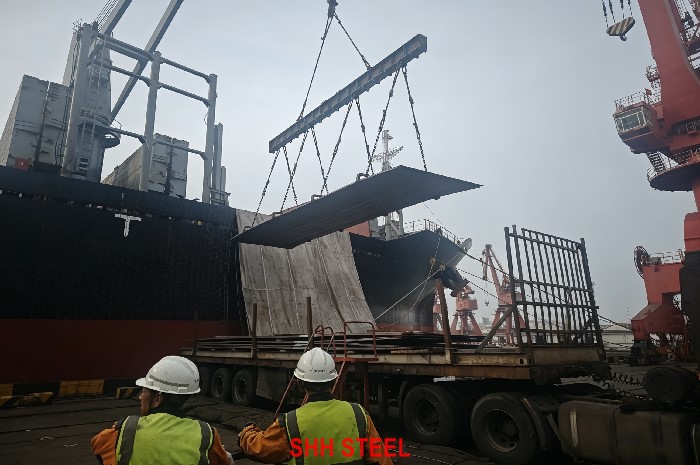
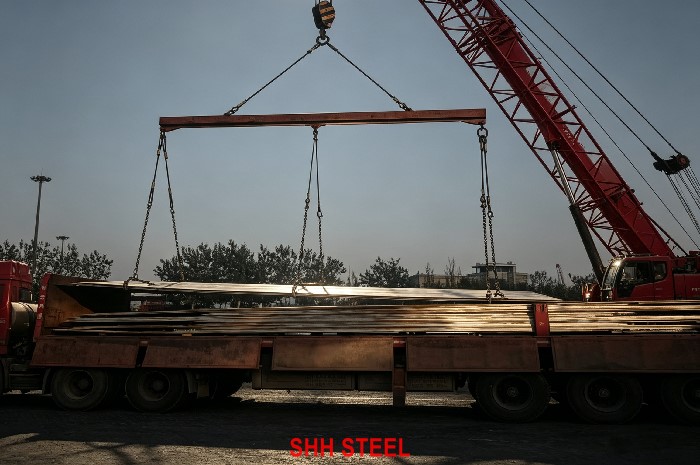
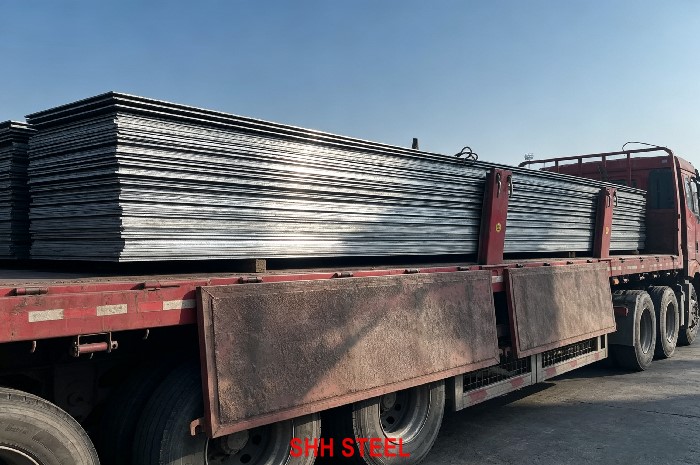
SHH STEEL produces and exports BS 1501 304S61 plate, sheet or strip to the ordered edition, delivery condition, dimensions and extra tests written on the enquiry.
Material specification for BS 1501 304S61
The items below follow BS 1501-3:1990 as the historical corrosion- and heat-resisting plate, sheet and strip book. Numeric cells in the chemical and mechanical sections come from the public secondary extract described there, not from a photographed 1990 Table 1. Thickness, width, length and the inspection document are stated on the enquiry rather than listed here as stock or capacity ranges.
| Parameter | Detail |
|---|---|
| Standard | BS 1501-3:1990, Steels for pressure purposes — Specification for corrosion- and heat-resisting steels: plates, sheet and strip |
| Designation used here | BS 1501 304S61 (steel number sourced from the opened 21-name list and the secondary extract; Clause 2 text unread) |
| Steel type | Low-carbon nitrogen-bearing chromium-nickel steel |
| Product form | Corrosion- and heat-resisting plate, sheet and strip for pressure purposes (this part does not cover bars, sections, tubes, forgings or carbon/alloy Part 1 and Part 2 plates) |
| How designations are listed | Sourced steel numbers take the form 304S11, 316S13 and similar. The letter S is part of the British steel number. No extra A or B suffix was sourced. These are not BS 970 bar designations |
| Thickness mentioned in the opened abstract | Abstract: plates 3 mm to 100 mm; sheet 0.30 mm to less than 3 mm; narrow strip 0.050 mm to less than 3 mm |
| Usual heat treatment | Solution annealed at 1000–1100 °C, water or fast-air cooled. |
| Chemical analysis | Cast analysis cells from the opened secondary extract of the 1990 composition table, each labelled by source |
| Tensile properties | Ambient Rp0.2, Rp1.0, Rm and elongation from the opened secondary extract |
| Our supply | We produce and export 304S61 plate, sheet or strip to the ordered edition, delivery condition, dimensions and extra tests |
Chemical composition of BS 1501 304S61
Numeric cells below are taken from a public secondary extract headed BS 1501/3-1990, opened on 8 November 2026 (Asia/Shanghai). The extract’s subjects match the official 1990 contents list: Table 1 covers cast analysis, ambient mechanical properties and heat treatment; Tables 13 and 14 cover elevated-temperature Rp0.2 and Rp1.0. Some HTML table tags were broken; manganese and molybdenum bounds were recovered from those broken cells (for example a silicon cell written as 1.00
2.00
for manganese 2.00). The two columns after manganese were headed only as dashes and sit in the conventional phosphorus and sulfur positions; they are labelled that way with this caveat. A photographed BSI PDF of BS 1501-3:1990 was not opened. These figures are a reference basis, not an official-complete 1990 guarantee and not an SHH proprietary guarantee. They are not copied from ASTM A240/ASME SA240 304-family tables or from BS 970 bar grades.
| Element | Value (wt. %) | Source opened for this cell |
|---|---|---|
| Carbon (C) | 0.030 max | Public secondary extract headed BS 1501/3-1990, opened 8 November 2026 (Asia/Shanghai) |
| Silicon (Si) | 1.00 (single printed figure in the Si column; treated here as a maximum) | Public secondary extract headed BS 1501/3-1990, opened 8 November 2026 (Asia/Shanghai) |
| Manganese (Mn) | 2.00 max (recovered from a broken HTML cell after silicon) | Public secondary extract headed BS 1501/3-1990, opened 8 November 2026 (Asia/Shanghai) |
| Phosphorus (P) | 0.045 max (dash-headed column after manganese) | Public secondary extract headed BS 1501/3-1990, opened 8 November 2026 (Asia/Shanghai) |
| Sulfur (S) | 0.025 max (dash-headed column after phosphorus) | Public secondary extract headed BS 1501/3-1990, opened 8 November 2026 (Asia/Shanghai) |
| Chromium (Cr) | 17.00–19.00 | Public secondary extract headed BS 1501/3-1990, opened 8 November 2026 (Asia/Shanghai) |
| Nickel (Ni) | 8.50–11.50 | Public secondary extract headed BS 1501/3-1990, opened 8 November 2026 (Asia/Shanghai) |
Tensile and elevated-temperature properties for BS 1501 304S61
Ambient tensile properties and the listed solution-annealing range below come from the opened secondary extract of the 1990 combined chemistry/mechanical/heat-treatment table.
| Item | Value | Source opened for this cell |
|---|---|---|
| 0.2 % proof stress Rp0.2, MPa min | 270 | Public secondary extract headed BS 1501/3-1990, opened 8 November 2026 (Asia/Shanghai) |
| 1.0 % proof stress Rp1.0, MPa min | 305 | Public secondary extract headed BS 1501/3-1990, opened 8 November 2026 (Asia/Shanghai) |
| Tensile strength Rm, MPa | 650–750 | Public secondary extract headed BS 1501/3-1990, opened 8 November 2026 (Asia/Shanghai) |
| Elongation A, % min | 35 | Public secondary extract headed BS 1501/3-1990, opened 8 November 2026 (Asia/Shanghai) |
| Solution-annealing temperature, °C | 1000–1100 | Public secondary extract headed BS 1501/3-1990, opened 8 November 2026 (Asia/Shanghai) |
| Intergranular-corrosion note on the extract | Sensitization time 30 min when an intergranular-corrosion test is required (extract note 5) | Public secondary extract headed BS 1501/3-1990, opened 8 November 2026 (Asia/Shanghai) |
Strength values are in MPa, equivalent to N/mm². On the extract, a disputed elongation test uses a proportional round specimen with gauge length 5.65 √So, or a 12.5 mm wide rectangular specimen with a 50 mm gauge length. Numeric cells below are taken from a public secondary extract headed BS 1501/3-1990, opened on 8 November 2026 (Asia/Shanghai). The extract’s subjects match the official 1990 contents list: Table 1 covers cast analysis, ambient mechanical properties and heat treatment; Tables 13 and 14 cover elevated-temperature Rp0.2 and Rp1.0. Some HTML table tags were broken; manganese and molybdenum bounds were recovered from those broken cells (for example a silicon cell written as 1.00
2.00
for manganese 2.00). The two columns after manganese were headed only as dashes and sit in the conventional phosphorus and sulfur positions; they are labelled that way with this caveat. A photographed BSI PDF of BS 1501-3:1990 was not opened. These figures are a reference basis, not an official-complete 1990 guarantee and not an SHH proprietary guarantee. They are not copied from ASTM A240/ASME SA240 304-family tables or from BS 970 bar grades.
Elevated-temperature minimum proof-stress values below come from the opened secondary extract whose subjects match official 1990 Tables 13 (Rp0.2) and 14 (Rp1.0). They are table values, not allowable design stresses and not a published maximum service temperature.
| Temperature | Rp0.2, MPa min | Rp1.0, MPa min | Source |
|---|---|---|---|
| 20 °C | 270 | 305 | Public secondary extract headed BS 1501/3-1990, opened 8 November 2026 (Asia/Shanghai) |
| 100 °C | 196 | 230 | Public secondary extract headed BS 1501/3-1990, opened 8 November 2026 (Asia/Shanghai) |
| 150 °C | 169 | 201 | Public secondary extract headed BS 1501/3-1990, opened 8 November 2026 (Asia/Shanghai) |
| 200 °C | 155 | 182 | Public secondary extract headed BS 1501/3-1990, opened 8 November 2026 (Asia/Shanghai) |
| 250 °C | 143 | 172 | Public secondary extract headed BS 1501/3-1990, opened 8 November 2026 (Asia/Shanghai) |
| 300 °C | 135 | 163 | Public secondary extract headed BS 1501/3-1990, opened 8 November 2026 (Asia/Shanghai) |
| 350 °C | 129 | 156 | Public secondary extract headed BS 1501/3-1990, opened 8 November 2026 (Asia/Shanghai) |
| 400 °C | 123 | 149 | Public secondary extract headed BS 1501/3-1990, opened 8 November 2026 (Asia/Shanghai) |
| 450 °C | 119 | 144 | Public secondary extract headed BS 1501/3-1990, opened 8 November 2026 (Asia/Shanghai) |
| 500 °C | 115 | 140 | Public secondary extract headed BS 1501/3-1990, opened 8 November 2026 (Asia/Shanghai) |
| 550 °C | 113 | 136 | Public secondary extract headed BS 1501/3-1990, opened 8 November 2026 (Asia/Shanghai) |
| 600 °C | 110 | 131 | Public secondary extract headed BS 1501/3-1990, opened 8 November 2026 (Asia/Shanghai) |
| 650 °C | 108 | 128 | Public secondary extract headed BS 1501/3-1990, opened 8 November 2026 (Asia/Shanghai) |
| 700 °C | 106 | 124 | Public secondary extract headed BS 1501/3-1990, opened 8 November 2026 (Asia/Shanghai) |
A dash means no figure was printed at that temperature on the opened extract. In the elevated-temperature tables, some HTML tags were again broken (for example a cell written as 144
132
). Those missing opening tags were recovered in the same way as the manganese and molybdenum cells. The extract listed temperatures through 700 °C; values printed at 650 °C and 700 °C are shown when present. Numeric cells below are taken from a public secondary extract headed BS 1501/3-1990, opened on 8 November 2026 (Asia/Shanghai). The extract’s subjects match the official 1990 contents list: Table 1 covers cast analysis, ambient mechanical properties and heat treatment; Tables 13 and 14 cover elevated-temperature Rp0.2 and Rp1.0. Some HTML table tags were broken; manganese and molybdenum bounds were recovered from those broken cells (for example a silicon cell written as 1.00
2.00
for manganese 2.00). The two columns after manganese were headed only as dashes and sit in the conventional phosphorus and sulfur positions; they are labelled that way with this caveat. A photographed BSI PDF of BS 1501-3:1990 was not opened. These figures are a reference basis, not an official-complete 1990 guarantee and not an SHH proprietary guarantee. They are not copied from ASTM A240/ASME SA240 304-family tables or from BS 970 bar grades.
Delivery conditions for BS 1501 304S61
The opened extract lists solution annealing at 1000–1100 °C. Name the required delivery condition on the purchase order.
On the opened extract, water cooling or rapid cooling in air is stated for the solution treatment, except where a note says that as-rolled supply after a sufficiently hot rolling practice does not apply and the plate is supplied in the final solution-annealed condition. For these steels the extract says annealing, solution treatment and solution annealing have the same meaning.
If the project has moved to EN 10028-7, order the successor designation and edition expressly. A later European name is not by itself a substitute instruction for 304S61.
The purchase order should name the official steel number, the edition required, whether plate, sheet or strip is wanted, thickness, width and length, the delivery condition, any intergranular-corrosion or elevated-temperature tests, and the inspection document required.
This page does not offer heat-treatment or fabrication services.
Welding and thermal cutting
BS 1501-3:1990 does not itself set a welding procedure for 304S61 on the pages opened for this article. Welding and thermal cutting should be qualified for the alloy content, thickness and the specified solution-annealed delivery condition.
304S61 is identified as a nitrogen-bearing low-carbon 18/9 steel on the opened materials-database list, but the numeric nitrogen window was not printed on the composition extract and is not invented here. Consumables should match the qualified procedure for a nitrogen-strengthened low-carbon chromium-nickel plate.
Heat input and any required post-weld treatment belong in the project specification. This page does not publish a pitting-resistance equivalent or a maximum service temperature.
Form, appearance, dimensions and thickness tolerances
Thickness, width, length, flatness and mass tolerances should be stated on the purchase order against the dimensional standard named by the project. The historical replacement set includes BS EN 10029 for plate, and later sheet and strip tolerance standards, when those standards are specified.
Appearance, repair welding and any ultrasonic class are taken from the enquiry. This page does not list stock sizes or mill capacity.
Applications and specification limits
We produce and export 304S61 as corrosion- and heat-resisting steel plate, sheet and strip for pressure purposes. Typical service is welded pressure equipment that specifies the higher-strength 304S61 number rather than 304S11.
BS 1501-3:1990 is a historical stainless flat-product standard. It is not the current EN 10028-7 order unless that successor standard is written on the enquiry, and it is not a BS 1501-1 carbon, BS 1501-2 alloy, BS 1502 bar or BS 1503 forging order.
Compare BS 1501 304S61 with other steel plates
BS 1501 304S61 is a historical BS 1501-3 corrosion- and heat-resisting flat product. The comparison below is for selection only; these materials are not equivalents.
| Material | Alloy / type | Delivery condition | Mechanical requirements | Typical service | Substitution limit |
|---|---|---|---|---|---|
| BS 1501 304S61 (this plate) | Low-carbon N-bearing Cr-Ni steel; C 0.030 % max, Cr 17–19 %, Ni 8.50–11.50 %; N window not printed | Solution annealed at 1000–1100 °C, water or fast-air cooled. | Extract: Rp0.2 270 MPa min; Rm 650–750 MPa; A 35 % min | Corrosion- or heat-resisting pressure equipment that specifies this steel number | A later EN 10028-7 or ASTM A240 name is not an automatic substitute |
| EN 10028-7 X2CrNiN18-10 (1.4311) | Later nitrogen-bearing low-carbon Cr-Ni pressure-vessel stainless plate | Solution annealed (+AT) as specified in EN 10028-7 | Live published Rp0.2 at least 270 MPa and Rm 550–750 MPa | Modern European 304LN-family vessel plate | Near name only; the live tensile window is 550–750 MPa, not the extract 650–750 MPa for 304S61 |
| AISI 304LN stainless steel plate | Low-carbon nitrogen-strengthened stainless plate on the live AISI page | Solution annealed | Live published yield at least 240 MPa and tensile at least 550 MPa | Common mill 304LN plate | Different book and strength basis; not an automatic substitute |
| EN 10028-7 X2CrNi18-9 (1.4307) | Later low-carbon Cr-Ni pressure-vessel stainless plate without a nitrogen identity on that live page | Solution annealed (+AT) as specified in EN 10028-7 | Live published Rp0.2 at least 200 MPa and Rm 500–700 MPa | Modern European low-carbon 304L-family vessel plate | Lower published strength than the 304S61 extract |
Equivalent and related grades by country
The designations below are near names, not automatic substitutes. Confirm chemistry, including residuals such as nitrogen, titanium, niobium or copper where they apply, together with heat treatment, proof stress, tensile properties, intergranular-corrosion testing and product form. EN 10028-7 and ASTM A240/ASME SA240 are later books with their own tables.
| Country / region | Standard | Grade or designation | Similarity and key differences | Substitution caveat |
|---|---|---|---|---|
| United Kingdom | BS 1501-3:1990 | 304S61 | This plate. Extract Rm 650–750 MPa and Rp0.2 270 MPa minimum. Nitrogen is part of the identity on the opened database list, but the percentage range was not printed. | This product |
| Europe | EN 10028-7 | X2CrNiN18-10 (1.4311) | Later nitrogen-bearing vessel plate. Live published Rp0.2 270 MPa minimum and Rm 550–750 MPa, against extract 270 MPa and 650–750 MPa for 304S61. | Near name only |
| United States | AISI / ASTM A240 family (live AISI 304LN page) | 304LN | Live published yield at least 240 MPa and tensile at least 550 MPa. | Related product form only |
| China / other | — | — | No separately verified GB plate counterpart was established as an automatic equivalent for 304S61 on this page. | Do not assume a local 304LN name is a substitute |
Why choose SHH STEEL for BS 1501 304S61
- We produce and export BS 1501 304S61 corrosion- and heat-resisting plate, sheet and strip
- We review the enquiry for edition, steel number, delivery condition, product form, dimensions and extra tests
- We keep the historical BS 1501-3 steel number distinct from later EN 10028-7 names, from ASTM A240/ASME SA240 types, and from BS 970 bar grades
- We match documentation to what the purchase order requires
How to enquire for BS 1501 304S61 plate
| Item | What to specify |
|---|---|
| Standard and designation | BS 1501 304S61 and the edition required (BS 1501-3:1990) |
| Or successor standard | The EN 10028-7 steel name or number and edition, if that is what the project now requires |
| Delivery condition | Solution annealed at 1000–1100 °C, water or fast-air cooled. |
| Product form and dimensions | Plate, sheet or strip, with required thickness, width and length |
| Chemistry | Cast analysis to the named edition |
| Mechanical tests | Proof stress, tensile strength, elongation and, where specified, intergranular-corrosion or elevated-temperature proof tests to the named edition |
| Other tests | Ultrasonic examination or other extra tests only when written on the order |
| Documentation | State the inspection document type required by the project |
Thickness, width and length are taken from the enquiry. This page does not list stock sizes, mill capacity or fabrication services.
Frequently Asked Questions
-
Is BS 1501-3 still a current product standard?
- No. BS 1501-3:1990 is the last final edition of the corrosion- and heat-resisting plate, sheet and strip part. It was published on 28 February 1990 and superseded on 15 July 2000. EN 10028-7 superseded part of it. Projects still using a historical steel number should name the edition required on the order.
-
Which numbers on this page are photographed 1990 table values?
- None are presented as a photographed BSI PDF. Cast analysis, ambient tensile properties, solution-annealing temperatures and elevated proof-stress figures come from a public secondary extract headed BS 1501/3-1990. Some HTML tags were broken and were recovered as described in the tables. They are a reference basis, not an official-complete guarantee.
-
What does the S in a number such as 304S11 mean, and is there an A or B suffix?
- The opened sources list complete steel numbers such as 304S11, 304S31 and 316S13. The letter S is part of that British steel number. Clause 2, Designation, was not opened, so further suffix rules are not stated here. No extra A or B order suffix was sourced. These numbers are not copied from BS 970 bar grades.
-
What nitrogen content does 304S61 have?
- The opened materials-database list labels 304S61 as a 0.03 % carbon nitrogen-bearing 18/9 chromium-nickel steel. The composition extract opened for this page did not print a numeric nitrogen window, so that percentage range is not invented here. Agree the required nitrogen analysis against the named edition.
-
What should a quotation enquiry include?
- BS 1501 304S61, the edition required or the successor designation, whether plate, sheet or strip is wanted, the delivery condition, thickness by width by length, quantity, any intergranular-corrosion or elevated-temperature tests, and the inspection document required.
Request a quotation
Contact SHH STEEL for a quotation for BS 1501 304S61 plate, sheet or strip. Please include your required quantity, thickness, width and length, delivery destination and preferred delivery schedule so we can review your production and export requirements.
Specify the edition (BS 1501-3:1990, or a named EN 10028-7 successor if that is what the project now requires), the delivery condition and any specimen heat treatment. If your project requires an intergranular-corrosion test, a stated elevated-temperature proof test, ultrasonic examination or another extra test, include the acceptance criteria and the inspection document required.
If you are considering a related designation, send the applicable standard and project specification with your enquiry so we can review chemistry, heat treatment and toughness. A later EN 10028-7 or ASTM A240 name is not by itself a substitute instruction.
For a detailed quotation, email your material specification, quantity and delivery requirements to our team.
Contact: admin@steelspecs.com
Quality Steel Needed? Inquire for Offers
Related Products