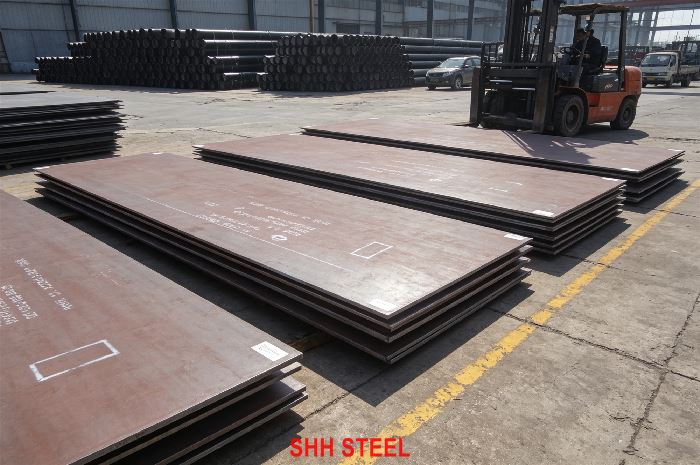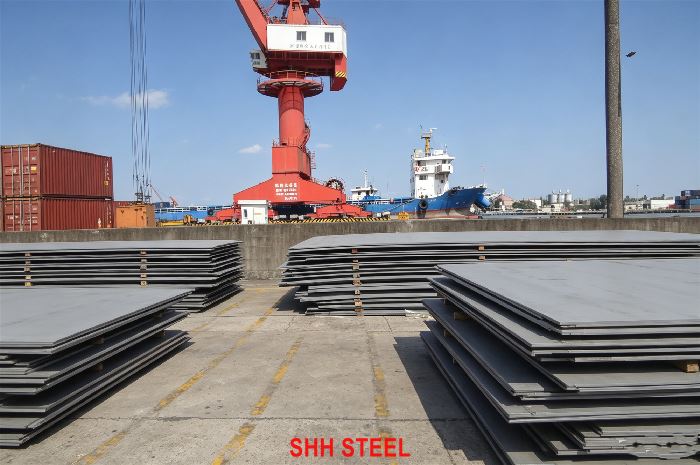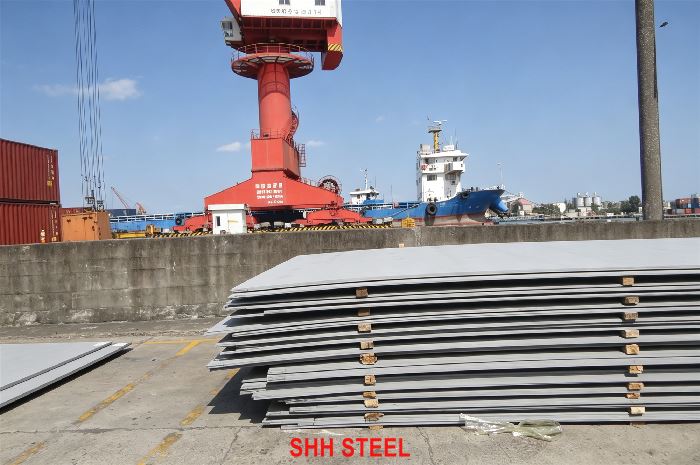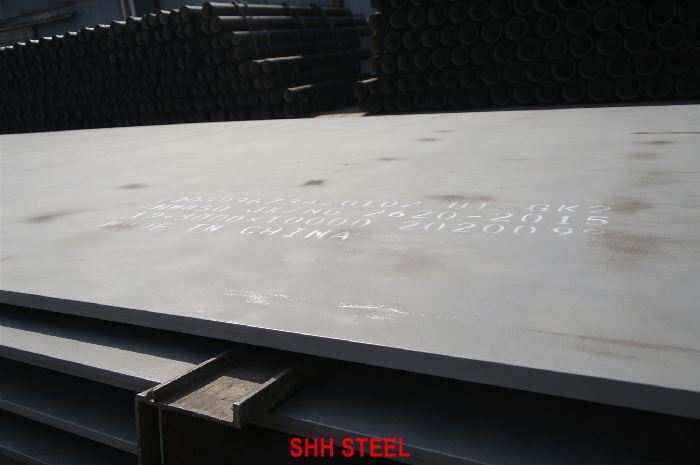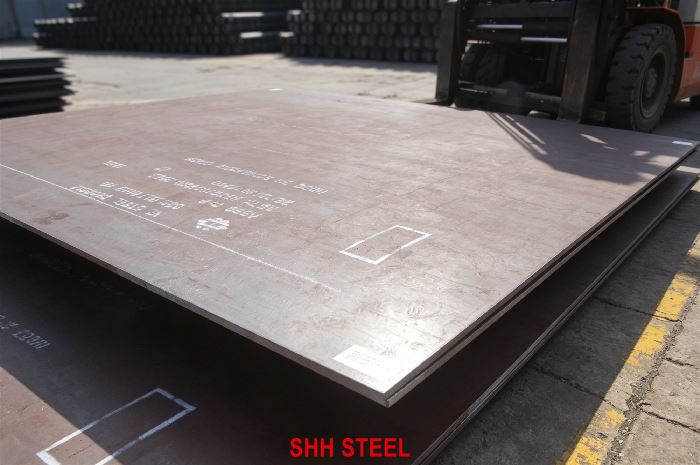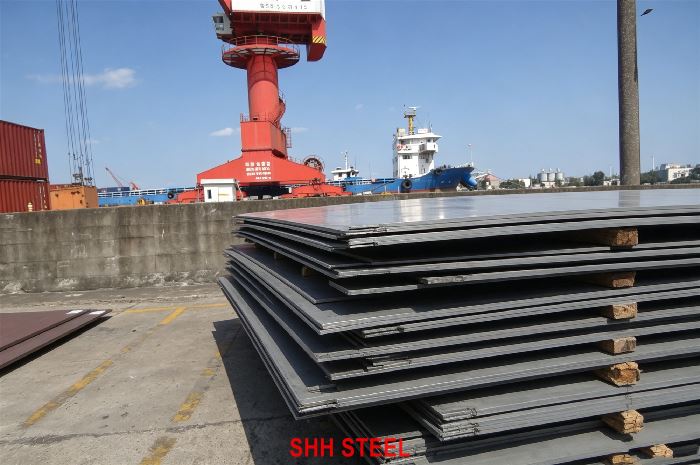

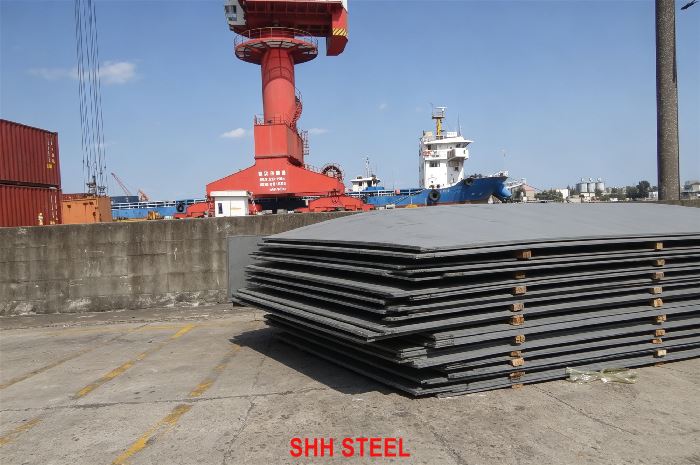
ASTM A517 Grade P Steel Plate | A517 Gr.P QT High Strength Vessel Plate
What is ASTM A517 Grade P Steel?
ASTM A517 Grade P sits between Grade F and Grade Q on thickness. Grade F stops at 65 mm. Grade P may be furnished up to 100 mm (4 in.). Grade Q and Grade E go to 150 mm. If the course is 80 mm and the drawing names Grade P, that is the correct specification—not Grade F, and not an automatic swap to Grade Q. As a China mill Agent, SHH STEEL supplies this plate to ASTM A517/A517M.
The same plate is written A517 Gr.P, A517GRP, A517 GR P, A517 Grade P, ASME SA517 Grade P, SA517 Gr.P, SA517GRP and A/SA517 Grade P. They all mean Grade P. ASTM A517/A517M is the product specification. ASME SA-517/SA-517M is the Code companion used with Section VIII.
ASTM A517 lists eight grades—A, B, E, F, H, P, Q and S. They share one mechanical table where thickness overlaps. They do not share alloy content or maximum thickness. Grade P is a higher-nickel Cr-Mo alloy. Nickel heat analysis is 1.20–1.50%, in the same nickel band as Grade Q, with chromium lower than Grade Q (0.85–1.20% versus 1.00–1.50%).
The steel is killed and made to fine austenitic grain practice under ASTM A20 / ASME SA-20. Heat treatment is mandatory quench and temper: austenitize at not less than 900 °C, quench in water or oil, temper at not less than 620 °C. As-rolled or normalize-only plate is not A517GRP.
Do not mix this page with ASTM A516 or ASME SA516. Those are carbon vessel plates. ASTM A517 Grade P is a QT alloy plate. It is also not structural A514. A514 is a structural specification. A517 is a pressure-vessel specification with A20 general requirements, Code marking and vessel testing.
For Code work the plate is dual-certified to ASME SA517 Grade P and used under ASME Section VIII. Certificates can be EN 10204 3.1 or EN 10204 3.2.
When a project is still choosing high-strength vessel plate, a China mill Distributor path through SHH STEEL puts A517GRP next to ASME SA537, ASTM A537, ASME SA387 and ASTM A285, so the buyer can see whether they actually need 690 MPa QT or a lower-strength carbon / Cr-Mo route.
Material Specification
| Specification Element | Requirement | SHH STEEL Compliance |
|---|---|---|
| Grade | ASTM A517 Grade P / A517 Gr.P / A517GRP | Confirmed |
| Product Specification | ASTM A517/A517M | Applied |
| Companion Spec | ASME SA517 Grade P / SA517GRP | Dual cert available |
| General Requirements | ASTM A20 / ASME SA-20 | Applied |
| Code Context | ASME Section VIII when dual certified | As specified |
| Product Form | Pressure vessel / boiler plate | Available |
| Steel Practice | Killed, fine austenitic grain | Confirmed |
| Heat Treatment | Quench and temper (mandatory) | Confirmed |
| Maximum Thickness (Grade P) | 100 mm (4 in.) | Per A517 |
| Typical Supply | 8 mm – 100 mm | By mill enquiry |
| Width / Length | Up to about 4000 mm / 12000 mm | Mill capability |
| Certification | EN 10204 3.1 or 3.2 / third-party | As ordered |
This plate belongs to the Pressure Vessel Steel Plates family. It is not a structural HSLA Steel Plates substitute and not a Carbon Steel Plates grade.
Chemical Composition
Chemistry for ASTM A517 Grade P is reported as heat analysis and, when specified, product analysis under ASTM A517/A517M. Grade P is a Ni-Cr-Mo alloy. Nickel is in the same heat band as Grade Q (1.20–1.50%). Chromium is 0.85–1.20%, lower than Grade Q.
Heat Analysis — ASTM A517 Grade P / A517GRP
| Element | Heat Analysis (%) |
|---|---|
| Carbon (C) | 0.12 – 0.21 |
| Manganese (Mn) | 0.45 – 0.70 |
| Phosphorus (P), max | 0.025 |
| Sulfur (S), max | 0.025 |
| Silicon (Si) | 0.20 – 0.35 |
| Nickel (Ni) | 1.20 – 1.50 |
| Chromium (Cr) | 0.85 – 1.20 |
| Molybdenum (Mo) | 0.45 – 0.60 |
Product Analysis — A517 Gr.P / SA517 Grade P
| Element | Product Analysis (%) |
|---|---|
| Carbon (C) | 0.10 – 0.23 |
| Manganese (Mn) | 0.40 – 0.78 |
| Silicon (Si) | 0.18 – 0.37 |
| Nickel (Ni) | 1.15 – 1.55 |
| Chromium (Cr) | 0.79 – 1.26 |
| Molybdenum (Mo) | 0.41 – 0.64 |
| P, S | Per A20 / order |
A Grade F heat cannot be recertified as Grade P. Nickel on Grade F is 0.70–1.00%. A Grade Q heat cannot be recertified as Grade P either: chromium and vanadium bands differ, and Grade Q exists for 150 mm. If the drawing says ASTM A517 Grade P, the ladle must sit in the Grade P table. SHH STEEL reports heat analysis on every certificate and adds product analysis when ASTM A20 or the vessel specification requires it.
Tighter phosphorus, sulfur or residuals are supplementary. Vacuum carbon deoxidation and other A20 chemistry items are available when written on the order.
Mechanical Properties
Grade P uses both lines of the A517 tensile table up to its 100 mm ceiling.
Tensile Requirements — ASTM A517 Grade P per ASTM A517/A517M
| Property | ≤ 65 mm (2.50 in.) | Over 65 mm to 100 mm |
|---|---|---|
| Tensile strength | 795 – 930 MPa (115 – 135 ksi) | 725 – 930 MPa (105 – 135 ksi) |
| Yield strength, min | 690 MPa (100 ksi) | 620 MPa (90 ksi) |
| Elongation in 50 mm, min | 16% | 14% |
| Reduction of area, rectangular, min | 35% | — |
| Reduction of area, round, min | 45% | 45% |
There is no 150 mm line on Grade P. If the plate is 110 mm, Grade P is outside ASTM A517. That job belongs to Grade Q or Grade E. A 70 mm plate is ordered and tested to the lower yield line. Do not apply the 690 MPa line to 80 mm Grade P and call the heat compliant.
Density is 7.85 g/cm³. Hardness after QT is typically in a high-strength vessel range; a special HBW window is a supplementary requirement.
ASTM A517 requires transverse Charpy V-notch testing with a minimum lateral expansion of 0.38 mm (0.015 in.) on each specimen. The test temperature is agreed between purchaser and manufacturer. Write the temperature on the PO. Do not assume −20 °C or −40 °C.
Specimens follow ASTM A20. If simulated PWHT is specified, coupons from the same A517 Gr.P heat follow the vessel cycle before tensile and impact testing. On QT 690 MPa plate that request should be on the mill order whenever the shop will PWHT the vessel.
Material Comparison
| Grade | Alloy emphasis | Max thickness | Same strength table where allowed? |
|---|---|---|---|
| ASTM A517 Gr.B / ASME SA517 Gr.B | Cr-Mo-B-Ti, no specified Ni | 32 mm | Yes |
| ASTM A517 Gr.F / ASME SA517 Gr.F | Ni-Cr-Mo-B | 65 mm | Yes |
| ASTM A517 Gr.P / ASME SA517 Gr.P | Higher Ni-Cr-Mo | 100 mm | Yes |
| ASTM A517 Gr.Q / ASME SA517 Gr.Q | Ni-Cr-Mo-V | 150 mm | Yes |
| ASTM A517 Gr.E / ASME SA517 Gr.E | High Cr-Mo, no specified Ni | 150 mm | Yes |
| ASTM A537 Cl.2 / ASME SA537 Cl.2 | Carbon QT | By class | Lower strength |
| ASTM A514 | Structural QT | Structural spec | Not a vessel spec |
| EN 10028-6 P690Q / P690QL | European QT vessel | By EN thickness | Project comparison only |
Order ASTM A517 Grade P when the drawing names Grade P and thickness is 100 mm or less. If thickness exceeds 100 mm, Grade P is not available under A517. If the plate is 50 mm and the drawing allows Grade F, Grade F may be enough. SHH STEEL does not swap P for Q or F on a Code vessel without a written revision.
HSLA Steel Plates and S690QL structural plate are not ASTM A517. If the equipment is Section VIII, stay on A517 / SA517.
High-Strength QT Vessel Service
ASTM A517 Grade P exists because some vessels need 690 MPa class QT plate thicker than Grade F and do not need the 150 mm ceiling of Grade Q. The 100 mm limit is the specification limit, not a mill preference.
When dual certified to ASME SA517 Grade P, allowable stress comes from ASME Section II Part D, not from a mill flyer. Impact temperature is an order number.
Typical use is high-pressure process vessels, intermediate-thickness courses, and other fusion-welded parts specified to A517 Grade P. It is not a cryogenic 3.5Ni or 9Ni grade, and it is not a creep-focused Cr-Mo grade such as A387.
Weldability
A517GRP is a high-strength QT alloy with a high nickel band. Welding is not the same job as welding A516 Gr.70.
Procedures for Code work are qualified to ASME Section IX. Consumables should match the required joint strength, toughness and nickel. Hydrogen control, preheat and interpass are mandatory. QT plate in this strength class will crack if it is started cold and wet on a restrained joint.
Preheat depends on thickness, restraint, hydrogen and the qualified WPS. After welding, many shops want to PWHT. On QT plate that decision has to be engineered. A shop cycle that is too hot or too long can drop yield below the A517 table. Simulated PWHT of mill coupons should be on the purchase order whenever the vessel specification includes PWHT.
Do not copy an A516, Grade F or Grade Q procedure onto ASTM A517 Grade P without review. Procedure review can go through steel welding services. The fabricator owns the qualified WPS
Heat Treatment
Heat treatment of ASTM A517 Grade P follows ASTM A517/A517M:
- Heat to not less than 900 °C (1650 °F)
- Quench in water or oil
- Temper at not less than 620 °C (1150 °F)
That sequence is the product. As-rolled plate is not A517 Grade P. Normalized-only plate is not A517 Grade P.
Holding time follows mill practice and ASTM A20 thickness rules. Thick Grade P plate needs enough soak at both austenitizing and tempering temperatures to finish the core. If the purchaser fixes a tempering band or a maximum tempering temperature because later PWHT is planned, those limits go on the mill instruction and onto the certificate.
SHH STEEL reports the actual heat-treatment condition on the MTC for every A517 Gr.P plate, including quench medium when the mill records it.
Delivery Condition
Delivery condition for this grade is quenched and tempered. That is the only standard condition.
The certificate lists ASTM A517 Grade P and, when dual certified, ASME SA517 Grade P; heat number; heat analysis; product analysis when ordered; tensile results by thickness line; reduction of area; Charpy lateral expansion and test temperature; heat-treatment temperatures; and supplementary tests.
Surface is vessel-plate quality. Shot blasting and shop primer are available. Decorative 2B or BA finishes are not used on QT vessel plate.
Certificates may be EN 10204 3.1 or EN 10204 3.2. BV, LR, DNV, TUV, SGS or the buyer’s agency can witness quench, temper, mechanical tests and documents when the order says so.
Dimensions
Usual supply range from SHH STEEL for A517 Gr.P QT high strength vessel plate:
- Thickness: 8 mm – 100 mm (Grade P maximum in ASTM A517 is 100 mm)
- Width: up to about 4000 mm
- Length: up to about 12000 mm
State the ordered thickness clearly. At 65 mm the tensile table changes. A 70 mm plate is ordered and tested to the lower yield line. If the inquiry is 110 mm, Grade P is the wrong grade. Cut-to-length shells and nest sizes are available inside 100 mm.
Tolerances
Dimensional limits follow ASTM A20 / ASME SA-20. Thickness, width, length, flatness and camber are vessel-plate tolerances. QT plate can move during quench; extra-flatness is a negotiated item, not a free default.
Ultrasonic testing to A435 or A578 is commonly added on Grade P because thickness and restraint are high. Finished sizes go through steel cutting services. Thermal cutting of 690 MPa QT plate needs preheat and edge control; that belongs in the cutting instruction, not as an afterthought.
Supplementary Requirements
Almost every ASTM A517 Grade P order adds tests beyond the base tensile table. Intermediate-to-heavy thickness, high nickel and later shop PWHT are the usual reasons. SHH STEEL does not assume these extras. They run only when they are written on the purchase order.
Simulated PWHT. Same-heat coupons follow the vessel cycle: heating rate, soak temperature, hold time and cooling path as stated by the fabricator. Tensile and Charpy are then run on those coupons, not only on the as-QT plate. On 690 MPa QT plate this is the test that prevents a shop surprise. If the vessel specification includes PWHT and simulated PWHT is omitted from the mill order, the plate can still meet ASTM A517 as delivered and miss the after-PWHT numbers the shop needs.
Charpy details. The base specification requires transverse Charpy V-notch lateral expansion of 0.38 mm (0.015 in.) on each specimen. The test temperature is agreed. Purchasers commonly add an energy minimum in joules, a colder temperature than the mill default, specimen location (surface, quarter-thickness or mid-thickness on heavy plate), and a retest rule. Write those items on the RFQ. Do not assume −40 °C.
NDE. Ultrasonic testing to ASTM A435, A577 or A578 with purchaser acceptance levels. Edge magnetic-particle or liquid-penetrant examination after cutting is added when nozzles or strained joints are cut from the plate. Straight-beam UT on 70–100 mm Grade P is a normal request, not an unusual one.
Hardness survey. Surface or through-thickness HBW or HV after QT, and again after simulated PWHT when that cycle is specified. A hardness window is not a default in ASTM A517. It is a supplementary limit used to control weldability and to confirm the temper.
Restricted chemistry. Tighter phosphorus and sulfur, residual limits, or vacuum carbon deoxidation per ASTM A20 supplementary requirements. Grade P already carries a high nickel band. Restricted P and S help toughness and hydrogen-related performance when the datasheet asks for them.
HIC / NACE. Hydrogen-induced cracking tests to NACE TM0284, or sour-service chemistry to NACE MR0175 / ISO 15156, only when the datasheet cites those documents. Grade P is not automatically sour-service plate. Do not print “NACE” on a certificate unless the tests and chemistry were actually ordered.
Z-direction. ASTM A770 or quality classes Z15 / Z25 / Z35 for thick nozzles, pad plates and joints with through-thickness strain. On 70–100 mm Grade P this is a frequent extra.
Third-party witnessing. Quench, temper, mechanical tests, UT and document review can be witnessed by BV, LR, DNV, TUV, SGS or the buyer’s appointed agency. Output can be EN 10204 3.2. EN 10204 3.1 remains the standard mill certificate when no witness is named.
These tests run through steel testing service. If an item is not on the purchase order, it is not assumed, not tested and not printed as if it were.
Equivalent Material Grades
These names are used for project comparison. They are not automatic substitutes. Chemistry, thickness limit, heat treatment, impact rule and Code marking still have to match the drawing.
| Designation | Standard | Region / notes |
|---|---|---|
| ASTM A517 Grade P / A517 Gr.P / A517GRP | ASTM A517/A517M | Product name on this page |
| ASME SA517 Grade P / SA517 Gr.P / SA517GRP | ASME SA-517/SA-517M | Identical Code companion for Section VIII |
| ASTM A517 Grade F / ASME SA517 Grade F | A517 / SA-517 | Same family, 65 mm ceiling, lower Ni |
| ASTM A517 Grade Q / ASME SA517 Grade Q | A517 / SA-517 | Same Ni band class, 150 mm ceiling |
| EN 10028-6 P690Q | EN 10028-6 | European QT pressure-vessel plate, quality Q |
| EN 10028-6 P690QL | EN 10028-6 | Same family with specified low-temperature impact |
| EN 10028-6 P690QL1 | EN 10028-6 | Colder impact quality in the P690 line |
| EN 10025-6 S690QL | EN 10025-6 | Structural QT; not A517 vessel plate |
| DIN 17102 StE 690 / TStE 690 (historical) | DIN 17102 (withdrawn into EN) | Old German high-yield QT designation |
| SEW 088 related 690 QT | SEW | German mill comparison only |
| ISO 9328-4 P690Q / P690QL | ISO 9328 | ISO pressure-vessel QT comparison |
| JIS G3128 SHY685 | JIS G3128 | Japanese high-yield QT steel; project comparison |
| JIS G3115 SPV490 | JIS G3115 | Japanese PV plate, lower strength than A517 Gr.P |
| GB/T 16270 Q690E / Q690D | GB/T 16270 | Chinese high-strength QT structural comparison |
| GB 19189 WDB620 / WDB690 related | GB 19189 | Chinese high-strength QT vessel-related comparison |
| ASTM A514 | ASTM A514/A514M | Structural QT cousin; not a vessel spec |
For stamping a Section VIII vessel, write dual A517 / SA517 Grade P. Do not stamp EN P690QL, JIS SHY685 or A514 unless that specification is actually ordered and tested. Nearby vessel pages: ASTM A537, ASME SA537, ASTM A516, ASME SA516.
Applications
ASTM A517 Grade P / A517 Gr.P is selected when a Section VIII or equivalent vessel needs QT alloy strength and thickness stays at or below 100 mm.
| Industry | Typical components |
|---|---|
| High-pressure vessels | ASTM A517 Grade P shells and A517GRP heads |
| Petrochemical | A517 Grade P reactors and high-pressure drums |
| Energy and process | ASTM A517 Grade P QT high strength vessel plate |
| Intermediate-thick courses | A517 Gr.P plate to 100 mm |
| Dual-certified export | A517 / SA517 Gr.P plate |
| Heavy fabrication | A517GRP cut to nest sizes |
Related pages: petrochemical industry, energy industry, steel cutting services, steel welding services, steel testing service, worldwide shipping service.
Why Choose SHH STEEL
SHH STEEL works as a China Mill Direct Exporter for plates to ASTM A517/A517M. On ASTM A517 Grade P that is not a slogan. It is the supply route: the plate is rolled and quench-tempered at a producing mill, marked to the ordered specification, and exported with the tests the vessel shop wrote on the purchase order.
For this grade that means mill pricing instead of mixed-yard stock of unknown heats. Dual A517 / SA517 Grade P marking is available when the vessel must be stamped to ASME Section VIII. Heat analysis is reported on every certificate. Product analysis is added when ASTM A20 or the buyer asks for it. The 1.20–1.50% nickel band and 0.85–1.20% chromium band are checked against Grade P, not against Grade F or Grade Q.
Heat treatment is recorded. Austenitizing temperature, quench medium when the mill records it, and tempering temperature go on the MTC. Charpy lateral expansion is run at the temperature agreed on the order. If the RFQ adds energy minima or a through-thickness location, those extras are scheduled with the mill, not promised after the plate has already been cut.
EN 10204 3.1 is standard. EN 10204 3.2 is arranged when a third party is named. Simulated PWHT, UT, hardness, Z-direction and restricted chemistry are treated as order items, not as brochure defaults. That is the difference between selling “A517 Grade P” as a name and supplying A517GRP as a Code plate.
We also keep the order on the right grade. Grade P is not Grade F. Grade P is not Grade Q. Grade P is not A514. Grade P is not EN 10028-6 P690QL unless that specification is actually ordered. If the thickness is 110 mm, we will say so before anyone tries to buy Grade P. If the drawing names F and the plate is 50 mm, we will not upsell P only because both are A517.
Cutting, welding procedure review and testing can be coordinated through the service pages already linked above. Export packing and documents go through worldwide shipping service. Company scope: China steel Mill Agent-SHH STEEL.
FAQ
- What names are used for ASTM A517 Grade P?Buyers write A517 Gr.P, A517GRP, A517 GR P, A517 Grade P, ASME SA517 Grade P and SA517GRP. They all mean Grade P in ASTM A517/A517M. SHH STEEL prints the wording on the purchase order.
- Is ASTM A517 Grade P the same as ASME SA517 Grade P / SA517GRP?Chemistry and tensile limits match. ASTM A517 is the product spec. ASME SA-517 is the Code version used with ASME Section VIII. As China mill-Direct Supply, SHH STEEL dual-certifies A517 Gr.P / SA517 Gr.P when the vessel must be stamped.
- What is the yield strength of A517 Gr.P?690 MPa minimum through 65 mm. 620 MPa minimum over 65 mm to 100 mm. Grade P is not furnished above 100 mm under ASTM A517.
- Why specify Grade P instead of Grade F or Grade Q?Strength is the same where thickness overlaps. Grade F stops at 65 mm. Grade P stops at 100 mm. Grade Q goes to 150 mm. Nickel and chromium bands also differ. Follow the grade and thickness on the drawing.
- Can EN 10028-6 P690QL or JIS G3128 SHY685 replace ASTM A517 Grade P?Not automatically. Those grades are comparison names. Chemistry, thickness limit, impact rule and Code marking must match the drawing. SHH STEEL dual-certs A517/SA517 Grade P for Section VIII work.
- Is A517GRP the same as A514 or S690QL?No. Those are structural specifications. ASTM A517 Grade P is a pressure-vessel plate under A517 and A20. Do not substitute structural QT plate on a Section VIII vessel.
- What heat treatment does ASTM A517 Grade P require?Quench and temper. Austenitize at not less than 900 °C, quench in water or oil, temper at not less than 620 °C. As-rolled or normalize-only delivery is not this grade.
- Can welding of A517 Gr.P be qualified to ASME Section IX?Yes, when the plate is used on an ASME vessel. Use a high-strength low-hydrogen WPS written for this Ni-Cr-Mo alloy and thickness. The fabricator owns the procedure.
- Can SHH STEEL issue EN 10204 3.2 on ASTM A517 Grade P?Yes. EN 10204 3.1 is standard. EN 10204 3.2 or another third-party witness is arranged when it is written on the order.
- What is the density of A517 Gr.P plate?7.85 g/cm³. SHH STEEL uses this value for shipping-weight estimates on ASTM A517/A517M plate.
Conclusion
ASTM A517 Grade P Steel Plate is the higher-nickel Cr-Mo, quenched-and-tempered high-strength vessel grade in ASTM A517/A517M, limited to 100 mm. Whether the inquiry says A517 Gr.P, A517GRP, A517 Grade P or ASME SA517 Grade P, SHH STEEL supplies plate with heat and product analysis, recorded QT, thickness-correct tensile lines, agreed Charpy testing, optional simulated PWHT, and EN 10204 3.1 or 3.2 certification.
As Direct Mill Supply by SHH STEEL, we provide ASTM A517 Grade P / A517 Gr.P QT High Strength Vessel Plate for boiler and ASME Section VIII work.
Contact SHH STEEL for mill rolling, QT, dual A517/SA517 marking, 3.2 inspection or a quotation.
ASTM A517 Grade P Steel Plate, A517 Gr.P, A517GRP, ASTM A517, ASME SA517 Grade P, EN 10028-6 P690Q, JIS G3128 SHY685, QT high strength vessel plate, A517 Grade P supplier, China mill Agent
Quality Steel Needed? Inquire for Offers
Related Products