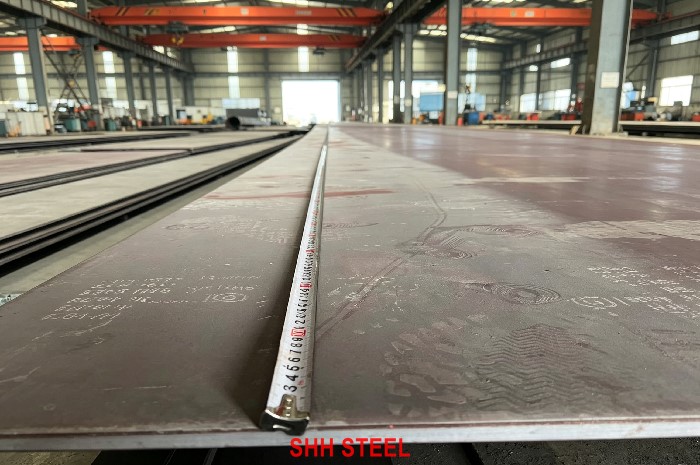
GOST 1435 U7 Tool Steel Plate | U7 Carbon Tool Steel
General Description of GOST 1435 U7 Tool Steel Plate
GOST 1435-99 classifies the steel as quality or high-quality (A). U7 is a quality grade, not the high-quality (A) grade. GOST 1435-99 does not include grades U11 or U13; those names are not treated on this page as grades of this edition. General technical requirements on this page are those of GOST 1435-99. Confirm the official text of that edition.
GOST 1435 U7 Tool Steel Plate Material Specification
As of 12 November 2026, GOST 1435-99 remains in force. It was introduced in the Russian Federation on 1 September 2001, replacing GOST 1435-90, and is the edition used on this page. The official catalogue records a 2004 reissue. Corrections IUS 12-2022 and IUS 2-2023 amend only the foreword table of participating countries and do not change the grade tables used on this page. This page does not tabulate any later edition. Buyers should confirm that GOST 1435-99 is the edition stated on the order.
GOST 1435 U7 Tool Steel Plate is described by GOST 1435-99. The official English title is “Bars, strips and reels of tool unalloyed steel. General specifications.”
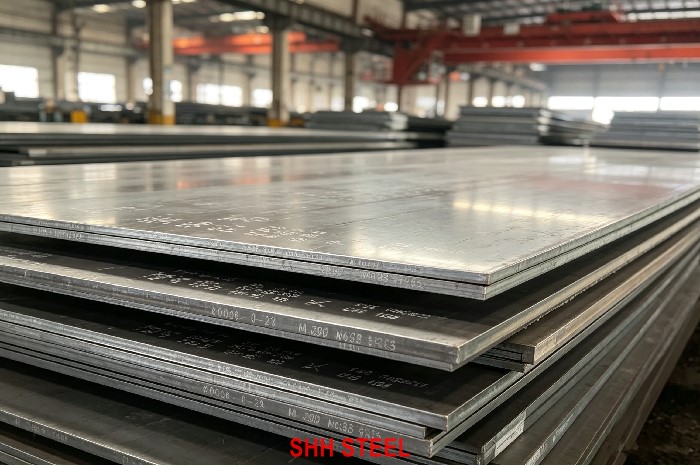
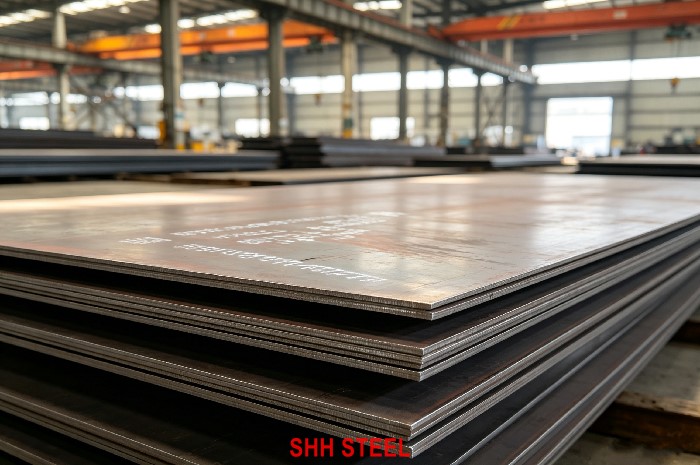
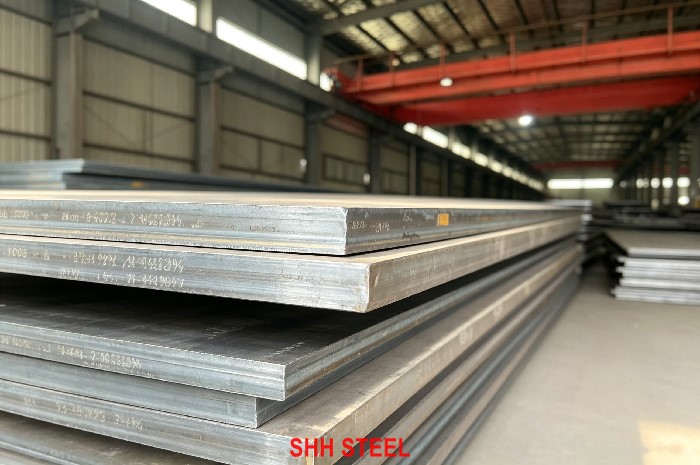
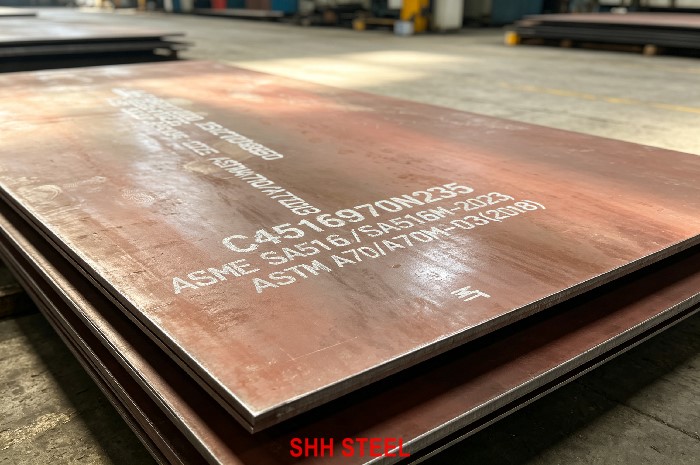
The Scope covers forged bars and strips, and hot-rolled, calibrated and special-surface-finish bars, strips and coils, of unalloyed (carbon) tool steel, and, as regards chemical-composition limits, also ingots, billets, sheet, tape, wire and other metal products. Clause 3.3.1 requires the metal products to be manufactured as bars, strips and coils. This page describes plate or flat supply against the composition and hardness requirements of GOST 1435-99; plate or sheet is supplied cut from strip or by agreement.
Clause 3.1 classifies the products by: chemical-composition class (quality or high-quality — A); purpose group 1, 2 or 3, which governs the chromium, nickel and copper limits of Table 2; further-processing subgroup a (hot working, including upsetting, and cold drawing) or b (cold machining); surface-quality group; and delivery condition (without heat treatment; heat-treated — TO; or cold-worked — NG, for calibrated and special-finish bars). Group 1 covers products of all kinds, including cores, other than patented wire and tape. Group 3 covers products of all kinds (including hot-rolled and cold-rolled sheets and tapes) whose manufacture involves repeated heating that increases the risk of graphitization, and products that require increased hardenability (other than core bars, patented wire and tape). Group 2 (patented wire and tape) is listed in Table 2 only for high-quality (A) grades and is not a Table 2 group for U7. The group, the purpose (for group 1 used for cores), the further-processing method, the material condition and the surface group shall be stated in the order (clause 3.1.6).
GOST 1435 U7 Tool Steel Plate Chemical Composition
Clause 3.2.1 requires the grades and the heat (ladle) analysis to comply with Tables 1 and 2. The Table 1 row for U7, visually inspected in the text of GOST 1435-99, is given below. Values are mass fraction, %. Sulphur and phosphorus are maxima. There is no “other elements” column in Table 1; chromium, nickel and copper are specified by group in Table 2.
| Grade | C | Si | Mn | S max | P max |
|---|---|---|---|---|---|
| U7 | 0.65–0.74 | 0.17–0.33 | 0.17–0.33 | 0.028 | 0.030 |
Note 1 to Table 1: the letter U means carbon tool steel; the following figure is the average carbon content in tenths of a percent; G, where used, means a higher manganese content. Note 2: the sulphur content of steel made by electroslag remelting shall not exceed 0.013 %. Confirm those notes against the official text.
Table 2 residual chromium, nickel and copper (maxima, except where a range is given) for the groups that Table 2 lists for U7:
| Group | Cr | Ni max | Cu max | Purpose (clause 3.1.3) |
|---|---|---|---|---|
| 1 | Not more than 0.20 | 0.25 | 0.25 | All kinds, including cores, other than patented wire and tape |
| 3 | 0.20–0.40 | 0.25 | 0.25 | All kinds (including sheets and tapes) with repeated heating, or increased hardenability; not cores or patented wire and tape |
Table 2 note 1: in group 2 products the total of chromium, nickel and copper shall not exceed 0.40 %. Table 2 note 2: in group 1 and group 3 products made by the scrap process, nickel, copper and chromium may each be 0.05 % higher than the table values; that increase is not permitted in metal intended for cold-rolled tape. The group shall be stated on the order; it is not a default. Clause 4.2.1 allows agreed alternative Table 8 limits for groups 1 and 3 (chromium not more than 0.30 % in group 1, or 0.20–0.50 % in group 3; nickel not more than 0.35 %; copper not more than 0.30 %). Table 8 is an agreed option, not the basic specification.
Clause 3.2.2 allows the deviations of Table 3 from the Table 1 and Table 2 limits in rolled products, ingots, billets and further-processed articles. Table 3 does not list a carbon deviation. The inspected Table 3 values are:
| Element | Permitted deviation, % |
|---|---|
| Silicon | ±0.02 |
| Manganese | ±0.02 |
| Sulphur | +0.002 |
| Phosphorus | +0.005 |
Confirm every limit against the official text of GOST 1435-99 before use on an order.
GOST 1435 U7 Tool Steel Plate Mechanical Properties
Clause 4.1.2.1 requires the hardness of heat-treated metal products (after annealing or high tempering), other than bars for cores, and the hardness of specimens after quenching in water, to comply with Table 5. The inspected Table 5 row that includes U7 is:
| Grade | HB, max (annealed or high-tempered) | Indentation diameter, mm, min | Quench temperature (in water), °C | HRCe (HRC), min, after quench |
|---|---|---|---|---|
| U7 | 187 | 4.4 | 800–820 | 63 (62) |
The two hardness figures in the last column are as published: HRCe not less than 63 and HRC not less than 62. Table 5 is not a tensile-strength or impact-energy table. GOST 1435-99 does not tabulate yield strength or elongation for this grade as a basic requirement.
Clause 4.2.3 (an agreed characteristic, not the basic specification): heat-treated products less than 5 mm in diameter or thickness are not checked for hardness, but may, at the purchaser’s request, be tensile-tested. For U7, U7A, U8, U8A, U8G, U8GA, U9 and U9A, Table 9 then requires tensile strength σB not more than 650 N/mm² (66 kgf/mm²). Clause 4.2.4 allows a lower Brinell hardness than Table 5, or a restricted hardness range, by agreement. Table 6 hardness applies to bars for cores and is not restated as a plate default on this page.
Clause 4.1.4.2 and Table 7: in heat-treated products in bars up to 60 mm in diameter or thickness (other than subgroup a for hot working), the pearlite form for U7, U7A, U8, U8A, U8G, U8GA, U9 and U9A shall correspond to ratings 2, 3, 4, 5, 6, 7, 8 or 9 (ratings 1 and 10 are not permitted). For U7, U7A, U8, U8A, U8G and U8GA, absence of a cementite network is ensured by the chemical composition. Confirm those microstructure rules, and any agreed narrower pearlite range under clause 4.2.8, against the official text. This page does not reproduce the microstructure rating charts in the annexes.
GOST 1435 U7 Tool Steel Plate Delivery Conditions
Clause 3.1.6: products are manufactured without heat treatment, heat-treated (TO), or cold-worked (NG, for calibrated and special-finish bars). The group, the purpose (for group 1 used for cores), the further-processing subgroup, the material condition and the surface-quality group shall be stated in the order. If a particular condition is not agreed, do not assume heat treatment or cold work as a default.
Table 5 hardness after annealing or high tempering applies when the product is supplied heat-treated (TO), other than core bars. The quench temperature and the quenched-specimen hardness in Table 5 are control values on specimens quenched in water at the stated temperature; they are not a mandatory heat-treatment cycle for the delivered product unless that is agreed. The fabricator qualifies any further hardening to the project specification and to the official edition on the order.
Order information should include GOST 1435-99, the steel name (U7), the product form and the applicable dimensional standard (clause 3.3.2), the group (1 or 3), subgroup a or b as applicable, the delivery condition, the surface group, the quantity and dimensions, and any clause 4.2 options (alternative Table 8 residuals, tensile test of thin heat-treated product, restricted hardness, normalized hardenability for group 3, tighter decarburization, or a specified pearlite range). Group 2 is not a Table 2 group for U7; it is listed only for high-quality (A) grades.
GOST 1435 U7 Tool Steel Plate Weldability
GOST 1435-99 does not specify a welding procedure, a carbon equivalent, preheat, or a qualified joint for U7. A listed chemical composition is not a welding procedure. Any welding is a fabricator responsibility and shall be qualified to the project specification and to the official edition on the order. This page does not tabulate preheat, heat-input or hydrogen controls.
These are high-carbon unalloyed tool steels. Confirm fitness for any welded construction against the official standard, the project specification and the inspection document. This page does not claim that the grade is, or is not, weldable as a general rule.
GOST 1435 U7 Tool Steel Plate Tolerances
Clause 3.3.1: the metal products are manufactured as bars, strips and coils. Clause 3.3.2 requires form, dimensions and limiting deviations to comply with the referenced dimensional standards: GOST 2590 (or other normative documents) for hot-rolled round bars; GOST 2591 (or other normative documents) for hot-rolled square bars; GOST 2879 for hot-rolled hexagonal bars; GOST 1133 for forged square and round bars; GOST 103 and GOST 4405 for strips; GOST 7417, GOST 8559 and GOST 8560, tolerances h11 and h12, for calibrated bars (coils); and GOST 14955, tolerances h11 and h12, for bars with a special surface finish. GOST 1435-99 does not itself tabulate a plate-thickness schedule. Plate or flat supplied against this page is cut from strip or made by agreement, and the ordered dimensional standard shall be stated.
Clause 4.1.3.1 limits the depth of the decarburized layer (ferrite plus transition zone), per side, on hot-rolled bars, strips and coils and on forged bars and strips, as follows: 0.20 mm up to 5 mm diameter or thickness; 0.30 mm over 5 mm to 10 mm; 0.40 mm over 10 mm to 16 mm; 0.50 mm over 16 mm to 25 mm; 0.60 mm over 25 mm to 40 mm; and 1.5 % of the diameter or thickness over 40 mm. Tighter limits may be agreed under clause 4.2.6. Other decarburization rules apply to calibrated bars, special-finish bars and core bars (clauses 4.1.3.2 to 4.1.3.4); confirm those against the official text. Surface-quality groups and defect-removal depths are specified in clauses 4.1.3.5 to 4.1.3.7 by subgroup and surface group.
GOST 1435 U7 Tool Steel Plate Applications and service limits
Annex A (informative) lists U7 and U7A together for typical uses including woodworking tools (axes, splitting wedges, chisels and gouges), small pneumatic tools (chisels, heading dies and striking bits), forging dies, needle wire, and fitters’ and assembly tools (hammers, sledge-hammers, drifts, screwdrivers, combination pliers, nippers and side cutters, among others). Those are indicative examples, not a mandatory duty list. Selection of the grade, the group, the thickness, the delivery condition and any agreed option is a design decision for the project engineer. GOST 1435-99 does not by itself assign a minimum design temperature, a pressure-equipment duty, a fire rating or a fatigue class. Confirm fitness for the intended service against the official edition, the project specification and the inspection document.
Clause 5 sets acceptance rules. Retests, where required, follow GOST 7566 (clause 5.3). Chemical analysis is sampled to GOST 7565 and determined to the analysis standards named in clause 6.2, or by other methods of the required accuracy; in case of dispute, the named standards apply. Hardness is determined to GOST 9012 (Brinell) and GOST 9013 (Rockwell). This page does not restate the full sampling frequencies of clause 5.2; confirm those against the official text. Marking and packing follow GOST 7566, with GOST 1051 for calibrated bars and coils and GOST 14955 for special-finish bars (clause 4.3).
Compare U7 with other GOST 1435 grades and related tool steels
U7 under GOST 1435-99 is not a substitute for another GOST 1435 grade, and a similar carbon range in another standard is not automatic equivalence.
- U7A — the high-quality companion grade with the same carbon range and tighter manganese, sulphur and phosphorus limits. That relationship is not interchangeability.
- U8 — the next quality carbon grade, with a higher Table 1 carbon range and a lower control-quench temperature in Table 5. That relationship is not interchangeability.
- ISO 4957 ISO 4957 C70U and JIS G4401 JIS G4401 SK70 are commonly compared carbon tool steels. Official correspondence tables were not inspected. A similar carbon name is not interchangeability. Engineer approval is required before any substitution.
- GB/T 1299 is a related tool-steel family on this site. This page does not treat a GB/T 1299 designation as an automatic equivalent of U7.
The same ISO 4957 and JIS G4401 designations are commonly compared with both U7 and U7A. Those two GOST grades are not interchangeable with each other: U7A is the high-quality grade, with tighter manganese, sulphur and phosphorus limits.
This page does not treat U11 or U13 as GOST 1435-99 grades.
GOST 1435 U7 Tool Steel Plate Equivalent Material Grade
The heading identifies a comparison topic, not a declaration of interchangeable material. No formal equivalence has been verified for the designations below. They are commonly compared designations only. Official correspondence tables were not inspected.
| Standard | Country-Region | Equivalent Grade | Note |
|---|---|---|---|
| GOST 1435-99 | Interstate (GOST) | U7 | Quality unalloyed carbon tool steel on this page. Standard product forms are bars, strips and coils; plate or flat by agreement. Not interchangeable with another GOST 1435 grade. |
| ISO 4957 | International (ISO) | C70U | Commonly compared carbon tool steel. Official correspondence tables were not inspected. Not an automatic equivalent. Engineer approval is required before any substitution. |
| JIS G4401 | Japan | SK70 | Commonly compared carbon tool steel. Official correspondence tables were not inspected. Not an automatic equivalent. Engineer approval is required before any substitution. |
None of those relationships is interchangeability. Confirm every requirement against the official text of each standard named on the order, and obtain engineer approval before any substitution.
Why choose Us
SHH STEEL produces and exports unalloyed carbon tool steel to GOST 1435-99, including supply of GOST 1435 U7 Tool Steel Plate. We review the ordered edition, the steel name, the group, the subgroup, the delivery condition, the surface group and the dimensional standard before production, and we state the actual heat analysis and hardness results on the inspection document. We do not treat a related ISO 4957 or JIS G4401 name as a GOST 1435-99 grade, and we do not treat U11 or U13 as grades of this edition.
Orders are accepted against GOST 1435-99 unless the order states a different edition. See the GOST 1435 hub for the product family.
Our Service
Supply covers production to the ordered GOST 1435-99 requirements, mill documentation, and export packing and shipment. Inspection documents record the actual heat analysis and the hardness or other results required by the official tables of the edition on the order and by any agreed option. Agreed options are supplied when they are stated on the order, not by default. Standard product forms are bars, strips and coils; plate or flat is supplied cut from strip or by agreement.
To enquire, state GOST 1435-99, the steel name (U7), the product form and dimensions, the quantity, the group, the subgroup, the delivery condition, the surface group and any required options. SHH STEEL will confirm manufacturability and the inspection plan against that order. This page is a product description written to GOST 1435-99; the official standard of the edition on the order, and the inspection document, govern acceptance.
FAQ
-
What is U7 tool steel plate?
-
GOST 1435 U7 Tool Steel Plate is quality unalloyed (carbon) tool steel under GOST 1435-99, official designation U7. The standard product forms are bars, strips and coils; plate or flat is supplied cut from strip or by agreement, against the Table 1 composition (carbon 0.65–0.74 %) and Table 5 hardness of this edition. Confirm the official text of GOST 1435-99.
-
Is GOST 1435-99 still current for U7?
-
Yes, as of 12 November 2026. GOST 1435-99 remains in force. It was introduced in the Russian Federation on 1 September 2001, replacing GOST 1435-90, and is the edition used on this page. The official catalogue records a 2004 reissue. Corrections issued in 2022 and 2023 add participating countries to the foreword and do not change Tables 1, 2, 3 or 5. State GOST 1435-99, the steel name, the product-form standard, the group (1, 2 or 3), the subgroup, the delivery condition and the surface-quality group on the order, and confirm that this is the edition that applies. This page does not tabulate any later edition.
-
How does U7 differ from U7A and from U8?
-
U7 and U7A have the same Table 1 carbon (0.65–0.74 %) and silicon (0.17–0.33 %) ranges and the same Table 5 annealed hardness and control-quench temperature. U7A is the high-quality (A) grade: manganese is 0.17–0.28 % (U7: 0.17–0.33 %), sulphur is not more than 0.018 % (U7: 0.028 %) and phosphorus is not more than 0.025 % (U7: 0.030 %). Table 2 lists group 2 only for A grades, including U7A. U8 is a different quality grade, with Table 1 carbon 0.75–0.84 % and a Table 5 quench temperature of 780–800 °C. Those grades are not interchangeable. U7A and U8 product pages that are not yet published are named, not linked.
-
What information must be supplied on a GOST 1435 U7 order?
-
State GOST 1435-99, the steel name (U7), the product form, the dimensions and the applicable dimensional standard (clause 3.3.2), the quantity, the purpose group (1 or 3), the further-processing subgroup (a or b) as applicable, the delivery condition (without heat treatment, TO or NG), the surface-quality group, and any clause 4.2 options required. Clause 3.1.6 requires the group, purpose (for group 1 used for cores), further-processing method, material condition and surface group to be stated in the order. Confirm the official wording against GOST 1435-99.
-
How should U7 tool steel plate be ordered?
-
State GOST 1435-99 and the steel name (U7). State whether the supply is bar, strip, coil, or plate or flat cut from strip or by agreement, with the dimensional standard and the dimensions. State the group, the subgroup, the delivery condition and the surface group, and any agreed options (product analysis, alternative Table 8 residuals, tensile test of thin heat-treated product, restricted hardness, or others). The official text of GOST 1435-99 governs acceptance.
Enquire about GOST 1435 U7 Tool Steel Plate
Enquire for GOST 1435 U7 Tool Steel Plate to GOST 1435-99. State the steel name (U7), the product form and the dimensional standard, the dimensions, the quantity, the group, the subgroup, the delivery condition, the surface-quality group and any agreed options. SHH STEEL will confirm the inspection plan against the official tables of the edition on the order. The official standard and the inspection document govern acceptance.
Quality Steel Needed? Inquire for Offers
Related Products