BS 1501 622/515 Steel Plate
What is BS 1501 622/515 plate?
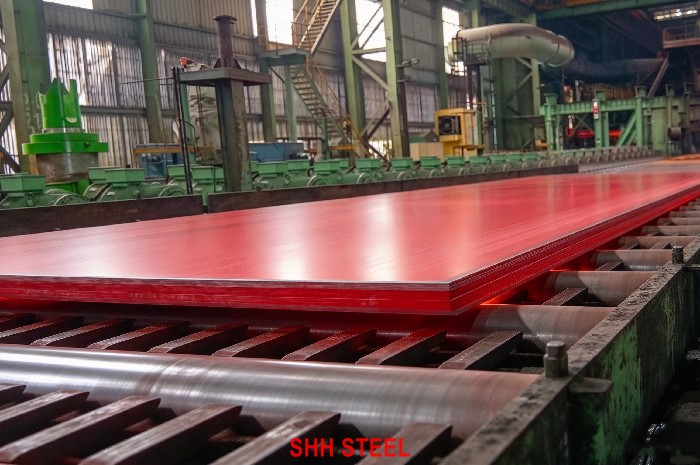
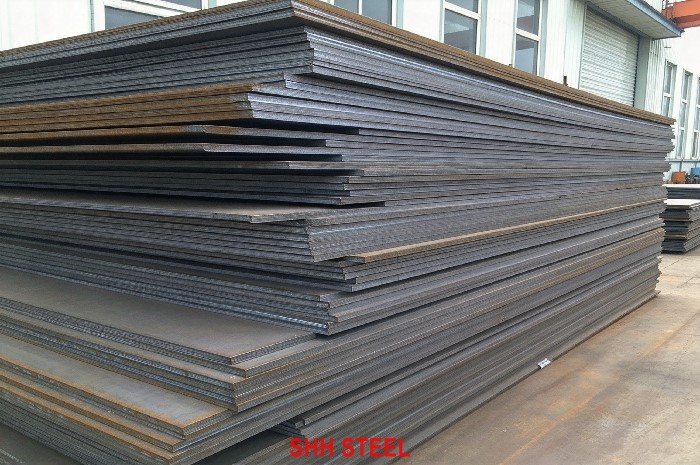
We produce and export BS 1501 622/515 as 2.25 chromium-1 molybdenum alloy steel plate for pressure purposes. Typical service is alloy pressure equipment that specifies this type.
BS 1501-2:1988 is the last final edition of the alloy-plate part of BS 1501. It was published on 29 July 1988 and superseded on 15 January 1995. It replaced Addendum No. 1 (1973) and Addendum No. 2 (1975) to BS 1501: Part 2: 1970. A photographed 1988 Table 1 was not opened for this page. Clause 3 of the 1988 book is titled Designation, but that clause text was not opened. Clause 19 makes elevated-temperature proof stress an optional requirement for section-two steels. The formal 1988 writing of type, tensile token and any A or B suffix therefore remains unverified. Peer catalogues sometimes write names such as 243 B, 620 B, 621 B or 622-515 B; those B forms are recorded as unverified formal-symbol candidates, not declared absent and not declared commercial-only.
Numeric cells below are taken only from the named public database or peer catalogue opened for this page. They are a reference basis, not a photographed BS 1501-2:1988 table and not an SHH proprietary guarantee. EN 10028-2 values for 16Mo3, 13CrMo4-5 or 10CrMo9-10 are not copied onto this legacy type. Missing chemistry or thickness-banded mechanical fields are project requirements to be agreed against the named edition.
SHH STEEL produces and exports BS 1501 622/515 plate to the ordered edition, delivery condition, dimensions and extra tests written on the enquiry.
Material specification for BS 1501 622/515
The items below follow BS 1501-2:1988 as the historical alloy-plate book. Numeric cells in the chemical and mechanical sections are from opened public-database listings and peer catalogues, each labelled by source. They are not photographed 1988 Table 1 values and not 1993 National Annex NC tables (that annex covers 271, 281, 621 and 660 only). Thickness, width, length and the inspection document are stated on the enquiry rather than listed here as stock or capacity ranges.
| Parameter | Detail |
|---|---|
| Standard | BS 1501-2:1988, Steels for pressure purposes — Specification for alloy steels: plates. Numeric cells below are public-database or peer-catalogue references, each labelled by source |
| Designation used here | Working name BS 1501 622/515 (formal 1988 full symbol unverified) |
| Steel type | 2.25 chromium-1 molybdenum alloy steel plate |
| Product form | Alloy steel plate for pressure purposes (this part does not cover bars, sections, forgings, tubes or stainless sheet) |
| How designations are listed | This page uses the working name 622/515. Formal 1988 full symbols (type number plus any tensile token and any A or B suffix) were not photographed. Peer catalogues that print B forms are recorded as unverified formal-symbol candidates; they are not declared absent and not declared commercial-only |
| Applicable thickness in the opened tensile table | Peer catalogue bands to 150 mm; official 1988 thickness table not opened |
| Usual heat treatment | Normalized at 900–960 °C and tempered at 700–750 °C. |
| Chemical analysis | Opened public cells only, each labelled by source in the chemical table |
| Tensile properties | Database single window plus peer catalogue thickness bands, each labelled by source |
| Our supply | We produce and export 622/515 plate to the ordered edition, delivery condition, dimensions and extra tests |
Chemical composition of BS 1501 622/515
Numeric cells below are taken only from the named public database or peer catalogue opened for this page. They are a reference basis, not a photographed BS 1501-2:1988 table and not an SHH proprietary guarantee. EN 10028-2 values for 16Mo3, 13CrMo4-5 or 10CrMo9-10 are not copied onto this legacy type. Missing chemistry or thickness-banded mechanical fields are project requirements to be agreed against the named edition. The tensile token 515 in the working name is not used to invent a 515–690 MPa official window. The public-database listing shows Rm 500–690 MPa. Formal use of a B suffix remains unverified.
| Element | Value (wt. %) | Source opened for this cell |
|---|---|---|
| Carbon (C) | 0.09–0.15 | Public database listing opened 8 November 2026 (Asia/Shanghai); the same limits also appear on a peer brochure printed as 622-515 B |
| Chromium (Cr) | 2.00–2.50 | Public database listing opened 8 November 2026 (Asia/Shanghai); the same limits also appear on a peer brochure printed as 622-515 B |
| Aluminium (Al) | 0.020 max | Public database listing opened 8 November 2026 (Asia/Shanghai) |
| Silicon (Si) | 0.50 max | Peer mill brochure printed as 622-515 B, opened 8 November 2026 (Asia/Shanghai) |
| Manganese (Mn) | 0.30–0.60 | Peer mill brochure printed as 622-515 B, opened 8 November 2026 (Asia/Shanghai) |
| Molybdenum (Mo) | 0.90–1.10 | Peer mill brochure printed as 622-515 B, opened 8 November 2026 (Asia/Shanghai) |
| Nickel (Ni) | 0.30 max | Peer mill brochure printed as 622-515 B, opened 8 November 2026 (Asia/Shanghai) |
| Phosphorus (P) | 0.025 max | Peer mill brochure printed as 622-515 B, opened 8 November 2026 (Asia/Shanghai) |
| Sulfur (S) | 0.015 max | Peer mill brochure printed as 622-515 B, opened 8 November 2026 (Asia/Shanghai) |
Tensile, impact and elevated-temperature properties for BS 1501 622/515
Mechanical figures are labelled by source. They are not a photographed 1988 table and not EN 10028-2 10CrMo9-10 values (live 10CrMo9-10 is 480–630 MPa and 310 MPa yield at ≤ 16 mm).
| Thickness / item | Tensile strength Rm | Yield | Elongation A | Source |
|---|---|---|---|---|
| Single database window | 500–690 MPa | ≥ 285 MPa | ≥ 16 % | Public database listing opened 8 November 2026 (Asia/Shanghai) |
| Up to 100 mm (peer catalogue heading 622-515 B) | 515–690 MPa | 310 MPa | Not printed on the opened brochure rows | Peer mill brochure printed as 620 B, opened 8 November 2026 (Asia/Shanghai) |
| > 100 mm up to 150 mm (peer catalogue heading 622-515 B) | 500–670 MPa | 285 MPa | Not printed on the opened brochure rows | Peer mill brochure printed as 620 B, opened 8 November 2026 (Asia/Shanghai) |
A database listing showed normalizing at 900–960 °C and tempering at 700–750 °C. Hidden public-database fields were not filled except where the peer brochure supplied an independent cell. Numeric cells below are taken only from the named public database or peer catalogue opened for this page. They are a reference basis, not a photographed BS 1501-2:1988 table and not an SHH proprietary guarantee. EN 10028-2 values for 16Mo3, 13CrMo4-5 or 10CrMo9-10 are not copied onto this legacy type. Missing chemistry or thickness-banded mechanical fields are project requirements to be agreed against the named edition.
Delivery conditions for BS 1501 622/515
A public database listing shows normalizing at 900–960 °C and tempering at 700–750 °C. Name the required delivery condition on the purchase order.
If the project has moved to EN 10028-2, order the successor designation and edition expressly. A later European name is not by itself a substitute instruction for type 622/515.
The purchase order should name the official designation, the edition required, thickness, width and length, the delivery condition, any extra tests, and the inspection document required.
This page does not offer heat-treatment or fabrication services.
Welding and thermal cutting
Neither the opened historical book notes nor the later remaining-steel annex set a welding procedure for type 622/515 on this page. Welding and thermal cutting should be qualified for the alloy content, thickness and the specified delivery condition.
Type 622/515 is treated here as a 2.25 chromium-1 molybdenum plate. Consumables and hydrogen control should match the qualified procedure for that alloy family.
Heat input and any required post-weld heat treatment belong in the project specification.
Form, appearance, dimensions and thickness tolerances
Thickness, width, length, flatness and mass tolerances should be stated on the purchase order against the dimensional standard named by the project. The historical replacement set includes BS EN 10029 for plate tolerances when that standard is specified.
Appearance, repair welding and any ultrasonic class are taken from the enquiry. This page does not list stock sizes or mill capacity.
Applications and specification limits
We produce and export 622/515 plate as alloy steel plate for pressure purposes. Typical service is alloy pressure equipment that specifies 622/515 or the peer-attested name 622-515 B. This page is not 622/690.
BS 1501-2:1988 is a historical alloy-plate standard. It is not the current EN 10028-2 or EN 10028-4 order unless that successor standard is written on the enquiry, and it is not a BS 1501-1 carbon, BS 1501-3 stainless, BS 1502 bar or BS 1503 forging order.
Compare BS 1501 622/515 with other steel plates
BS 1501 622/515 is a historical BS 1501-2 alloy pressure-vessel plate. The comparison below is for selection only; these materials are not equivalents.
| Material | Alloy / type | Delivery condition | Mechanical requirements | Typical service | Substitution limit |
|---|---|---|---|---|---|
| BS 1501 622/515 (this plate) | 2.25Cr-1Mo alloy plate | Normalized at 900–960 °C and tempered at 700–750 °C. | Database Rm 500–690 MPa and yield ≥ 285 MPa; peer 622-515 B up to 100 mm 515–690 MPa and 310 MPa yield | Alloy pressure equipment that specifies this type | A later EN name or a different 1988 type is not an automatic substitute |
| EN 10028-2 10CrMo9-10 | 2.25Cr-1Mo elevated-temperature vessel plate, steel number 1.7380 | As specified in EN 10028-2 | Live published yield 310 MPa at ≤ 16 mm and tensile 480–630 MPa | Modern European 2.25Cr-1Mo vessel plate | Related class only; those EN numbers are not copied onto 622/515 |
| ASTM A387 Grade 22 Class 1 | Nominal 2.25Cr-1Mo pressure-vessel plate | As specified in ASTM A387/A387M | Live published tensile 415–585 MPa and yield 205 MPa minimum | ASTM chrome-moly vessel plate | Related product form only |
| GB/T 713 12Cr2Mo1R | Later Chinese 2.25Cr-1Mo vessel plate | As specified in GB/T 713 | Live published yield 310 MPa in the usual band and tensile 520–680 MPa | Modern Chinese 2.25Cr-1Mo vessel plate | Related chromium-molybdenum class only |
Equivalent and related grades by country
The designations below are near names, not automatic substitutes. Confirm chemistry, heat treatment, tensile properties, impact temperature and product form.
| Country / region | Standard | Grade or designation | Similarity and key differences | Substitution caveat |
|---|---|---|---|---|
| United Kingdom | BS 1501-2:1988 working name | 622/515 (peer catalogues also 622-515 B or 622B) | This page uses the working name 622/515. Older comparison tables also mention 622 Gr. 31 and Gr. 45. Formal 1988 full symbol is unverified. | This product |
| Europe | EN 10028-2 | 10CrMo9-10 (1.7380) | Later 2.25Cr-1Mo vessel plate. Live published yield 310 MPa at ≤ 16 mm and tensile 480–630 MPa, against a database window of 500–690 MPa for 622/515. | Near name only; EN numbers are not used as 622/515 values |
| United States | ASTM A387/A387M | Grade 22 Class 1 | Nominal 2.25Cr-1Mo vessel plate. Live published tensile 415–585 MPa and yield 205 MPa minimum. | Related product form only |
| China | GB/T 713 | 12Cr2Mo1R | Later Chinese 2.25Cr-1Mo vessel plate. Live published yield 310 MPa and tensile 520–680 MPa. | Related chromium-molybdenum class only |
Why choose SHH STEEL for BS 1501 622/515
- We produce and export BS 1501 622/515 alloy pressure-vessel steel plate
- We review the enquiry for edition, designation, delivery condition, dimensions and extra tests
- We keep the historical BS 1501-2 type number distinct from later EN 10028-2 names and from Part 1 A/B carbon grades, and we record peer B forms as unverified formal-symbol candidates until a 1988 table is opened
- We match documentation to what the purchase order requires
How to enquire for BS 1501 622/515 plate
| Item | What to specify |
|---|---|
| Standard and designation | BS 1501 622/515 and the edition required (BS 1501-2:1988 and/or the 1993 national-annex remaining-steel clauses) |
| Or successor standard | The EN 10028-2 designation and edition, if that is what the project now requires |
| Delivery condition | Normalized at 900–960 °C and tempered at 700–750 °C. |
| Dimensions | Required thickness, width and length |
| Chemistry | Cast analysis to the named edition |
| Mechanical tests | Yield strength, tensile strength, elongation and, where specified, impact or elevated-temperature proof tests to the named edition |
| Other tests | Ultrasonic examination or other extra tests only when written on the order |
| Documentation | State the inspection document type required by the project |
Thickness, width and length are taken from the enquiry. This page does not list stock sizes, mill capacity or fabrication services.
FAQ
-
Is BS 1501-2 still a current product standard?
- No. BS 1501-2:1988 is the last final edition of the alloy-plate part. It was published on 29 July 1988 and superseded on 15 January 1995. EN 10028-2 superseded part of it. Projects still using a historical type number should name the edition required on the order.
-
Which numbers on this page are guaranteed 1988 table values?
- None are presented as a photographed 1988 table. Public-database carbon, chromium, aluminium and the 500–690 MPa window are shown, together with peer 622-515 B catalogue chemistry and thickness bands. The token 515 is not used to invent an official 515–690 MPa window.
-
Does this page treat 620B or similar B names as the official 1988 symbol?
- No. A photographed 1988 designation table was not opened. Peer catalogues do use B forms such as 620 B, 621 B, 622-515 B and 243 B. Those names are recorded as unverified formal-symbol candidates. They are not declared absent and not declared commercial-only.
-
Can 10CrMo9-10 be used instead of 622/515?
- Only after a project review. Live 10CrMo9-10 is published as 310 MPa yield at ≤ 16 mm and 480–630 MPa tensile. A database listing for 622/515 shows 500–690 MPa. It is not an automatic substitute.
-
What should a quotation enquiry include?
- BS 1501 622/515, the edition required or the successor designation, the delivery condition, plate thickness by width by length, quantity, any extra tests, and the inspection document required.
Request a quotation
Contact SHH STEEL for a quotation for BS 1501 622/515 steel plate. Please include your required quantity, plate thickness, width and length, delivery destination and preferred delivery schedule so we can review your production and export requirements.
Specify the edition (BS 1501-2:1988 or the later United Kingdom national-annex remaining-steel clauses, or a named EN 10028-2 successor if that is what the project now requires), the delivery condition and any specimen heat treatment. If your project requires ultrasonic examination, a stated impact temperature or another extra test, include the acceptance criteria and the inspection document required.
If you are considering a related designation, send the applicable standard and project specification with your enquiry so we can review chemistry, heat treatment and toughness.
For a detailed quotation, email your material specification, quantity and delivery requirements to our team.
Contact: admin@steelspecs.com
Quality Steel Needed? Inquire for Offers
Related Products