
ASME SA240 316Ti Stainless Steel Plate | SA240 Type 316Ti
What is ASME SA240 316Ti Stainless Steel Plate?
As a professional stainless steel plate supplier and China Mill-Direct Supply / Mill Direct Exporter, SHH STEEL is pleased to present ASME SA240 316Ti Stainless Steel Plate, also known as SA240 Type 316Ti.
ASME SA240 Type 316Ti is a titanium-stabilized version of the molybdenum-bearing austenitic stainless steel Type 316. The addition of titanium stabilizes carbon in the form of titanium carbides, effectively preventing chromium carbide precipitation at grain boundaries. This gives Type 316Ti outstanding resistance to intergranular corrosion after welding or after exposure to the sensitization temperature range. At the same time, the 2–3% molybdenum content provides significantly better resistance to pitting and crevice corrosion than the titanium-stabilized 321 grade.
These combined characteristics make SA240 Type 316Ti particularly suitable for welded equipment that operates at elevated temperatures or in corrosive environments where both sensitization resistance and improved chloride performance are required. Typical applications include chemical process equipment, heat exchangers, high-temperature piping, and pressure vessels in moderately corrosive service.
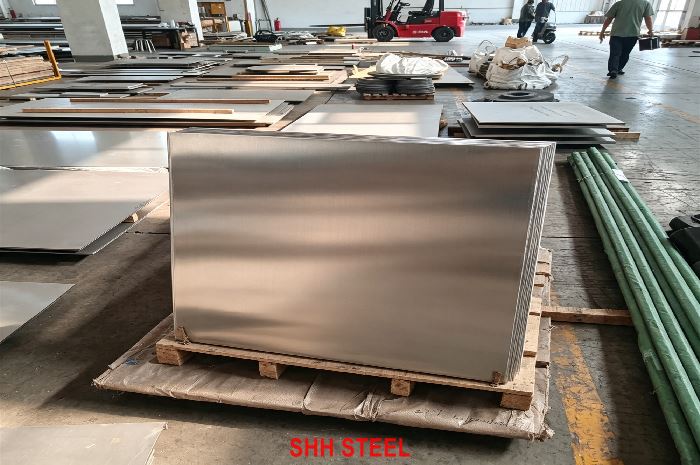
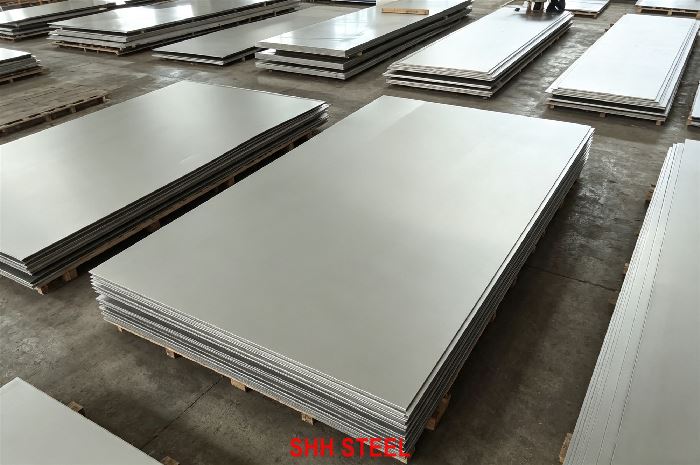
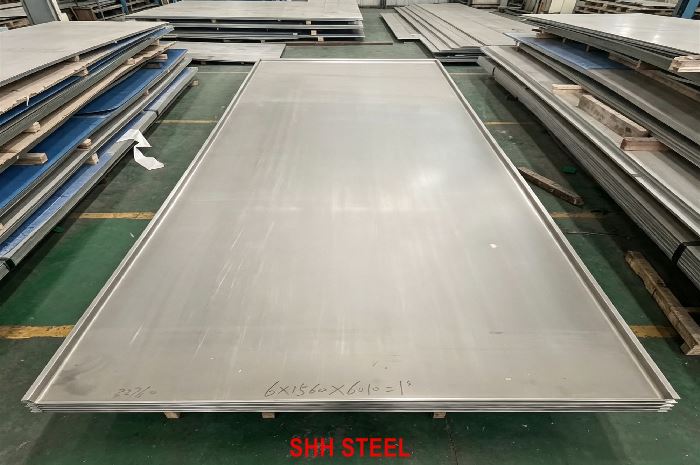
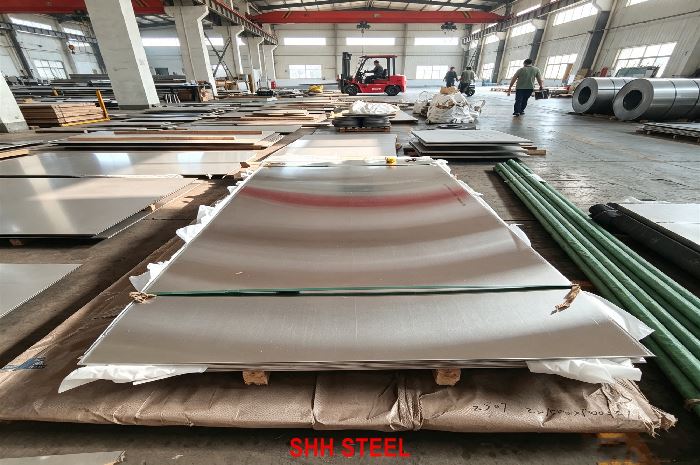
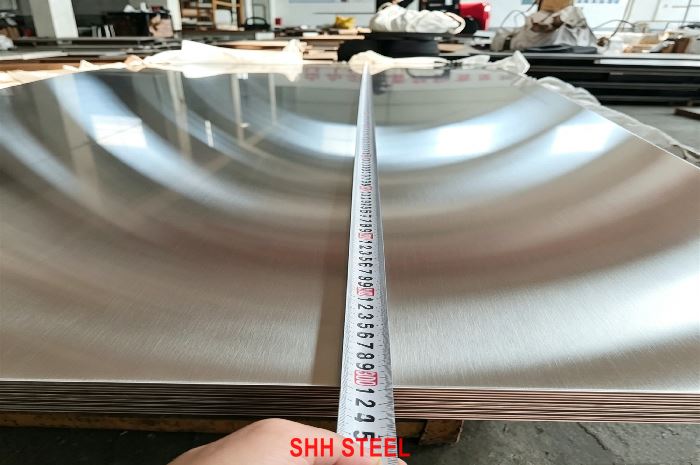
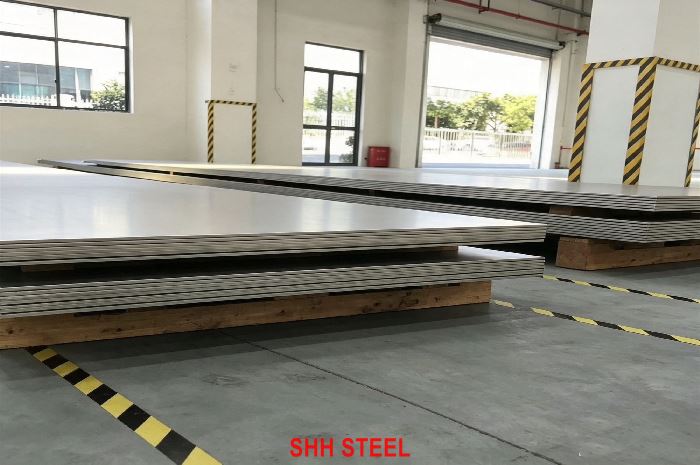
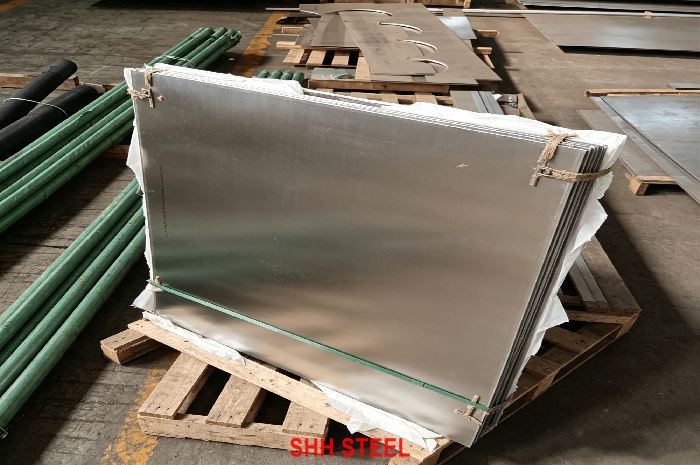
SHH STEEL supplies ASME SA240 316Ti as true Mill Direct Supply, sourcing directly from major Chinese stainless steel mills. This model delivers competitive mill pricing, consistent quality, full heat traceability, and shorter lead times. We offer thicknesses from 1 mm to 100 mm (thicker plates available on request), widths up to 2000–3000 mm, and lengths up to 12000 mm or cut-to-length. Material is supplied in the solution-annealed condition with a full range of surface finishes.
Material Specification
| Specification Element | Requirement | SHH STEEL Compliance |
|---|---|---|
| Primary Standard | ASME SA240 / SA240M | Full compliance |
| Steel Grade | Type 316Ti (UNS S31635) | Confirmed |
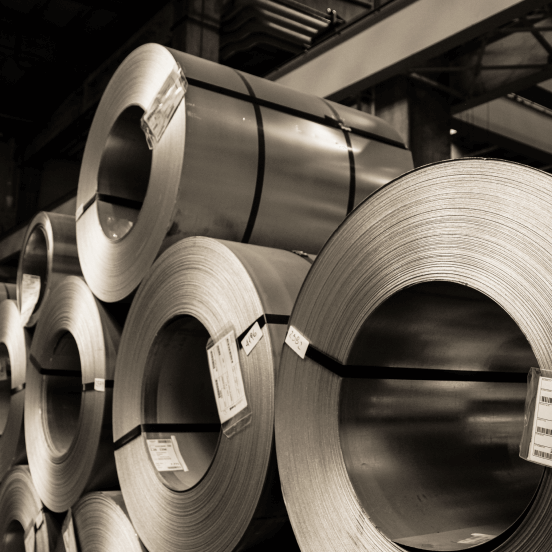
| Product Form | Plate, Sheet, Coil | Available |
| Delivery Condition | Solution Annealed | Standard |
| Thickness Range | 1 mm – 100 mm (thicker available) | Custom sizes supported |
| Width | Up to 2000–3000 mm | Available |
| Length | Up to 12000 mm or cut-to-length | Available |
| Surface Finish | No.1, 2B, BA, No.4, HL, Polished | Available |
| Certification | EN 10204 3.1 / ASME Mill Test Certificate | Available |
Chemical Composition
Heat Analysis (Ladle Analysis) according to ASME SA240 Type 316Ti:
| Element | Content (%) |
|---|---|
| Carbon (C) | ≤ 0.08 |
| Silicon (Si) | ≤ 0.75 |
| Manganese (Mn) | ≤ 2.00 |
| Phosphorus (P) | ≤ 0.045 |
| Sulfur (S) | ≤ 0.030 |
| Chromium (Cr) | 16.00 – 18.00 |
| Nickel (Ni) | 10.00 – 14.00 |
| Molybdenum (Mo) | 2.00 – 3.00 |
| Titanium (Ti) | ≥ 5 × C% |
| Nitrogen (N) | ≤ 0.10 |
| Iron (Fe) | Balance |
Product Analysis (typical permissible variations):
| Element | Content (%) |
|---|---|
| Carbon (C) | ≤ 0.08 |
| Silicon (Si) | ≤ 0.75 |
| Manganese (Mn) | ≤ 2.00 |
| Phosphorus (P) | ≤ 0.045 |
| Sulfur (S) | ≤ 0.030 |
| Chromium (Cr) | 15.90 – 18.10 |
| Nickel (Ni) | 9.90 – 14.10 |
| Molybdenum (Mo) | 1.90 – 3.10 |
| Titanium (Ti) | ≥ 5 × C% |
| Nitrogen (N) | ≤ 0.10 |
The minimum titanium content of five times the carbon percentage is the critical stabilizing requirement. Titanium combines preferentially with carbon, protecting the alloy from intergranular corrosion while the molybdenum addition enhances resistance to localized chloride attack.
Mechanical Properties
Room-Temperature Mechanical Properties (Annealed Condition)
| Property | Value |
|---|---|
| Tensile Strength | ≥ 515 MPa (75 ksi) |
| Yield Strength (0.2%) | ≥ 205 MPa (30 ksi) |
| Elongation (in 50 mm) | ≥ 40% |
| Hardness | ≤ 217 HB / ≤ 95 HRB |
Physical Properties
- Density: 7.98 g/cm³
- Melting Range: approximately 1370–1400°C
- Magnetic: Non-magnetic in the annealed condition
Type 316Ti maintains good strength and oxidation resistance at elevated temperatures and offers better resistance to sensitization than unstabilized 316 or 316H during continuous or intermittent high-temperature service.
Material Comparison
| Grade | Key Feature | Primary Advantage | Typical Preference |
|---|---|---|---|
| SA240 Type 316L | Low carbon + Mo | Best as-welded corrosion resistance | Heavy welding in chloride environments |
| SA240 Type 316H | Higher carbon + Mo | Higher strength at elevated temperature | Continuous high-temperature service |
| SA240 Type 316Ti | Ti-stabilized + Mo | Stabilization + pitting resistance | High-temperature + corrosive service |
| SA240 Type 321 | Ti-stabilized (no Mo) | Stabilization, lower cost | High-temperature, milder corrosion |
| SA240 Type 347 | Nb-stabilized | Superior high-temperature stability | Most severe high-temperature service |
ASME SA240 316Ti is selected when the application requires both titanium stabilization (for resistance to intergranular corrosion) and molybdenum (for improved pitting resistance). It offers a performance advantage over astm a240 type 321 stainless steel sheet plate in chloride-containing environments. When maximum as-welded corrosion resistance at moderate temperatures is the priority, astm a240 type 316l stainless steel sheet plate is usually preferred. For the most demanding high-temperature stability, astm a240 type 347 stainless steel sheet plate may be considered.
Corrosion Resistance
In the annealed condition, ASME SA240 Type 316Ti provides corrosion resistance comparable to Type 316, with the important added benefit of excellent resistance to intergranular corrosion after welding or after exposure to the sensitization temperature range (approximately 450–850°C).
The molybdenum content delivers significantly better resistance to pitting and crevice corrosion than Type 321 in chloride environments. General corrosion resistance in oxidizing acids and many chemical media is good. Resistance to stress corrosion cracking in chloride media remains limited at elevated temperatures under high tensile stress, similar to other standard austenitic grades.
Weldability
ASME SA240 Type 316Ti has excellent weldability by all standard fusion and resistance welding methods. Because the grade is titanium-stabilized, it can normally be used in the as-welded condition without risk of intergranular corrosion.
Matching or niobium-stabilized filler metals (E318 / ER318 or E316L) are commonly used. The grade can be welded to other austenitic stainless steels using appropriate procedures. Post-weld heat treatment is generally not required for corrosion resistance purposes.
Heat Treatment
ASME SA240 Type 316Ti is supplied in the solution-annealed condition.
Recommended Solution Annealing Parameters
- Temperature range: 1000 – 1100°C (typically 1050 – 1100°C)
- Holding (soaking) time: – Plates ≤ 25 mm: minimum 10–20 minutes after the section reaches temperature – Plates 25–50 mm: minimum 20–40 minutes – Plates > 50 mm: 30–60 minutes or longer to ensure uniformity throughout the cross-section
- Cooling: Rapid cooling (water quench preferred for thicker plates) to retain the stabilized structure and maximum corrosion resistance
An optional stabilizing treatment at approximately 840–900°C can be applied in special cases to ensure complete titanium carbide precipitation, although modern production practices usually make this unnecessary for most applications.
Surface Finishes
| Finish | Description | Typical Use / Keywords |
|---|---|---|
| No.1 | Hot-rolled, annealed and pickled | SA240 316Ti No.1 – most common for pressure vessel and industrial plate |
| 2B | Cold-rolled, annealed, pickled, skin-passed | SA240 316Ti 2B – general fabrication and process equipment |
| BA | Bright Annealed | SA240 316Ti BA – clean and decorative applications |
| No.4 | Brushed (satin) finish | SA240 316Ti No.4 – architectural and visible surfaces |
| HL | Hairline finish | SA240 316Ti HL – decorative panels |
| Polished | Mirror or custom polish | SA240 316Ti Polished – sanitary and high-end applications |
SHH STEEL regularly supplies ASME SA240 316Ti in No.1 and 2B finishes, and can provide BA, No.4, HL, and polished finishes according to project requirements.
Tolerances
Dimensional tolerances conform to ASME SA240 and the general requirements of ASTM A480. Thickness, width, length, and flatness are controlled within standard or tighter agreed limits.
Equivalent Material Grades
| Grade / Designation | Standard | Notes |
|---|---|---|
| SA240 Type 316Ti | ASME SA240 | — |
| A240 Type 316Ti | ASTM A240 | Essentially identical |
| UNS S31635 | — | Unified Numbering System |
| 1.4571 / X6CrNiMoTi17-12-2 | EN 10088-2 | European equivalent |
| SUS316Ti | JIS G4305 | Japanese equivalent |
| 06Cr17Ni12Mo2Ti | GB/T 3280 | Chinese equivalent |
Related grades frequently evaluated with ASME SA240 316Ti include astm a240 type 316l stainless steel sheet plate, astm a240 type 316 stainless steel sheet plate, astm a240 type 321 stainless steel sheet plate, and astm a240 type 347 stainless steel sheet plate.
Applications
ASME SA240 Type 316Ti is widely used in welded equipment requiring both high-temperature capability and improved corrosion resistance:
| Industry / Sector | Typical Components / Equipment |
|---|---|
| Chemical & Petrochemical | Reactors, heat exchangers, process piping |
| High-Temperature Service | Furnace parts, hot-process equipment |
| Heat Exchangers | Shells, channels, tubesheets |
| Pressure Vessels | High-temperature or corrosive-service vessels |
| Power Generation | Boiler components and hot piping |
| Pharmaceutical & Food | Process equipment requiring stabilization |
| General Fabrication | Welded structures in moderately corrosive high-temp service |
Why Choose SHH STEEL
SHH STEEL is a China Mill-Direct Supply and Mill Direct Exporter of stainless steel plate. We maintain long-term strategic cooperation with major Chinese stainless steel mills and supply ASME SA240 Type 316Ti with the following advantages:
- Competitive mill-direct pricing
- Consistent quality and complete heat traceability
- Full Mill Test Certificates (EN 10204 3.1 / ASME)
- Flexible dimensions and surface finishes (including SA240 316Ti No.1 and SA240 316Ti 2B)
- Technical support for high-temperature and corrosive-service material selection
- Reliable worldwide logistics and export documentation
FAQ
- hat is the main advantage of SA240 316Ti over SA240 316L?
- Type 316Ti is titanium-stabilized, giving it excellent resistance to intergranular corrosion and better performance in continuous or intermittent high-temperature service, while still offering the pitting resistance of the 316 family.
- What is the difference between 316Ti and 321?
- Both are titanium-stabilized, but 316Ti contains molybdenum and therefore provides significantly better resistance to pitting and crevice corrosion in chloride environments.
- Is ASME SA240 316Ti magnetic?
- Non-magnetic in the annealed condition. It may become slightly magnetic after heavy cold working.
- What is the density of SA240 Type 316Ti?
- Approximately 7.98 g/cm³.
- Can SHH STEEL supply dual-certified ASME SA240 / ASTM A240 Type 316Ti?
- Yes, dual certification is commonly available.
Conclusion
ASME SA240 316Ti Stainless Steel Plate (SA240 Type 316Ti) is a titanium-stabilized molybdenum-bearing austenitic stainless steel that offers an excellent combination of intergranular corrosion resistance, improved pitting resistance, and reliable high-temperature performance. It is the preferred choice for many welded process and high-temperature applications where both stabilization and chloride resistance are required.
As a professional China Mill-Direct Supply and Mill Direct Exporter, SHH STEEL provides high-quality ASME SA240 Type 316Ti plate with competitive pricing, full certification, and complete technical support.
Contact SHH STEEL today for stock availability, surface finish options (including SA240 316Ti No.1 and SA240 316Ti 2B), or a competitive quotation.
ASME SA240 316Ti Stainless Steel Plate, SA240 Type 316Ti, SA240 316Ti, ASME SA240 Type 316Ti, 316Ti stainless steel plate, SA240 316Ti supplier
Quality Steel Needed? Inquire for Offers
Related Products