
ASTM A240 Type 317 Stainless Steel Sheet & Plate
What is ASTM A240 Type 317 Stainless Steel Sheet and Plate?
As a professional stainless steel supplier, SHH STEEL is pleased to present ASTM A240 Type 317 Stainless Steel Sheet and Plate. Also known as SS317 or UNS S31700, this higher-molybdenum austenitic grade is designed for more severe corrosive environments than standard Type 316.
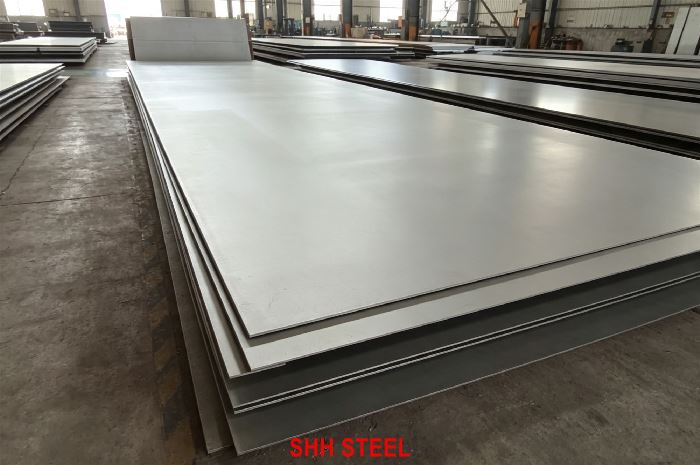
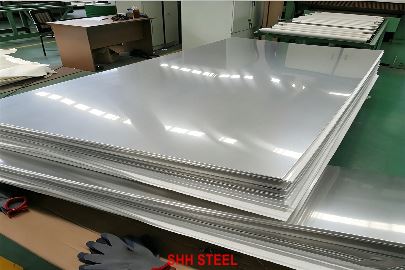
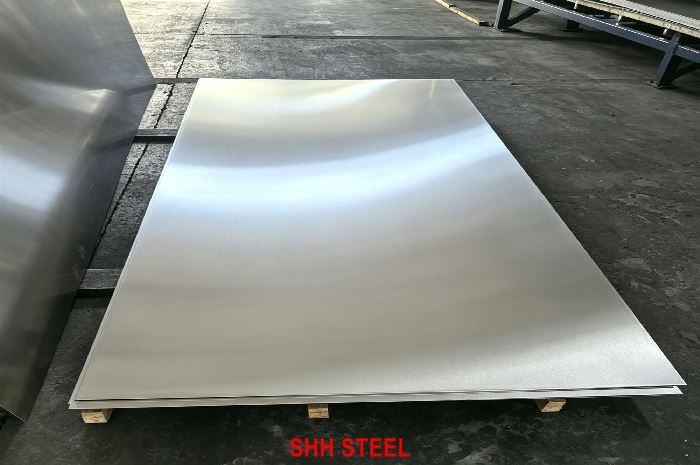
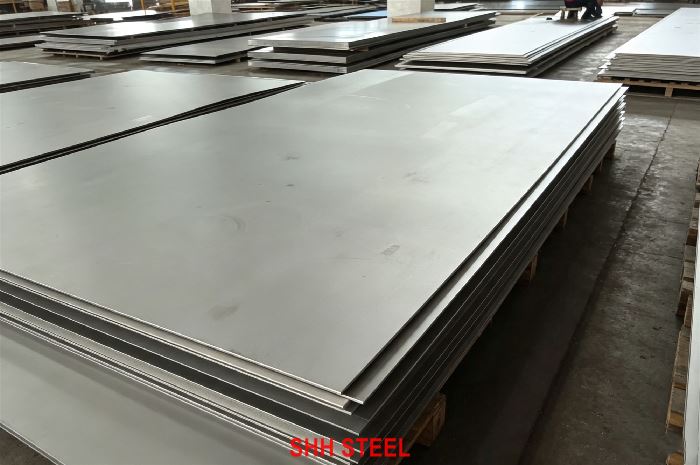
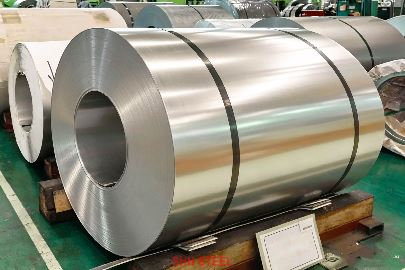
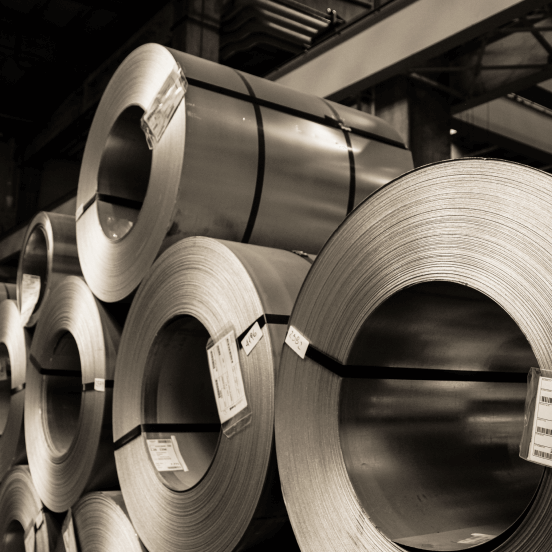
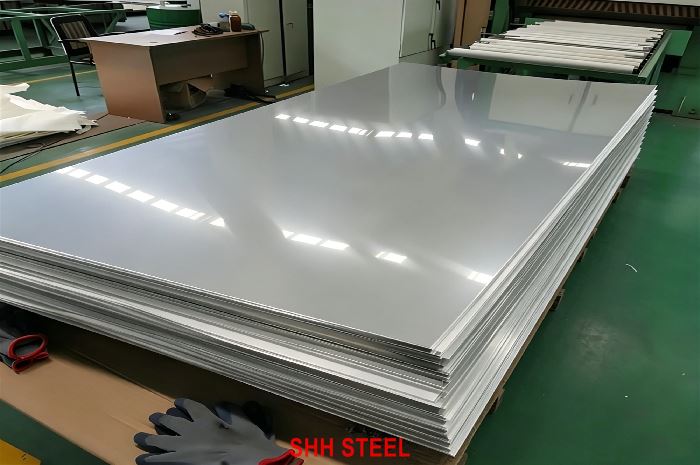
Type 317 contains 3.00–4.00% molybdenum, providing significantly improved resistance to pitting, crevice corrosion and general corrosion in chemical processing media, especially those containing chlorides or reducing acids. It also offers good formability, weldability and toughness. SHH STEEL supplies ASTM A240 Type 317 in both sheet and plate forms, covering thicknesses from 0.5 mm to 100 mm, with widths up to 2500 mm and lengths up to 12000 mm. Custom sizes and surface finishes are available.
The material is typically delivered in the solution-annealed condition with full Mill Test Certificates (EN 10204 3.1). Whether for thin sheet fabrication or heavy plate applications, SHH STEEL provides consistent quality for demanding chemical and industrial projects worldwide.
Material Specification
ASTM A240 Type 317 stainless steel sheet and plate are manufactured in accordance with ASTM A240/A240M and ASME SA-240. This specification covers chromium-nickel-molybdenum stainless steel plate, sheet and strip for pressure vessels and general applications.
| Specification Element | Requirement | SHH STEEL Compliance |
|---|---|---|
| Primary Standard | ASTM A240 / ASME SA-240 Type 317 | Full compliance |
| Product Form | Sheet and Plate | Both available |
| Thickness Range | 0.5 mm – 100 mm | Custom sizes available |
| Width / Length | Up to 2500 mm / 12000 mm | Custom fabrication supported |
| Surface Finish | 2B, No.1, BA, HL, No.4 | Multiple options |
| Heat Treatment Condition | Solution Annealed | Standard supply condition |
| Certification | EN 10204 3.1 / 3.2 | Available |
ASTM A240 Type 317 Chemical Composition
The chemical composition of ASTM A240 Type 317 is designed to provide enhanced corrosion resistance through higher molybdenum content.
| Element | Content (%) | Standard Limit | Role |
|---|---|---|---|
| Carbon (C) | ≤ 0.08 | 0.08 max | Strength and corrosion balance |
| Manganese (Mn) | ≤ 2.00 | 2.00 max | Deoxidation and strength |
| Phosphorus (P) | ≤ 0.045 | 0.045 max | Impurity control |
| Sulfur (S) | ≤ 0.030 | 0.030 max | Cleanliness |
| Silicon (Si) | ≤ 0.75 | 0.75 max | Deoxidation |
| Chromium (Cr) | 18.00 – 20.00 | 18.00 – 20.00 | Corrosion and oxidation resistance |
| Nickel (Ni) | 11.00 – 15.00 | 11.00 – 15.00 | Austenite stability and toughness |
| Molybdenum (Mo) | 3.00 – 4.00 | 3.00 – 4.00 | Superior pitting and crevice corrosion resistance |
| Nitrogen (N) | ≤ 0.10 | 0.10 max | Strength contribution |
ASTM A240 Type 317 Mechanical Properties
In the solution-annealed condition, ASTM A240 Type 317 delivers reliable strength and good ductility.
| Property | Value | Test Method |
|---|---|---|
| Tensile Strength | ≥ 515 MPa (75 ksi) | ASTM A370 |
| Yield Strength (0.2% Offset) | ≥ 205 MPa (30 ksi) | ASTM A370 |
| Elongation in 50 mm | ≥ 35–40% | ASTM A370 |
| Hardness | ≤ 217 HB / ≤ 95 HRB | ASTM E10/E18 |
| Density | 8.00 g/cm³ | — |
Delivery Conditions
SHH STEEL supplies ASTM A240 Type 317 primarily in the solution-annealed and pickled condition. Detailed capabilities by surface finish are as follows:
2B Finish (Cold-rolled, annealed, pickled and skin-passed)
- Typical thickness range: 0.5 mm – 6.0 mm (most common 0.8 mm – 3.0 mm)
- Maximum width: up to 1500–2000 mm depending on thickness
- Preferred for applications requiring a smooth, bright surface and good flatness.
No.1 Finish (Hot-rolled, annealed and pickled)
- Typical thickness range: 3.0 mm – 100 mm (most common 4.0 mm – 50 mm)
- Maximum width: up to 2000–2500 mm
- Standard finish for heavy plates used in chemical process equipment, tanks and structural applications.
Other Finishes
- BA (Bright Annealed): Available in thinner gauges
- HL (Hairline) and No.4: Available for specific requirements
Protective PVC film can be applied on one or both sides. Precision cutting (plasma, laser or waterjet) and closer dimensional tolerances are available upon request.
Tolerances
Dimensional tolerances for ASTM A240 Type 317 sheet and plate follow ASTM A480/A480M.
- Thickness tolerances vary by product form and thickness. Cold-rolled sheet has tighter controls, while hot-rolled plate follows standard allowable deviations.
- Width tolerance is typically +6 mm / 0 mm.
- Length tolerance for cut-to-length material is normally +10 mm / 0 mm.
- Flatness is controlled according to ASTM A480; improved flatness can be supplied for precision fabrication.
- Edge conditions include mill edge, slit edge, sheared edge or plasma/laser cut edge according to customer preference.
Tighter tolerances can be arranged for special projects.
Weldability
ASTM A240 Type 317 offers good weldability using all common fusion welding processes, including GTAW (TIG), GMAW (MIG), SMAW and plasma welding. Preheating is generally not required. Matching or slightly over-alloyed filler metals such as ER317 or ER317L are commonly recommended. Post-weld heat treatment is usually unnecessary for most applications. Proper cleaning and passivation after welding are recommended to restore full corrosion resistance, especially in aggressive chemical environments.
Equivalent Material Grades
| Grade | Standard | Designation |
|---|---|---|
| Type 317 | ASTM A240 / ASME SA-240 | — |
| UNS S31700 | Unified Numbering System | S31700 |
| 1.4449 | EN (reference) | X3CrNiMo18-12-3 |
| SUS317 | JIS G4304 / G4305 | — |
| Related Chinese grades | GB/T series | High-molybdenum 18Cr-12Ni-3Mo types |
| X3CrNiMo18-12-3 | DIN / EN | — |
Applications
ASTM A240 Type 317 is selected for more aggressive corrosive environments where Type 316 may not provide sufficient resistance. Typical applications are shown below with relevant keywords:
| Application Area | Typical Components / Uses (Keywords) |
|---|---|
| Chemical Processing | Reactors, storage tanks, piping, heat exchangers – A240 317 Chemical Processing |
| Pulp & Paper | Digesters, bleach plants, chemical recovery equipment – A240 317 Pulp Paper |
| Pharmaceutical & Fine Chemicals | Process vessels, piping systems – A240 317 Pharmaceutical |
| Petrochemical Industry | Process equipment exposed to chlorides and acids – A240 317 Petrochemical |
| Pollution Control | Scrubbers, absorbers, flue gas systems – A240 317 Pollution Control |
| General Industrial | Pressure vessels, heat exchangers, pumps and valves – A240 317 Industrial |
Why Choose SHH STEEL
SHH STEEL maintains long-term strategic cooperation with major Chinese stainless steel mills and acts as a first-level (primary) agent for these mills. This direct partnership enables us to offer competitive pricing advantages, faster delivery times and consistent quality assurance that many intermediate traders cannot match.
All ASTM A240 Type 317 material is sourced from reputable Chinese mills under strict quality control, supplied with complete Mill Test Certificates, and supported by our professional export team. Customers benefit from reliable supply, short lead times, technical support and cost-effective solutions for chemical and industrial applications worldwide.
FAQ
- What is the main difference between ASTM A240 Type 316 and Type 317?Type 317 contains higher molybdenum (3.00–4.00%) compared with Type 316 (2.00–3.00%). This provides significantly better resistance to pitting, crevice corrosion and general corrosion in aggressive chemical environments.
- What is the difference between 317 and 317L?Type 317L is the low-carbon version (C ≤ 0.030%) of Type 317, offering improved resistance to intergranular corrosion after welding. Type 317 has a maximum carbon content of 0.08%.
- What are the equivalent grades of ASTM A240 Type 317?Common equivalents include UNS S31700, EN 1.4449 (reference), JIS SUS317 and related high-molybdenum Chinese grades.
- What is the density of ASTM A240 Type 317?Approximately 8.00 g/cm³.
- Is Type 317 suitable for chloride environments?Yes. Due to its higher molybdenum content, Type 317 offers better pitting and crevice corrosion resistance than Type 316 in many chloride-containing media.
Quality Steel Needed? Inquire for Offers
Related Products